• Get involved.
    We want your input!
    Apply for Membership and join the conversations about everything related to broadcasting.

    After we receive your registration, a moderator will review it. After your registration is approved, you will be permitted to post.
    If you use a disposable or false email address, your registration will be rejected.

    After your membership is approved, please take a minute to tell us a little bit about yourself.
    https://www.radiodiscussions.com/forums/introduce-yourself.1088/

    Thanks in advance and have fun!
    RadioDiscussions Administrators

Digital-Only Signals Could Help Bring AMs ‘Back From The Brink Of Extinction

How does MA3 impact sky wave propagation and DX at night? Listeners in isolated and rural areas rely on distant AM signals where local radio is almost nonexistent. Will MA3 improve reception or will it create sideband noise like HD AM did?

There are so few people that live in what the FCC called "gray areas" today that distant AM reception is not an issue. And besides, there are very few AM stations that do any kind of useful programming after 7 PM as those hours are pretty much unsalable to clients.

And of course, the clients know this and don't buy radio at night and they only buy AM if there is something really compelling; the best examples are the few remaining big signal farm stations like WNAX in Yankton. But even those stations are fading as farmers and ranchers use satellite delivered crop, weather and livestock data to them.

Any town of a few thousand or more has a station or a translator or is close enough to a bigger town to have plenty of service now.

Example: as a kid I would DX from Omena, Michigan in the summer. There was limited good signal daytime service from two stations 20 miles south. At night, one was off the air and the other, a Class IV, was buried in a cacophony of voices on 1400 AM. Today, there are more than a dozen 60 dbu or better FM signals and one very strong AM on a nice regional channel. All across America this same phenomenon has occurred since the total number of stations and translators has more than quadrupled in the last 50-some years.

The "unserved audience" argument died decades ago.
 
I agree that the population living in the "grey areas" is not significant but it does exist. I imagine these underserved areas will continue to expand as more stations shut down or AM stations switch to lower power FM signals. Also, many people travel through those areas or vacation there for extended periods of time. If there's a road closure due to a snow storm or local wildfire, I would want to tune to a local radio station to find out as soon as possible.

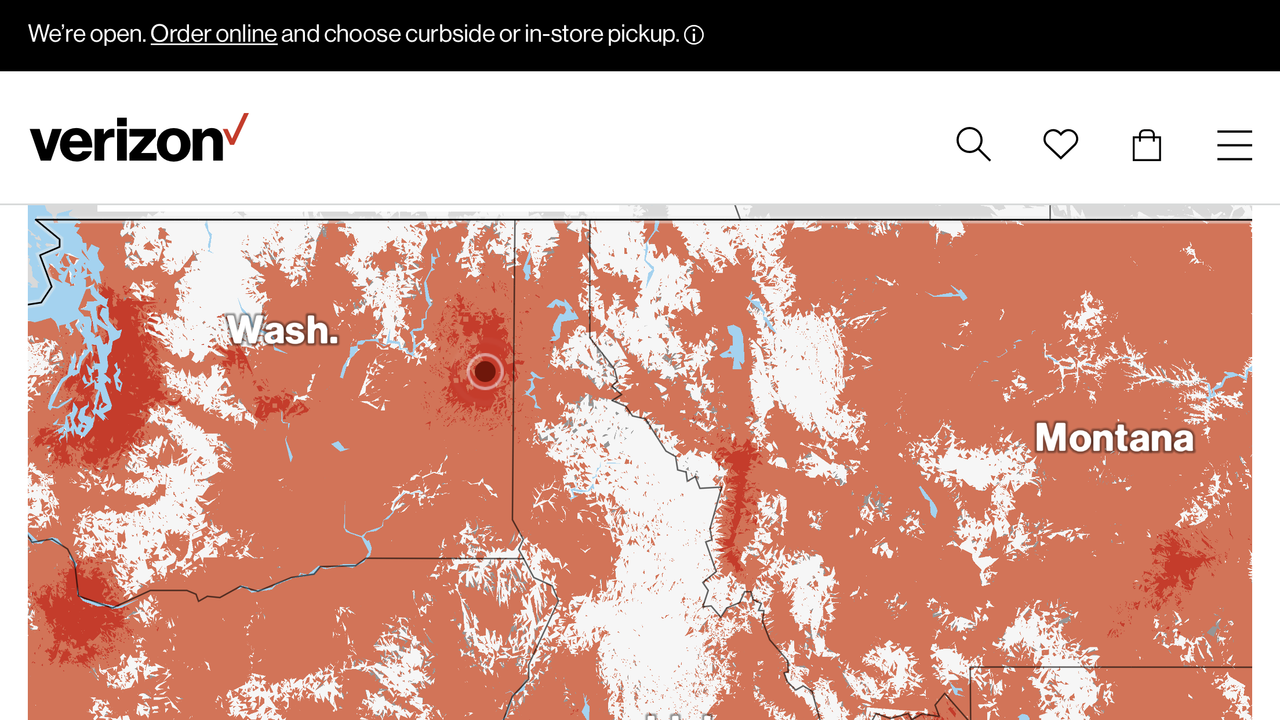
Cellular data solves most of these problems by providing location based alerts and real time information IF the area has adequate coverage. However, there are huge sections of North America that have no cellular reception whatsoever. Here's a Verizon coverage map of the Pacific Northwest.
20201014-035845000-i-OS.png


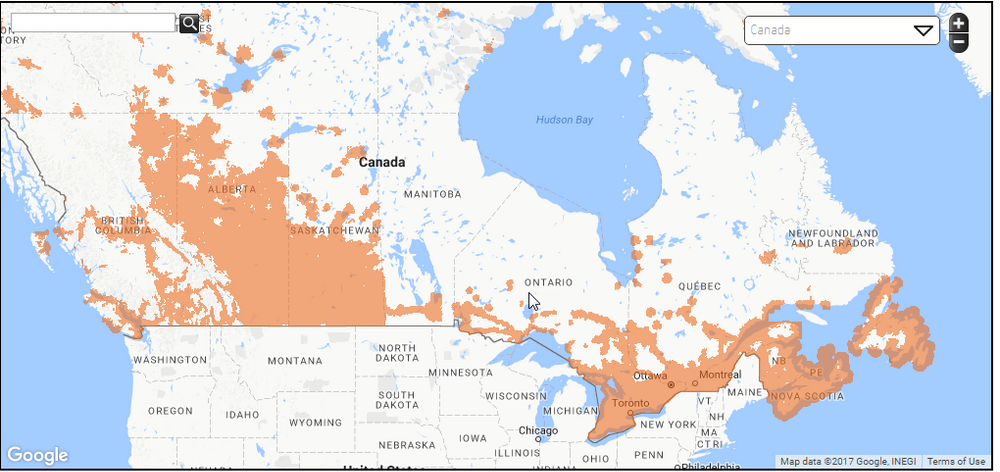
In Canada, the situation is much worse where less than a third of the land area is covered by a cellular signal.
20201014-040351758-i-OS.png


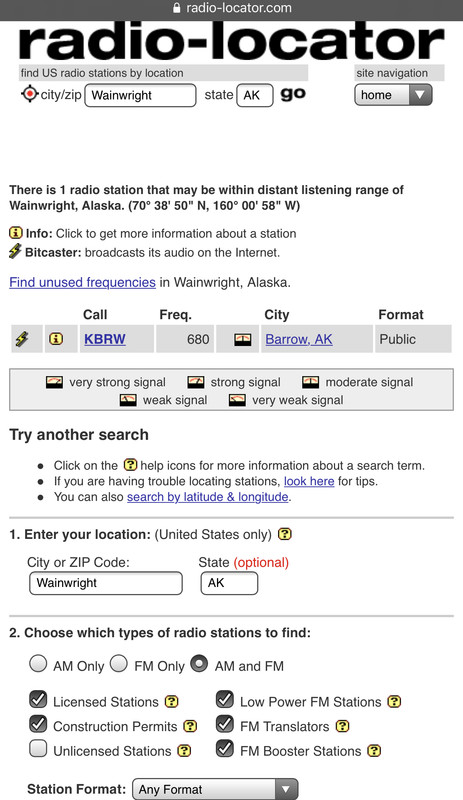
It's reasonable to assume that these areas underserved by cell service probably aren't served by radio signals either. For fun, I looked up Wainwright, AK and generated a reception report on radio-locator.com For the 500 luck souls that call Wainwright home, they can receive a total of ONE radio station on the dial! This is an AM station with "moderate" reception in the town. The FM band is a complete ghost town. The Alaska governor recently decided to de-fund the state's public broadcasting network so there's a chance that the AM band may become a ghost town as well in the near future.
20201014-041038000-i-OS.jpg


For areas like this, it makes sense to have a strong regional signal that can provide news and critical information. Using CBK-AM as an example, the station provides critical weather alerts, highway conditions, and road closure information for the entire prairie region (far beyond Regina & Saskatoon). Maybe MA3 can be part of a broader strategy to improve reception and listener experience on the AM band. If the government forced a digital transition of the AM band, many of the low powered stations and daytimers would go dark which would be the first step to cleaning up the band. If the clear channels were to switch to MA3, they could provide reliable coverage to fringe areas. I'm curious as to what the coverage & reception would be like for a blowtorch like XEWA-AM if the station switched to MA3.
 
I'm curious as to what the coverage & reception would be like for a blowtorch like XEWA-AM if the station switched to MA3.

XEWA is reportedly running a fraction of the licensed power, and is constantly requesting of the government permission to shut down; they are required to stay on due to coverage of purportedly "unserved areas". They were given an FM in SLP and don't want the AM at all. Only the current ownership issues of the sale of the 50% of the former Televisa share to new partners with Spain's PRISA and reported internal conflicts has prevented them further pushing to put that AM signal to rest.
 
I agree that the population living in the "grey areas" is not significant but it does exist. I imagine these underserved areas will continue to expand as more stations shut down or AM stations switch to lower power FM signals. Also, many people travel through those areas or vacation there for extended periods of time. If there's a road closure due to a snow storm or local wildfire, I would want to tune to a local radio station to find out as soon as possible.

That's great in theory, but who will pay to keep the station(s) running? Advertising businesses in very-rural locations with low population density, who also pay their bills, are hard to find these days. AM stations with FM translators still need to keep their AM's running to qualify for having that translator. A station owner isn't obligated to fund keeping the public service up and running out of their own pocket. Unless funded by a government, radio is and always will be, a business.

Maybe MA3 can be part of a broader strategy to improve reception and listener experience on the AM band. If the government forced a digital transition of the AM band, many of the low powered stations and daytimers would go dark which would be the first step to cleaning up the band.

The Commission has been clear it has no intention of forcing the AM band to all digital. They did that with TV already, and it was an expensive fiasco.

I'm all for encouraging the struggling AM stations to turn in their licenses in an effort to reduce congestion. There are two problems with that though: 1. Many AM stations still involve service of debt for their purchase. Unless a station owner wants to take a big hit by defaulting on that debt, they have to keep the station alive. 2. Unless the property which the transmitter site is located has resale value equal or more than the station is worth, it's hard to justify shutting it down and turning in the license on the off-chance that someone else may want to try their hand at running a struggling AM station.
 
For what? HD Radio? That train left the station ten years ago. The company was sold, and then sold again. All the marketing was done in 2001 to 2005. Radio stations played lots of free spots extolling the virtues, but nobody could find any radios. The electronics industry was too busy making phones and video games. So you had radio marketing a product that no one could hear. Thud.

The FCC hasn't approved all digital, so that will start from square 1. Unless there's a company that gets behind some product, there won't be any marketing at all. You need to start somewhere.

Sangean has a pretty thorough line of non-automotive radios. Alpine, Kenwood and Pioneer offer a number of choices in the automotive market.
 
Sangean has a pretty thorough line of non-automotive radios.

Sangean has never been available at Walmart, Best Buy or other "big box" stores, has it? I remember rebranded Sangeans at Radio Shack being sold as Realistics, but as we all know, RS is no more. So would the average non-radio-geek, bricks-and-mortar shopper even be able to find a Sangean receiver?
 
I'm all for encouraging the struggling AM stations to turn in their licenses in an effort to reduce congestion. There are two problems with that though: 1. Many AM stations still involve service of debt for their purchase. Unless a station owner wants to take a big hit by defaulting on that debt, they have to keep the station alive. 2. Unless the property which the transmitter site is located has resale value equal or more than the station is worth, it's hard to justify shutting it down and turning in the license on the off-chance that someone else may want to try their hand at running a struggling AM station.

And the amazingly large number of AMs with translators must keep the AM on the air to sustain the FM license. If the FCC eliminates the AM continuation requirement, we will shed hundreds, maybe even a thousand AMs within a year. That would reduce the number of AMs by at least 20%.
 
Sangean has never been available at Walmart, Best Buy or other "big box" stores, has it? I remember rebranded Sangeans at Radio Shack being sold as Realistics, but as we all know, RS is no more. So would the average non-radio-geek, bricks-and-mortar shopper even be able to find a Sangean receiver?

Walmart carries Sangean on their web site:

https://www.walmart.com/ip/Sangean-Portable-Radio-AM-FM-Stereo-HD-RadioTM-Black/398862715

https://www.walmart.com/ip/Sangean-HDR-15-AM-FM-HD-Radio-Clock-Radio/955781599

https://www.walmart.com/ip/Sangean-HDR-16-AM-FM-HD-Portable-Radio/52909558
 
And the amazingly large number of AMs with translators must keep the AM on the air to sustain the FM license. If the FCC eliminates the AM continuation requirement, we will shed hundreds, maybe even a thousand AMs within a year. That would reduce the number of AMs by at least 20%.
What’s the logic behind the AM continuation requirement? I’ve seen several examples on this board of AM stations running at less than 10 watts so that they can run an FM translator at 250 watts. The fact that an AM daytimer can run an FM translator 24 hours a day implies that the FCC rule is arbitrary.

If these bottom feeders could shut down, it would clean-up the band and (possibly) the clear channels could increase their coverage footprints.
 
That's great in theory, but who will pay to keep the station(s) running? Advertising businesses in very-rural locations with low population density, who also pay their bills, are hard to find these days. AM stations with FM translators still need to keep their AM's running to qualify for having that translator. A station owner isn't obligated to fund keeping the public service up and running out of their own pocket. Unless funded by a government, radio is and always will be, a business.
I agree that the number of rural and small town family owned businesses that would advertise on a regional signal from an adjacent metro area is almost nonexistent. However, if a major AM signal could significantly increase their coverage area, that would be appealing to agencies and national ad buys. If a station can claim that they have solid coverage across 6 states, that’s got to be a benefit from a marketing perspective.

The Commission has been clear it has no intention of forcing the AM band to all digital. They did that with TV already, and it was an expensive fiasco.
I would argue that the digital TV transition was a success. The government had an incentive to make it happen so they could auction off the spectrum. The government also set a hard deadline well in advance, coordinated the transition with broadcasters, and communicated the date to consumers and provided a digital converter box to every household. Consumers were drawn to the slim form factor and better picture quality of digital TV sets. It also helped that the prices for digital TV sets dropped rapidly which motivated consumers to upgrade to digital even though their analog sets were still working.

With digital AM, the transition would need to be similar to digital TV in order to have any chance of success. If it’s voluntary where few stations are digital and consumers have no incentives to buy new radios, the initiative will be a failure.
 
What’s the logic behind the AM continuation requirement? I’ve seen several examples on this board of AM stations running at less than 10 watts so that they can run an FM translator at 250 watts. The fact that an AM daytimer can run an FM translator 24 hours a day implies that the FCC rule is arbitrary.

If these bottom feeders could shut down, it would clean-up the band and (possibly) the clear channels could increase their coverage footprints.

Very few stations would spend the money to make a major improvement now as for the existing clear channels there is no benefit. Radio is bought by advertisers for the local market. A 50 kw clear channel already covers their market well, and adding out of market coverage really is of no financial benefit and the costs are high.

For any regional channel station to make an improvement, the other dominant stations would need to go away, something very unlikely. What will disappear is a bunch of daytimers, highly directional stations wedged onto the dial and stations in small markets where the economy has changed with Walmarts and the like killing local advertisers.

The idea of letting AM's have translators was to allow those lousy facilities and daytimers to have better coverage and 24 hour operation ability. The problem is that the FCC positioned this as a rescue for AM when they should have made it a rescue for failing AM stations that needed to move to FM to survive. Let the AMs with translators close the ancient band facility!
 
I agree that the number of rural and small town family owned businesses that would advertise on a regional signal from an adjacent metro area is almost nonexistent. However, if a major AM signal could significantly increase their coverage area, that would be appealing to agencies and national ad buys. If a station can claim that they have solid coverage across 6 states, that’s got to be a benefit from a marketing perspective.

Ad agencies don't by regional signals. They are set up... and ratings are set up... for discreet, local markets.

In any case, increasing power for an AM requires four times the power to just double the coverage area. That means that a few stations might add an adjacent market or two, but nothing more.

And at night, all the issues with adjacent channel and co-channel stations would make it hard to increase power; international treaties would likely limit what could be done. But were it possible, radio listening at night is low and most agency buys are 6 AM to 7 PM, not at night.

When WLW had 500 kw we did not have TV and the big network shows ran at night... so the high power and multi-state coverage was useful. Today, big night coverage is of no value at all.

And that is without entering into a discussion of what a distant AM could do to get local audience in other markets. The answer there is "nothing". Every market today has too many stations already. Nobody is going to look for an out of town AM when AM listening by people under 55 is below 5% of all listening already.
 
With digital AM, the transition would need to be similar to digital TV in order to have any chance of success. If it’s voluntary where few stations are digital and consumers have no incentives to buy new radios, the initiative will be a failure.

I can't think of one currently successful AM that would go pure digital. There are essentially no home or at-work digital radios, and something like 80% of vehicles have no digital ability. So a station with a 4 share today would end up with about a 0.5 share if they went pure digital.

And if the FCC tried to force it, there would be huge opposition as it's not easy to retrofit cars which have modular audio devices and so radio would lose most of the audience that keeps some stations still viable. What would happen is that lots of stations would just sign off and not waste money.

As I have said before, AM's biggest problem is limited coverage where many top 100 markets do not even have two stations that cover the whole market day and night.
 
I can't think of one currently successful AM that would go pure digital. There are essentially no home or at-work digital radios, and something like 80% of vehicles have no digital ability. So a station with a 4 share today would end up with about a 0.5 share if they went pure digital.

That's where the manufacturers have a role in making HD Radio succeed. Every radio sold for the US market should be HD capable. By churning out analog-only radios, they are just compounding the problem.

The FCC has approved HD Radio for use. All they can do now is refine the regulations to better support the private sector. Now it's up to Xperi, broadcasters, manufacturers, and retailers to do their part in making HD Radio succeed. Unlike other countries with governments that largely control broadcast, the US private sector will write the story of HD Radio's success or failure.
 
The FCC has approved HD Radio for use. All they can do now is refine the regulations to better support the private sector.

The FCC won't mandate HD in radios because it would be a financial windfall for Xperi. Radio manufacturers don't include HD because they have to pay Xperi a royalty. For the most part, radio manufacturers are based in China.

This battle was fought 20 years ago. Nothing has really changed since then.
 
I agree that the number of rural and small town family owned businesses that would advertise on a regional signal from an adjacent metro area is almost nonexistent. However, if a major AM signal could significantly increase their coverage area, that would be appealing to agencies and national ad buys. If a station can claim that they have solid coverage across 6 states, that’s got to be a benefit from a marketing perspective.

Back during the early days of AM, that was the case. Stations could be heard from the East to Midwest, and Canadian border to California. See NBC Red/Blue Network: https://www.oldradio.com/archives/prog/nbc.htm

Stations like KFI in Los Angeles and KGO in the Bay Area used to be heard across several western states. Radio tuners of the day were designed for high sensitivity to pull in these distant stations down to .5mVm. In the 80's, the ITU determined that in order for your average AM tuner to receive AM signals at a listenable level, a listener would have to be within the 5mVm contour of an AM (MW) station. As recently as 2017, the ITU changed that standard to 10mVm. The reason? Terrestrial interference from consumer devices. The other thing that stifles having multi-market boomers, is advertisers aren't interested in advertising outside a particular market. If True Value doesn't have any stores in a town 250 miles from the city of license, they can care less about advertising there.

I would argue that the digital TV transition was a success. The government had an incentive to make it happen so they could auction off the spectrum. The government also set a hard deadline well in advance, coordinated the transition with broadcasters, and communicated the date to consumers and provided a digital converter box to every household. Consumers were drawn to the slim form factor and better picture quality of digital TV sets. It also helped that the prices for digital TV sets dropped rapidly which motivated consumers to upgrade to digital even though their analog sets were still working.

For consumers, you're right. The FCC failed to stay within budget during the transition in 2009, and had to go back to Congress twice for additional funds. The assumption was that the auctions would more than cover the expense and trouble. Eventually it did, sort of. Not nearly what initial estimates were as sold to Congress. The repack was another boondoggle. Cell/PCS providers told the Commission what they wanted to hear, then stayed low when the bidding started. At the end of the day, it cost the Government about 90% more than expected, and brought in 40% of what was projected.

With digital AM, the transition would need to be similar to digital TV in order to have any chance of success.

Will never happen. The AM/Medium Wave band is too small by comparison with, say the UHF TV band. The Government would never entertain forcing stations to convert, if there is no opportunity to recover the cost, which broadcasters would require. Any digital modulation happening will be entirely voluntary.
 
What’s the logic behind the AM continuation requirement? I’ve seen several examples on this board of AM stations running at less than 10 watts so that they can run an FM translator at 250 watts. The fact that an AM daytimer can run an FM translator 24 hours a day implies that the FCC rule is arbitrary.

If these bottom feeders could shut down, it would clean-up the band and (possibly) the clear channels could increase their coverage footprints.
As I see it, the problem with allowing AM stations with FM translators, to jettison the AM and license the translator, is that the FCC would have to make specific rules for the translator, regarding power and height requirements. As it stands now, there are many second adjacent translators that would never be approved by comparable Class A facilities! The idea of grandfathering all of these translators seems like asking for trouble in the near or far term!
 
As I see it, the problem with allowing AM stations with FM translators, to jettison the AM and license the translator, is that the FCC would have to make specific rules for the translator, regarding power and height requirements. As it stands now, there are many second adjacent translators that would never be approved by comparable Class A facilities! The idea of grandfathering all of these translators seems like asking for trouble in the near or far term!
That’s a good point. Currently, the FCC classifies translators as extensions of existing stations (AM signals, HD sub channels, or distant analog FM stations). They don’t operate as standalone entities.

The exception is when there is an FM translator of an AM daytimer. If the purpose of the FM translator is truly to extend coverage of the AM signal, the FM should be required to sign-off at sunset with the AM and should not be permitted to broadcast original programming during the overnight hours when the AM signal is off the air.
 
That’s a good point. Currently, the FCC classifies translators as extensions of existing stations (AM signals, HD sub channels, or distant analog FM stations). They don’t operate as standalone entities.

Easy to remedy: create a new letter-denominated FM class for AM stations to migrate to. Make them permanent, and allow the AM to be closed.

The exception is when there is an FM translator of an AM daytimer. If the purpose of the FM translator is truly to extend coverage of the AM signal, the FM should be required to sign-off at sunset with the AM and should not be permitted to broadcast original programming during the overnight hours when the AM signal is off the air.

The purpose of a translator is to keep the station viable. Daytimers are seldom viable today and the FCC is attempting to keep individual stations viable so that they can offer a variety of programming in each service area. Since FM propagation does not change at night, there is no reason for translators to mirror the AM daytimer in this regard.
 
Status
This thread has been closed due to inactivity. You can create a new thread to discuss this topic.


Back
Top Bottom