• Get involved.
    We want your input!
    Apply for Membership and join the conversations about everything related to broadcasting.

    After we receive your registration, a moderator will review it. After your registration is approved, you will be permitted to post.
    If you use a disposable or false email address, your registration will be rejected.

    After your membership is approved, please take a minute to tell us a little bit about yourself.
    https://www.radiodiscussions.com/forums/introduce-yourself.1088/

    Thanks in advance and have fun!
    RadioDiscussions Administrators

The Beginning of the end for HD Radio

Well said! That was too strong. A violation of expectation would have been a better choice of words. Innovation is the key. They don't have to be there 24/7, but perhaps it's good to know that they are. Radio stations make choices that will impact their listeners expectations. That's the choice we're all faced with in the world of business.

But you're making assumptions about their expectations. Do they expect the station to be staffed personally 24/7? On what do they base that expectation? If the station promotes itself as "Your 24/7 source for local news and information," then you'd be correct that the station needs to service that expectation. Most stations don't promise hours of service. However, 7-11 does. In fact, the name 7-11 is derived from its original hours of operation: From 7AM to 11PM. That was in the 1940s. They expanded to 24 hour operation in the 60s, but kept the name.

Radio stations are not retail stores. They are two different types of business. A convenience store is open 24/7 because it can only collect revenue from customers if the store is open. Radio stations operate differently. The listeners don't pay for the radio service. Advertisers do. So the station can operate 24/7, airing advertiser's commercials, but it doesn't have to be staffed in order to get paid for those commercials.
 
But you're making assumptions about their expectations. Do they expect the station to be staffed personally 24/7? On what do they base that expectation? If the station promotes itself as "Your 24/7 source for local news and information," then you'd be correct that the station needs to service that expectation. Most stations don't promise hours of service. However, 7-11 does. In fact, the name 7-11 is derived from its original hours of operation: From 7AM to 11PM. That was in the 1940s. They expanded to 24 hour operation in the 60s, but kept the name.

Radio stations are not retail stores. They are two different types of business. A convenience store is open 24/7 because it can only collect revenue from customers if the store is open. Radio stations operate differently. The listeners don't pay for the radio service. Advertisers do. So the station can operate 24/7, airing advertiser's commercials, but it doesn't have to be staffed in order to get paid for those commercials.

We seem to be on the same page (read my earlier post.)

Innovation needed to reinvigorate a station's listenership is an elusive proposition. Learning from the past is a necessity. Moving forward might mean looking at ways to improve the listeners' expectations and loyalty. This might mean considering keeping a person behind the microphone at night. The overall business model might not pay for itself hour to hour. However, maybe the developed overall expectation that the radio station is always there for you, is a profitable win for the brand in the long run. Just like 7-Eleven's choice to adopt a 24-hr model.

Hard to say, but it's a thought.

I think I kind of strayed the conversation away from HD Radio. My apologies to the moderator. :)
 
Moving forward might mean looking at ways to improve the listeners' expectations and loyalty. This might mean considering keeping a person behind the microphone at night.

I'll reply in a way that gets the thread back on track:

There is no real way to "improve the listeners' expectations and loyalty," because everyone wants different things. There is no one solution, and a radio station can't be all things to all people. However, radio has a better chance of meeting expectations and improving loyalty by offering MULTIPLE PLATFORMS that each offer different formats or subgenres. That would be worth a whole lot more towards meeting expectations and loyalty than paying some toad $20 an hour to baby-sit a computer. That's where HD radio comes in. It gives a radio station a few more stations to play with in ways that don't cost more money.

How do your students feel about 24/7 staffing? How do their parents feel? How does the school board feel? I will tell you that the advertisers aren't very supportive of it, and they're the ones who pay the bills, not the listeners.
 
How do your students feel about 24/7 staffing?How do their parents feel? How does the school board feel? I will tell you that the advertisers aren't very supportive of it, and they're the ones who pay the bills, not the listeners.

Fair point. We're on automation at night, but we're not a commercial station. If I was running a commercial station, I would consider different options and ask different questions. My time would be spent keeping my listener's engaged. Rather than keeping my students engaged.

Actually we do a 24-hour marathon each year to celebrate National High School Radio Week. The kids broadcast all night -- live bands -- call - ins live guests. So, at least once a year we pull an allnighter. It brings in good donations for the station. Of course, that's just once a year

That's why this forum is so important. It's these conversations that lead to many innovations that keep Radio exciting --
JUST LIKE HD RADIO.

There!!! I did it. We're back on topic :)
 
So when FM became common in car radios, it only took a few years to become nearly universal.
Some GM cars still came standard with an AM-only radio as late as 1990. I think Ford trucks came with AM-only radios until at least 1991.

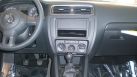
But that beats the Great Recession era (2008-2011) cheapskate cars like the Nissan Versa, Hyundai Accent, Kia Rio, and even the base model VW Jetta which came with no radio at all, and no air conditioning. I remember seeing them on dealer lots with a cubbyhole or blanking plate in the dashboard where the radio would normally go.

18n56vkb28h2cjpg.jpg
 
Some GM cars still came standard with an AM-only radio as late as 1990. I think Ford trucks came with AM-only radios until at least 1991.

But that beats the Great Recession era (2008-2011) cheapskate cars like the Nissan Versa, Hyundai Accent, Kia Rio, and even the base model VW Jetta which came with no radio at all, and no air conditioning. I remember seeing them on dealer lots with a cubbyhole or blanking plate in the dashboard where the radio would normally go.

18n56vkb28h2cjpg.jpg
Perhaps, the thinking was that someone would install an after-market stereo, if they wanted one. Hasn't AC always(for the last 50 years or so)been an option?
 
Perhaps, the thinking was that someone would install an after-market stereo, if they wanted one. Hasn't AC always(for the last 50 years or so)been an option?

I believe even into the early 2000's that AC and car stereos were dealer installed options in several import brands. I always changed the stereo in my cars until the early 2000's because of usually having radio only and no cassette or later CD.
 
If I was running a commercial station, I would consider different options and ask different questions. My time would be spent keeping my listener's engaged. Rather than keeping my students engaged.

The difference you would notice if you were owner or GM of a commercial station, instead of a local publicly-funded LPFM-school station:

* Keeping costs down while still fulfilling your debt obligations. That includes keeping the lights on.
* How to keep revenue coming in the door in spite of your revenue opportunities being cut by 70%.
* How to keep the few air-staff left paid, in spite of reduced revenue to support those shows.

The absolutely LAST thing you would be thinking about is adding more staff, let alone for overnights.
 
Some GM cars still came standard with an AM-only radio as late as 1990. I think Ford trucks came with AM-only radios until at least 1991.

True, once upon a time I worked for a cable company. A few months after I started there, the job got some new 1988 Ford cargo vans, and I was one of the lucky ones to get one. It had a stock digitally tuned AM only radio. I went to Radio Shack and bought an FM converter for it. I even got a few other techs who got new vans to do the same.
 
HD RADIO...:)
The forum's software has improved!
Whenever I tried to post something in RED, it would always post in ORANGE​.

I doubt that A/C would be standard on most new cars sold in Jimmy Horton's "Last Frontier" state even today.
 
Last edited:
The difference you would notice if you were owner or GM of a commercial station, instead of a local publicly-funded LPFM-school station:

* Keeping costs down while still fulfilling your debt obligations. That includes keeping the lights on.
* How to keep revenue coming in the door in spite of your revenue opportunities being cut by 70%.
* How to keep the few air-staff left paid, in spite of reduced revenue to support those shows.

The absolutely LAST thing you would be thinking about is adding more staff, let alone for overnights.
Kelly, you're probably right, but consider this:

These off-hour times can be a great investment, not only in keeping a local focus, but by providing a much needed talent farm for new blood in the industry.

I originally built our LPFM station as a exercise for my music students and it morphed into something I didn't expect. There's a waiting-list to get into broadcasting classes here. These kids LOVE radio!

This is why I'm such a proponent of HD Radio and off-hour Broadcasting opportunities on commercial stations. It can be a place for young aspiring talent to build their on-air skills and show what they can do after high school and college radio. Commercial radio stations get the advantage of experienced young folks willing to cut their teeth on a live show for minimum pay. Listeners get a feeling that their favorite station is really there any time... Win, win, win, etc. :)

I know, I'm a hopeless optimist. But, they told Beethoven he'd never be a great composer, and do you think he listened to them!? Oh... Wait...
 
These off-hour times can be a great investment, not only in keeping a local focus, but by providing a much needed talent farm for new blood in the industry.

I originally built our LPFM station as a exercise for my music students and it morphed into something I didn't expect. There's a waiting-list to get into broadcasting classes here. These kids LOVE radio!

This is why I'm such a proponent of HD Radio and off-hour Broadcasting opportunities on commercial stations. It can be a place for young aspiring talent to build their on-air skills and show what they can do after high school and college radio. Commercial radio stations get the advantage of experienced young folks willing to cut their teeth on a live show for minimum pay. Listeners get a feeling that their favorite station is really there any time... Win, win, win, etc. :)

I know, I'm a hopeless optimist. But, they told Beethoven he'd never be a great composer, and do you think he listened to them!? Oh... Wait...

The world needs more eternal optimists like you Ralph. And don't get me wrong, I applaud all your efforts and enthusiasm. The reality, harsh or not, is we're witnessing another point of evolution in the radio business. The role of a radio in society is changing with the times. Radio is no longer the main source of aural news and entertainment, but another source among many. Conventional terrestrial transmission sites are becoming just another wireless delivery method.

Anymore, stars of radio now also have to be stars, or have a big presence, of associated on-line and social media too.
 
The world needs more eternal optimists like you Ralph. And don't get me wrong, I applaud all your efforts and enthusiasm. The reality, harsh or not, is we're witnessing another point of evolution in the radio business. The role of a radio in society is changing with the times. Radio is no longer the main source of aural news and entertainment, but another source among many. Conventional terrestrial transmission sites are becoming just another wireless delivery method.

Anymore, stars of radio now also have to be stars, or have a big presence, of associated on-line and social media too.

That's the beauty of all of this -- it's not mutually exclusive. Nothing is replacing anything. It's advancing everything! We're not just in the radio business, we're in the content business. We have the advantage of using the internet and terrestrial broadcast technology to enhance the overall media landscape.

As for young people:
Computers have been around their whole lives.

Radio has been around their whole life.

From their perspective, the two technologies are the same age. These kids can do podcasting and develop their social media skills and still do live radio.

We've got to stop proclaiming radio to be dead. We might be spending too much time digging our graves when we could spend that time building cool rocket ships to the stars. We have all of the online resources, just like everyone else. We also have terrestrial radio -- no apologies -- no excuses.

Radio is only dead if we stop dreaming.
 
From "GM-TRUCKS.com" , among the many websites carrying this story....

www.gm-trucks.com/the-ongoing-chip-shortage-just-added-hd-radio-to-its-list-of-victims

HEADLINE: The Ongoing Chip Shortage Just Added HD Radio To Its List of Victims
By Chris Teague -June 23, 2021


"Earlier this month, we reported that General Motors would be producing certain full-size pickup trucks and SUVs without stop-start technology. The fuel saving feature relies on electronic components that are currently hard to come by in the midst of the ongoing microchip shortage. Now, we’ve seen an email, sent to dealers, which outlines changes coming to select 2021 model year pickup trucks and all 2022 HD pickups. The trucks will be built without the components needed for HD radio, and according to the email, this is expected to be a permanent change."

"The change affects certain 2021 model year Chevrolet Silverado 1500 and GMC Sierra 1500 pickups, as well as all 2022 model year Chevrolet Silverado 2500/3500 HD and GMC Sierra 2500/3500 HD pickups. The shift will take place starting with vehicles produced on or after July 12, 2021."

The affected 2021 models include:

* Chevrolet Silverado 1500
** LS
** RST
** LT
** Trail Boss
** LTZ
** High Country

* GMC Sierra 1500
** SLE
** SLT
** Elevation
** AT4
** Denali

"Trucks affected by this change will be built with a Monroney label (window sticker) that shows RPO code RG0 – Not Equipped with HD Radio. A $50 MSRP credit is being applied for these vehicles as well, and the change will be reflected in all consumer- and dealer-facing marketing materials."

"It’s up to dealers to let customers know about these changes and to educate them on what is, and isn’t, included with a new vehicle purchase. General Motors says that the change to the availability of HD radio is currently expected to be a permanent one. GM expects dealers to counsel all customers to avoid issues at the time of vehicle delivery."

"Only time will tell whether or not General Motors is able to reverse course and begin offering HD radio in its trucks again, but it’s clear that the company is taking the steps it feels are necessary to continue putting its most popular models on dealers’ lots."
 
Speaking of GM; Radio INK Confirms: GM announced it will be eliminating HD Radio in certain 2022 trucks due to the chip and component shortages:
 
Status
This thread has been closed due to inactivity. You can create a new thread to discuss this topic.


Back
Top Bottom