• Get involved.
    We want your input!
    Apply for Membership and join the conversations about everything related to broadcasting.

    After we receive your registration, a moderator will review it. After your registration is approved, you will be permitted to post.
    If you use a disposable or false email address, your registration will be rejected.

    After your membership is approved, please take a minute to tell us a little bit about yourself.
    https://www.radiodiscussions.com/forums/introduce-yourself.1088/

    Thanks in advance and have fun!
    RadioDiscussions Administrators

Fewer cars with AM radios...

I am starting to see more and more of those here in The Desert. Solar panels over the shade canopies that are very common where the summer heat can reach 124° and we have only a few cloudy days a year.
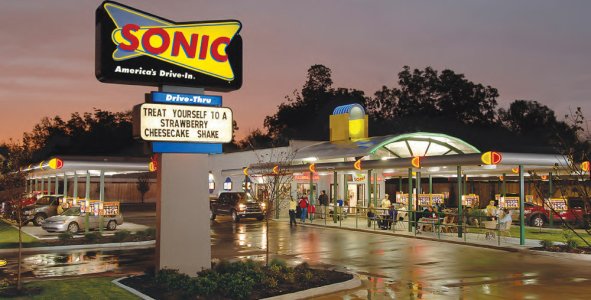
I'm still waiting for someone to announce they're going with my idea of putting solar panels on top of the canopies at Sonic Drive-Ins and charging stations inside the menu boards.

Sonic_Franchise_Brochure_Img31_1000px.jpg
 
Personal experience in Phoenix, Arizona is not universal, Tuna. In many American cities, the costs of insurance and parking become an issue big enough that younger people (and again, Millennials are 26-41 now) will live as close as they possibly can to work, shopping and public transit because it's actually cheaper. Not the majority, but they do exist.
And in places like Phoenix, Tucson, Las Vegas, Palm Springs the summer temperatures are so high that few want to wait at bus stops or transit stations. This means that the people using mass transit tend to be the very lowest income residents who have no choice.

It reminds me of when I was not yet able to drive. To go to the main library in Cleveland, I had to take three different bus lines. It was at least 90 minutes each way on a Saturday when I did my research homework. As soon as I got a car, it was a 20 minute drive. I only had used the bus because I had no choice.
 
I'm still waiting for someone to announce they're going with my idea of putting solar panels on top of the canopies at Sonic Drive-Ins and charging stations inside the menu boards.

View attachment 3290
In the meantime, please email me one of those cheesecake shakes!
 
In the meantime, please email me one of those cheesecake shakes!
I mean, think about it, David. The cars are parked. It's not a drive-thru (they have those, too). People sit in their parked cars for 20, 30 minutes---sometimes more---having a meal. Depending on the car and the charger power, that could be a significant recharge.
 
And in places like Phoenix, Tucson, Las Vegas, Palm Springs the summer temperatures are so high that few want to wait at bus stops or transit stations. This means that the people using mass transit tend to be the very lowest income residents who have no choice.

It reminds me of when I was not yet able to drive. To go to the main library in Cleveland, I had to take three different bus lines. It was at least 90 minutes each way on a Saturday when I did my research homework. As soon as I got a car, it was a 20 minute drive. I only had used the bus because I had no choice.
In the last few months I was in Phoenix, there were a few occasions where, to facilitate press vehicle swaps, it made sense for me to leave the review vehicle at home and take public transit from my home in Moon Valley down to the iHeart studios near 44th and Van Buren. Arriving at work by 9:00 am required getting on a bus no later than 6:50 to be sure I made the right light rail train downtown for the last part of the trip.

In the summer, even a little before 7, waiting at the bus stop could get a little toasty---and reversing the procedure at 5:00 p.m.---walking to the 44th & Washington light rail stop and waiting for the train---plus any layover waiting for the bus to go back up to Moon Valley---that was not a lot of fun in triple-digits.
 
EBs:


I recently noticed Electric Bicycles for sale (IIRC, $1500 - $2500) at a Phone Repair shop in Oak Park Mall
in KS.

About 10 years ago, one guy where I was working had a (seemingly) regular bicycle with an attachment to make it into an electric bicycle (he said his drivers license had been taken away, so long at the EB didn't go faster than 19mph [might be a MO only law], he didn't need any kind of license), he would charge the EB while he was working.

(note: it looks like EBs don't have AM or FM radios, so it's BYOR)


Kirk Bayne
 
Where did that statement come from? The only Millennials not owning a car are those in cities such as Noo Yawk or perhaps S.F. (where you can get around without one).
There were polls in the news in the mid 2010s about Millennials attitudes towards the automobile. More than one news article about it. This was when the leading edge of Millennials were hitting their early 30s.
 
EBs:


I recently noticed Electric Bicycles for sale (IIRC, $1500 - $2500) at a Phone Repair shop in Oak Park Mall
in KS.

About 10 years ago, one guy where I was working had a (seemingly) regular bicycle with an attachment to make it into an electric bicycle (he said his drivers license had been taken away, so long at the EB didn't go faster than 19mph [might be a MO only law], he didn't need any kind of license), he would charge the EB while he was working.

(note: it looks like EBs don't have AM or FM radios, so it's BYOR)


Kirk Bayne
I ride my bike for recreation and exercise, and there's a guy who'd often pass me, and his bike looked like a typical, multi-geared commuter bike, but it always had this odd, almost electric-sounding whirring noise that I never could place. Also, he seemed to be riding very fast with such amazing ease. As his riding times matched commute hours, I am pretty sure he was commuting.

It wasn't until I heard about these electric bicycles that I figured out that he was riding an electric bike, and the 'whirring' noise I heard was probably the electric power assist. And because I used to see him a lot during the 2010s, his bike was probably one of the earlier models.
 
I programmed a classic rock station in a market of about 20 million some years back. Research revealed about 600 playable songs. We went to over an 18 share in the first book, nearly double that of the #2 station.

With that share, we pretty much invited a competitor. And we got one... playing over 1800 songs and a slogan of "more of your favorite rock".

They got up to a 1.8 share, good for about 20th in the market. We increased to over 20 share in some books.

People like to hear their favorite songs over and over. The fist lesson for new PDs is that "variety" does not mean "more songs". It means "no songs I don't like".
Talking with people of all ages I find just quite the opposite. They don't like hearing the same song everyday especially at the same time! The Houston's Eagle plays the same cuts every afternoon and people are tired of that... I've noticed even Sirius XM is starting to do that..
 
Yes, but those insurance and parking costs aren't just limited to transit-friendly cities like San Francisco, New York and Portland. A lot (again, not a majority) of young adults could afford the car, but not the insurance and the parking on top of that. So, even in cities not famous for their transit, they seek out places to live where there's a bus, subway or light rail line nearby---or that puts them in walking or biking distance from work.
I know what you mean, In Sacramento (City Proper) the downtown area and Sac State are more transit and friendly than other districts. Davis which is where UC Davis is located was mentioned to be a bike friendly place in the Sacramento Valley. Yes its more car centric for now but its in the process for certain places to be more transit and bike friendly.
 
Isn't some countries use DRM as their Radio transmission method.
India is making DRM the future standard of the Medium Wave band with simultaneous transmissions in analog AM and DRM. At the same time commercial FM is expanding to even the smaller markets.

DRM is exclusive used by the government All India Radio as there are no commercial MW stations either AM or DRM. Neighbor Pakistan is doing limited implementation of DRM.

No nation has fully transitioned to DRM to replace AM or FM systems. More have partially transitioned to DAB such as England and the Scandinavian nations.

Here is a listing by DRM of their "open doorways":


Note that it's government radio that is doing the testing and expansion. There is no nation in the Western Hemisphere that has moved beyond perfunctory testing. Brazil, mentioned in the report has abandoned any effort there.

Many of the nations mentioned by the DRM folks are using it only for the near-dead short wave bands.
 
It's called financing. And with tax incentives, the cost of purchasing an EV is equivalent to a mid-range gas-fueled vehicle.

Gen-Z's appear to be much more interested in driving/owning cars, that includes women and motorcycles

The cost of personal solar energy has come way down. Next spring, I plan on adding 26 solar panels to my garage roof. Among other things, like selling energy back to the local utility during the day, it will also be charging my eventual lease of an EV. Where I work, the city is requiring businesses to install solar farms on their roofs to help contribute energy back to the grid. We're also in the process of installing four solar charge parking spots for employees with EV.s
It's a slow process to switch from something that's been around for 100 years. Even harder than the way radio has/is evolving.


My nieces husband is an engineering supervisor with Dominion Energy, one of the largest utilities on the East Coast. He's been passing along their progress in decommissioning coal and natural gas-fired utility generation, to solar and wind. The largest hurdle has been the battery storage component, as it's expensive. Converting some farmer's cow pasture to put a solar farm in is the easy part. They're even talking about a floating barge solar farm.

As I said, it's a process. It took a while to build the infrastructure like roads and highways to support the vehicles we've known. Moving to alternative energy to support transportation probably won't take even that long.

I still say give it 20-30 years -- only if the United States develops a better electrical energy production policy. Which it probably won't. They have sat back and let us languish at 2005 levels for over 15 years. Are they concerned now? Looking at the EIA electric production chart, government policies and programs just shuffled more electrical production from coal to renewables. A good thing, of course, for the environment, but it didn't increase total production, which isn't so good for converting the US vehicle fleet to EVs.

Also, there has been a lot of talk here about solar. Solar provided maybe 1.6% of all electrical production in the US in 2021, according to the US EIA's latest available data. Even with its growth, the percentage is miniscule in the bigger electrical energy picture.

Look at the charts:

Now, maybe some of the home solar supplies escape the EIA's radar screen. However, a recent article in a renewable energy bulletin appears to disagree. They say that although the renewable portion went up from 20% to around 23% (mostly due to wind and solar), the total electricity produced in the US remained roughly the same, at around 4.1-4.2 trillion kilowatt hours, because fossil fuel plants are being shut down. EVs aren't like electric bikes. They require a considerable amount of power. And if you're talking EV trucks and EV buses, even more.

I realize that states like California are requiring new homes to have solar. That's great. That's definitely going to help. But that's not all the homes, condos, and apartments in the US.

EVs are the future, but right now are simply too many trends running against it. To retool the country's vehicular transportation system the electrical grid needs to re-tool, and in a way that increases total electrical production, instead of keeping the total production stagnant at 2005 levels. The population is growing (it grew by roughly 15% from 2000 to 2022) and the energy needs of that increased population are growing. The grid is taxed in many regions because of it.

And while it's absolutely true that it took some years of transition to move from horses and buggies to gas powered vehicles and paved highways, energy production skyrocketed to meet that increased demand. Oil production more than doubled in just the 1920s alone -- in just ten years. And the 1920s were the transition period for much of America, when the Model T began to replace the horse and buggy everywhere, not just in the cities.

That sort of increase in energy production isn't happening now. 1.6% solar is 1.6% solar. 4.1 trillion kilowatt hours is 4.1 trillion kilowatt hours.

I agree with your overall consensus, I just disagree with the timing. My state has enacted a limit on new gas-powered car sales set for 2030, just eight years away. In my view, they're dreaming.

 
The main problem with DRM in much of the world is that the more developed nations are veering away from standalone radios, so the remaining analog systems are adequate for what they do. The UK and Norway and a few other EU countries had DAB radio sales incentive programs when they switched over to DAB, and a lot of DAB radios were sold in the late 2000s and through the early 2010s, but I don't think the sales have increased since them. Like we notice here in the US, the smartphone is replacing radios.

India does produce domestic DRM radios, and perhaps there will be a lot of them sold. Neighboring China still has an extensive analog radio network, and they produce a lot of radios for the domestic market, so in countries with hundreds of millions of poor people, like India and China, OTA radio systems can work. But in the Western world and alot of the former Third World, it simply isn't the case.

To bring this back to the topic at hand, I can see where auto manufacturers will eliminate radios period. It will all be smartphones connected to the dashboard controlled stereo system via Bluetooth. A lot of people I know use that now. They've replaced FM as well as the CD and MP3 audio system with Bluetooth and the smartphone.
 
Status
This thread has been closed due to inactivity. You can create a new thread to discuss this topic.


Back
Top Bottom