Of course manufacturers support the EV mandate. Building one version of a vehicle is much less complicated than building ICE, EV and EV-H forms.What you're overlooking is how the industry is responding to the mandate, which is positively. One in eight vehicles sold in the United States is sold in California. It's why California emissions standards (after a period of building "49-state" cars and "California emissions" cars) became what manufacturers built to.
EV-H pro's are the best of both world's for range.Also, on October 28, the European Union announced it's going forward with a mandate that mirrors California. Same basic parameters---no new internal combustion passenger vehicles sold after 2035, with a carve-out for plug-in hybrids with 50 miles or more of pure electric range.
EV-H con's are the worst in terms of complexity, initial and repair costs.
Wait until EV "mandaters" try dealing with the lack of battery performance in the northern half of the country.Last year, with sales constrained by supply-chain issues, 10-million new passenger cars were sold in the EU.
With those numbers, it's unlikely that manufacturers would continue production of very many ICE vehicles even if California were the lone state with a 2035 cutoff, and it's unlikely that will be the case. In fact, 17 other states are weighing adopting the California standard at this moment, with only two of those (Pennsylvania and Colorado) considered probable "no" votes.
The customer decides what will be manufactured, not the manufacturer.17 states weigh adopting California's electric car mandate
There really is no manufacturer resistance to speak of. Many, in fact, will beat the deadline and won't have gasoline or diesel-powered passenger vehicles in production well before 2035:
You cannot charge an EV at night when the charging depends upon the sun. You could depend if the source is from the electric utility but then you've just changed one polluting source to the other. Mox nix.Every Automaker’s EV Plans Through 2035 And Beyond
As for the power grid, it's worth noting that 80 percent of all EV charging happens at home, 30 to 40% of those home charging units are powered by solar, and publicly-owned utilities are not part of the grid that's in trouble (which is largely PG&E's). That includes the Los Angeles Department of Water & Power and the Sacramento Metropolitan Utilities District (SMUD):
No, they don't all charge at once but just wait until most do. Not enough electrons to fill everyone's battery unless significant improvements are made to the grid.....and then just wait until the overnight electric usage rates go through the roof.MAP: California Communities That Supply Their Own Power | KQED
And, the thing everyone forgets---they don't all charge at once. Most EVs now provide upwards of 250 miles on a charge, matching or exceeding the range available on a full tank of gas. Most people don't go to the gas station and fill their tank every day.
Really? Just how often does a major part of the US experience a long lasting blackout other than the idiot energy managers in TX?But---with an EV, you can plug in and keep your vehicle continually topped off every night. It's a small amount of electricity if you've just driven 40 miles, but IF there's a massive blackout, you've got the electric equivalent of a full tank. And, in a blackout, gas pumps don't work, so you're actually a bit ahead of your neighbor.
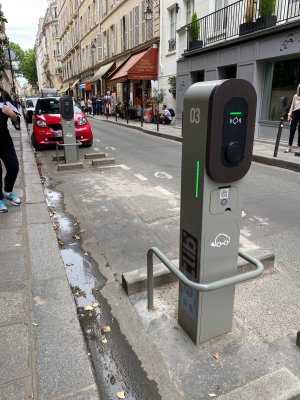
Or for non-Tesla owners.Having now driven two dozen different EVs for a week each as part of my work as an automotive journalist, and not having charging beyond a 110V extension cable in my garage, I can tell you the weak link at the moment is public charging, which is essential not only for road trips but for people living in multi-unit dwellings.
There are no EV-1's in existence unless GM has some hidden away. They were all returned to GM and crushed.And finally, we're talking about 12 years, not a week from Thursday. It's worth remembering that 12 years ago there were exactly ZERO electric vehicles on the market, and ZERO public charging stations (unless they were leftovers from the GM EV-1 experiement in the 1990s). Today, there are 34 EVs for sale in the US:
Today there are 34 EV's available. Except for pickup trucks (which can't carry or tow like an ICE truck can) and heavy duty semi's, and about 90% are too expensive for the average buyer, not enough EV repair facilities and knowledgeable repair techs. And, like Tesla, if it breaks down in Jasper Junction it has to be towed a significant distance to a Tesla repair shop.
And did I mention the trouble EV manufacturers are going to have obtaining raw materials for batteries and the problems related to disposition and/or reuse (not to mention cost and the fact that a lot of these raw materials are mined in countries not friendly with the USA?
EV charging stations compared to ICE fueling stations: ICE - how many minutes do you spend waiting at a gas station because all pumps are busy? Note: # of pumps at an average gas station is 8 vs 4/5 at an EV charger. Got a good book to read while waiting?Guide to Every EV for Sale in U.S.
...and 144,000 public charging stations:
Interactive: EV Charging Stations Across the U.S. Mapped
Not enough time. You have to have an electric source nearby to support high charging volumes such as along freeways. Think construction of gas stations is time-consuming and costly? Try running new high voltage lines, probably underground, all over towns.All of that has happened since the Tesla Model S went on sale 10 and a half years ago. We have that much time, plus a year and a half, to build out the infrastructure.
Have kids? That'll make stopping for a quick charge every couple of hours even more pleasant.
Towing? In a freezing winter day? Cut your battery capacity in half.
Yup. The next go-to business will be the skyrocketing cost of used cars. Wait.....that's already here.In the meantime, you can buy whatever you want, and after 2035, if you still don't like it, you can buy used (three times as many used cars are sold every year as new).


 , I'll be charging two different vehicles over time before any upgrades or solar panel replacement-investment will be required.