
-
Get involved.
We want your input!
Apply for Membership and join the conversations about everything related to broadcasting.
After we receive your registration, a moderator will review it. After your registration is approved, you will be permitted to post.
If you use a disposable or false email address, your registration will be rejected.
After your membership is approved, please take a minute to tell us a little bit about yourself.
https://www.radiodiscussions.com/forums/introduce-yourself.1088/
Thanks in advance and have fun!
RadioDiscussions Administrators
You are using an out of date browser. It may not display this or other websites correctly.
You should upgrade or use an alternative browser.
You should upgrade or use an alternative browser.
2024 Ford Mustang Drops AM Radio From Infotainment
- Thread starter davideduardo
- Start date
- Status
- Not open for further replies.

Well, Toyota's changing---Akio Toyoda is stepping down as CEO next month. Part of it is the understanding that they need to play catch-up in EVs. And maybe to stop the bleeding or invest enough to make a difference in infrastructure when it comes to hydrogen.Toyota has the right idea with focusing Hybrids and PHEV's, rather than fully electric such as GM is positioning themselves at this point IMHO. And pertaining to the original conversation above...they still have AM radios for the few that will use them.
As for AM radios, almost everyone still has them. We won't see the '24 Mustang until summer. But if Ford makes this move without any pain, and spreads it across the product line without issues, you can expect most if not all manufacturers to follow.
What Frank misses in his comment about how little it costs to include AM capability is scale. If a part costs $2.50 and the car you're putting it in is projected for 100,000 units a year, that's a quarter-million dollars a year that you can either spend or save.
If it's the Ford F-150, which sold 653,957 units last year, that $2.50 part works out to $1.634 million a year.
..And in the meantime, the few independent garages in my area who've hung out signs stating they're now certified to service hybrids and/or EVs are doing a solid business with those customers. I know there are plenty who continue to be naysayers about EV and hybrids and tell people all the reasons they shouldn't get them and there are Facebook and Instagram memes from plenty of EV haters, some of them wildly inaccurate, as a business, service stations would be wise to "hang on to the old", while they "grab on to the new" to paraphrase the Bellamy Bros.No one is discussing cessation of service, or of selling used internal combustion vehicles. And given that California and other jurisdictions have included a carve-out for plug-in hybrid vehicles (PHEVs), which by nature include a gasoline engine, service will be essential.
It's about time..Dude doesn't even know how to spell his name properly.Well, Toyota's changing---Akio Toyoda is stepping down as CEO next month.
(joking...I know, humor is sometimes frowned upon in these parts).
I think it's not the cost of including AM, it's the cost of supporting it. If owners complain about vehicle-induced interference, they're faced with a choice of providing warranty service to try to fix it or telling the customer to just live with it. Neither is likely to lead to a good outcome.It's curious that Ford removed the AM band from their radios. It costs virtually nothing to include AM.
It was a foolish decision.

Exactly. Auto manufacturers are very concerned about 'customer experience', trying to keep that experience with the vehicle owner/lesee as positive as possible. A good example were factory BMW radios with HD capabilities. Back in the day, some original FM-HD stations had trouble keeping analog and digital timing synced on a consistent basis. BMW radios defaulted to HD-on, which created an unpleasant listening experience when the radio switched between HD (digital) and analog when audio wasn't time synced. Frustrated about the negative comments and warranty claims that BMW ultimately had no control over, they opted to just disable HD for those who complained.I think it's not the cost of including AM, it's the cost of supporting it. If owners complain about vehicle-induced interference, they're faced with a choice of providing warranty service to try to fix it or telling the customer to just live with it. Neither is likely to lead to a good outcome.
Now look at AM. So, a new car customer accidentally selects AM and gets blasted with noise, whether the noise is induced by the vehicle systems, or just the normal (terrible) noise floor and heterodyne of the AM band? From the vehicle manufacturer and customer perspective= Unpleasant Customer Experience.
And a quick note---Initial Customer Satisfaction surveys, which help create an overall impression of "quality" are increasingly influenced by customer interactions with tech. Otherwise reliable cars lose points for things like finicky Bluetooth connections. So, yeah---what Kelly said.Exactly. Auto manufacturers are very concerned about 'customer experience', trying to keep that experience with the vehicle owner/lesee as positive as possible. A good example were factory BMW radios with HD capabilities. Back in the day, some original FM-HD stations had trouble keeping analog and digital timing synced on a consistent basis. BMW radios defaulted to HD-on, which created an unpleasant listening experience when the radio switched between HD (digital) and analog when audio wasn't time synced. Frustrated about the negative comments and warranty claims that BMW ultimately had no control over, they opted to just disable HD for those who complained.
Now look at AM. So, a new car customer accidentally selects AM and gets blasted with noise, whether the noise is induced by the vehicle systems, or just the normal (terrible) noise floor and heterodyne of the AM band? From the vehicle manufacturer and customer perspective= Unpleasant Customer Experience.
That's interesting. I've been telling friends that when I buy my next car I'll pay more attention to the touch screen than anything else. New cars all drive, ride and handle pretty well. I want one with well designed tech!And a quick note---Initial Customer Satisfaction surveys, which help create an overall impression of "quality" are increasingly influenced by customer interactions with tech. Otherwise reliable cars lose points for things like finicky Bluetooth connections. So, yeah---what Kelly said.

And there lies the Oldsmobile.All they want to do is sell cars, Mike.
As the (sorta) father of the Mustang himself, Lee Iacocca, said:
"You can sell an old man a young man's car, but you'll never sell a young man an old man's car."
Not me-I like thinking for myselfMakes sense: White, Male, Retiree's=AM Right Wing Talk Radio-Listener.
A brand that was named for Mr. Olds...And which GM shut down and discontinued nearly 20 years ago.And there lies the Oldsmobile.
My BMWs, all bought from the Palm Springs, CA, dealer, had HD disabled at the dealer because, at the time, there was only one HD signal in the market, used to justify a translator. They otherwise got too many complaints.Exactly. Auto manufacturers are very concerned about 'customer experience', trying to keep that experience with the vehicle owner/lesee as positive as possible. A good example were factory BMW radios with HD capabilities. Back in the day, some original FM-HD stations had trouble keeping analog and digital timing synced on a consistent basis. BMW radios defaulted to HD-on, which created an unpleasant listening experience when the radio switched between HD (digital) and analog when audio wasn't time synced. Frustrated about the negative comments and warranty claims that BMW ultimately had no control over, they opted to just disable HD for those who complained.
Last edited:
But not until after a failed advertising campaign using the slogan "not your father's Oldsmobile" and featuring Ringo Starr, of all people.A brand that was named for Mr. Olds...And which GM shut down and discontinued nearly 20 years ago.
But not until after a failed advertising campaign using the slogan "not your father's Oldsmobile" and featuring Ringo Starr, of all people.
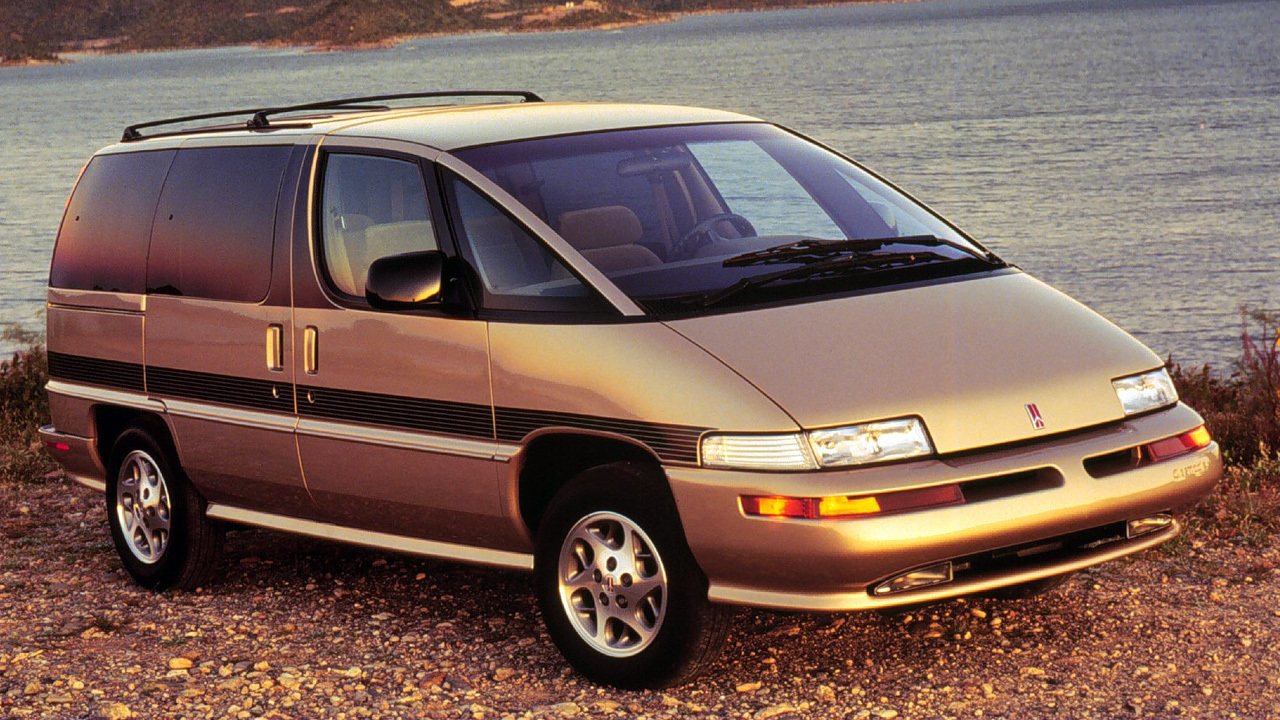
When the New Generation of Olds Killed Your Father's Oldsmobile
The "Not Your Father's Oldsmobile" marketing effort alienated people of all ages with strange nepotism.
At the end of the 1980s, Oldsmobile was determined to shake the image that it built boring cars for sleepy seniors. The end result was the indelible "This Is Not Your Father's Oldsmobile" catchphrase, birthed from one of the strangest publicity campaigns to ever emanate from Detroit.
Instead of bridging generations, the "Not Your Father's Oldsmobile" effort alienated people of all ages, and has been be blamed for hastening Oldsmobile's irrelevance and eventual death a decade down the road from the marketing campaign's kickoff.
When the New Generation of Olds Killed Your Father's Oldsmobile
The "Not Your Father's Oldsmobile" marketing effort alienated people of all ages with strange nepotism.www.motortrend.com
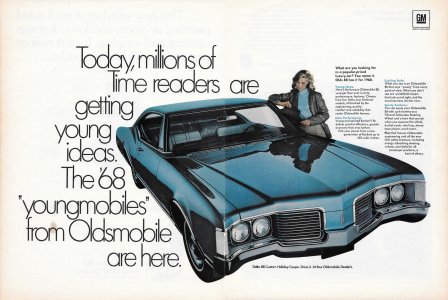
And that was at least the second try. Oldsmobile spent all of model year 1968 trying to reposition its vehicles as "The Youngmobiles from Oldsmobile".
Ransom E. Olds, to be precise ("My parents named me after something you pay a kidnapper.").A brand that was named for Mr. Olds...And which GM shut down and discontinued nearly 20 years ago.
And, you're right---the brand's been dead since 2004. Somehow it seems like it's been gone longer than that.
Not to be too hard on Benjamin Hunting, who's a fine automotive journalist, but the conclusion he draws about the effect of the "Not Your Father's Oldsmobile" campaign is a bit simplistic and not entirely supported by the facts:When the New Generation of Olds Killed Your Father's Oldsmobile
The "Not Your Father's Oldsmobile" marketing effort alienated people of all ages with strange nepotism.
The response was almost immediate. Oldsmobile sales dropped from just over a million units shifted in 1986, to less than half that number by 1991. The pivot point between those two figures clearly correlated with the "Not Your Father's Oldsmobile" embarrassment.
No, Benjamin. "Not Your Father's Oldsmobile" was the panic response to a decline in sales, that Benjamin notes in his piece, began with a decline in 1987. Up until that point, the Cutlass Supreme was among the best-selling cars in the country. 1986-87 is when the Honda Accord started beating it up for its lunch money:
1986 10Best Cars (from Car and Driver)

My view- This is less about customer satisfaction and more about the goal of creating a subscription income stream from the vehicle manufacturer's entertainment dashboard portal. Entertainment as a service. For example, Ford customers pay $49.95 a month for the portal, and content providers pay Ford to be on it. That is much better for Ford than putting hardware in cars for others to deliver content (with advertising). Removing AM is an easy step in this process. FM is next.
I think the most significant aspect of customer surveys might be that more people, and desirable demographics may fine with renting instead of owning in many more areas of life. Transportation as a service (not owning a car) appeared to be floated as a trial balloon recently.
You've noticed many software companies are now steering customers into renting the software, instead of buying it outright. I think they must have determined this is a more profitable business plan for them.
Plenty of good old red-blooded Americans believe that if a creek runs through their property, they can dam it up and use all the water for their irrigation, without regard for the others downstream. When does private profit and self-interest conflict with the greater good of everyone? It's up to voters and their elected representation to decide to what extent government regulates commerce, considering the public interest.
Thus, to what extent the FCC will be permitted to regulate the Internet is a major issue, for good reason, considering how much profit there is in it. I think the idea of the public owning radios, and direct transmission of content from independent broadcasters, at no additional cost to the audience (except for listening to commercials) is a thorn in the business plan of many with big ideas. Over the air broadcasting is the printing press, the town crier.
Is it likely consumers will be able to select (tune) between a dozen independent Internet service providers and dashboard content gatekeepers on their devices? That is exactly what consumers can do on a radio.
I think over the air AM and FM broadcasting is an example of the essence of democracy and freedom. I am proud to have made broadcasting my career.
I think the most significant aspect of customer surveys might be that more people, and desirable demographics may fine with renting instead of owning in many more areas of life. Transportation as a service (not owning a car) appeared to be floated as a trial balloon recently.
You've noticed many software companies are now steering customers into renting the software, instead of buying it outright. I think they must have determined this is a more profitable business plan for them.
Plenty of good old red-blooded Americans believe that if a creek runs through their property, they can dam it up and use all the water for their irrigation, without regard for the others downstream. When does private profit and self-interest conflict with the greater good of everyone? It's up to voters and their elected representation to decide to what extent government regulates commerce, considering the public interest.
Thus, to what extent the FCC will be permitted to regulate the Internet is a major issue, for good reason, considering how much profit there is in it. I think the idea of the public owning radios, and direct transmission of content from independent broadcasters, at no additional cost to the audience (except for listening to commercials) is a thorn in the business plan of many with big ideas. Over the air broadcasting is the printing press, the town crier.
Is it likely consumers will be able to select (tune) between a dozen independent Internet service providers and dashboard content gatekeepers on their devices? That is exactly what consumers can do on a radio.
I think over the air AM and FM broadcasting is an example of the essence of democracy and freedom. I am proud to have made broadcasting my career.
Last edited:
There is nothing to indicate that Ford is heading down that path.My view- This is less about customer satisfaction and more about the goal of creating a subscription income stream from the vehicle manufacturer's entertainment dashboard portal. Entertainment as a service. For example, Ford customers pay $49.95 a month for the portal, and content providers pay Ford to be on it. That is much better for Ford than putting hardware in cars for others to deliver content (with advertising).
AM may be on the way out the door---and again, Ford has told us it'll be done with new generations of existing models and any new models, so we're talking probably a ten-year phase-out---but FM's not on anyone's chopping block, yet.
And, like most automakers, they have signed contracts with Android Automotive and Apple's next-generation of CarPlay, both of which broaden choice rather than restricting it to an in-house Ford solution. And Ford pays them, not the other way around.
Some of us 20-somethings will listen to it for you instead. Some syndicated AM conservative talk radio isn’t bad, while some of it is just obnoxious.Not me-I like thinking for myself
And yet General Motors slapped his initials on buses and trucks for years.Ransom E. Olds, to be precise ("My parents named me after something you pay a kidnapper.").
- Status
- Not open for further replies.