

Over 35% of American households earn $100,000 and over...Look, I live in a working class area, and -- like you -- I understand basic economics. New EVs average over $65K, far beyond the reach of the average American salary ($36K a year), especially when inflation for most necessities (like food) has been hovering around 30% over the past two-year period, since 2021. New car sales in general have dropped over the past year and a half. Some of that is due to supply chain issues and availability. But a lot of it is due to inflation. You seem to think that the average American is more loaded than they really are.
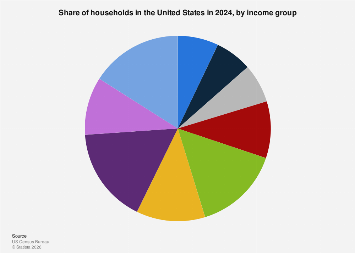
Distribution of household income U.S. 2021 | Statista
In 2021, a little more than 52 percent of Americans had an annual household income that was less than 75,000 U.S.
 www.statista.com
While making under about $150,000 in some expensive metro areas may exclude some from the ability to purchase a new EV , in most places the newest generation of those vehicles is affordable, particularly when tax incentives and other benefits are considered.
Today, cares under $25 to $30 thousand are fewer and fewer. The $12 to $15 thousand car of 2000 is the $30 to $35 thousand car of today. I think Mr. Hagertey can give some data on the percentage of cars in each price range sold today in the U.S.Other apartment complexes have parking garages, with no outlets there, either. The landlords probably aren't going to dish out hundreds of thousands to have every tenant space provided with outlets, and the tenants themselves probably don't have the spare income to buy any of the $30K~ models you mentioned upthread, especially if there is no outlet handy where they live.
Unless you are in the under 4% of the population worth over $4 million, those costs are a significant aspect of your budget.So right now, the people who are most apt to purchase an EV live in a high value condo complex (with individual garages), or they are individual homeowners who own houses. And they are people to whom inflation is a minor deal.
No, not always. People worth under $2 million generally have most of their assets in the non-encumbered value of their home. And most home owners have mortgages, with the first 10% being mostly interest payments.If you own a house in most major metros of the US -- where most Americans live -- you probably have assets that put you into the top 10% of Americans, easily, and your income level isn't far behind.
The major issue separating renters from homeowners is the down payment amount and/or poor credit. It is not about being "rich" but about just not having enough money in non-retirement savings.
No, the top 2.5% is well to do and some of that group is "rich". That 2.5% is the group with non-encumbered assets of over $5 million. And for you reference, a retired person (with no other income) with $5 million makes less than $140,000 a year before taxes. That is hardly "rich"Top 10% is rich.
That is because over a third of all American households has an income below $50,000 a year. They won't be buying any kind of new car, so including them in this analysis is not appropriate.And even many of those homeowners today probably don't have the spare income to drop down $60K (even in payments, insurance, etc.) for a new car. Most Americans don't have $1000 spare to handle emergency car repairs.
You are way off. Over 50% of households have gross incomes of over $100,000 and that puts them in the group that can (if they have not abused credit) afford a new car.But those homeowners who probably have the incomes to buy new vehicles are in the top 10% to top 5%, especially if the value of their assets is concerned. That means they're rich. They're definitely rich compared to the working class, who are scraping to get by, and who number probably in the hundreds of millions.
35% of households is in the defined "working class" or middle income group, making $35,000 to $100,000. And a person living in a lower cost metro, like Albuquerque or Des Moines or Tulsa is going to be able to, prudently, buy a new car.
But other economic reasons are already making even FM usage to be in decline. In 2000, the average person used around 20 hours of broadcast radio weekly, while today it is around 6 hours or lower, depending on the market. Not all of that decline has to do with new media, but the fact is that radio has far less revenue and will eventually be twilighted without any influence from electric cars.To bring this back to topic: By the time the infrastructure is worked out, to where the tens of millions of apartment and condo tenants and owners have easy access to AC outlets at every parking stall, and by the time that inflation drops and people have more income available -- by that time, AM radio will be further on its way out the door. It may take 15 to 20 years to get the infrastructure and economics of EV ownership available to the average American, and in 15 or 20 years AM will be a no-show, or close to it. The remaining AM stations will have to depend on streaming. Maybe enough of them will be translator only.
Actually, in-car listening which is a bit under half of all listening, is where most AM listening takes place. So in-car AM services reach over 20% of all in-car listeners. That is not a low figure when we consider that most markets have only 1 or 2 AM stations that cover the whole market day and night, and some have none!But people won't be tuning AM in their cars. Most aren't now.


