• Get involved.
    We want your input!
    Apply for Membership and join the conversations about everything related to broadcasting.

    After we receive your registration, a moderator will review it. After your registration is approved, you will be permitted to post.
    If you use a disposable or false email address, your registration will be rejected.

    After your membership is approved, please take a minute to tell us a little bit about yourself.
    https://www.radiodiscussions.com/forums/introduce-yourself.1088/

    Thanks in advance and have fun!
    RadioDiscussions Administrators

NPR temporarily stopped it's twitter accounts in a "state-media" beef with Elon Musk

That's the problem. Broadcasters got complacent, and decided not to innovate.
Really! Okay since you know so much more than everyone else, what sort of innovation by traditional broadcast radio would have prevented additional competition from streaming and smartphone apps? More chatty DJ's? Time checks? Newscasts?
That left other advertising platforms to undercut them, like facebook, google, twitter, etc.
Wait, you think that advertisers left traditional media for digital platforms because radio let them? No, digital has certain advantages that broadcast can't do, like the ability to get immediate granular feedback from those visiting or seeing their ads like; demographic info, reach, and other buying habits. Oh, and it's much cheaper too. Or are you claiming lack of innovation by broadcasters is at fault here too?
I thought you would appreciate that one a bit more--apparently it didn't land as intended. I was thinking of something in real time as opposed to the 1968 film. Had Hal really existed in 2001, XP and Vista would have been the OS that created the O.G. that wouldn't open those pod bay doors for Dave. Recently there's been talk of ChatGPT being deployed to voice track radio. OK fine, perhaps their audience demos will be other artificial intelligence devices too. Hal would be 20 year old tech then if Kubrick's movie was accurate. Gotta wonder if AI will be a money demo down the road. What kind of music and talk shows appeal to psychotic AI's anyway?
I don't understand what point you're trying to make. Or is this just another uninformed, hyperbolic assumption that AI will be taking over an old form of media like radio? I recently got back from an AI conference with many heavy hitters in the AI sector. Trust me, radio is on the agenda for AI no more than putting jet engines in Ford Pinto's.
Broadcasters spent so much time not innovating in the 1990s and early 2000s behaving like a monopoly, thinking the existing car dashboard would stay the same.
Broadcasters have nothing to do with vehicle dashboards. Auto manufacturers make entertainment systems for their customers. If customers want radio, streaming, podcasts, or access to apps on their phones, that's what manufacturers give them. If much less relevant forms of media, like AM, are no longer in demand, you give the customer more of what is in demand. They call that 'supply and demand'.
The NAB looked the other way when the DMCA got passed, hoping to hobble streaming by adding extra fees to non broadcast streams, then crying foul when the RIAA started asking for their idea of (covid cough) 'fairness' regardless of analog or digital being the delivery method. I like streaming myself--it gives me more options than my local market provides. But then again, I'm an outlier who likes music beyond "Hotel California" and "Dreams" bring played like a recurrent.
Maybe you should do a little more research on what DMCA is: What is DMCA?
Let us remember how broadcasters tried to plead, beg, and then force FM chips in phones, and manufacturers of said smartphones said, 'no thank you.' Again, phones are Apple and Google's platform, and what gets put on them is their call.
Both Apple and Google are concerned about consumer experiences. Sticking some old form of tech without a usable antenna other than headphones, creates an inconsistent user experience. And without an antenna by using Bluetooth(tm) wireless earbuds, there is no antenna.
Radio basically phoned-it-in when it came to digital, hoping all of it would just go away, and some grumbled their way into HD. Besides being a place to rebroadcast a translator, and get around market caps, that idea has been a bust.
I agree to an extent. Station groups like Clear Channel completely blew the opportunity to market HD, by creating cryptic spots run exclusively on their own stations. But there again, sales of aftermarket vehicle radios were trending downwards about that time anyway, and consumers who already owned portable or clock radios were happy with what they had.
Based on what we know now; I believe few if any non-technical upper management at most radio groups had any clue about what HD Radio was. All they knew it was 'something digital'. Ultimately, AM-HD had the most to benefit, but old timers who felt there was nothing wrong with AM went out of their way to shoot it down. That, and zero marketing for AM-HD.
To me, radio was an original social network, and offered a great mechanism for advertisers to connect with listeners.
Huh? Social media is bidirectional. Broadcasting is broad-one way.
It still could be. It isn't when 'Fred's Bank' is in minute 8 of a 12 minute cluster. Those are the brilliant minds to which I was referring. Now Spotify and Pandora get to offer that, in a more targeted way, with fewer interruptions for those who want an ad-based service.
Uh, that's what ad-supported versions of streams do.
Broadcasters that stream online could offer an idea better.
Good Lord. Ever heard of iHeart? They're one of the leading streaming providers. Oh, and they own radio stations too!
Since they have to advertise, perhaps ask (yes, ask) their listeners what kind of advertisers they want (and are in the market for) during their commercial breaks, and are in the market to use. Think of it the way Spotify picks music, except with ads during said commercial cluster.
Good Lord-squared.
Hell, what am I thinking. It's radio. They don't innovate.
Could it be you're the one out of step with the past twenty years?
 
Based on what we know now; I believe few if any non-technical upper management at most radio groups had any clue about what HD Radio was. All they knew it was 'something digital'. Ultimately, AM-HD had the most to benefit, but old timers who felt there was nothing wrong with AM went out of their way to shoot it down. That, and zero marketing for AM-HD.
That's not my impression. Strube, the head of ibiquity, did presentations at the management meetings of the major groups and for many smaller ones even before HD started rolling out.

I recall him presenting to the HBC managers and corporate management at a meeting about a year before the broad introduction of HD. He explained the system, the sub-channels and the data that could be added via HD. Even a couple of our totally non-technical sales-focused managers got it and understood that there might be new revenue opportunities.

But, as you mention, people were already slowing down the purchase of new radios and were spending money on the early iPod and the like. HD was too little too late and had to compete with a whole new set of technology introductions that led up to the smartphone and all the current music streaming options.
 
That's not my impression. Strube, the head of ibiquity, did presentations at the management meetings of the major groups and for many smaller ones even before HD started rolling out.
Back in the early days of HD Radio, I had the opportunity to attend some corporate meetings between the company I worked for at the time, and Clear Channel who we were in the process of a merger. Pretty much all the meetings involving Strube, had technical and programming folks, not upper management. Upper corporate management only knew how much of a capex was expected, and that the technical folks said HD Radio involved something about a digital transition. Understandably, there was little understanding of how it worked, or any discussion of short term ROI. One needs to remember, this was happening in the early dot.com days, when various industries were throwing money at tech hoping something sticks.
I recall him presenting to the HBC managers and corporate management at a meeting about a year before the broad introduction of HD. He explained the system, the sub-channels and the data that could be added via HD. Even a couple of our totally non-technical sales-focused managers got it and understood that there might be new revenue opportunities.
You know as well as I, most non-technical folks attention spans rival a goldfish. "HD what? "Oh, yeah I remember something about that." "Going to take us digital-something someday."

But, as you mention, people were already slowing down the purchase of new radios and were spending money on the early iPod and the like. HD was too little too late and had to compete with a whole new set of technology introductions that led up to the smartphone and all the current music streaming options.
 
Canada is heavily influenced by American culture. The Conservatives have taken a lot of cues from MAGA as seen from the trucker convoy last year. Unfortunately it looks like some political extremists have made it into office there too.

As for the CBC, it is taxpayer funded but editorially independent. Hardly comparable to state-run propaganda media in authoritarian countries.
CBC is technically a Crown Corporation. Why this happened as if it's connected to the Trudeau Administration is crazy here given the rantings of this member of Parliament.
How did Elon Musk decide to go after Public Media outlets specifically is yet to be verified here. It's been News Wire Services like AP and Reuters that covered Musk extensively though.

 
Radio basically phoned-it-in when it came to digital, hoping all of it would just go away, and some grumbled their way into HD. Besides being a place to rebroadcast a translator, and get around market caps, that idea has been a bust.
I remember going to the pub down the street from the station with a few co-workers, including the-then brand new "digital sales manager." Maybe around 2007 or so(?). Anyway, we had websites that were on a shoestring budget, a pretty wonky streaming platform, and that one guy trying to sell "digital." I made the case that we really needed to get ahead of this thing, and not just hand the handling of the station's digital presence to whomever got stuck with the added work. Maybe we even needed a "digital program director" to take care of that online presence, because it would be important. The reaction to my enthusiasm? Mixed.

It was another decade before the stations actually gave someone the title of "Digital Program Director." In keeping with tradition, he was the MD/APD/Midday talent at the country station who also tracked weekends on the classic hits station and drove for Uber on the weekends because he needed the money. This was in a large market.

Now, I wish I could say I was ahead of the curve, but what I was really doing was following in the footsteps of Kidd Kraddick, who - at a morning show boot camp in 1995 (?) - made the case that if we didn't do something about this "online radio" thing, it was going to eat our lunch eventually.

As someone said earlier "This didn't all just happen at once. It was a long process."

And during that long process, the large radio companies, the medium radio companies, and even the small ones (since "radio is not one thing") all consistently failed to get out of the way of the slow moving train barrelling towards them over the years.
 
You know as well as I, most non-technical folks attention spans rival a goldfish. "HD what? "Oh, yeah I remember something about that." "Going to take us digital-something someday."
Those are the ones who used to bring cassette decks and VCRs to the engineer for repair.

At one station, this ended when the CE put up a sign that said, "Home electronics for repair by engineering department go here"

The sign was placed over the trash chute.
 
Their Twitter tag now says "69% government-funded media". No percentage is listed for NPR, PBS, or Australia's ABC.

It doesn't matter. Regardless of the amount of funding, twitter claims there is 'government involvement over editorial content,' which is false.

"government-funded media is defined as outlets where the government provides some or all of the outlet's funding and may have varying degrees of government involvement over editorial content."
 
It doesn't matter. Regardless of the amount of funding, twitter claims there is 'government involvement over editorial content,' which is false.
True and these entities like CBC, NPR and PBS are Public Media entities but then again that's not how Twitter Operates.

Unless Elon Musk has evidence that CBC, NPR, PBS, DW, ABC Australia operates like RT in Russia then this is an argument about what Elon Musk does not want his fans to know about like lawsuits involving his companies.


Last edited:
Swedish Radio becomes first major European public broadcaster to announce it is quitting Twitter.

 
How did Elon Musk decide to go after Public Media outlets specifically is yet to be verified here.

Being anti-media is part of the GOP identity now. It dramatically took off when Trump started crying 'fake news' during his 2016 campaign and The Right realized how effective that was. The goal is to erode public trust in credible news outlets as a way to boost their own disinformation. Musk has fully embraced this concept and is taking more steps each day to transform twitter into a platform to distribute it.

Now that Musk has found a way to get public media organizations to leave twitter voluntarily, expect to see him ramp up the outrage even further in an effort to push other credible news organizations off the platform -- NY Times, Washington Post, etc. He'll try to purge all the fact checkers on the road to turning twitter into a full-blown rightwing social media mouthpiece.
 
Being anti-media is part of the GOP identity now. It dramatically took off when Trump started crying 'fake news' during his 2016 campaign and The Right realized how effective that was. The goal is to erode public trust in credible news outlets as a way to boost their own disinformation. Musk has fully embraced this concept and is taking more steps each day to transform twitter into a platform to distribute it.

Now that Musk has found a way to get public media organizations to leave twitter voluntarily, expect to see him ramp up the outrage even further in an effort to push other credible news organizations off the platform -- NY Times, Washington Post, etc. He'll try to purge all the fact checkers on the road to turning twitter into a full-blown rightwing social media mouthpiece.


All we have to do is look back at when Trump did that initially going after NBC News/MSNBC's license but that was debunked with FCC saying that they only investigate specific O&O's like KNBC-TV and WNBC-TV's license over very specific allegations.


The Big one we need to wait specifically is Elon Musk+ related companies, Twitter, Tesla, SpaceX files a Defamation lawsuit on Associated Press and Reuters like its their Dominion/Smartmatic lawsuit. The reason I pick these two media outlets is because they are the ones that covered Elon Musk being sued directly for allegations that happened at his managed companies.
 

If this is the case but for now this is all hype.

So Musk founded this company, then left it, and is now suing it, saying the company he founded is dangerous. OK.

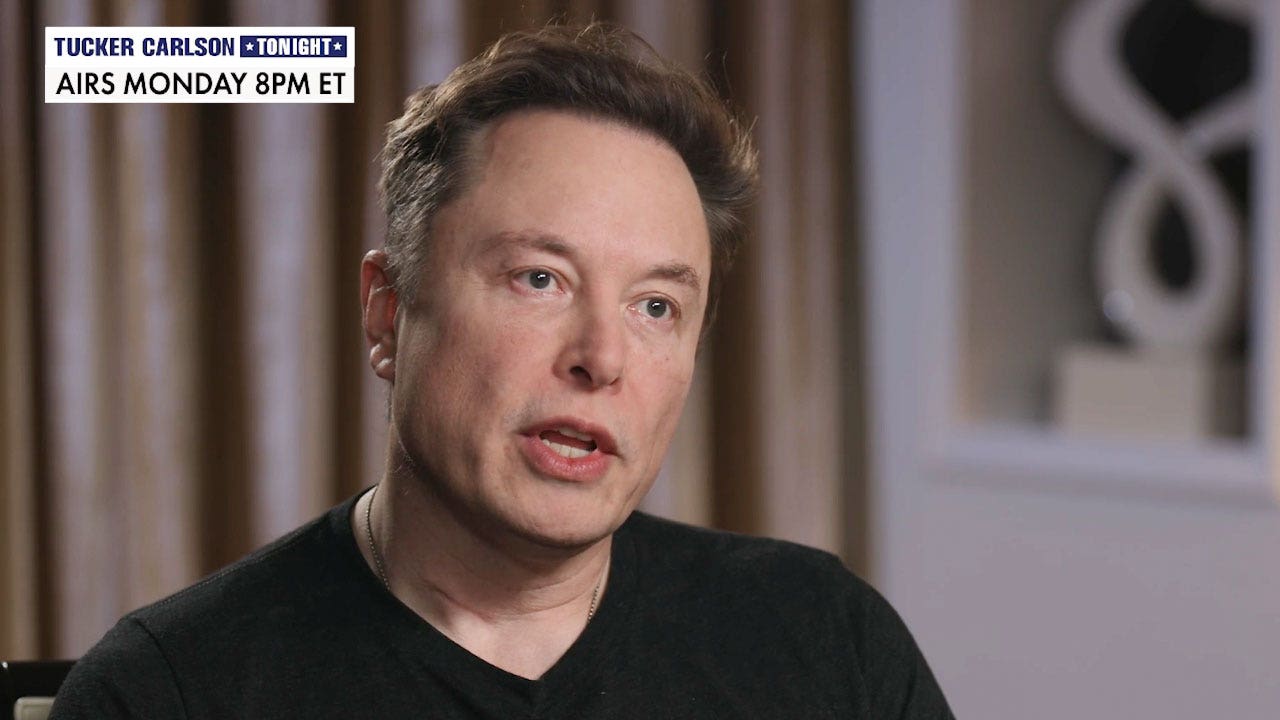
For some reason, Fox News failed to mention that Musk was a co-founder of OpenAI.
 
So Musk founded this company, then left it, and is now suing it, saying the company he founded is dangerous. OK.

For some reason, Fox News failed to mention that Musk was a co-founder of OpenAI.

I'm not sure how Elon Musk can rant about AI without turning into Mike Lindell though. The rant is very Mike Lindell though.
 
Twitter has made some changes to its hateful conduct policies. It's removed specific references to protections for transgender people and other minorities:


Twitter also removed a line from the policy detailing certain groups of people often subject to disproportionate abuse online, including “women, people of color, lesbian, gay, bisexual, transgender, queer, intersex, asexual individuals, and marginalized and historically underrepresented communities.”

Making twitter an easier place for people to spread hate and other negative material.
 
Status
This thread has been closed due to inactivity. You can create a new thread to discuss this topic.


Back
Top Bottom