I was an absolute shortwave nerd for 50 years. Still am to a degree, but that degree is ham radio. Shortwave broadcasting is a thing of the past now. Very little to listen to anymore. The BBC and VOA are still around, but are barely shadows of their former selves. Most of the other major stations are gone now (and I won't even go into the hot mess in Cuba).Could be. I never had much interest in shortwave and haven't followed it that closely.

-
Get involved.
We want your input!
Apply for Membership and join the conversations about everything related to broadcasting.
After we receive your registration, a moderator will review it. After your registration is approved, you will be permitted to post.
If you use a disposable or false email address, your registration will be rejected.
After your membership is approved, please take a minute to tell us a little bit about yourself.
https://www.radiodiscussions.com/forums/introduce-yourself.1088/
Thanks in advance and have fun!
RadioDiscussions Administrators
You are using an out of date browser. It may not display this or other websites correctly.
You should upgrade or use an alternative browser.
You should upgrade or use an alternative browser.
Media Companies Are Ready to Sell. Does Anyone Want to Buy?
- Thread starter davideduardo
- Start date
- Status
- Not open for further replies.

I was interested in the CBS/Viacom (Paramount) story, as They own one of our big 3 commercial TV networks, here in Australia. It is interesting to see that rather than try and sink the local network, that was/is drowning in debt, Viacom chose to buy it. Afterall, CBS/Viacom was their greatest creditor, were the network to go bust. A quick Wikipedia search would suggest that (cheap) aquisition was a better way of keeping their content on in foreign markets, be that either terestrial TV or streaming.

Yes, as all nations got FM as well as stations in smaller towns, the need for Shortwave was eliminated. Some stations kept on broadcasting until the transmitter died.I have to disagree as to the timing. Shortwave broadcasting thrived through the '80s, although I believe it started to decline in Latin America at least a decade before that (David, is this right?).
I'm trying to figure out if you're intentionally making a bad faith argument or if this is how your brain actually works.
So, for a model to be not broken, in your view, it should provide profits for businesses regardless of how fiscally prudent they are?
Which isn't the case and has no relevance to what we're discussing.
Here's an analogy: You decide that there's money in being a car dealer. There are two successful, profitable dealers in your town. One's been there for 20 years, the other for 15. Both have grown in that time to have 150 employees each, a 25,000 square foot showroom and keep 450 cars in inventory at all times.
You decide that you want to make as much money as they do right away, so you take every penny you have and borrow more on top of that to buy land, build a 25,000 square foot showroom, hire 150 employees and buy 450 cars from the manufacturer, plus pay the flooring costs and other expenses those competitors do.
You're in a hole they're not because they've had 15 to 20 years to retire any debt service from their startup, which was smaller and their growth more gradual than yours.
Now imagine that four other guys have the same idea you do and do exactly the same thing at the same time.
The established dealers are Netflix and Hulu. You and the four other new, overextended dealers are Max, Disney+, Paramount+, Apple+ and Peacock.
The model of being a car dealer isn't broken. The five of you were late to the game and burned cash to start big.
Here's your takeaway: Four new competitors flooded the streaming market. They spent big to gain scale quickly. They put themselves underwater, but haven't taken Netflix and Hulu down with them.
Now you're talking about linear TV.
I mean, Hulu was there first, so that's really backwards, but beyond that, you can probably expect Disney to roll Hulu into Disney+ sooner rather than later.
You DO realize that this was you, yesterday, before I told you that ABC got Hulu when it bought 20th Century Fox, right?
Who’s talking about taking other streaming companies down? With the money other companies haven’t made, how are my questions considered “bad faith arguments?” You stated there are more companies not making money from streaming? We saw the subscriber losses Netflix had last year. How can you be so certain over time that Netflix is bound to work? I’m merely stating how just because one or two companies having success with streaming is not a proper barometer of how streaming is successful overall. the other things you typed out was just telling me how wrong I am without providing stats. I thought fox still had some control over Hulu. I was wrong. What does a comment I made about Fox/Hulu have to do with this? Do others remember when radio was profitable overall? And then what happened? This is like you telling me, ”Well iheart and Audacy are doing well! The whole business is doing well”. Does anyone else from 2009 remember when newspapers wouldn’t exist by 2020? We’re so quick to declare things as “dead”I'm trying to figure out if you're intentionally making a bad faith argument or if this is how your brain actually works.
So, for a model to be not broken, in your view, it should provide profits for businesses regardless of how fiscally prudent they are?
Which isn't the case and has no relevance to what we're discussing.
Here's an analogy: You decide that there's money in being a car dealer. There are two successful, profitable dealers in your town. One's been there for 20 years, the other for 15. Both have grown in that time to have 150 employees each, a 25,000 square foot showroom and keep 450 cars in inventory at all times.
You decide that you want to make as much money as they do right away, so you take every penny you have and borrow more on top of that to buy land, build a 25,000 square foot showroom, hire 150 employees and buy 450 cars from the manufacturer, plus pay the flooring costs and other expenses those competitors do.
You're in a hole they're not because they've had 15 to 20 years to retire any debt service from their startup, which was smaller and their growth more gradual than yours.
Now imagine that four other guys have the same idea you do and do exactly the same thing at the same time.
The established dealers are Netflix and Hulu. You and the four other new, overextended dealers are Max, Disney+, Paramount+, Apple+ and Peacock.
The model of being a car dealer isn't broken. The five of you were late to the game and burned cash to start big.
Here's your takeaway: Four new competitors flooded the streaming market. They spent big to gain scale quickly. They put themselves underwater, but haven't taken Netflix and Hulu down with them.
Now you're talking about linear TV.
I mean, Hulu was there first, so that's really backwards, but beyond that, you can probably expect Disney to roll Hulu into Disney+ sooner rather than later.
You DO realize that this was you, yesterday, before I told you that ABC got Hulu when it bought 20th Century Fox, right?
Last edited:

But, that was 43 years ago.I have to disagree as to the timing. Shortwave broadcasting thrived through the '80s,
I'm not sure if I'd consider 40+ years a rapid decline.But when the Cold War ended with the collapse of the USSR and its satellite (Iron Curtain) countries and the advent of the Internet, that was the beginning of the end for the major international broadcasters. Since 1991, it's been a rather rapid decline.
It already has. I owned a pair of stations in one market (AM-FM) that was once valued at $5M. Less than a year ago the FM was sold for one-tenth that amount, and they turned in the AM license. Both were sold to a religious broadcaster.As station values continue to fall it will make it much easier for even small groups or churches to buy stations.
There's been an influx of Catholic radio owners of late, but most were formed because one or more of their leaders understood radio, and how it could bring income to the church. They sold the idea to church leadership. Once the donations started flowing in from other parts of the country where stations were purchased, expanding the donation footprint followed.I've seen small churches rally their members and raise millions of dollars to build a church building. Wouldn't be that much different to rally them to buy a station. The operating cost, if ran as non-commercial, can be minimalized. Their big expenses will include tower rents, electricity, music licenses, and a contractual on-call engineer. If a church has 300 families and they, on average, pledge $33/month that's almost $10,000/month to cover the operating expenses.
If we go back to the "glory days" of Network TV, there were 3 major networks, that all were, to some degree based on the particular year, profitable. Then came Fox, so 4. Probably the same will eventiualy happen with streaming, 3 major players, and a runner-up.So you have a crystal ball.
Cool.
I’m gonna go out on a limb here and say that in ten years, there are three or four profitable streaming platforms—-the two we have now and one or two more created by consolidation.
That’s not based on a crystal ball, just an understanding of fundamental business principles.

Who’s talking about taking other streaming companies down? With the money other companies haven’t made, how are my questions considered “bad faith arguments?” You stated there are more companies not making money from streaming?
Okay, at least now I know it's not a bad faith argument.
It's simple. There's a business. Streaming. Netflix and Hulu are the two majors. Actually, I've managed to zone a major player so far for this entire thread. There are three. Amazon Prime Video. All three have been profitable for many years.
Five newcomers arrive on the scene (Max, Apple+, Disney+, Paramount+, Peacock) spending like drunken sailors to get as big as Netflix, Hulu and Amazon Prime overnight.
Four years later, Netflix, Hulu and Amazon Prime are still there and still profitable. The five newcomers are in the red to the tune of billions. Some of the challengers actually have subscriber bases that could translate into a modest profit---Disney+, Max---if they hadn't dug the hole so deep.
That's not a broken model for streaming. That's five CEOs of companies that should have gotten into streaming years ago and grown along with Netflix, Hulu and Amazon Prime that thought buying scale all at once would work.
Those five CEOs being reckless could have damaged the entire business---if there were no growth in streaming, if people only subscribed to one streaming service, and if that finite pool of customers for three companies were suddenly split eight ways, you could have eight streamers in the red. But none of those things are true.
Let's take the rest of this a piece at a time.
We saw the subscriber losses Netflix had last year.
I assume you mean this (July 19, 2022):
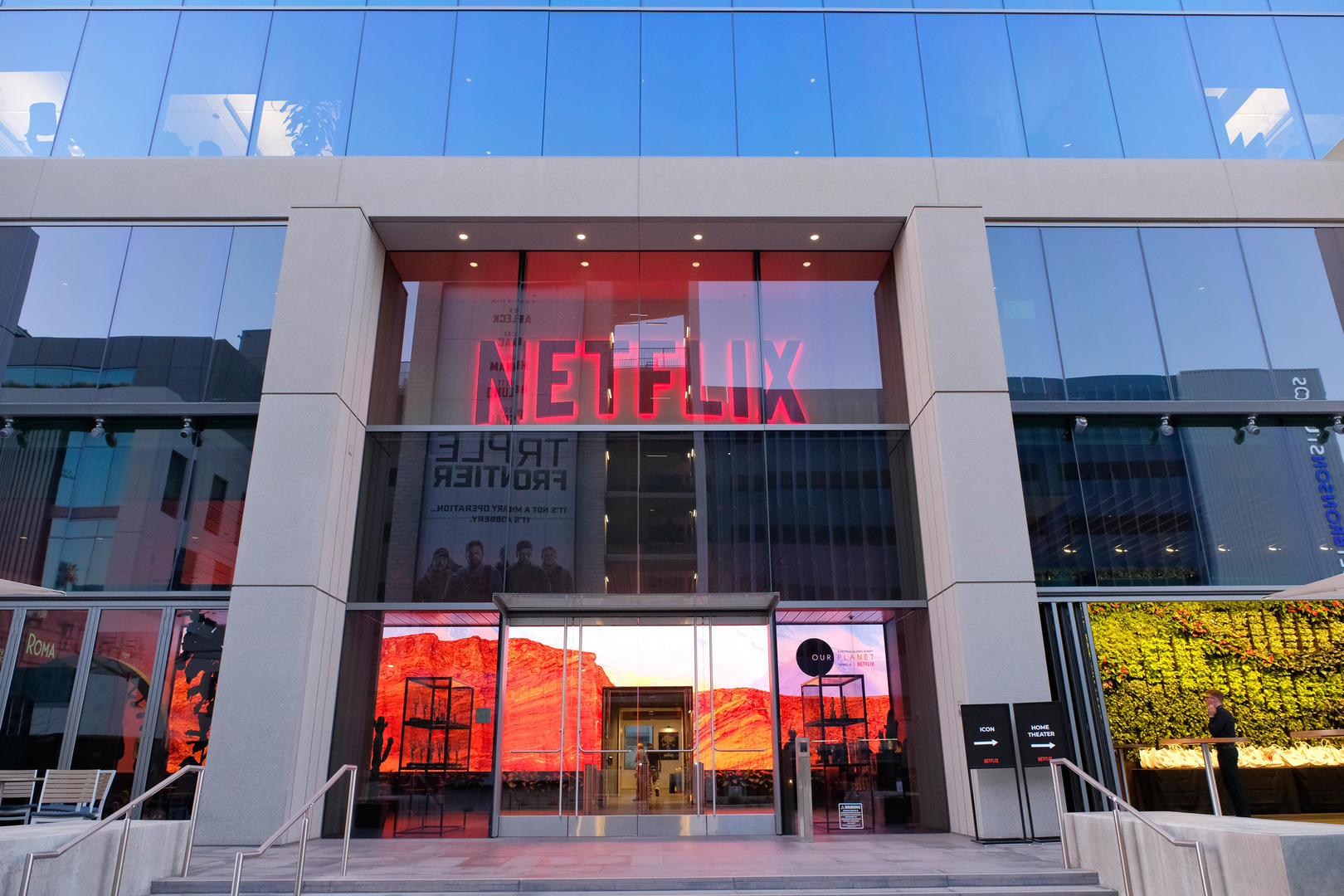
Netflix loses 970,000 subscribers, its largest quarterly loss ever | TechCrunch
During the three-month period ending June 30, Netflix reported a loss of only 970,000 subscribers. Last quarter, the company had a weak outlook for the
 techcrunch.com
How can you be so certain over time that Netflix is bound to work?
Well, it helps to stay current on the situation (July 19, 2023):

Netflix gains nearly 6M subscribers as paid sharing soars | TechCrunch
For the second quarter of 2023, Netflix saw a jump in 5.9 million global subscribers, bringing the total to 238.4 million subs.
techcrunch.com
For those who only read headlines and don't click through, here's the opening two paragraphs:
"A year ago today, Netflix reported its largest quarterly loss ever, with 970,000 subscribers dropping the service. The company has since crawled out from under the rubble. Netflix revealed Wednesday that, for the second quarter of 2023, the streaming giant saw a jump (or should we say leap) of 5.9 million global subscribers, bringing the total to 238.4 million subs.
The subscriber addition far exceeds industry guidance; analysts forecasted an increase of 1.7 million subs. Netflix ended Q1 with 232.5 million users."
I’m merely stating how just because one or two companies having success with streaming is not a proper barometer of how streaming is successful overall.
Which would be a valid argument if you had eight streamers who all conducted business the same way and five of them were failing. But that's not what's happening. You have three extremely healthy streamers and eight competitors who spent so heavily to be in the game at scale that of course they're in the red.
the other things you typed out was just telling me how wrong I am without providing stats.
I don't really see where I did that in that post (at least where stats would be applicable or appropriate), but we've got that covered with the Netflix subscriber data in this post.
I thought fox still had some control over Hulu. I was wrong. What does a comment I made about Fox/Hulu have to do with this?
Well, when you're making an argument that streaming isn't working and you make this part of that argument:
Why do you think Fox hasn’t launched their own streaming service outside of Fox nation?
....and just the day before you said this:
"Fox (the company not the news network) did the right thing at the right time. They have their piece of the pie with Hulu. The Murdochs should be lighting their cigars constantly over the smart moves they made."
...there's an essential contradiction. Set aside that Disney got Hulu. You thought Fox was still involved. So is Fox smart for staying out of streaming or should they be lighting cigars constantly over having a piece of the streaming pie with Hulu?
Do others remember when radio was profitable overall? And then what happened? This is like you telling me, ”Well iheart and Audacy are doing well! The whole business is doing well”.
I am straining to think of a time when anyone would tell you iHeart and Audacy were doing well, or use them as a brightside barometer for the overall health of radio.
Does anyone else from 2009 remember when newspapers wouldn’t exist by 2020? We’re so quick to declare things as “dead”
Do we have anyone in the audience from 2009? No? How about Des Moines?
Sorry. Too good to pass up.
Look, anyone who makes predictions of when something's dead and attaches a date certain is taking a big chance on being off by a little or a lot.
But the fact of the matter is, over-the-air radio, linear television and newspapers are all in trouble. And you could see it coming a decade or more out.
You know why? Because the technology that was going to replace them already existed and was growing in use---usually among younger people.
I'm not saying streaming will live forever. But if you're arguing that in ten years it won't, what you're missing that existed in similar predictions about radio, television and newspapers---is what replaces it.
And remember---technology does not travel backwards. People are not, in meaningful numbers, going to hook back up to cable or put an antenna on the roof.
If we go back to the "glory days" of Network TV, there were 3 major networks, that all were, to some degree based on the particular year, profitable. Then came Fox, so 4. Probably the same will eventiualy happen with streaming, 3 major players, and a runner-up.
In business school, they call it "The Consolidation Curve". It always ends up with three or four major players (CBS, NBC, ABC---Ford, GM, Chrysler---American, Delta, United) and a few, but only a few, scrappy competitors, who over time, might depose one of the "big three" (FOX, Toyota, Southwest), and less fortunate competitors who end up being eaten (UPN, AMC, US Airways) but it'll never be more than three or four bigs.
The Consolidation Curve
All industries have similar life cycles. Knowing where your company stands in the process can help you plot a winning strategy.
 hbr.org
In streaming, figure Netflix and Amazon Prime are secure. Disney probably rolls Hulu into Disney+ ( they could do it the other way around, but Disney burying a branded product inside a thing without the Disney name just doesn't seem like their approach).
Past that? A couple of mergers or strategic alliances (Apple/Disney? Paramount and someone? NBCUniversal and someone?), and whoever doesn't do that shutters and makes a deal to stream their content on Netflix, Amazon Prime or one of the other survivors.
Last edited:
I'd say the recklessness came into play around the pandemic. Hulu and Netflix were taking off like a rocket because as you pointed out, both were well established. Companies like Disney+, AppleTV and HBO were just barely starting up their streaming offerings. Then the ensuing mad scramble began with the entry of players like Peacock and Paramount+. I get it; CEO's were under pressure from their boards to come up with a plan for what appeared to be a new media gold rush. Capital to accelerate the process was plentiful. What nobody had the guts to ask was: So, what do we do if and when the pandemic ends, and consumers go back to consuming less content?Those five CEOs being reckless could have damaged the entire business---if there were no growth in streaming, if people only subscribed to one streaming service, and if that finite pool of customers for three companies were suddenly split eight ways, you could have eight streamers in the red. But none of those things are true.
And another difference is Netflix and Hulu were well into creating and delivering unique, edgy content. Paramount, Peacock (NBCU) and HBO were all launching with programming already carried on linear TV.Which would be a valid argument if you had eight streamers who all conducted business the same way and five of them were failing. But that's not what's happening. You have three extremely healthy streamers and eight competitors who spent so heavily to be in the game at scale that of course they're in the red.

It is already dying, cord cutting is real. Cable providers are losing subscribers at a rapid rate.So an industry that has survived DVDs, VCRs, will just die? Has anyone looked at how many streaming subscriptions there are? Will people constantly put up with the rising costs of streaming monthly subscriptions?
There are alternatives, but, of course, they require a relatively high speed Internet connection to use.It is already dying, cord cutting is real. Cable providers are losing subscribers at a rapid rate.
The most affected by this current trend are those with lower incomes, particularly Hispanics and Blacks.
Broadband should be a basic service at this point.There are alternatives, but, of course, they require a relatively high speed Internet connection to use.
The most affected by this current trend are those with lower incomes, particularly Hispanics and Blacks.
If you mean that the government should guarantee such service to everyone, thing about this: telephones were never a "basic service" nor was cable. Nor radio, or TV.Broadband should be a basic service at this point.
Yes, there should be a basic service at a reasonable price, maybe even with a low-income subsidy. But there are many areas, particularly rural ones, where the cost of installation is so high at this time that free enterprise can not provide such service.
But nobody provided cable for free. Why should broadband be given away?
At this point without broadband you can't do much of anything in this country. It's basically become the telephone in terms of importance.If you mean that the government should guarantee such service to everyone, thing about this: telephones were never a "basic service" nor was cable. Nor radio, or TV.
Yes, there should be a basic service at a reasonable price, maybe even with a low-income subsidy. But there are many areas, particularly rural ones, where the cost is so high at this time that free enterprise can not provide such service.
But nobody provided cable for free. Why should broadband be given away?
And the telephone was never a "basic service" was it?At this point without broadband you can't do much of anything in this country. It's basically become the telephone in terms of importance.
The best solution is to insure that the handicapped, unemployed and others unable to get broadband have an allowance included in their eligible benefits packages. But that does not even cover the many places where broadband is not available and economically not feasible.
Between Federal, State and City taxes, sales tax, property tax, gas tax and all the others, I already give nearly 60% of my gross income to the government. I don't want to provide additional taxing ideas to those in Washington, many of whom have never worked in the open market in their entire lives.
I thought telephones were a “basic service” in the respect that the federal govt provided LifeLine basic telephone service for low income individuals which made local landline telephone service free or practically free for low income individuals. A similar subsidy is now availsbjf for cell phone. The problem is I don’t think the monthly subsidy amount has changed in years so the amount that used to make a landline free or almost free years ago is now a discount on cell phone service.If you mean that the government should guarantee such service to everyone, thing about this: telephones were never a "basic service" nor was cable.
I also think the pandemic showed us the internet is a necessity these days, especially for students. Comcast offers a deeply discounted internet service at $10/month for low income individuals living in the areas they provide internet service in.
If you mean that the government should guarantee such service to everyone, thing about this: telephones were never a "basic service" nor was cable. Nor radio, or TV.
Yes, there should be a basic service at a reasonable price, maybe even with a low-income subsidy.
That was passed through congress as part of Joe Biden's infrastructure bill a couple of years ago.

Fact Sheet: The Bipartisan Infrastructure Deal | The White House
Today, Congress passed the Bipartisan Infrastructure Deal (Infrastructure Investment and Jobs Act), a once-in-a-generation investment in our nation’s
Ensure every American has access to reliable high-speed internet. Broadband internet is necessary for Americans to do their jobs, to participate equally in school learning, health care, and to stay connected. Yet, by one definition, more than 30 million Americans live in areas where there is no broadband infrastructure that provides minimally acceptable speeds – a particular problem in rural communities throughout the country. And, according to the latest OECD data, among 35 countries studied, the United States has the second highest broadband costs. The Bipartisan Infrastructure Deal will deliver $65 billion to help ensure that every American has access to reliable high-speed internet through a historic investment in broadband infrastructure deployment. The legislation will also help lower prices for internet service and help close the digital divide, so that more Americans can afford internet access.
There had been attempts by some local governments to provide free wifi. I know that I utilize free wifi in certain airports. (although not all of them). It is typically a sponsored service provided by the airport authority.

Yes, it was and still is. You can still acquire what conservatives derided as "Obamaphones", subsidized by the government.And the telephone was never a "basic service" was it?
The government subsidized building telephone lines to rural areas starting in the Truman administration, similarly to the rural electrification programs of the 1930s. In later years, federal programs were established to provide "universal access" to service through a legal settlement with the Bell System (in lieu of paying an antitrust fine to the government, Bell agreed to subsidize a certain portion of their customers)
By the early 1970s, 90% of households in the US had a telephone.

We've been down this road before.And the telephone was never a "basic service" was it?
The best solution is to insure that the handicapped, unemployed and others unable to get broadband have an allowance included in their eligible benefits packages. But that does not even cover the many places where broadband is not available and economically not feasible.
Between Federal, State and City taxes, sales tax, property tax, gas tax and all the others, I already give nearly 60% of my gross income to the government. I don't want to provide additional taxing ideas to those in Washington, many of whom have never worked in the open market in their entire lives.
It's called the Rural Electrification Administration.
The best and beautifully written description is in one volume of Robert Caro's multi-volume biography of Lyndon Johnson. Specifically, chapters 27 (The Sad Irons) and 28 (I'll Get It for You) in The Path to Power. To summarize, rural areas of the U.S. lacked electric power even into the 1930s and 1940s because private utilities claimed there wasn't enough population density along potential electric lines in order for service to be profitable, even though those same utilities had a guaranteed rate of return. They lobbied hard against any federal efforts to address the issue. Then FDR came along and the REA was formed as part of the New Deal.
Some farmers had purchased small power plants that produced lower-voltage power. (My German-American grandfather in Missouri was one of them.) There were even appliances and radios specifically designed to run from such power sources. But that was expensive and ultimately not sustainable. Many rural areas languished economically - even more than urban areas during the Great Depression - in the 1930s due to a lack of electric service.
The REA offered low-interest loans and logistical support to get farms wired. The task was big and it took until the early 1940s in some areas to get this done, and there were delays in a few areas due to World War II. Much of rural Missouri north of the Missouri River had electricity available by the late 1930s. My relatives remembered this well, and even my Republican relatives spoke of the REA with great reverence, for it enabled them to join the modern world. In more recent years rural electric cooperatives, as well as telephone co-ops, have obtained loans and assistance for bringing broadband service to rural areas and small towns. Some of this has been fought by private interests, most notably cable TV companies. But they haven't lifted a finger to do much for these communities, so what's the problem?
I'm not a progressive by any stretch of the imagination, but I also recognize that sometimes markets just don't work and government assistance is necessary and appropriate.
- Status
- Not open for further replies.