• Get involved.
    We want your input!
    Apply for Membership and join the conversations about everything related to broadcasting.

    After we receive your registration, a moderator will review it. After your registration is approved, you will be permitted to post.
    If you use a disposable or false email address, your registration will be rejected.

    After your membership is approved, please take a minute to tell us a little bit about yourself.
    https://www.radiodiscussions.com/forums/introduce-yourself.1088/

    Thanks in advance and have fun!
    RadioDiscussions Administrators

Rich Men North of Richmond #1

That's what's so unsettling about it. The song may not be pro-Trump, but it perpetuates the mentality that "all politicians are crooks, so therefore Trump isn't any worse than the rest of them, and he's being unfairly targeted while the rest of them are getting away with it scot-free".

Nothing in the song about anyone being unfairly targeted. The issues in the song are mainly high taxes, and workers not getting their fair share.
 
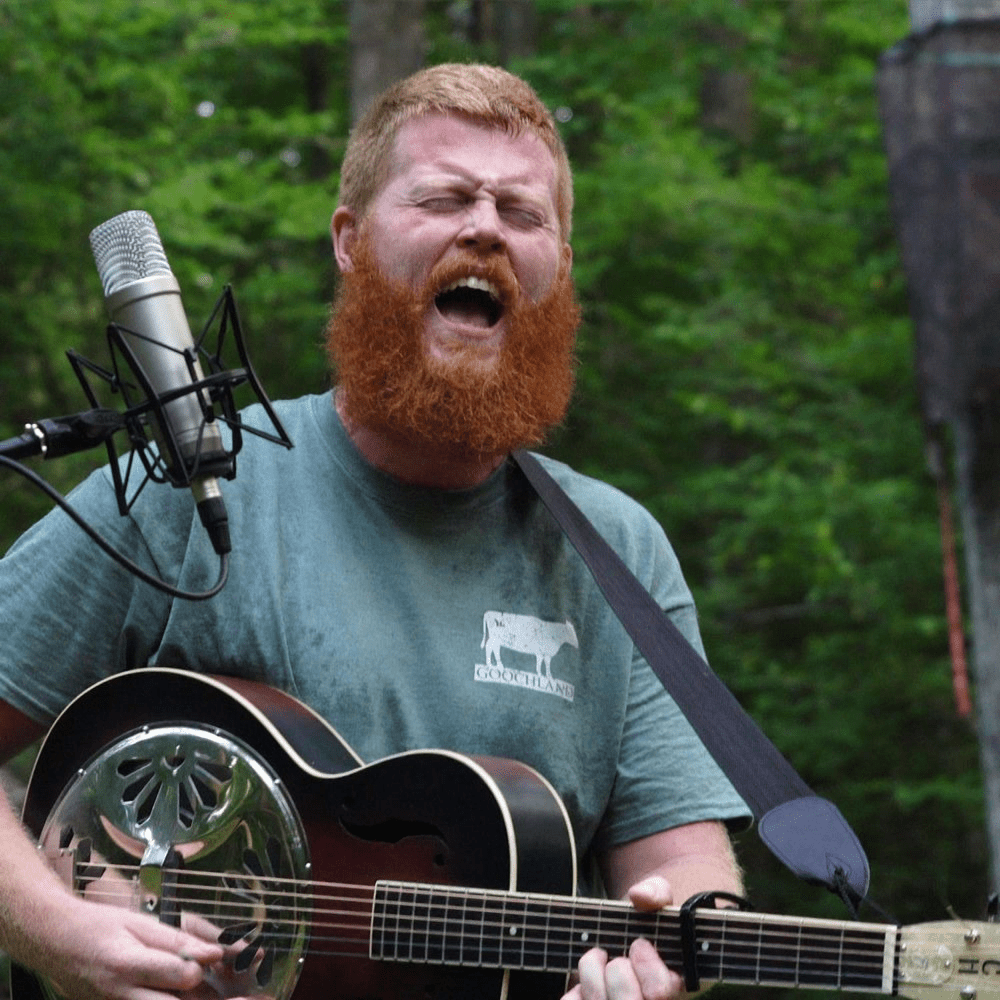
Billboard just released it's Hot Country Chart, and they report Rich Men North of Georgia is #1 for a second week:

The viral hit tops Hot Country Songs for a second frame. The first chart entry for Anthony surged by 31% to 22.9 million official U.S. streams, although it fell by 20% to 117,000 downloads sold Aug. 18-24, according to Luminate. It debuts at No. 45 on Country Airplay (2 million in audience, up 294%).
 
Sure, and depending on their unique situation, families can't afford to pay for expensive child care at the wages they're qualified to work. I know of one young family who legally immigrated from Iraq, and can barely pay California rent with one income, while the other parent cleans hotel rooms solely to pay for daily child care so they can both work. Same can be said for other non-immigrant families who can't get more than minimum wage jobs.
We as fellow humans, including politicians considered well off by comparison, should really spend some time to see what others less fortunate have to do for survival before assuming that every one of them is gaming the system.
This true and widely ignored observation does not include the "enhancement" of excessive inbound migration / immigration. The more entry level immigrants, the greater the supply and the lesser the demand, making everyone from born citizens to undocumented immigrants worth less to employers.

One of the effects is a reduction in wages. A family member of the electrician we have used for two decades works as a field supervisor in the agriculture sector. He was recently offered a lower pay rate because "the new people will work for less". The "new people" are, of course, undocumented immigrants.

At the same time, that family has found that those in their large "extended family" who rent are getting increases in their rental rates along with huge increases in utilities and general cost of living items.

I am always astounded by the appearance on Hollywood's TV network scripted dramas where "brand new" undocumented immigrants appear, speaking quite good English! The fact is that in the Southwest, most immigrants are from Mexico, Guatemala, El Salvador and Honduras and their education level is 6th grade for men and less for women. There are many who speak neither English nor Spanish but, instead, an indigenous language.

The enormous social cost of this mass immigration raises the costs of government, and reduces the services for citizens and legal immigrants. Neither party has even a vague clue of how to deal with this.
 
That's what's so unsettling about it. The song may not be pro-Trump, but it perpetuates the mentality that "all politicians are crooks, so therefore Trump isn't any worse than the rest of them, and he's being unfairly targeted while the rest of them are getting away with it scot-free".
I don't hear anything close to that message in the song.
 
That's what 40+ years of failed trickle-down economics and union-busting will do.
No, that is what un-balancing supply and demand does for the economy. "Good" CEOs make millions a year because there are not many of them. When you over-saturate the unskilled worker segment, pay scales go down. When legislation puts artificial minimums on those pay scales, entire industries go to other nations.

I was reading an in-depth analysis of the impending auto industry strike possibility. It appears that there are a number of "big three" contingency plans that would shutter more American plants and move assembly to Mexico and parts manufacture to Asia.

I've mentioned before that American made cars have nearly disappeared in most of Latin America where they used to be the most desired vehicles. Now, all the lower and mid-range vehicles are Chinese in many nations, and the luxury vehicles are Japanese and European.

I asked my grandson who has a business in Ecuador ("papers" made of plantain byproduct fiber, for example) why he has two classic Mercedes cars and not a Cadillac or a Corvette or the like: "terrible quality at an awful price" was the response.
 
The enormous social cost of this mass immigration raises the costs of government, and reduces the services for citizens and legal immigrants. Neither party has even a vague clue of how to deal with this.

However, the song does not in any way talk about migrants or migration. In an interview with Citizen's Free Press, the singer says people should not expect solutions from government:

In an interview with the Free Press following the overnight success of his viral so-called blue collar anthem, the country singer said he hopes his music will inspire listeners to stop relying “on someone 150 or 500 miles away from them to solve their problems.” “Nobody in Washington, D.C., no one in the federal government’s coming to save us,” he said, according to a clip posted to X, formerly known as Twitter. “The people that are going to save us are each other.”

 
However, the song does not in any way talk about migrants or migration. In an interview with Citizen's Free Press, the singer says people should not expect solutions from government:


To me, he's more a wannabe Woody Guthrie than a wannabe Jason Aldean. His distrust of government contains more than a touch of disappointment with it, and whatever echoes of "Down here, we take care of our own" you may hear in his lyrics don't seem to reflect what I believe he meant. His explanations in posts and interviews since the song exploded are consistent with what I interpret his message as being. I could be wrong -- wouldn't be the first time -- but I'm still unsure what my final opinion of him will be.

I'm also curious whether he'll have a lasting impact on country radio. i can see him not doing well in call-outs with the 25-44 females, which is what limited Zach Bryan's success at radio this summer. And STILL, I have yet to learn what stations are doing about the lyrics, since no one in this forum appears to have actually heard a radio station play the song.

Totally off topic, but Zach Bryan put out a new album last Friday. I can hear a few songs on it that would work on country radio, but who knows how much appetite country radio has for music that the female fans of bro-country and sappy boyfriend-country songs don't care to hear.
 
I'm also curious whether he'll have a lasting impact on country radio.

From what I'm seeing now, not directly. As we've discussed, there has been a big push for authenticity in the music getting played on country radio. That's why we see so many "flawed" figures having hits, starting with Luke Combs, who is hardly a typical radio pretty boy, followed by Jelly Roll. The problem with Oliver is it's so different from what's there. At least Zach Bryan was willing to sign with Warner Brothers and use their infrastructure. So far, Oliver doesn't seem interested. He likes the lane he's in.

He may have an influence on the songwriting though. If more people feel comfortable tapping into the "angry American" we remember from Toby Keith, we might see more of those songs.
 
However, the song does not in any way talk about migrants or migration. In an interview with Citizen's Free Press, the singer says people should not expect solutions from government:
But the song does point out dissatisfaction with how government deals with "issues" as reflected by the composer's suggestion that urban situations are out of control and discipline, while in smaller towns a sense of being part of a community makes up for government policing and regulation in big cities.

One analysis of the song is that close communities do a better job at disciplining people than the government does in big, anonymous cities.
 
But the song does point out dissatisfaction with how government deals with "issues" as reflected by the composer's suggestion that urban situations are out of control and discipline, while in smaller towns a sense of being part of a community makes up for government policing and regulation in big cities.

I think you're confusing Rich Men with the Adean song.
 
I think you're confusing Rich Men with the Adean song.
I'm thinking of the tone of the song that says that government regulation is beaten by sense of community.
 
I'm thinking of the tone of the song that says that government regulation is beaten by sense of community.

Have you heard the song or are you reacting to the interview? Because the lyrics of the song doesn't offer solutions.

He notes that there are people who don't get enough to eat, but they're not the ones who receive gov't support.

The lyrics say instead of government doing one thing, it should do another. Here's a link to the lyrics:

 
I am always astounded by the appearance on Hollywood's TV network scripted dramas where "brand new" undocumented immigrants appear, speaking quite good English! The fact is that in the Southwest, most immigrants are from Mexico, Guatemala, El Salvador and Honduras and their education level is 6th grade for men and less for women. There are many who speak neither English nor Spanish but, instead, an indigenous language.

The enormous social cost of this mass immigration raises the costs of government, and reduces the services for citizens and legal immigrants. Neither party has even a vague clue of how to deal with this.

My great-great-grandparents came here in their late teens with little education and no English from an undesirable part of the world (the shtetls of what's now Poland.) G-g-grandpa sold rags on the streets of a bad part of Buffalo.

They and their children were "drains" on the upstanding taxpayers of the 1870s, using the public schools and roads and parks of the time.

If I'm more sympathetic to today's refugees and asylum seekers than most here, it's because when I look at them, I see Abram and Rachel Fybush around 1864, and because I know how their story progressed and am grateful they were able to make a home and a successful family here.
 
First of all; I was responding to David's post, not you. And also, where did I mention anything about politics? To summarize my comments to something that you might understand better: try walking a mile in someone less well off shoes, before you start assuming that everyone is just trying to steal from you.

Signed,
Antifa
Do you support Antifa?
 
My great-great-grandparents came here in their late teens with little education and no English from an undesirable part of the world (the shtetls of what's now Poland.) G-g-grandpa sold rags on the streets of a bad part of Buffalo.
As did the Irish side of my family long ago. It's not about the soundness of ongoing immigration, but about the quantity of people and the economy's ability to absorb them without detriment to those already here.

Of course, a bunch of my family members back in the early 1800's simply starved to death during the potato famine, so the choice was fairly easy if they could afford passage.
They and their children were "drains" on the upstanding taxpayers of the 1870s, using the public schools and roads and parks of the time.
Look at the percentage of the population vs. the percentage of new migrants that it absorbed. There have been many studies, conflicting in percentages, but uniform in the conclusion that there is a limit on how many new people a nation can absorb all at the same time. Some newer studies add the considerations of language and culture, using the German migrations of the era around 1870 or so and the ensuing Italian migration which extended even up to the start of The Great War.
If I'm more sympathetic to today's refugees and asylum seekers than most here, it's because when I look at them, I see Abram and Rachel Fybush around 1864, and because I know how their story progressed and am grateful they were able to make a home and a successful family here.
My mother's family came over just 20 years after the Mayflower and for reasons of religious persecution, so on that side I can not relate. But my Father's family from East County Cork's most rural area had the choice of starving like some of the family... due to the British land policies and politics... or finding their way to America as basically indentured servants... but with food.

But in both cases and both sides of the family, the American economy was able to absorb newcomers. It was all a play of percentages and there was and is a breaking point where the existing economy can not sustain the influx of new residents.

Today, we see several situations in Sub-Saharan Africa, the Middle East and even Colombia where refugees from non-functioning nations or victims of persecutions flee in numbers so great that the economies of the welcoming nations are destroyed or are seriously affected to the detriment of both immigrants and the new arrivals.
 
Well this has really gone far afield, hasn't it? Since we're near the part where this discussion is going to be closed*, I'll let my earlier post about working in a factory and getting a reality check about the situations of working people in today's society stand as my "closing argument" on the song. I'd add that, as mentioned above, the song is ephemeral. Fleeting. As most hits that come "out of nowhere" often are. Will it change anything? Unlikely. People have already made up their minds, and a song isn't going to change many of those minds. Which is sad, because music can expose us to the plight of others and help us see things from a different point of view. But only if we listen.

(*by a moderator who seems to have already made up their mind as well)
 
Have you heard the song or are you reacting to the interview? Because the lyrics of the song doesn't offer solutions.
I have read the lyrics.
He notes that there are people who don't get enough to eat, but they're not the ones who receive gov't support.
Exactly. The government does not do as well at things as local communities do is the synopsis of my read of the lyrics. Of course, each of us can read even a simplistic song differently. In school, how many perspectives of Frost's "Fences" did we come up with in school? And how many levels could I read Don Quixote at in High School. Or what did each interpretation of James Joyce really mean... and did some levels contradict others?

The lyrics say instead of government doing one thing, it should do another.
Exactly. What I see is that local small communities supposedly do better than big ones where the authorities are distanced from the people.
 
(*by a moderator who seems to have already made up their mind as well)
My only task... and that of Frank... is only to step in when we go too far away from radio.

Since this particular song and artist are really tightly related to radio, we can discuss this for some time more. The issue is partly about how much radio airplay the song gets and for how long vs. streaming plays that are a separate discussion topic. And the subject is also about the attitude of country radio vs. that attached to other formats because of the value set of the core listener. And still more, it's about how radio deals with controversial songs and lyrics.
 
Status
This thread has been closed due to inactivity. You can create a new thread to discuss this topic.


Back
Top Bottom