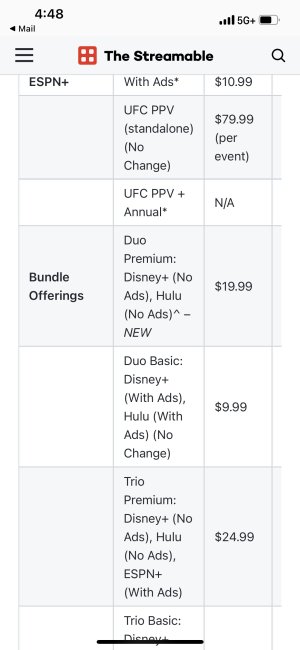
So depending on how often one watches TV/streaming and which programming is most important to them, those who cut the cord to try and save money now have the option of paying for ad-free programming and if they have a few different subscriptions to allow them to watch programming they're really into, they could easily pay more than the cost of their cable subscriptions, or they can get the ad-tier level, still have ads to deal with and pay nearly as much as a cable subscription, again, depending.
Right. Netflix, Amazon Prime, Max, Apple+, Hulu, Peacock, Paramount+, Disney+----if the new normal for ad-free is $14 a month, that's $112 a month.
Ad-supported---half that, but that's still $56 a month, which if you factor out internet service, is probably in the ballpark of what a lot of people pay for cable (not counting movie/sports packages, etc).
The difference is that (so far) ad-supported is more like four minutes of commercials per half hour show, about half that of traditional broadcast/cable. Fewer interruptions and shorter breaks.
Those who've chosen to stick with cable or dish still have plenty of options, but some programming is no longer available on traditional networks or cable, so if they want programming that's specifically on Disney+, Hulu, Amazon, Netflix, Discovery+, Peacock, etc. and some sports programming, especially as we move into college and pro football seasons, they still need to get a subscription to one or more of those streamers in addition to cable or dish, depending on how badly they want to see some contests.
The issue for us is that, even pre-pandemic, most of our viewing has been streaming shows.
Long term, I think some of this sorts itself out. I really don't believe there's room for eight major streaming players. When consolidation comes, I think you'll see three or four survivors---almost certainly Netflix and Amazon. Maybe Max, but that depends a lot on how WarnerBros. Discovery goes the next year or two.
The rest are merger bait. If the long-rumored Apple/Disney deal were to happen, that'd take Apple+, which, apart from a couple of really great shows (Severance and Shrinking), is pretty weak. If Apple doesn't merge with a studio, I think Apple+ remains a niche service and falls out of contention as a major streamer.
Absent that, Disney+ is likely to absorb Hulu. They and Comcast just hired investment analysts to determine a value for it yesterday.
And I don't see Peacock or Paramount+ surviving on their own.