Really well-written commentary by Brian Mann ! Also, thank you to everyone who participated in this thread. It's very edifying and elucidating ; and I've learned a lot about NPR.A helpful reminder that NPR is made up of a lot of people with a lot of views and Uri Berliner is only one of them. Here's another perspective from one of my favorite people there, reporter Brian Mann.

-
Get involved.
We want your input!
Apply for Membership and join the conversations about everything related to broadcasting.
After we receive your registration, a moderator will review it. After your registration is approved, you will be permitted to post.
If you use a disposable or false email address, your registration will be rejected.
After your membership is approved, please take a minute to tell us a little bit about yourself.
https://www.radiodiscussions.com/forums/introduce-yourself.1088/
Thanks in advance and have fun!
RadioDiscussions Administrators
You are using an out of date browser. It may not display this or other websites correctly.
You should upgrade or use an alternative browser.
You should upgrade or use an alternative browser.
National Public Radio Journalist Believes That NPR Listening Demographics Have Changed And...
- Thread starter Daryl Lynn L.A.
- Start date
- Status
- Not open for further replies.
A lot of what the article talks about is editorial discretion. Under the first amendment, news organizations decide what stories to cover, and how to cover them. NPR is isolated from government interference because the government doesn't oversee what they do or even decide if they get funding. The Corporation for Public Broadcasting gets the federal funds, and they distribute the money to the stations, who in turn buy programming from various services including NPR.
This is very different from the Voice of America. They receive direct federal funds, and their director is appointed by the president. That led to a very rough period when the previous administration turned the VOA into its personal publicity division:
Voice of America, affiliates in turmoil as controversial Trump pick takes over, clears house
So that's the distinction between independent journalism, and government control.
This is very different from the Voice of America. They receive direct federal funds, and their director is appointed by the president. That led to a very rough period when the previous administration turned the VOA into its personal publicity division:
Voice of America, affiliates in turmoil as controversial Trump pick takes over, clears house
So that's the distinction between independent journalism, and government control.
It's amusing how the people who claim NPR and other public media is "government propaganda" were the same people who complained that it was too anti-government during the Trump administration.

More perspective, from a former NPR/WAMU host:

 www.nightlightshow.com
Uri Berliner dragged NPR. What now?
Uri Berliner didn’t just attack NPR. He attacked a community. His article denigrated a nationwide chosen family, bonded by their love of learning, their civic duty and their belief in doing good. Perhaps he forgot why he showed up.
www.nightlightshow.com

I posted this in the Houston thread that has since been locked, so I'll repeat it here: A good point I pulled out of Joshua Johnson's essay is that NPR's critics are going after NPR's listeners just as much as they're going after NPRMore perspective, from a former NPR/WAMU host:
I posted this in the Houston thread that has since been locked, so I'll repeat it here: A good point I pulled out of Joshua Johnson's essay is that NPR's critics are going after NPR's listeners just as much as they're going after NPR
To me, the interesting part is I read lots of comments here from people who say that radio is dead, that nobody listens, and that it's irrelevant and obsolete. If that's true, why are people so angry?

Public broadcasting (radio and TV) is something that people, particularly those able to support through pledges, have a personal stake in. It's why the genre can support niche radio formats like classical and jazz in a way commercial radio cannot.To me, the interesting part is I read lots of comments here from people who say that radio is dead, that nobody listens, and that it's irrelevant and obsolete. If that's true, why are people so angry?
Public broadcasting (radio and TV) is something that people, particularly those able to support through pledges, have a personal stake in. It's why the genre can support niche radio formats like classical and jazz in a way commercial radio cannot.
But why are people who don't listen so angry at those who do?

Clearly, it's not true and you yourself have posted the statistics on listenership.To me, the interesting part is I read lots of comments here from people who say that radio is dead, that nobody listens, and that it's irrelevant and obsolete. If that's true, why are people so angry?
Which anger do you mean? Trump supporters hate NPR because they don't offer blind cult worship of their hero.To me, the interesting part is I read lots of comments here from people who say that radio is dead, that nobody listens, and that it's irrelevant and obsolete. If that's true, why are people so angry?
Silencing opposing points of view is a Putin tactic. They don't listen to NPR and they don't want anyone else to either...

Yes like last year when Elon Musk ranted about NPR by claiming it was "Government Funded" when it reality NPR is funded by donors to the local affiliates. It lead to NPR, PBS and their local affiliates to stop using X app because of his rants. We had to look at various stuff about the reasons would rant against NPR. It was initially because I thought NPR, PBS and their affiliates were about to reveal something big that Elon Musk does not want his fans to know about at his other operations like Space X and Tesla. That was until multiple Reuters articles showed examples on toxic work environment at Elon Musk's other operations like SpaceX and Tesla when the rest of the media were covering Twitter.To me, the interesting part is I read lots of comments here from people who say that radio is dead, that nobody listens, and that it's irrelevant and obsolete. If that's true, why are people so angry?
Then we found out that the State of Oklahoma had a huge spat over the funding of OETA the state PBS affiliate and for some reason kids shows got falsely accused of stuff that may have been covered on PBS Newshour about the Civil Rights records in that state.

NPR quits Elon Musk's Twitter over 'government-funded' label
National Public Radio is quitting Twitter over the social media company’s recent actions under owner Elon Musk to stamp it with labels that NPR says undermine its credibility. NPR said its organizational accounts will no longer be active on Twitter because Twitter is falsely implying that it is...
 apnews.com

New calls made to save OETA after Stitt vetoes bill that funds the public PBS affiliate
New calls were made to save the Oklahoma Educational Television Authority after Gov. Kevin Stitt vetoed a bill that funds the public PBS affiliate.
 www.koco.com
The veto came down last week, and Stitt told reporters there are shows that have aired on OETA that should disqualify them from public funding.
"Some of the stuff that they’re showing, it just overly sexualizes our kids. There are parents defending child transition on PBS that’s being played. There's elevating LGBTQIA2S+ voices," Stitt said on Friday.
https://www.koco.com/article/oklahoma-bill-would-defund-public-television/4292461
On Friday, the governor claimed OETA was indoctrinating children. He vetoed House Bill 2820, which would have allowed the state’s PBS station to operate through 2026.

As Oklahoma lawmakers push anti-LGBTQ+ bills, advocates worry about the chilling effect
Oklahoma has seen a surge in anti-LGBTQ+ legislation this year. While some bills have withered in the process, a number of other anti-LGBTQ+ measures could be passed before the legislative session ends in late May.
 www.pbs.org
This is the reason why certain Oklahoma politicians specifically aligned with Governor Kevin Stitt made crazy claims about their local PBS affiliate and its tied to PBS Newshour that aired a segment on the states LGBT Civil Rights record for the rest of the nation to think about leading to the 2024 elections.
Are you referring to those who don't listen to public radio being angry at those who do? Because the answer appears to be self-evident.But why are people who don't listen so angry at those who do?
Meanwhile the folks at Fox News are gloating, even though they've done far worse:
 www.foxnews.com
The article quotes the New York Times, but the Times also ignored the Biden laptop story.

 news.yahoo.com

 nypost.com
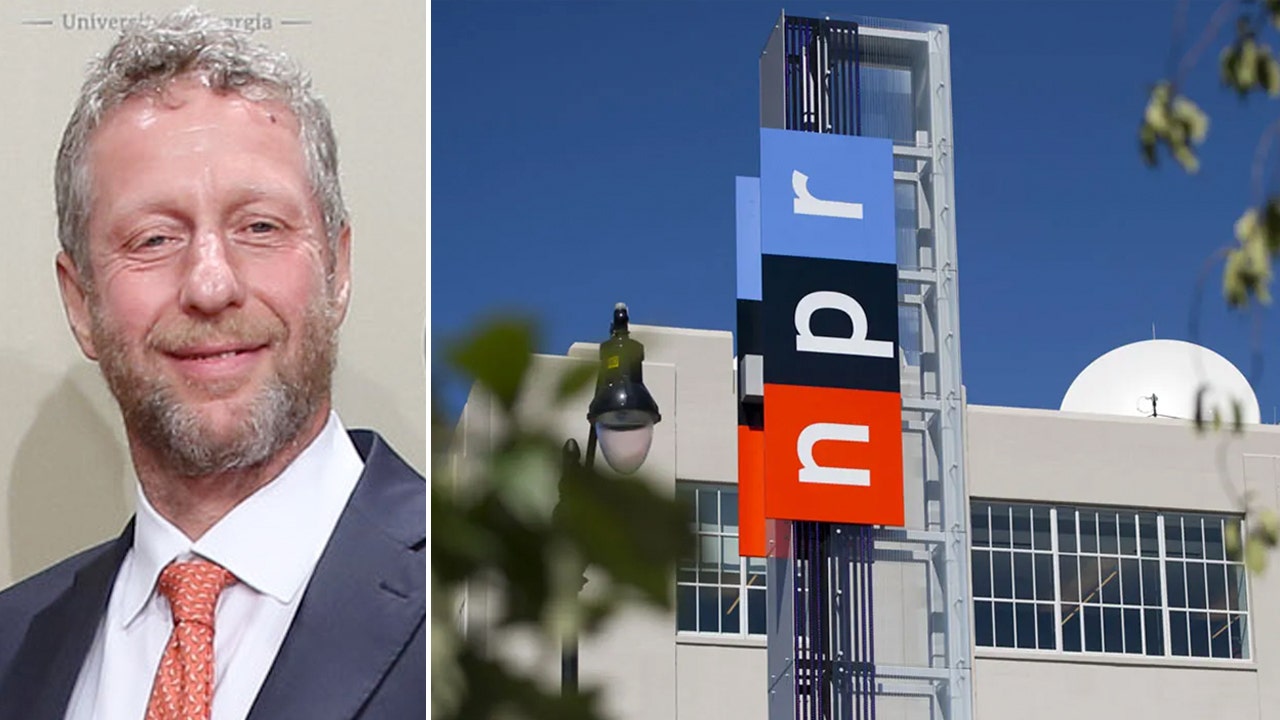
NPR editor's bombshell essay causing 'turmoil' at liberal outlet: Report
The New York Times reported that NPR is facing "turmoil" among staff following the bombshell essay penned this week by veteran senior business editor Uri Berliner.
The article quotes the New York Times, but the Times also ignored the Biden laptop story.
New York Times Quietly Retracts Claim That Hunter Biden Laptop Story Is ‘Unsubstantiated’
The New York Times has revised its coverage of the New York Post's Hunter Biden laptop story to reflect that it is not "unsubstantiated."
Now that Joe Biden’s president, the Times finally admits: Hunter’s laptop is real
First, The New York Times decides more than a year later that Hunter Biden’s business woes are worthy of a story. Then, deep in the piece, in passing, it notes that Hunter’s laptop is l…
nypost.com
Last edited:

My best guess is that it's due to changes in society that they feel are threatening to their economic prospects, their status, possibly even their well-being. Then there's a whole ecosystem of media devoted to creating a feedback loop that amplifies and feeds those grievances in the service of profit. There are plenty of grievances to go around, no matter who you are. But you know how, when dealing with an angry person, you can make them even angrier by totally refusing to respond in a reactive manner? I think that's some of what happens with NPR: the tone is relentlessly calm and logical, which just makes the angry people that much angrier.But why are people who don't listen so angry at those who do?
Some of this is also the same-old, same-old: public broadcasters in other countries get hit with similar accusations: the U.K., Canada, Australia, the Netherlands, and so on. In a way, the American funding model, fragmented and fraught as it can be, provides at least some insulation against such accusations, since American public broadcasters have to demonstrate enough appeal to garner direct financial support from listeners, and programming decisions are decentralized.

In particular, angry over VOA and its affiliates such as Radio Martí. The fact is that listening is very limited.To me, the interesting part is I read lots of comments here from people who say that radio is dead, that nobody listens, and that it's irrelevant and obsolete. If that's true, why are people so angry?
Years ago, when short wave was still a popular thing and I had stations in Ecuador I never, ever ran into a person who mentioned listening to VOA. In fact, when I reviewed the in-person coincidental ratings results for the largest cities in Ecuador, I never saw a single mention of VOA.
I do believe that in totalitarian-governed nations that listening to the BBC, VOA, and a few other international broadcasters was important. However, in some nations being caught listening to those stations could cause problems. In Cuba, listening to Radio Martí would often result in the family being deprived of things like eggs and milk.
One could also question why are liberal-minded people so angry at conservative talk radio, with draws smaller ratings (overall) than NPR stations do? It's because it's a voice that's on the airwaves that goes against their biases, that's why. Doesn't matter if the stations have big ratings or poor ratings. The existence of voices contrary to theirs is the problem.But why are people who don't listen so angry at those who do?
The existence of voices contrary to theirs is the problem.
Works both ways. Nobody listens, everybody talks.
NPR is losing relevance to everyone but the liberal minded -- as Uri points out, around 67% of their listeners identify as liberal. So the stations are merely preaching to the converted. And there is nothing wrong with that, really.
And I've read elsewhere that NPR's average listenership is over age 50, so the network is technically 'aging out' -- although they depend on donations from their (mostly?) well-heeled patrons, so they really don't have to worry about ratings as much as other stations do.
I've also read that their overall listenership is down, but their revenues have gone up. I think this was in a recent Pew Research report on news and broadcasting.
I don't listen to the local NPR stations, but I do listen to the Oregon Public Radio and Jefferson Public Radio stations (on AM), and they play a lot of NPR, but it's mixed with the BBC at night, and their local news reports and national reporting doesn't seem biased, so a lot of this controversy is the general network vs. the local networks, and how they handle the news stories and what programming they include. I don't think one can say NPR is a monolith.
And I've read elsewhere that NPR's average listenership is over age 50, so the network is technically 'aging out' -- although they depend on donations from their (mostly?) well-heeled patrons, so they really don't have to worry about ratings as much as other stations do.
I've also read that their overall listenership is down, but their revenues have gone up. I think this was in a recent Pew Research report on news and broadcasting.
I don't listen to the local NPR stations, but I do listen to the Oregon Public Radio and Jefferson Public Radio stations (on AM), and they play a lot of NPR, but it's mixed with the BBC at night, and their local news reports and national reporting doesn't seem biased, so a lot of this controversy is the general network vs. the local networks, and how they handle the news stories and what programming they include. I don't think one can say NPR is a monolith.

No, that's not it. It's because, all too often, "conservative talk radio" lies. They make up stuff, they invent "facts", they filter out anything that doesn't fit into their carefully constructed, right-wing Republican/MAGA world view. They march to the day's talking points and don't engage in independent thinking, much less critical thinking. They are dishonest brokers who exist to sell a point of view to fact-challenged, low-information listeners.One could also question why are liberal-minded people so angry at conservative talk radio, with draws smaller ratings (overall) than NPR stations do? It's because it's a voice that's on the airwaves that goes against their biases, that's why. Doesn't matter if the stations have big ratings or poor ratings. The existence of voices contrary to theirs is the problem.
NPR (and the other NPR-like public radio program producers/distributors) are not perfect, they sometimes forget that they're journalists and not advocates, but they deal in facts, factually-based information, and I think they try to do their best to cover all sides of a topic. (Which does not mean that every individual piece is going to cover every side of an issue, but averaged out over their entire coverage of a story or a controversy, most significant sides will get covered.) That's a whole lot different than right-wing commercial talk radio, which exists to act as propaganda for one side of the political spectrum, filtering out anything that might upset their listeners with inconvenient facts.
- Status
- Not open for further replies.