
It's easy to forget there are places in the world without internet, cell phone service, and AM/FM. Those remote, isolated, and sparsely populated islands and atolls in Micronesia, Melanesia, Marshall Islands, etc, where Shortwave, ham radio may be the only connection with the world. Parts of Africa also come to mind. So Shortwave won't completely disappear.Which really only replaces a problem-plagued older transmitter from 1990. This gets RNZ back to where it was a few years back, restoring the ability to simulcast in AM and DRM.

-
Get involved.
We want your input!
Apply for Membership and join the conversations about everything related to broadcasting.
After we receive your registration, a moderator will review it. After your registration is approved, you will be permitted to post.
If you use a disposable or false email address, your registration will be rejected.
After your membership is approved, please take a minute to tell us a little bit about yourself.
https://www.radiodiscussions.com/forums/introduce-yourself.1088/
Thanks in advance and have fun!
RadioDiscussions Administrators
You are using an out of date browser. It may not display this or other websites correctly.
You should upgrade or use an alternative browser.
You should upgrade or use an alternative browser.
Kari Lake nominated to head Voice of America.
- Thread starter gr8oldies
- Start date
Would receiving QSL cards from Radio Moscow, Radio Kiev, and Radio China International, trigger anything from the US government, circa the late 70's?
I had cards from Radio Moscow, a couple of other Soviet Republics, and Havana, and no one ever contacted me...
The US uses Radio Free Asia for broadcasting into China, and the Chinese jam it with CNR-1.China has domestic SW in the less urban areas to the West and Northwest, and has a good number of stations. In most urban areas, though, people will not have SW radios.
Russia began eliminating domestic SW 25 years ago, and WRTH 2024 shows just 3 5 kw SW stations for domestic service out of Moscow. Domestic AM is limited to less than 20 stations now, per, again, WRTH.
I think her perception of the usefulness of SW in those nations is about a full generation out of date.
And, were China at all concerned about VOA, they have several large transmitter manufacturers who sell internationally as well who could mount jammers nearly "overnight". It would take lots of VOA transmitters with lots of power in nearby locations to penetrate China. what nations would allow that today?
RE VOA in general: whoever wrote the bit in Project 2025 was probably accurate in that it's stupid to get rid of VOA, and it's better to use VOA as they have been already -- as a projection of soft power. The Chinese do this with CRI. Soft power isn't like military power -- the positive returns from using it aren't always obvious. But governments have been doing this for decades, and the governments doing it aren't exactly stupid.
Most actual VOA listeners are probably in Africa and parts of Asia, places where China has been making inroads economically and politically. Being that geopolitics is a global game, to get rid of VOA would just take one more tool out of the toolkit -- either that, or reducing VOA's presence would be the equivalent of taking a really high quality wrench out out of your toolkit and replacing it with one made out of pot-metal.
Most actual VOA listeners are probably in Africa and parts of Asia, places where China has been making inroads economically and politically. Being that geopolitics is a global game, to get rid of VOA would just take one more tool out of the toolkit -- either that, or reducing VOA's presence would be the equivalent of taking a really high quality wrench out out of your toolkit and replacing it with one made out of pot-metal.

Yet all across sub-Saharan Africa there is a profusion of FM stations. Larger cities had 25 or more! There is no need for "outside" radio voices anywhere now.Most actual VOA listeners are probably in Africa and parts of Asia, places where China has been making inroads economically and politically.
For example, look at this listing of stations in Ouagadougou and all of Burkina Faso: Listen to the Best Radio Stations from Burkina Faso
It's budget, like USDA, the post office and many other programs, is such a small part of the federal budget, not even a rounding error, not even .05% of expenditures, won't make a hill of beans of difference...I bet the magas have no idea it even exists, or that it's 100% taxpayer funded. Trump himself didn't know about it until the end of his first term. If they were truthfully looking for government waste, this would be a great place to start.
Maga isn't anywhere near "American majority."Actually, she will fit right in with the spirit of the VOA which is to reflect American majority sentiment and attitudes.
According to polls, 40% of the country identifies as "conservative."
Each of the two major political parties is about 27-28%, with Dems. the largest of the two, but only slightly.
Trump won 49.9%, far from a "majority," of the popular vote, but, of course, an electoral college majority.
Nobody said that Maga was a majority sentiment. But Her attitudes seem to reflect those of a good majority of Americans as to the position that the VOA should present about the United States to the rest of the world.Maga isn't anywhere near "American majority."
Again, the administration of the VOA is about how America "paints itself" to the rest of the world, not about partisan politics.According to polls, 40% of the country identifies as "conservative."
Each of the two major political parties is about 27-28%, with Dems. the largest of the two, but only slightly.
Trump won 49.9%, far from a "majority," of the popular vote, but, of course, an electoral college majority.
Again, the administration of the VOA is about how America "paints itself" to the rest of the world, not about partisan politics.
Although the last time this administration was in power, they used VOA for partisan politics. They fired everybody else. They'll likely do the same again.
That was simply putting their own people into the management positions which are political appointments.Although the last time this administration was in power, they used VOA to present partisan politics. They fired everybody else. They'll likely do the same again.
As someone who samples VOA occasionally due to my work for a division of that agency, I did not find that the on-air people or the content changed much due to any changes in the administration... going back to the time of Ronald Reagan.
I did not find that the on-air people or the content changed much due to any changes in the administration... going back to the time of Ronald Reagan.
The changes didn't come until very late in the administration. When it did, the editorial people who approve what the on-air people say changed completely. I've posted stories on all that earlier in this thread. They won't wait this time. Once Kari Lake is in charge, they will become a PR agency for the incoming president.
Here's one story from the VOA itself on what happened during the 6 month tenure of Michael Pack:
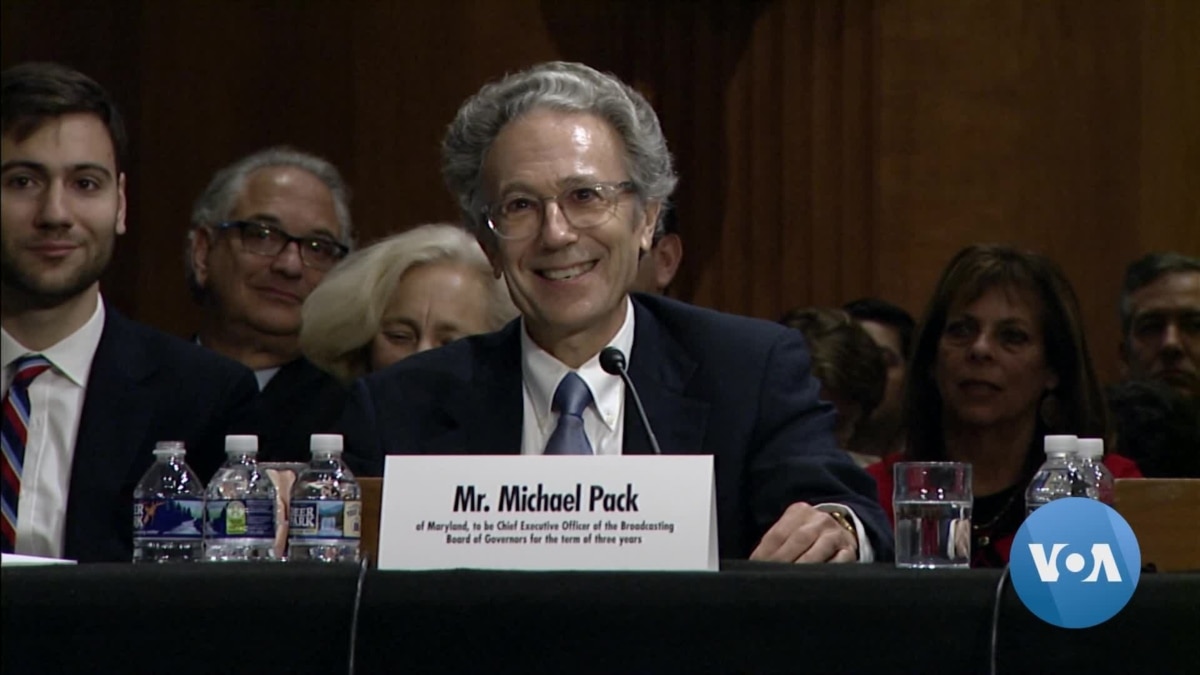
Government Report Finds Former USAGM CEO Abused Authority, Wasted $1.6 Million in Funds
Independent report ordered by OSC 'substantiated' whistleblower complaints and bipartisan concerns about Pack's tenure as head of USAGM
 www.voanews.com
I think the new Chinese roads, railways, ports and power plants across South-East Asian and African countries (all with large, prominent signs saying exactly who paid for them) are a more powerful projection of soft power than a shortwave radio station that is relatively listener-untroubled.RE VOA in general: whoever wrote the bit in Project 2025 was probably accurate in that it's stupid to get rid of VOA, and it's better to use VOA as they have been already -- as a projection of soft power. The Chinese do this with CRI. Soft power isn't like military power -- the positive returns from using it aren't always obvious. But governments have been doing this for decades, and the governments doing it aren't exactly stupid.
Most actual VOA listeners are probably in Africa and parts of Asia, places where China has been making inroads economically and politically. Being that geopolitics is a global game, to get rid of VOA would just take one more tool out of the toolkit -- either that, or reducing VOA's presence would be the equivalent of taking a really high quality wrench out out of your toolkit and replacing it with one made out of pot-metal.
Supposedly at least some of the transmitters at Noblejas are being replaced with new units. The existing facilities have been troublesome with numerous reports on SWDX forums of missing transmissions.Im pretty sure Spain said something similar recently.... recommitting to their international shortwave service, Radio Exterior Espana... sometimes a simulcast of RNE but often with its own content in portuguese,spanish, french, Sefardi/Judaeo Spanish, Russian, English and Arabic
REE actually was completely shut down on SW a few years back, but a supposed outcry from mariners on fishing fleets and international aid workers resulted in a limited restoration. I suspect the reality is that a tiny number of people made a huge amount of noise, and were given too much weight by TPTB at RNE.

I was one of the bigger reporters of the missing transmissions over the summer when they had several transmissions go off for while.Supposedly at least some of the transmitters at Noblejas are being replaced with new units. The existing facilities have been troublesome with numerous reports on SWDX forums of missing transmissions.
REE actually was completely shut down on SW a few years back, but a supposed outcry from mariners on fishing fleets and international aid workers resulted in a limited restoration. I suspect the reality is that a tiny number of people made a huge amount of noise, and were given too much weight by TPTB at RNE.
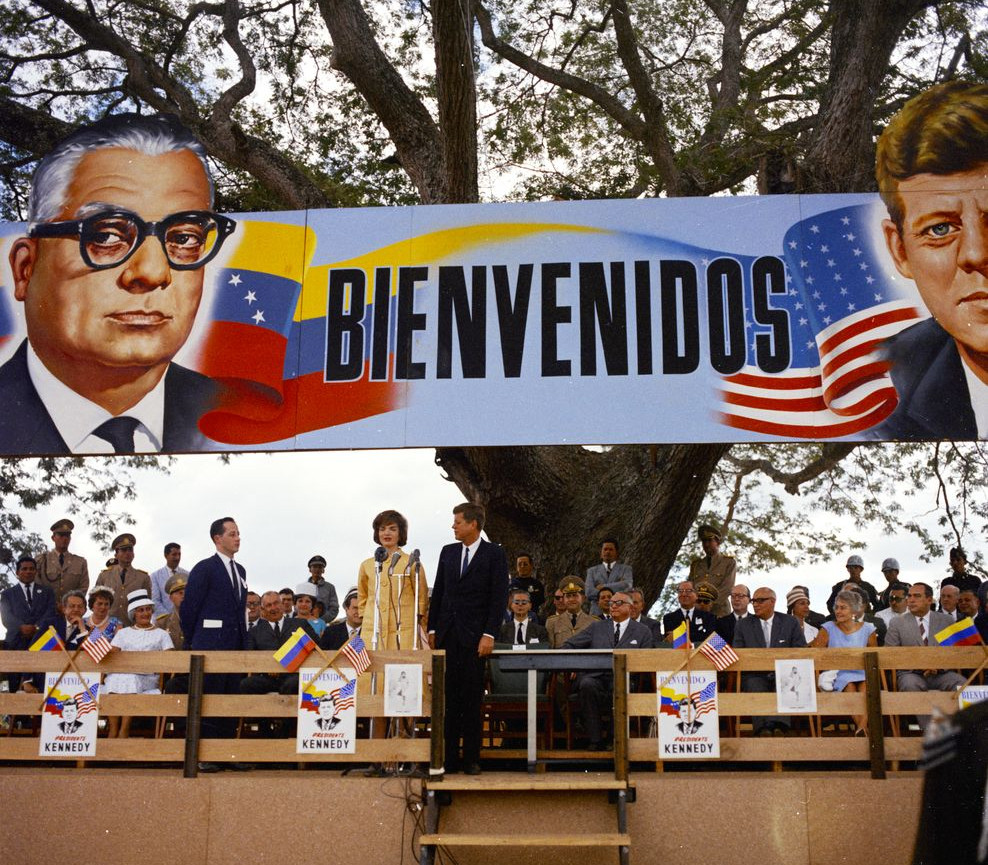
Actually, the "Alliance for Progress" talked a lot more than it built. I never saw an actual project that was done by the Alliance.Anyone remember the "Alliance for Progress" where the US built roads and water systems in South and Central America? Created better economic opportunities for the folks down there and maybe would help with the surge in illegal immigration.
From Wikipedia:
The Alliance for Progress achieved a short-lived public relations success. It also had real but limited economic advances.[12] But by the early 1970s the program was widely viewed as a failure.[19]
The program failed for three reasons:
- Latin American nations were unwilling to implement needed reforms, particularly in land reform.
- Kennedy's presidential successors, Lyndon B. Johnson and Richard Nixon, were less supportive of the program.
- The amount of money was not enough for the entire region: $20 billion averaged out to only $10 per Latin American.[4]
Alliance for Progress - Wikipedia
That would be more akin to 'hard power'. Soft power is more based on media and entertainment. Propaganda usually doesn't consist of highways and railroads. It consists of media, including news media. Entertainment is also a form of it at times -- even when unintended.I think the new Chinese roads, railways, ports and power plants across South-East Asian and African countries (all with large, prominent signs saying exactly who paid for them) are a more powerful projection of soft power than a shortwave radio station that is relatively listener-untroubled.
A classic example of it -- although our government doesn't intend it that way, is Hollywood, and even some of our other entertainment media. Hollywood exports a vision of the US that often is better than the reality. Sometimes it is much worse than the reality. Millions of people in other countries have inaccurate views of US society because of what they see in movies and TV. Millions of people all over the world are usually introduced to the US via Hollywood.
The US government doesn't have anything to do with it, but it's a form of 'soft power' just the same.
A Chinese example of 'soft power' in the US would be the paid-for, full page, full color articles printed in big newspapers like the NY Times in the 2010s, which looked like actual news articles, but were paid-for, Chinese propaganda. The number of readers to those articles were few, comparatively. The NY Times at its height maybe has had 2-3 million readers, and most of those never subscribed to the newspaper, or even read most of the articles, including the Chinese propaganda pieces.
But the feature, propaganda stories were an example of 'soft power'. The concept behind 'soft power' is that you are using various methods to influence people, and that number of people doesn't have to be large to make a difference in another country.
Internet comment bots could also be a form of 'soft power'. The number of people who are influenced by internet comment bots are relatively few, when compared to the entire population of the United States. But China (and Russia) use them for a reason. If a government can influence 5 people in a city, those 5 will influence maybe 10 others. And so on. You don't need a large number of people to gain influence in a society. The BBC doesn't broadcast to Africa every night because everyone in Africa is tuning to the BBC. They do it as a form of soft power.
Especially with China it its an example of a country or great power playing the long game, as opposed to the more short sighted one.
- Status
- This thread has been closed due to inactivity. You can create a new thread to discuss this topic.