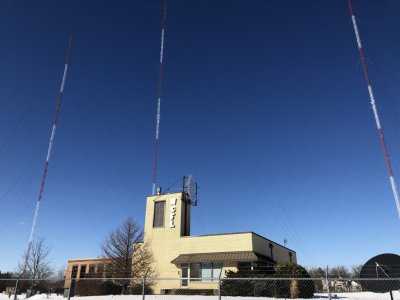
The WSCR tower has been there for many decades. I'm sure it was that the land becoming more valuable was the reason for moving, not the air hazard aspect. I'm seeing more and more incidences of this. Maybe it would be better to use the WMVP towers for other Class A stations, as they are much taller than the WYLL towers, which are electrically very short at 670 and 780. I think there will be a lot of complaints about fading with those short towers. Perhaps if they could have split the expenses between companies, using the taller towers would be more feasible.
The newer AM rules have caused many haphazard things to happen, as have the multiple ownership rules. The FCC allegedly made the new rules to improve the AM band. Much of what I have seen is the new rules causing the better AM facilities to be sacrificed, while Class C and Class D facilities with very low Night power continue to operate. Of course, some of that haphazard loss of stations was the preference for lower power facilities getting translators, once again at the expense of better AM facilities. And where stations have moved under these rules, rarely are the new locations significantly better, except in certain areas.
Of course, the younger people who have taken over from the legacy owners and managers will tell you that no one listens to AM anymore anyway.
Why anyone thought that 250 watt FM translators were going to save AM, except those lower power facilities in small towns where the 250 watt translators actually have comparable service areas, is a mystery. And the FM rules made in the early 1960s, and preference for "First Local Service" under Docket 80-90, made it nearly impossible to serve larger communities with substitute FM facilities in any meaningful way, as has been done in Canada and Mexico.