
• Get involved.
    We want your input!
    Apply for Membership and join the conversations about everything related to broadcasting.

    After we receive your registration, a moderator will review it. After your registration is approved, you will be permitted to post.
    If you use a disposable or false email address, your registration will be rejected.

    After your membership is approved, please take a minute to tell us a little bit about yourself.
    https://www.radiodiscussions.com/forums/introduce-yourself.1088/

    Thanks in advance and have fun!
    RadioDiscussions Administrators

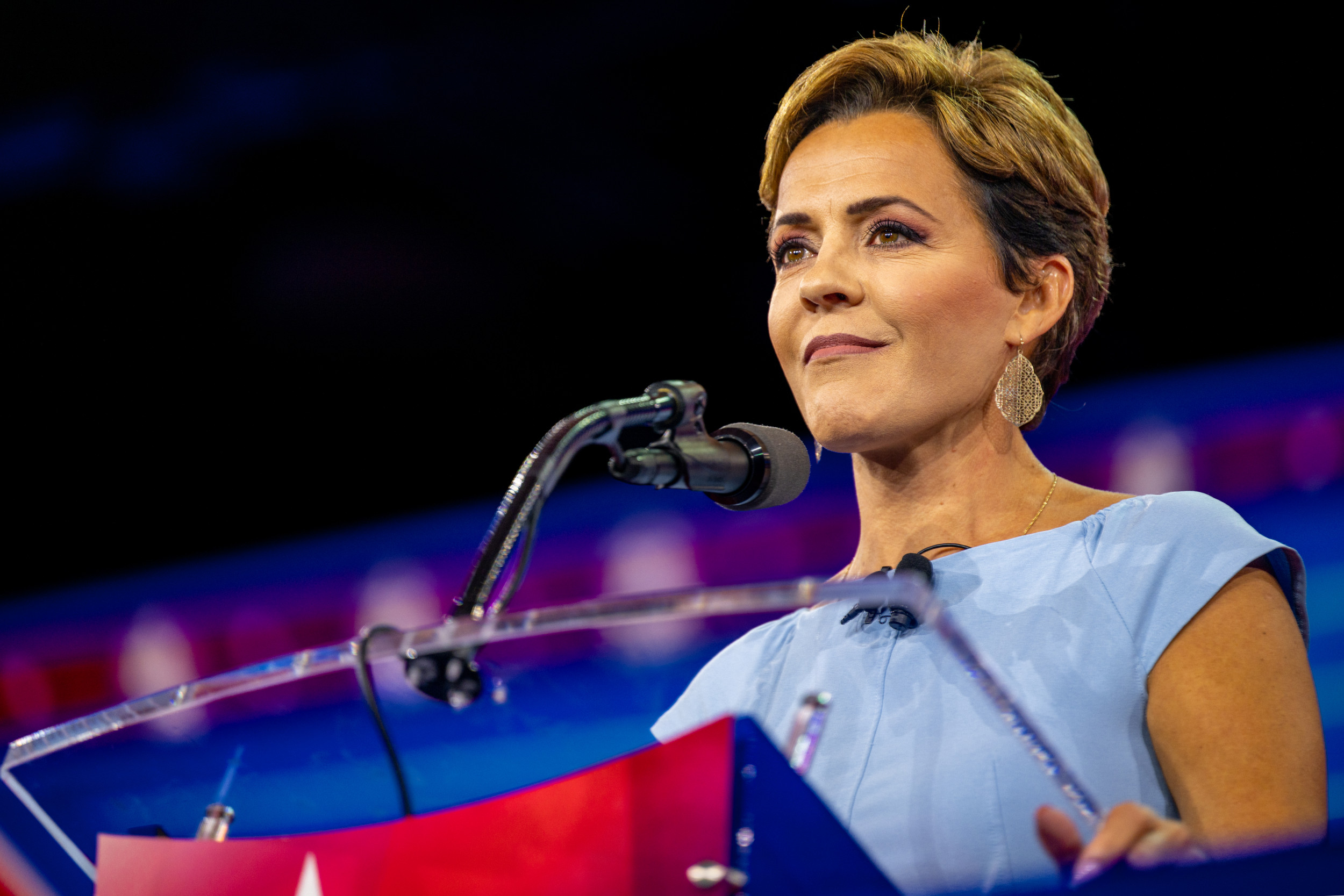
Kari Lake previews her plans for Voice of America in the next Administration.

The white house explained why they shut down the VOA. As I said, it has nothing to do with shortwave or ratings:


They clearly didn't like what VOA had been reporting, and decided to stop it on Friday.
 
As I have told this board on a number of occasions, during all my work in radio in Latin America and nations like Pakistan, I never saw any evidence of listening to the VOA. Even in the 60's (when I turned in a licence I had for a shortwave simulcast with a MW station I bought), I saw little shortwave listening and none to the VOA.

Examinations of the raw data (forms, questionnaires, etc.) for ratings never showed any VOA listening... even below the "made the book" cutoff.

But if nobody listens? I did the official evaluations of Radio Martí several times in its first two decades on the air, and there was no evidence that anyone actually listened due to the existence of local Cuban stations on the same frequency. And assuming that more than an infinitesimally small number of shortwave radios are still used by people around the world is a very incorrect assumption.
If what I fear is going to happen in the U.S. happens, then I think I'd better get my old (1977) Panasonic RF-2800 out of mothballs. I just hope there will be news sources still available on the SW bands that I can trust.
 
If what I fear is going to happen in the U.S. happens, then I think I'd better get my old (1977) Panasonic RF-2800 out of mothballs. I just hope there will be news sources still available on the SW bands that I can trust.
As long as the internet stays up, there are plenty of out-of-U.S. news sources. If the Trump/Musk administrations shuts down the internet for "national security" there won't be much on shortwave to get info from eithet
 
Kari Lake put out her own press release on the EO, and says she intends to implement it.


This agency is not salvageable. From top-to-bottom this agency is a giant rot and burden to the American taxpayer—a national security risk for this nation—and irretrievably broken. While there are bright spots within the agency with personnel who are talented and dedicated public servants, this is the exception rather than the rule.

So what she's saying is they are reviewing all existing staff to see if there are any people they can retain. They'll likely get phone calls soon.

One obvious change is VOA will not be moving to a new building. That had been the plan under Biden. They had found cheaper office space somewhere else. Lake says the move is too expensive.
 
As long as the internet stays up, there are plenty of out-of-U.S. news sources. If the Trump/Musk administrations shuts down the internet for "national security" there won't be much on shortwave to get info from eithet
Will a Trump/Musk-censored internet be next? Could such a concept conceivably come to pass via executive order, or through the complicity of Congress and the Supreme Court?
 
Will a Trump/Musk-censored internet be next? Could such a concept conceivably come to pass via executive order, or through the complicity of Congress and the Supreme Court?

What Brendan Carr has said is that they want to either repeal or reinterpret Section 230 of the communications act that says social media sites aren't liable for the posts by others. They want to control the message. They've been very careful in the EOs so they aren't interfering with existing law.

The VP says he is working some kind of deal with TikTok for the first week of April. When that happens, we'll get a better idea of where things are going.
 

Here is more on the VOA and its basically an extension on why the AP, and Reuters were banned from the Oval Office some of this is that the Associated Press and Reuters continued to dig more dirt on Musk and Trump via lawsuit papers the Trump Administration was in.

The government agency that runs the Voice of America has moved to terminate contracts with The Associated Press, Reuters and Agence France-Presse, and told its journalists Friday to stop using material from the wire services.

Kari Lake, the former broadcaster turned Republican politician who was selected by President Donald Trump to run VOA, estimated the move would save $53 million.

The new administration has quickly asserted its authority at VOA, which has delivered news from an American perspective to countries across the world. While awaiting official approval to take over, Lake was brought on as special adviser at the U.S. Agency for Global Media, which oversees VOA and sister organizations like Radio Free Europe.

She announced via social media on Thursday that she was ending the “expensive and unnecessary contracts” with the wire services.“We should not be paying outside news organizations to tell us what the news is,” said Lake, who ran unsuccessfully for Arizona governor. “With a nearly billion-dollar budget, we should be producing news ourselves. And if that’s not possible, the American taxpayer should demand to know why.”
 
As long as the internet stays up, there are plenty of out-of-U.S. news sources.
I’ve found that I now get most of my news from non-U.S. online sources, such as BBC, CBC, France 24, DW, Australia’s ABC, NHK, and a few others. However having been a shortwave listener since the 1960s I was already familiar with having a large variety of news sources and international perspectives.
 
Update: All three Radio Marti shortwave frequencies are now off the air, confirmed by reports on DX forums and my own listening. VOA frequencies in Portuguese and French beamed to Africa from the USAGM Greenville site are also reported missing, so it appears that facility is now off the air.

The USAGM Botswana relay is reported still on the air with outdated news and music fill.
 
The white house explained why they shut down the VOA. As I said, it has nothing to do with shortwave or ratings:


They clearly didn't like what VOA had been reporting, and decided to stop it on Friday.

Radical-any American who did not vote for, or fully worship Donald Trump. One of the links is to the Washington Free Beacon. Can't wait for the Ohio legislation to rename VOA Park to MAGA something-or-other
 
Yet despite the fact that in day to day life it is difficult to see evidence of people listening to top rated stations, we know that happens because of the extensive research -- something which is simply not done in third world countries.
Yes, it is. Back in the 60's we had sophisticated ratings in Ecuador, and there were a number of research companies that could do perceptual studies. For my news/talk/novelas station, we did some perceptuals in combination with our associated newspaper in the later 1960's

Everywhere I have worked in Latin America from that time forward has had very good research... often better than in the U.S. because labor was so cheap that more interviews could be done within a budget.
Obviously, in rural Africa and Asia there are no Neilsens. The jury's out concerning SW listening, or MW listening over country borders.
Almost every country that has commercial radio has a ratings company and surveys that use the personal interview similar to what The Pulse did. That is a very good system, as properly used aided recall is better than a diary but too expensive to use in the U.S.
Compared to the cost of some other items in the US budget, I don't think USAGM is breaking the American bank.

Even looking at the online numbers on VOA's website, the number of visits per language group is rather small, and given that internet access in rural parts of the third world is spotty to non-existent, who knows if anyone listens to the SW broadcasts.
Most third world population is now urban, and areas like Sub-Saharan Africa have phone systems tied into an electronic money system where people can be paid, even for piece work, into their phone and buy stuff at the local markets with it.

And, in some areas, the rural zones use vernaculars of very limited usage languages, making it impossible to reach them with wide area short wave.

As an example, Mexico has over 100 languages and dialects, all spoken in limited parts of the country.
Starting with Nahuatl, spoken by 1.6 million Mexicans, there are 16 languages spoken by over 100,000 Mexicans. They won't be listening to Spanish language VOA broadcasts. The same kind of language subsets exist in much of Africa and more rural areas of S.E. Asia.

Beyond that, the education level of rural residents in underdeveloped nations makes any assumption that they might like and enjoy VOA programming a ridiculous assumption.
 
Beyond that, the education level of rural residents in underdeveloped nations makes any assumption that they might like and enjoy VOA programming a ridiculous assumption.

Then again, you're assuming the programming will remain as its been. Clearly the purpose of Saturday's shutdown was to end the status quo. Whatever happens next won't be like the old VOA. The future won't be like the past. What's happening now is similar to stunting before a format change in commercial radio.
 
Much of that is tied into the predominant religious culture, whether it be devout Catholicism or Evangelical Protestantism. Both have authoritarian and hierarchical structures led by charismatic leaders. Much of that construct is emulated and reflected in local governments and politics.

The U.S., which for most of its history was dominated by a bland mishmash of smaller, decentralized and independent mainstream Protestant denominations, tended to avoid that dynamic…until the past few decades.

I will defer to David E. and his experience in the region for a more concise analysis.
Your comments are quite relevant.

All Latin American nations are highly centralized. There may be "states" in Mexico, but they do not have the influence and power that states do here. Everything comes out of the national government. And in Mexico, the Catholic Church has been prohibited from political intervention for over 100 years; religious radio was totally prohibited until there was a recent relaxation. So attributing all of the difference to religion is not correct and does not apply to all nations.

The only politicians with some influence are the mayors of the big cities. My partner in one station in Ecuador went on to almost win the presidential election, and then spent 6 terms as mayor of the largest city where he improved roads, security, industrial park development, and so on.

Otherwise, the elected equivalent of senators and congressmen have the best chance at gaining presidential power. Most nations have three or more major parties, unlike the United States. So there is constant realignment of power and we often see one charismatic person become a political party on their own.

This has media implications, as each major party will have its radio voice or voices and, still, a newspaper, So there is lots more news/talk on the radio than in the U.S. Buenos Aires has a dozen big talk and news stations, most with 50,000 to 100,000 watts!
 
Then again, you're assuming the programming will remain as its been. Clearly the purpose of Saturday's shutdown was to end the status quo. Whatever happens next won't be like the old VOA. The future won't be like the past. What's happening now is similar to a format change in commercial radio.
Shortwave covers regions of many countries or single large ones. They can't possibly target all the thousands of languages and dialects spoken around the world. As mentioned, Mexico alone has over 100 languages and dialects, with their government recognizing over 60 as separate tongues.
 
Shortwave covers regions of many countries or single large ones. They can't possibly target all the thousands of languages and dialects spoken around the world. As mentioned, Mexico alone has over 100 languages and dialects, with their government recognizing over 60 as separate tongues.

I think this is a chance for Marco Rubio to flex his muscles in a way that won't get him in trouble with the boss.
 
If what I fear is going to happen in the U.S. happens, then I think I'd better get my old (1977) Panasonic RF-2800 out of mothballs. I just hope there will be news sources still available on the SW bands that I can trust.
If the VOA is gone, then the BBC World Service is pretty much the last source for broad worldwide English language news on shortwave, if you are in a position to receive it. Very difficult for North America these days, given the extremely limited BBC shortwave transmission schedule and beams currently in use.

English language news is available on some other SW broadcasters, but it tends to be either domestic or regional in scope, or extremely skewed by political means, or simply lame.
 
Your comments are quite relevant.

All Latin American nations are highly centralized. There may be "states" in Mexico, but they do not have the influence and power that states do here. Everything comes out of the national government. And in Mexico, the Catholic Church has been prohibited from political intervention for over 100 years; religious radio was totally prohibited until there was a recent relaxation. So attributing all of the difference to religion is not correct and does not apply to all nations.
My point was that those living in an authoritarian/hierarchical/charismatic religious environment might be more susceptible or amenable to similar attributes in the political and social arenas, regardless of whether those religious institutions have any direct control over government. But thanks for your analysis!
 
The Washington Post just did an article about Lake in the light of the changes at VOA. There are a couple of paragraphs about the changes she hoped to make:

During one phone call, Lake said the outlet had not adapted with the times and needs to produce more digital-friendly content to expand its audience. She also spoke of a need to examine audience numbers, bureaus and content. Lake was pondering how to “rebuild audiences that have fallen off” and “shift resources,” the person recalled of the call. Lake also said she wanted to leverage content the government already has, including footage created by NASA and the U.S. Army Corps of Engineers, and archival records at the Library of Congress, the person said.


Back
Top Bottom