That was a whole other world.Was "Paradise by the Dashboard Light"

-
Get involved.
We want your input!
Apply for Membership and join the conversations about everything related to broadcasting.
After we receive your registration, a moderator will review it. After your registration is approved, you will be permitted to post.
If you use a disposable or false email address, your registration will be rejected.
After your membership is approved, please take a minute to tell us a little bit about yourself.
https://www.radiodiscussions.com/forums/introduce-yourself.1088/
Thanks in advance and have fun!
RadioDiscussions Administrators
You are using an out of date browser. It may not display this or other websites correctly.
You should upgrade or use an alternative browser.
You should upgrade or use an alternative browser.
Song you wondered how they they ever got played on Top 40 radio
- Thread starter secondchoice
- Start date
Cyndi Lauper, as it turned out, did NOT record THAT "Time After Time". The stations playing that music played her song anyway.Interesting quote from him (in the obit) in 2004: "We aren't abandoning Frank Sinatra and Ella Fitzgerald, but we also want to support newer artists and new recordings,” he said. “Crystal Gayle and Cyndi Lauper have done very nice recordings of classic songs. That’s how this music will be carried forward.”

That was a whole other world.
Actually, I always thought Lou's other big hit, "Rhapsody in the Rain", inspired "Paradise by the Dashboard Light":
Baby the raindrops play for me
A lonely rhapsody 'cause on our first date
We were makin' out in the rain
And in this car our love went much too far
It was exciting as thunder
Tonight I wonder where you are
The windshield wipers seemed to say
"Together - together - together - together"
And now they are saying
"Oh, ne... ver, ne... ver"
Ooh-wee, ooh-wee, baby
Rhapsody in the rain
Rhapsody in the rain
Angels keep cryin' for me (don't... stop)
Angels keep cryin' for me (don't... stop)
Baby, I'm parked outside your door
Remember makin' love, makin' love, we were makin' love in the storm
(sha-la-la-la la-la)
And then a flash from above
Lightning - lightning - lightning - lightning
Just li-ike our love
It was exciting, exciting
Ooh-wee, ooh-wee, baby
Baby doncha hear my heart
You got it drowning out the radio
I've been waiting so long
For you to come along and have some fun
And I gotta let you know
No you're never gonna regret it
So open up your eyes I got a big surprise
It'll feel all right
Well I wanna make your motor run
And now our bodies are oh so close and tight
It never felt so good, it never felt so right
And we're glowing like the metal on the edge of a knife
Glowing like the metal on the edge of a knife
C'mon! Hold on tight!
C'mon! Hold on tight!
Though it's cold and lonely in the deep dark night
I can see paradise by the dashboard light
Paradise by the dashboard light
You got to do what you can
And let Mother Nature do the rest
Ain't no doubt about it
We were doubly blessed
'Cause we were barely seventeen
And we were barely dressed
Cyndi Lauper, as it turned out, did NOT record THAT "Time After Time". The stations playing that music played her song anyway.
Andy by 2004, the time of that interview, 20 years after Cyndi's "Time After Time", he was well aware of that.
Most likely, what he was referring to was Cyndi's album from 2003, the year before:
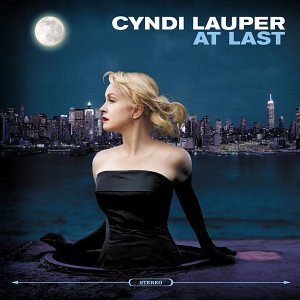
At Last (Cyndi Lauper album) - Wikipedia

There was no specific Lauper tune specified in the obit.Cyndi Lauper, as it turned out, did NOT record THAT "Time After Time". The stations playing that music played her song anyway.
Here's a gift link to the obit: https://www.nytimes.com/2016/12/14/...e_code=1.RE8._Z2Q._d01GB1Fds_T&smid=url-share -- I think the obit could have been a little more precise on some details but the basic outlines are clear.Andy by 2004, the time of that interview, 20 years after Cyndi's "Time After Time", he was well aware of that.
Most likely, what he was referring to was Cyndi's album from 2003, the year before:
I suppose there could be entire threads about popular artists performing songs from the "Great American Songbook", a genre that seems to be calcifying a little bit and which is definitely a niche interest. At the same time, those tunes require actual musical talent and the ability to sing on-key, something you can't really take for granted any more.
(cough-cough) Bob Dylan ... (cough-cough) Rod Stewart ...At the same time, those tunes require actual musical talent and the ability to sing on-key,
At least they can articulate. Most of the current crop of popular singers sound like they just came back from the dentist and the anesthetic hasn't worn off yet.(cough-cough) Bob Dylan ... (cough-cough) Rod Stewart ...

K.M. Richards
Program Director, The Eighties Channel™
(cough-cough) Bob Dylan ... (cough-cough) Rod Stewart ...
Dylan even talks off-key.

There were attempts 20 years ago to build formats that heavily included then-contemporary artists doing songs from the Great American Songbook. They all crashed and burned.
The problem is a basic one: Demographics. Taking the same material and having it done by younger (marginally, now---Cyndi Lauper is 72) artists might get some Boomers to listen, but not enough of them all at once to make a difference in the numbers. That's why what's left of the Standards format is now playing 40-50 year old Top 40 hits from Billy Joel and Jimmy Buffett.
Standards albums are something that rock-era artists have been attempting, with mixed results, for 55 years. The first of these albums was Ringo Starr's "Sentimental Journey", in 1970, which he says he recorded "for me mum" (Ringo's 84 and his mom, were she still alive, would be 111). It made it to #22, but he was a Beatle.
Harry Nilsson's "A Little Touch of Schmilsson" in the night was considered a big risk for Harry, who was hot when he released it in 1973. It killed a streak, peaking at #46, but it's a lovely album, with orchestration by Gordon Jenkins.
Remarkably, it was Willie Nelson who proved it could work---sorta---with "Stardust" in 1978, which peaked at #30.
After that was probably Carly Simon's "Torch" from 1981, which I liked (mostly), but which stiffed at #50.
And then, Linda Ronstadt's trilogy of LPs with Nelson Riddle, "What's New" (1983), which peaked at #3, "Lush Life" (1984), which peaked at #13 and "For Sentimental Reasons" (1986), which stalled at #46 but still went Platinum.
Since then, it seems like everyone has done a standard album---or several. I never could warm up to the Rod Stewart albums, but I thought the Natalie Cole albums of her dad's songs were terrific, James Taylor's "American Standard" I think is wonderful, Joni Mitchell's "Both Sides Now", apart from the title track, is a really, really good standards album, and...y'know what? In the right mood, in the right atmosphere, the Dylan standards albums are...well, not as bad as you'd expect.
The problem is a basic one: Demographics. Taking the same material and having it done by younger (marginally, now---Cyndi Lauper is 72) artists might get some Boomers to listen, but not enough of them all at once to make a difference in the numbers. That's why what's left of the Standards format is now playing 40-50 year old Top 40 hits from Billy Joel and Jimmy Buffett.
Standards albums are something that rock-era artists have been attempting, with mixed results, for 55 years. The first of these albums was Ringo Starr's "Sentimental Journey", in 1970, which he says he recorded "for me mum" (Ringo's 84 and his mom, were she still alive, would be 111). It made it to #22, but he was a Beatle.
Harry Nilsson's "A Little Touch of Schmilsson" in the night was considered a big risk for Harry, who was hot when he released it in 1973. It killed a streak, peaking at #46, but it's a lovely album, with orchestration by Gordon Jenkins.
Remarkably, it was Willie Nelson who proved it could work---sorta---with "Stardust" in 1978, which peaked at #30.
After that was probably Carly Simon's "Torch" from 1981, which I liked (mostly), but which stiffed at #50.
And then, Linda Ronstadt's trilogy of LPs with Nelson Riddle, "What's New" (1983), which peaked at #3, "Lush Life" (1984), which peaked at #13 and "For Sentimental Reasons" (1986), which stalled at #46 but still went Platinum.
Since then, it seems like everyone has done a standard album---or several. I never could warm up to the Rod Stewart albums, but I thought the Natalie Cole albums of her dad's songs were terrific, James Taylor's "American Standard" I think is wonderful, Joni Mitchell's "Both Sides Now", apart from the title track, is a really, really good standards album, and...y'know what? In the right mood, in the right atmosphere, the Dylan standards albums are...well, not as bad as you'd expect.
Last edited:
The term "trick" may have shifted meanings over time, producing a jarring result when viewed with present-day eyes.
That was my point. It went from something you (or at least Rogers & Hart) would call your wife to an airshift in 13 years. At least once.
Digging further, in the 1860s, "trick" was slang for bank robbery, and it started being used to describe clients of prostitutes around 1915. Lorenz Hart wrote the Rogers & Hart lyrics, and he never married, so using that term in "The Most Beautiful Girl in the World" in 1935 at least didn't cause him trouble at home.
I could never stand "Spill The Wine" by Eric Burden and War. Your mileage may vary...
I could never stand "Spill The Wine" by Eric Burden and War. Your mileage may vary...
It helped if you had The Real Don Steele back-announcing it.
Last edited:
It survived into the 1970s, at least in Houston, where one would have thought that the more salacious meaning of "trick" would have predominated, as evidenced by this mention by the Houston Chronicle's Ann Hodges in her column of May 30, 1973:That was my point. It went from something you (or at least Rogers & Hart) would call your wife to an airshift in 13 years. At least once.
Ron Morgan, KULF's popular music director ... will be doing his last local broadcast on June 9. He's going to station KSD in St. Louis, where he'll be handling the afternoon radio trick and also some TV sports.
By the way, Morgan was at several St. Louis stations after KSD; he passed away in 2003 at the age of 60 in the St. Louis suburb of Chesterfield.
I have to confess that, until today, the term "trick" for an airshift was something I never would have ever contemplated.
I think part of the challenge is that the Great American Songbook is a niche interest, just as live Broadway theater is a niche interest that tends to appeal to people looking for that type of culture. That's not to say it isn't valuable, but it wouldn't be popular culture that's going to bring in a mass audience. I think it's a similar problem to that of classical-music formats: adherents are very motivated and engaged in that kind of music, but their numbers are small. Radio is a game of numbers and not of intensity.There were attempts 20 years ago to build formats that heavily included then-contemporary artists doing songs from the Great American Songbook. They all crashed and burned.
The problem is a basic one: Demographics. Taking the same material and having it done by younger (marginally, now---Cyndi Lauper is 72) artists might get some Boomers to listen, but not enough of them all at once to make a difference in the numbers. That's why what's left of the Standards format is now playing 40-50 year old Top 40 hits from Billy Joel and Jimmy Buffett.
{...}
Since then, it seems like everyone has done a standard album---or several. I never could warm up to the Rod Stewart albums, but I thought the Natalie Cole albums of her dad's songs were terrific, James Taylor's "American Standard" I think is wonderful, Joni Mitchell's "Both Sides Now", apart from the title track, is a really, really good standards album, and...y'know what? In the right mood, in the right atmosphere, the Dylan standards albums are...well, not as bad as you'd expect.
Now if someone wanted to try to create a listener-supported format with the Songbook, standards, etc., that would be interesting. But I'd still have my doubts.
I think part of the challenge is that the Great American Songbook is a niche interest, just as live Broadway theater is a niche interest that tends to appeal to people looking for that type of culture. That's not to say it isn't valuable, but it wouldn't be popular culture that's going to bring in a mass audience. I think it's a similar problem to that of classical-music formats: adherents are very motivated and engaged in that kind of music, but their numbers are small. Radio is a game of numbers and not of intensity.
Now if someone wanted to try to create a listener-supported format with the Songbook, standards, etc., that would be interesting. But I'd still have my doubts.
Well, it’s niche because the mass audience for it is (largely) dead. It’s not an art form that transcended generations at a sustained level of popularity, and I think it’s at least likely that someone will be saying that about rock 30-40 years from now.

In fact, I think we could start a "is rock dead?" or, at least, "is rock radio dead?" thread. The mainstream rock stations are playing mostly classic rock. Alt is a format that has had few if any successful launches in the last 15 years or so... and it seems to be migrating to a non-com station sector just like Adult Album Alternative is doing.Well, it’s niche because the mass audience for it is (largely) dead. It’s not an art form that transcended generations at a sustained level of popularity, and I think it’s at least likely that someone will be saying that about rock 30-40 years from now.
Even the Rock 'n' Roll Hall of Fame is becoming the Pop Music Hall of Fame with inductions that have only loose ties to rock.
In fact, I think we could start a "is rock dead?" or, at least, "is rock radio dead?" thread. The mainstream rock stations are playing mostly classic rock. Alt is a format that has had few if any successful launches in the last 15 years or so... and it seems to be migrating to a non-com station sector just like Adult Album Alternative is doing.
Even the Rock 'n' Roll Hall of Fame is becoming the Pop Music Hall of Fame with inductions that have only loose ties to rock.
I mean, we could start that thread, but do you want to moderate it?
224 pages of "No, it's not!" and "Elvis and the Beatles will live forever". "Kids will embrace it if you only expose them enough to it!"
As I near 70, I'm ready to call it:
All music created with a mass commercial audience in mind lasts for as long as that mass audience is alive, if it lasts that long. It declines in popularity over the lifespan of that audience. There are exceptions, but they are extremely rare and impossible to predict.
---Hagerty's Law.
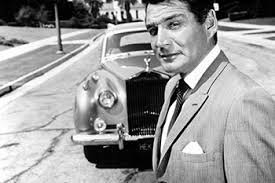
Linda Ronstadt's standards albums were probably the best of the bunch.There were attempts 20 years ago to build formats that heavily included then-contemporary artists doing songs from the Great American Songbook. They all crashed and burned.
The problem is a basic one: Demographics. Taking the same material and having it done by younger (marginally, now---Cyndi Lauper is 72) artists might get some Boomers to listen, but not enough of them all at once to make a difference in the numbers. That's why what's left of the Standards format is now playing 40-50 year old Top 40 hits from Billy Joel and Jimmy Buffett.
Standards albums are something that rock-era artists have been attempting, with mixed results, for 55 years. The first of these albums was Ringo Starr's "Sentimental Journey", in 1970, which he says he recorded "for me mum" (Ringo's 84 and his mom, were she still alive, would be 111). It made it to #22, but he was a Beatle.
Harry Nilsson's "A Little Touch of Schmilsson" in the night was considered a big risk for Harry, who was hot when he released it in 1973. It killed a streak, peaking at #46, but it's a lovely album, with orchestration by Gordon Jenkins.
Remarkably, it was Willie Nelson who proved it could work---sorta---with "Stardust" in 1978, which peaked at #30.
After that was probably Carly Simon's "Torch" from 1981, which I liked (mostly), but which stiffed at #50.
And then, Linda Ronstadt's trilogy of LPs with Nelson Riddle, "What's New" (1983), which peaked at #3, "Lush Life" (1984), which peaked at #13 and "For Sentimental Reasons" (1986), which stalled at #46 but still went Platinum.
Since then, it seems like everyone has done a standard album---or several. I never could warm up to the Rod Stewart albums, but I thought the Natalie Cole albums of her dad's songs were terrific, James Taylor's "American Standard" I think is wonderful, Joni Mitchell's "Both Sides Now", apart from the title track, is a really, really good standards album, and...y'know what? In the right mood, in the right atmosphere, the Dylan standards albums are...well, not as bad as you'd expect.
Even though I really love James Taylor's music (and actually took my fiancée to see him in concert last summer - she also really loves James), I thought his standards album was alright. It seemed to me like a lot of autotune was used on his voice (which on the one hand is understandable considering his age, but on the other hand... it's just not very well suited to standards). Wish he would've done that years ago back in the 70s or 80s - I bet it would have been fantastic.
Thanks for the compilation of standards albums there - that is really helpful to see the evolution of the genre.
Well, it’s niche because the mass audience for it is (largely) dead. It’s not an art form that transcended generations at a sustained level of popularity, and I think it’s at least likely that someone will be saying that about rock 30-40 years from now.
Yeah, it seems to me that rock is pretty much dead. There's not much new happening there, and I'm not sure that there's the younger interest in it that a lot of old rockers think/wish there is...In fact, I think we could start a "is rock dead?" or, at least, "is rock radio dead?" thread. The mainstream rock stations are playing mostly classic rock. Alt is a format that has had few if any successful launches in the last 15 years or so... and it seems to be migrating to a non-com station sector just like Adult Album Alternative is doing.
Even the Rock 'n' Roll Hall of Fame is becoming the Pop Music Hall of Fame with inductions that have only loose ties to rock.