Maybe. This was about 20 years ago so things may have changed, but when the Mariners were on KOMO, that station would continue their news format online while the station went to Mariners broadcasts. You had to pay for an MLB pass in order to get the games online. Several years ago, I did hear a Mariners game online, but the data on Tunein said the game wasn't being streamed, so I'm not sure what was up with that. It seems as if MLB highly frowns upon at the very least making game broadcasts available via local station streams. If a game is not available on radio at all or a team is part of a smaller league, it's likely much easier to stream.

-
Get involved.
We want your input!
Apply for Membership and join the conversations about everything related to broadcasting.
After we receive your registration, a moderator will review it. After your registration is approved, you will be permitted to post.
If you use a disposable or false email address, your registration will be rejected.
After your membership is approved, please take a minute to tell us a little bit about yourself.
https://www.radiodiscussions.com/forums/introduce-yourself.1088/
Thanks in advance and have fun!
RadioDiscussions Administrators
You are using an out of date browser. It may not display this or other websites correctly.
You should upgrade or use an alternative browser.
You should upgrade or use an alternative browser.
FCC & Radio Ownership Limits
- Thread starter TheBigA
- Start date
Maybe. This was about 20 years ago so things may have changed, but when the Mariners were on KOMO,
We're talking about college football.
I saw a random post on Bluesky before a Tennessee Volunteers game. "Where can I get the radio broadcast of the game tonight. I don't subscribe to SiriusXM or Tune-in". I so much wanted to say "on an actual radio".
Which is funny because not everything is streamed. I've literally gone on some stations and it will have this recorded loop saying the program wasn't available online.
Which is funny because not everything is streamed. I've literally gone on some stations and it will have this recorded loop saying the program wasn't available online.
Many radio stations have had problems getting the rights to stream certain popular programs, especially sports play-by-play, over the Internet. The leagues, team owners, and athletes all want a piece of the revenue generated by people forking over their money to watch or listen to team sports through official sources. Allowing them to listen free through unofficial sources cuts into that revenue source.

That had nothing to do with either agency. The infrastructure, meaning roads, bridges, power lines, potable water, power plants, sewers, police stations and government agency affixes was so thoroughly destroyed that outside of parts of the larger cities, nothing worked. Many towns had to have food and water dropped in by helicopter.Keep in mind who was in charge of FEMA and the FCC at that time.
Puerto Rico is very mountainous except for some areas on the coast, and there are hundreds and hundreds of bridges that were damaged or destroyed, so the first issue was to get food and water in, and then start repairing roads and bridges. Even with heavy equipment and crews sent in, it took weeks to regain access many municipalities (PR equivalent of counties).
Note that I only count public bridges. Many housing developments in the hills around cities like the San Juan metro, Ponce, Mayagüez and Arecibo have one entrance that runs over a little gully or gorge that has a big culvert pipe, compacted earth and pavement over it. Many hundreds more such areas were isolated, with people unable to get in or out except by foot... often walking miles to get food.
It was not until roads and temporary bridges were taken care of that restoration of electricity, phones, cellular service, etc. could start to be fixed. And those home developments with bridges or culverts washed out had to wait until private enterprise workers finished the bigger projects... often weeks.
My example of Puerto Rico is non-political. The FCC quickly authorized any kind of temporary service, but the major TV stations had lost their towers and had their transmitter buildings and gear destroyed by the falling steel. A large number of radio stations had flooding, building or tower damage; the FCC does not fix broken stations.
FEMA did a fair to moderately good job. Its biggest issues were in the fact that Puerto Rico is an island about a thousand miles from the nearest cargo port (Jacksonville) and some of Puerto Rico’s port infrastructure was also damaged; some port areas had to be dredged to be accessible again. Air services were mostly, due to weight and size, limited to foods, medicines and things like circuit boards and antennas for cellular sites.
It took about 2 weeks to get a simple bulldozer to the Island. Just the port-to-port transit time is about 4 days. Add in a day to unload stuff at the port of embarkation, a day or so to load a full container ship, another day to unload on the Island plus transit to the the port of origin and away from the port of destination and you have 10 days at best and two weeks on average.
But throughout the storm and the rebuilding, at least one, and later, many radio stations were there. Radio was the only communications working after the storm except for cellular in some small parts of metro San Juan.
Last edited:
This is not a "problem". It is a business situation where the teams or leagues have control over broadcasts outside of local broadcaster networks or stations. In more and more cases, the teams negotiate a time buy for games on stations, retaining all rights themselves. The teams and leagues are, more and more, removing individual stations to "own" rights as the teams are buying blocks of time and running the show; the stations may, in many cases, get the right to sell a percentage of time in the games to non-competitive sponsors.Many radio stations have had problems getting the rights to stream certain popular programs, especially sports play-by-play, over the Internet.
That is the idea. But I can remember going back to 1990 negotiating the Seminoles games for WTNT and WNLS in Tallahassee. The team had a company that produced the broadcasts and sold the time. We were allowed, with restrictions, to identify the Noles with the stations, and we sold spots in the games.The leagues, team owners, and athletes all want a piece of the revenue generated by people forking over their money to watch or listen to team sports through official sources. Allowing them to listen free through unofficial sources cuts into that revenue source.
Had there been streaming back then, we would likely not have had the rights to the stream and probably would not have been able to sell ads in that imaginary stream. That is because we did not own the rights to the team or the games... just the obligation to broadcast the games and the right to sell some spots. And that was 35 years ago.
The emergency thing is a red herring. If the best argument for radio is "what about emergencies!" then it may as well be turned off, and turned on during emergencies.
What about the 99.99% of the broadcast year when we're not having any kind of emergency? To me, it's about togetherness, storytelling, music discovery and community - whether that's my local community, or a wider community of people interested in a type of music or a topic being talked about on air. Those are the things I struggle to obtain from my Spotify subscription, and these days it's "all radio" vs "music apps" rather than radio station vs radio station.
What about the 99.99% of the broadcast year when we're not having any kind of emergency? To me, it's about togetherness, storytelling, music discovery and community - whether that's my local community, or a wider community of people interested in a type of music or a topic being talked about on air. Those are the things I struggle to obtain from my Spotify subscription, and these days it's "all radio" vs "music apps" rather than radio station vs radio station.
The issue is that most of us find "community" and interaction online now, and don't want some person we don't even know interrupting the music. For "talking about things" we have better sources.What about the 99.99% of the broadcast year when we're not having any kind of emergency? To me, it's about togetherness, storytelling, music discovery and community - whether that's my local community, or a wider community of people interested in a type of music or a topic being talked about on air.
In the later 60's, I owned a top 40 station that was located on the second floor of a building that was on the main suburban street of the market. Kids who had cars would drive up and down in the afternoon, waving at other kids and my DJs in the process.
Today, those kids are somewhere else, with a smartphone or tablet, chatting and posting. They could give a darn about the radio station (which I put on the air 61 years ago this Friday).
I think he'll come around once he talks to his advisors. If anything, the change, at least with the mergers on the table, would place more leverage in the hands of station groups the President would look at favorably relative to the networks. I suspect that there soon will be a relaxation of the caps.How do you explain that to the president?

Trump Opposes FCC Raising 39% TV Ownership Cap if It Would ‘Enlarge’ ‘Fake News Networks’ Like ABC, NBC — but It Wouldn’t Do That
President Donald Trump weighed in on the issue of the FCC's potential move to raise or eliminate the current 39% cap on local TV station owners -- saying he opposes it if the result would be an "expansion of the fake news networks," citing ABC News and NBC News specifically.variety.com
I think he'll come around once he talks to his advisors. If anything, the change, at least with the mergers on the table, would place more leverage in the hands of station groups the President would look at favorably relative to the networks. I suspect that there soon will be a relaxation of the caps.
I agree they will relax the caps, but they'll do so regardless of what the president thinks. He doesn't have to approve it. He's not going to fire Carr. It'll just be something they do without him.
Maybe. This was about 20 years ago so things may have changed, but when the Mariners were on KOMO, that station would continue their news format online while the station went to Mariners broadcasts. You had to pay for an MLB pass in order to get the games online. Several years ago, I did hear a Mariners game online, but the data on Tunein said the game wasn't being streamed, so I'm not sure what was up with that. It seems as if MLB highly frowns upon at the very least making game broadcasts available via local station streams. If a game is not available on radio at all or a team is part of a smaller league, it's likely much easier to stream.
At least in the local market, streaming of MLB games is now allowed. I believe MLB also allows streaming on non-mobile devices outside of local markets now. I remember working for a Cardinals affiliate more than 20 years ago and having to pull the patchcords to the stream in the rackroom downstairs before the Buck at Bat show and not being allowed to reconnect them until after the wrap up show. I really don't like baseball that much unless I'm in the stadium. So, I've never tried listening to a game on my local affiliates, but at least the flagships can stream in their local markets now.
The NFL recently started allowing the streaming of its games within a certain distance of the football stadium. A few weeks ago, I was sitting on the patio at Jess & Jim's Steakhouse in Martin City, MO listening to the Chiefs/Colts game on my iPhone via the Audacy app on KFNZ-FM. My house, however, is a little too far from Arrowhead Stadium to get the games; I either get Fox Sports Net programming from KFNZ 610 or a message on repeat telling me the play-by-play isn't available on mobile in my area when I tune in KFNZ-FM on my phone. So, I have to finish walking my dog before the opening kickoff!
College football also allows streaming of the play-by-play audio, though you may still have to be in the local market in order to get the audio via your favorite station. Those who use Learfield, which is most of the Big XII and SEC (and possibly other conferences), are available via the Varsity app, and most offer the play-by-play on their own team apps.
Okay. I don't know how to find the articles that said it was the other way around in NC.My post was about the FCC response to Hurricane Helene. Their priority was about restoring cell service and providing discounted cell and broadband services:
There is this but they expect you to subscribe.
Here's something else but it doesn't really say much.

How a local radio station became a lifeline after Helene roared through North Carolina
As Helene bore down on the mountains of North Carolina, an Asheville radio station helped coordinate wellness checks and connect the stranded with resources.
 www.cbsnews.com
WNAM Appleton, WI (ABM) had the NFL Packers but the stream didn't.Maybe. This was about 20 years ago so things may have changed, but when the Mariners were on KOMO, that station would continue their news format online while the station went to Mariners broadcasts. You had to pay for an MLB pass in order to get the games online. Several years ago, I did hear a Mariners game online, but the data on Tunein said the game wasn't being streamed, so I'm not sure what was up with that. It seems as if MLB highly frowns upon at the very least making game broadcasts available via local station streams. If a game is not available on radio at all or a team is part of a smaller league, it's likely much easier to stream.
College football is almost as big of a business as professional sports these days, so the conferences may have similar rules. I am honestly not up on the streaming restrictions put on sports teams.We're talking about college football.

To me, it's about togetherness, storytelling, music discovery and community - whether that's my local community, or a wider community of people interested in a type of music or a topic being talked about on air. Those are the things I struggle to obtain from my Spotify subscription, and these days it's "all radio" vs "music apps" rather than radio station vs radio station.
The issue is that most of us find "community" and interaction online now, and don't want some person we don't even know interrupting the music. For "talking about things" we have better sources.
Miss Tuned understands radio's unique selling proposition, and more broadly, understands what people still truly want from radio.
David's dismissal of this concept, which is frequently echoed by others on this site, is a glaring example of how out of touch so many so-called leaders in radio are today.
Fred Jacobs, who has to be one of my favorite radio consultants -- one who still cares about content and talent and frequently articulates the same opinions I post about on this site on a regular basis -- just spoke on this topic in an interview just published today. Fred says:
The big finding is the ongoing power of both personality and “local” year-in-and-year-out in Techsurvey. These aren’t just important to fans of radio; they also happen to be the defining differences between broadcast radio and virtually everyone else. (An aside: In our dealings with automakers over the past two decades, when we tell them we’re in radio and we talk about the value of the medium TO THEM, they always bring up the power and value of air talent and connection to the local community. Every time. What does that tell you about their obvious value?)
This is an amazing interview in its entirely. With apologies to Lance -- I don't make a habit of linking to your competitors, but I wish everyone here would take a few minutes to read it.
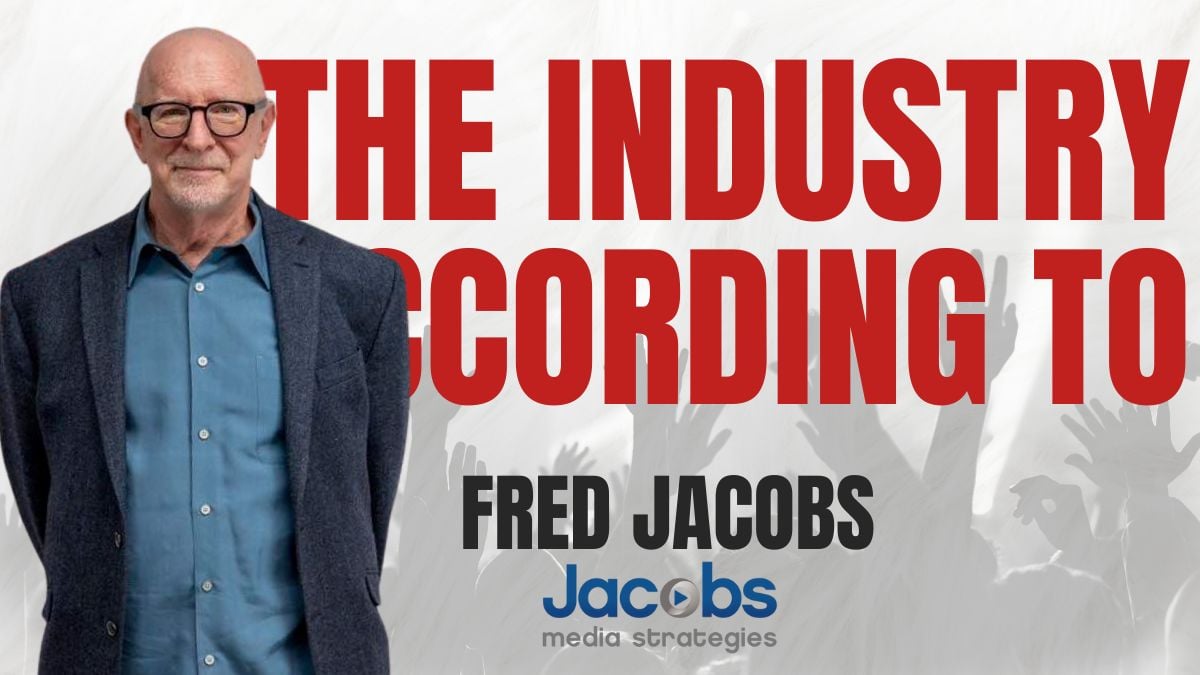
The Industry According To...Fred Jacobs, Jacobs Media
Radio researcher and consultant Fred Jacobs dives into the hottest topics and trends in media with Keith Cunningham.
 barrettmedia.com
Miss Tuned understands radio's unique selling proposition, and more broadly, understands what people still truly want from radio.
People want what people want. It varies from person to person. You can't generalize. Some people want storytelling, and some people don't. Some people want new music discovery, and some people want classic hits. The radio dial offers a range of choices, from commercial and non-commercial operators. If that range of choices isn't enough, there are other places to go. In some cases, the best choice for some people is to pay for what they want. That's usually better than depending on advertisers or others to pay.
I think he'll come around once he talks to his advisors. If anything, the change, at least with the mergers on the table, would place more leverage in the hands of station groups the President would look at favorably relative to the networks. I suspect that there soon will be a relaxation of the caps.
What the current U.S. president wants is to have the caps lifted on those who support and have them clamped down on those who don't and publicly criticize him. He fails to understand or appreciate (as TheBigA has hinted at several times) that the law is supposed to apply equally to broadcasters, regardless of whether they support him or not.
He fails to understand or appreciate (as TheBigA has hinted at several times) that the law is supposed to apply equally to broadcasters, regardless of whether they support him or not.
Whenever this comes up at white house briefings, the way they explain a lot of the president's social media posts is: He has a first amendment right to express himself. Not everything he says should be viewed as government policy. He sometimes just expresses his personal thoughts. So that's how I take it. Watch what they do, not what they say.
College football IS a professional sport these days. An ocean of money sloshing around, and everyone is getting paid.College football is almost as big of a business as professional sports these days
College athletics are now ancillary businesses operated by colleges and universities, rather than an integral part of the overall academic experience.
What I understand is that average to weak local shows can't compete with Bobby Bones, Seacrest and Charlemagne. Those "big" shows have access to artists and contacts for content that the station in Wichita or Cleveland does not.Miss Tuned understands radio's unique selling proposition, and more broadly, understands what people still truly want from radio.
David's dismissal of this concept, which is frequently echoed by others on this site, is a glaring example of how out of touch so many so-called leaders in radio are today.
Fred Jacobs, who has to be one of my favorite radio consultants -- one who still cares about content and talent and frequently articulates the same opinions I post about on this site on a regular basis -- just spoke on this topic in an interview just published today. Fred says:
In the later 50's, TV learned that local stations could not compete with the late night show with Steve Allen and then Johnny. Initially, radio did not do this do to connection costs.
And most people (and one-to-many radio is all about "most people" and not "some people" or individual people) don't want people talking over the songs after 9 AM or 10 AM any more. As Joe Friday would say, "just the hits, ma'am".
In the 80's, 90's, and earlier 00's I did a "morning show 24/7" station in what was market #11 and got 13 to 14 shares with the next two stations together having less. Today, that does not work in a TikTok world.
We have a changed world. Listeners spend less time with OTA radio, and about a quarter of them don't really use radio at all (the data says 90% cume radio, but a significant part of that number are rare and occasional listeners).
Jacobs is right when you can offer the right talent in the right daypart. But he makes money telling people only he can fix it.
Again, this points to what I have said for years: the only model that can work in the future is national stations with amazingly talented hosts 24/7 simulcast on signals in every market across the country. That satisfies Jacob's concerns but does him out of all but, maybe, one job.