• Get involved.
    We want your input!
    Apply for Membership and join the conversations about everything related to broadcasting.

    After we receive your registration, a moderator will review it. After your registration is approved, you will be permitted to post.
    If you use a disposable or false email address, your registration will be rejected.

    After your membership is approved, please take a minute to tell us a little bit about yourself.
    https://www.radiodiscussions.com/forums/introduce-yourself.1088/

    Thanks in advance and have fun!
    RadioDiscussions Administrators

Washington Post could fold entire sports section


These are some of the cuts hitting Washington Post. Some of this is how the news outlet has to compete against other national news outlets like New York Times, USA Today, and Wall Street Journal for readers. Another factor here as we previously talked about such as getting access to National News content directly from the wire services like AP and Reuters. But this one looks at specific instances such as cutting the Sports section of the news outlet like Washington Post.

The Washington Post could shut down its entire sports section after management informed staffers that it was abruptly scrapping its planned coverage of the 2026 Winter Olympics two weeks before the opening ceremony.

The decision by the Jeff Bezos-owned publication to cancel coverage of the Winter Games coincides with a report from Puck News journalist Dylan Byers, who tweeted on Saturday that “massive layoffs” at the paper were imminent.

According to Byers, there is increased chatter that the Washington Post’s “sports desk could be shuttered entirely” and that its “foreign desk will be hit hard too.”
 
Other than local high school and small-college games that have no interest beyond their own areas, there is almost nothing related to sports that any fishwrap can provide anymore that isn't available on the local TV stations or national websites like ESPN.com, CBSSports.com, etc.

The Olympics will be well-covered by NBC and its affiliates. Nobody buys The Washington Post for sports coverage. It should stick to what it does best: News and politics, especially national. The Nationals, Redsk... Commanders, Capitals, and Wizards are already well-covered.
 
My view on this is the Washington Post is discovering something that all of us in radio learned about 20 years ago: You don't have to be all things to all people. There was a time when radio stations didn't specialize in formats, did local news and sports, and basically tried to serve everyone. That ended as stations focused on formats in the 1970s and 80s.

Today there's no need for the Washington Post to have a sports section. The New York Times spun their sports section off into its own specialized publication called The Athletic. The Post could do the same, or just eliminate it. They don't need a book review section. Food critic. They try to be all things to all people, rather than focusing on their core. That's what seems to be happening. They know what their readers want, and what they don't want. So now they will focus on the topics that get read. It's the same approach we use in radio for deciding what music we play. People don't use media the way they did 50 years ago. So the media needs to adapt to the way its being used.
 
I see this thread is already open, so (gift link): https://www.nytimes.com/2026/02/04/...e_code=1.JlA.oziN._QZJOsHPjaE5&smid=url-share

tl;dr (including information from other sources): WaPo lays off about one-third of its staff. All technology reporters (who were very good) were laid off. A few sports reporters will remain but they will be moved to the culture features desk. International reporting will be curtailed, though there will still be a few correspondents. A correspondent in Ukraine was laid off while in the middle of a freezing war zone without heat or light.

The Post essentially shrinks to the level of coverage that one used to expect from a regional newspaper.

I'm beginning to question the value of retaining my WaPo subscription. I personally don't care all that much about sports coverage, but I recognize that it brings readers to the newspaper that it otherwise wouldn't have.

It's notable that the publisher, Will Lewis, whom Bezos touted as the person to reposition the paper for modern conditions, was not present for the layoff announcements. Nor was Jeff Bezos.

Excerpt regarding Mr. Lewis and his track record of success:

Much of his tenure has been tumultuous, including a shake-up of newsroom leadership and scrutiny of his ties to a phone-hacking scandal while he worked for News Corp. Just before the 2024 presidential election, Mr. Lewis announced a new policy from Mr. Bezos ending presidential endorsements by The Post’s editorial board, which blocked a drafted endorsement of the Democratic candidate, Vice President Kamala Harris. Hundreds of thousands of Post subscribers canceled their subscriptions in response.

(edited for a couple of minor fixes, to add a comment about sports coverage, and to add an excerpt regarding Lewis)
 
Last edited:
The economics for the industry remain brutal. The cuts would've been depper and happened earlier without Bezos largesse.

I hope there is some severance for those who've lost their jobs. I see the paper focusing the remaining staff on its strengths, political reporting among them, and leveraging wire services and freelancers to fill out the other sections.
 
I'm beginning to question the value of retaining my WaPo subscription.

Then you will be responsible for the next round of cuts. As I always say: Somebody has to pay. In the old days, newspapers had multiple revenue streams. Now they have none. Same thing for broadcasting. Everyone wonders why radio isn't as it was 50 years ago. The answer is because nothing is as it was 50 years ago. The entire economic ecosystem has changed. The Post is just now catching up to what we all have been experiencing in radio.

There's a new model for news reporting. I call it the Barstool Sports model. You get paid per piece. Your payment is based on the number of views your piece gets. As a content creator, you're an independent contractor. No salary & benefits. You're on your own. You file your story, and then AI comes along, copies it, and pastes it to their own site where your work is seen for free and you don't get paid for your work. That's the world today.

I hope there is some severance for those who've lost their jobs.

They're all in the union, so yes, they very likely have union benefits that will continue after they leave. Those kinds of union benefits are disappearing.
 
My view on this is the Washington Post is discovering something that all of us in radio learned about 20 years ago: You don't have to be all things to all people. There was a time when radio stations didn't specialize in formats, did local news and sports, and basically tried to serve everyone. That ended as stations focused on formats in the 1970s and 80s.
That is an interesting perspective. This will be a good test of the concept if the apparently very contentious newsroom staff decides to still be on the team and try something new.

I like your idea of a newspaper having a specialized format; it has worked for 136 years for the Wall Street Journal. If the WaPo can be the nations politics and news journal, they could go deeper into areas of state and local politics... even with regional editions.

Newspapers had to be mass appeal to market their big money maker, classified and real estate ads. Both of those died over two decades ago, so there is no need to cover everything from sports to comic strips and weather. The day of a "paper" arriving at the door and each family member grabbing their favorite section are long gone.
Today there's no need for the Washington Post to have a sports section. The New York Times spun their sports section off into its own specialized publication called The Athletic. The Post could do the same, or just eliminate it. They don't need a book review section. Food critic. They try to be all things to all people, rather than focusing on their core. That's what seems to be happening. They know what their readers want, and what they don't want. So now they will focus on the topics that get read. It's the same approach we use in radio for deciding what music we play. People don't use media the way they did 50 years ago. So the media needs to adapt to the way its being used.
I assume that they have done some perceptual research, as Bezos' companies have always used deep data analysis to grow and create efficiencies. What you detail is a very precise view of how a newspaper needs to react to survive.

Interestingly, this is the approach used effectively by all news radio going back to the first such station in 1947! But people in the print news business did not "get" that kind of focus.
 
They're all in the union, so yes, they very likely have union benefits that will continue after they leave. Those kinds of union benefits are disappearing.
This is a whole separate subject. As Americans, particularly in the "Alphabet Named" generations, tend to stay for much less time on the same job or even in the same field, highly segmented and fastidiously defined union positions may need to be re-imagineered (term stolen from Disney) if unions want to survive.
 
Then you will be responsible for the next round of cuts.
That's grandiose. Besides, guilt-tripping is pointless.

Every subscriber has to make a decision for himself or herself. I merely described my own considerations. In 2024, when the Post lost hundreds of thousands of subscribers due to the last-minute decision not to make a presidential endorsement, every subscriber at the time had to consider whether it was worth continuing with the subscription. My own decision was to keep the subscription. Newspaper opinion pages don't matter to me, and editorial endorsements or the lack of endorsements has never had an influence on how I vote.

The cost-benefit analysis may be different this time. I valued the technology reporting that the Post did, especially regarding cybersecurity, which I happen to know a few things about. That's going to be much diminished. It may not be worth the $8.41 per month to continue. Sounds miniscule, but that's a shade over $100 per year. In a personal context, I may find better uses for that money. Jeff Bezos isn't a charity, and neither am I. In a larger context, I doubt that my subscription is going to be essential to the Post's survival.

The model of sustaining a news organization (especially print) hoping for subsidies by a civic-minded rich guy willing to tolerate small profit margins always seemed shaky to me. For one reason, the new generation of rich guys is mostly selfish, self-absorbed, and interested in civic projects only to the extent that they can get a tax deduction from it. For another, it's become clear that this new generation will cozy up to any political entity that appears to have the power or inclination to take their tax breaks away from them. Non-profit organizations seem to have better success through soliciting donations from civic-minded readers. Those organizations' lack of brand heritage is both an advantage and a disadvantage. The disadvantage is that they have to create a track record from scratch. The advantage is that they're not nearly as stuck in dogma as the old print organizations. Moreover, they're entirely online. They've never had to deal with the industrial process of printing, which really is akin to manufacturing.

Nothing here argues for weakening ethical standards. The Post has seemed mostly OK on that point up to now. We will see if that continues.

What newspapers are doing now with paywalls simply won't scale. Few people will want to manage a multitude of online subscriptions. Publications without national reach will struggle. The New York Times, Wall Street Journal, and Financial Times have all succeeded in achieving national and even international reach. The Post had national aspirations; with the staffing cuts, it will have to be content to be a regional organization, albeit one that contains the national capital. But otherwise, there will be little to differentiate it from, say, the Kansas City Star. Nothing wrong with the Star, but it's never been an organization with national aspirations and never will be. The Post is going to be functioning at that level. That also means its subscription market will be far smaller than it has been.

The answer is because nothing is as it was 50 years ago.
Except for radio programming concepts. As for politics, things are becoming as they were 150 years ago. We are retrogressing quickly to a state of partisan-fueled ignorance along with unrestrained grifting and quackery.

 
That's grandiose. Besides, guilt-tripping is pointless.

Maybe, maybe not. We all see the comments from boomers complaining about radio, and then they say they stopped listening 15 or 20 years ago. But they're the reason why radio changed. Once they stopped listening, radio refocused on those who were left. That will happen to the Post at some point. I know people who would wake up on Sunday, go out and get the paper, and read it from the front to the back. But the paper isn't what it was. Just as radio is not what it was, basically for the same reason.

People want someone else to pay for their news, and then complain when it's not done the way they want. That's not going to work anymore. You get what you pay for. You want detailed solid reporting? You have to pay for it because the advertisers don't care.

Nothing wrong with the Star, but it's never been an organization with national aspirations and never will be. The Post is going to be functioning at that level.

That's not what I'm seeing. They're dropping reporters and departments that have nothing to do with national news. They know what the subscribers are reading. Just as we in radio know what songs our listeners like. It's not hard for them to get that information. The Post is dropping the sports section because it's not what their subscribers read.
 
My view on this is the Washington Post is discovering something that all of us in radio learned about 20 years ago: You don't have to be all things to all people. There was a time when radio stations didn't specialize in formats, did local news and sports, and basically tried to serve everyone. That ended as stations focused on formats in the 1970s and 80s.

Today there's no need for the Washington Post to have a sports section. The New York Times spun their sports section off into its own specialized publication called The Athletic. The Post could do the same, or just eliminate it. They don't need a book review section. Food critic. They try to be all things to all people, rather than focusing on their core. That's what seems to be happening. They know what their readers want, and what they don't want. So now they will focus on the topics that get read. It's the same approach we use in radio for deciding what music we play. People don't use media the way they did 50 years ago. So the media needs to adapt to the way its being used.

True too given where we are now, especially with Op-ed parts we can go to substack and Medium to see those things we used to go to newspapers for that one. Yes the current media environment is a factor here in why the Washington Post goes the way they did with the cuts.
 
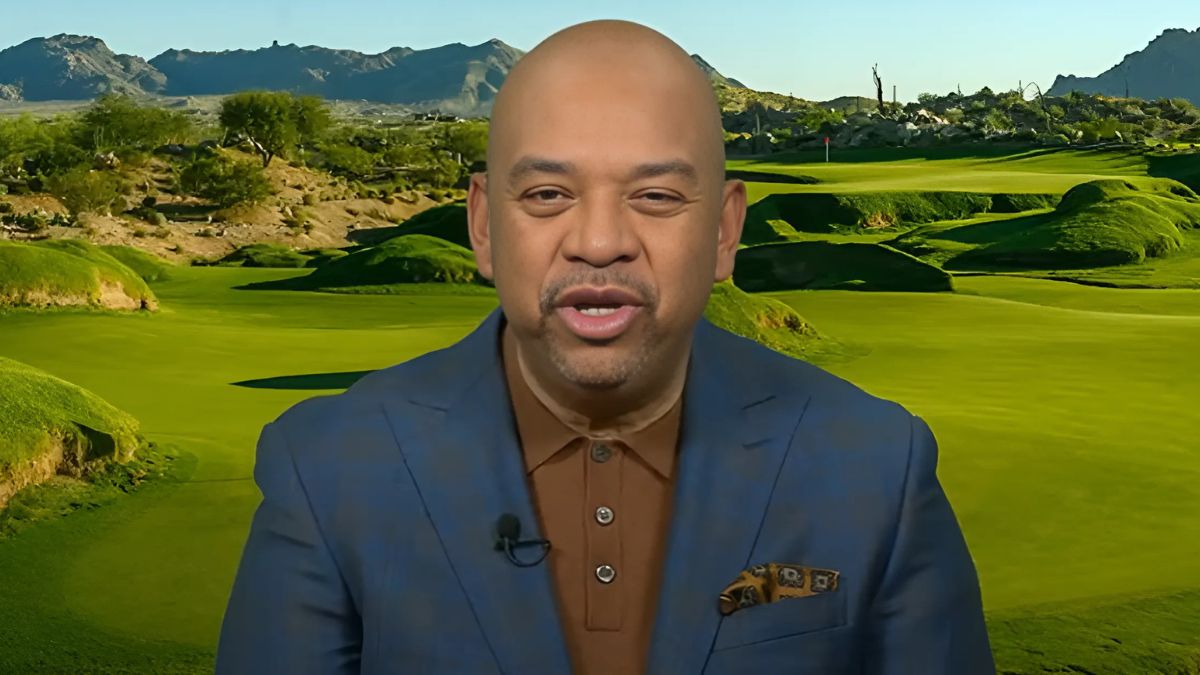
ESPN's Michael Wilbon on the end of Washington Post Sports:


He's right, but once again, it simply points out how people have changed the way they consume media.

That little device in everyone's pocket has taken a toll on traditional media. Radio, TV, and newspapers.
 
My view on this is the Washington Post is discovering something that all of us in radio learned about 20 years ago: You don't have to be all things to all people. There was a time when radio stations didn't specialize in formats, did local news and sports, and basically tried to serve everyone. That ended as stations focused on formats in the 1970s and 80s.

Today there's no need for the Washington Post to have a sports section. The New York Times spun their sports section off into its own specialized publication called The Athletic. The Post could do the same, or just eliminate it. They don't need a book review section. Food critic. They try to be all things to all people, rather than focusing on their core. That's what seems to be happening. They know what their readers want, and what they don't want. So now they will focus on the topics that get read. It's the same approach we use in radio for deciding what music we play. People don't use media the way they did 50 years ago. So the media needs to adapt to the way its being used.


I remember at one time newspapers got some of the comics content and op-eds from places like creators syndicate, Andrews McMeel and Cagle. Yes its from the era when they had to be all things to all people given where the business model was back then.
 
Meanwhile in Boston, the Globe's Peter Abraham posts on Facebook:
"The Globe has two reporters at Red Sox spring training with a third arriving in a few days.
We have two at the Olympics in Italy focused on stories about the New Englanders competing in the Games.
We'll also have a dozen people at the Super Bowl this week covering the Patriots."


Of course, the Globe is owned by John Henry, who also owns the Red Sox, so it figures that sports continues to be a priority there despite the circulation and advertising collapses.
 
That little device in everyone's pocket has taken a toll on traditional media. Radio, TV, and newspapers.
By creating an environment wherein many people can no longer fully agree with each other on most major issues?

We seem to be becoming a country of about 330 million mutually exclusive opinions. It amazes me that people can still more or less agree on basic things, like the rules of the road.

c
 
By creating an environment wherein many people can no longer fully agree with each other on most major issues?

We seem to be becoming a country of about 330 million mutually exclusive opinions. It amazes me that people can still more or less agree on basic things, like the rules of the road.
We saw this around 55 years ago when Top 40 fragmented, with the very late 60's seeing album based harder rock move into being a separate format, and in the very early 70's "chicken rock" developed into a strong format by limiting the hard rock and deep soul and some of the crossover country. We later got Rhythmic Top 40 or Churban, too.

The more sources for information and entertainment we have, the more variants and alternative providers of those service will come up with. And then we have sources that allow us to put together our own mix of music and enough podcasts to reflect every sociopolitical perspective you can imagine.


Back
Top Bottom