Quite right, and on top of that, coverage of events within the state where the COL is located isn't specifically mandated (unless it were a situation such as the one with WWOR's license renewal and moving to Secaucus, but that was a special set of circumstances). To use one example with which I am somewhat familiar, WQCW is nominally licensed to Portsmouth OH, but as a practical matter, they are a sidecar to WSAZ Huntington WV and their newscast is essentially WSAZ's, just at a different time. WSAZ does a decent job of covering southeastern Ohio (as well as eastern Kentucky, made easier by the resources of Gray sister stations WYMT and WKYT), but there is no specific emphasis upon Portsmouth or Ohio in WQCW's newscasts.That's not what the public service requirements mean. WNET can offer programming that addresses "issues" anywhere in its coverage area, which includes NYC. They don't even have to be specifically local issues.
Meaning a "Frontline" doc that addresses the high cost of housing in America's large cities is just as good as one identifying corruption in Newark's city hall.

-
Get involved.
We want your input!
Apply for Membership and join the conversations about everything related to broadcasting.
After we receive your registration, a moderator will review it. After your registration is approved, you will be permitted to post.
If you use a disposable or false email address, your registration will be rejected.
After your membership is approved, please take a minute to tell us a little bit about yourself.
https://www.radiodiscussions.com/forums/introduce-yourself.1088/
Thanks in advance and have fun!
RadioDiscussions Administrators
You are using an out of date browser. It may not display this or other websites correctly.
You should upgrade or use an alternative browser.
You should upgrade or use an alternative browser.
NJ PBS set to shut down in July 2026
- Thread starter Theater of My Mind
- Start date


NJ lawmakers hear pleas to save public broadcasting • New Jersey Monitor
With NJ PBS set to close, media and business leaders urged lawmakers to find funding and protect NJ's only public broadcast station.
 newjerseymonitor.com
Here is an update the New Jersey State Legislature hears why NJ PBS should remain on the air in the state. Yes Journalism is the issue on why public media should be saved as the main arguments here.
With NJ PBS set to end operations in July after it lost state and federal funding, media and business leaders met in Trenton Monday to urge legislators to quickly find funding and ensure New Jersey does not lose its only public broadcast station.
The Senate’s legislative oversight committee heard 90 minutes of pleas from people who warned that losing public news and arts programming would lead to a less-informed citizenry and hurt families who can’t afford to pay for cable TV or streaming services. Corruption, political polarization, and misinformation threaten to flourish as the shrinking media industry loses another trusted outlet, they said.
“This is not an option for you to debate. It’s an obligation that you need to fulfill,” said Tom Bracken, president and CEO of the New Jersey Chamber of Commerce and a former NJ PBS board member.
Mike Rispoli is the senior director of journalism and civic information at Free Press Action, a national, nonpartisan nonprofit that advocates for press freedom, civic engagement, and expanded funding for public funding. Funding cuts and the decades-long decline of newspapers have created a media environment “where good information is hard to find and people’s news feeds are increasingly filled with hate, clickbait and misinformation,” he told lawmakers.
True I get the notion that public media stations started out for educational purposes. But today as seen in multiple parts of the country. It’s about journalism and finding a reliable source for news that’s been a running issue in both the CPB funding and State funding to public media that’s the core of the debate but rife with first amendment issues when certain politicians talk about defunding it.The only practical option I can think of is if a college or group of colleges could use the stations for educational purposes.
But I don't expect the state to go back to a government owned system.
Dumb question, couldn't WNET just use the four NJ stations as satellites, and provide a 100% simulcast for them? Seems to me that would only entail the cost of running the transmitters. Is there something I'm missing here? Keep in mind, too, WNET is technically a Newark station.
Perhaps WNJB New Brunswick could be shut down, in that WNET covers much of the same area.
Perhaps WNJB New Brunswick could be shut down, in that WNET covers much of the same area.
Dumb question, couldn't WNET just use the four NJ stations as satellites, and provide a 100% simulcast for them?
It's a bit more complicated. WNET had a contact with NJPBS. It sounds like you're suggesting to remove the middle man. That would require a different contract.
It's a bit more complicated. WNET had a contact with NJPBS. It sounds like you're suggesting to remove the middle man. That would require a different contract.
Exactly. I am thinking that either NJPBS would cease to exist and that WNET would just assume ownership of the stations, or that NJPBS could live on as a separate legal entity, but would only have the expense of maintaining the stations as satellites.
Exactly. I am thinking that either NJPBS would cease to exist and that WNET would just assume ownership of the stations, or that NJPBS could live on as a separate legal entity, but would only have the expense of maintaining the stations as satellites.
That may be up to the state. NJPBS has already said that without WNET, they will cease to exist.
In 2018, they already shut down the WNJN ("Channel 50", licensed to Montclair) and WNJT ("Channel 52", Trenton) transmitters. They're now sharing with WNJB ("Channel 58", New Brunswick) and WNJS ("Channel 23", Camden), respectively.Perhaps WNJB New Brunswick could be shut down, in that WNET covers much of the same area.

Dumb question, couldn't WNET just use the four NJ stations as satellites, and provide a 100% simulcast for them?
How would that serve the people of New Jersey? WNET primarily targets a NYC audience with just a token 30-minute NJ news show that currently precedes primetime hours.
Keep in mind, too, WNET is technically a Newark station.
Proving the point that broadcasters based in, or licensed to, northern New Jersey always follow the money to NYC instead of serving their home state.
Perhaps WNJB New Brunswick could be shut down, in that WNET covers much of the same area.
Public broadcasting advocates would like to see a New Jersey public broadcaster that tailors its news and public affairs programming to serve the people of New Jersey. How would shutting down WNJB contribute to that goal?
That may be up to the state. NJPBS has already said that without WNET, they will cease to exist.
Did you read the NJ Monitor article linked in post #22? It indicates there are interests working to address this:
Media leaders from Montclair State University and Rowan University offered their facilities, staff and students to ensure public broadcasting continues past June. Advocates and lawmakers alike agreed a new model of public broadcasting should have both a permanent source of funding and opportunities for philanthropy. Bracken told lawmakers he also would press the state’s big businesses to step up financially, and that several major corporations already have pledged to support the effort.
I didn't know that. I thought all four stations were still operational. Thanks for the clarification.In 2018, they already shut down the WNJN ("Channel 50", licensed to Montclair) and WNJT ("Channel 52", Trenton) transmitters. They're now sharing with WNJB ("Channel 58", New Brunswick) and WNJS ("Channel 23", Camden), respectively.
But that would make any continuation of the NJ stations even less costly, powering and maintaining two transmitters is cheaper than four.
Better than nothing at all, and WNET is one of the prime public broadcasters in the US, so aside from a dearth of New Jersey coverage (which could be ramped up), nobody would be getting shortchanged, far from it.How would that serve the people of New Jersey? WNET primarily targets a NYC audience with just a token 30-minute NJ news show that currently precedes primetime hours.
WNJB and WNJS, put together, provide a usable signal to practically the entire state. Spinning off WNJB to WNET, and WNJS to WHYY, is another possibility.
Did you read the NJ Monitor article linked in post #22? It indicates there are interests working to address this:
That's what I was referring to in post #23. Those two colleges have degree programs. So does Livingston.
Maybe they can pool their budgets.
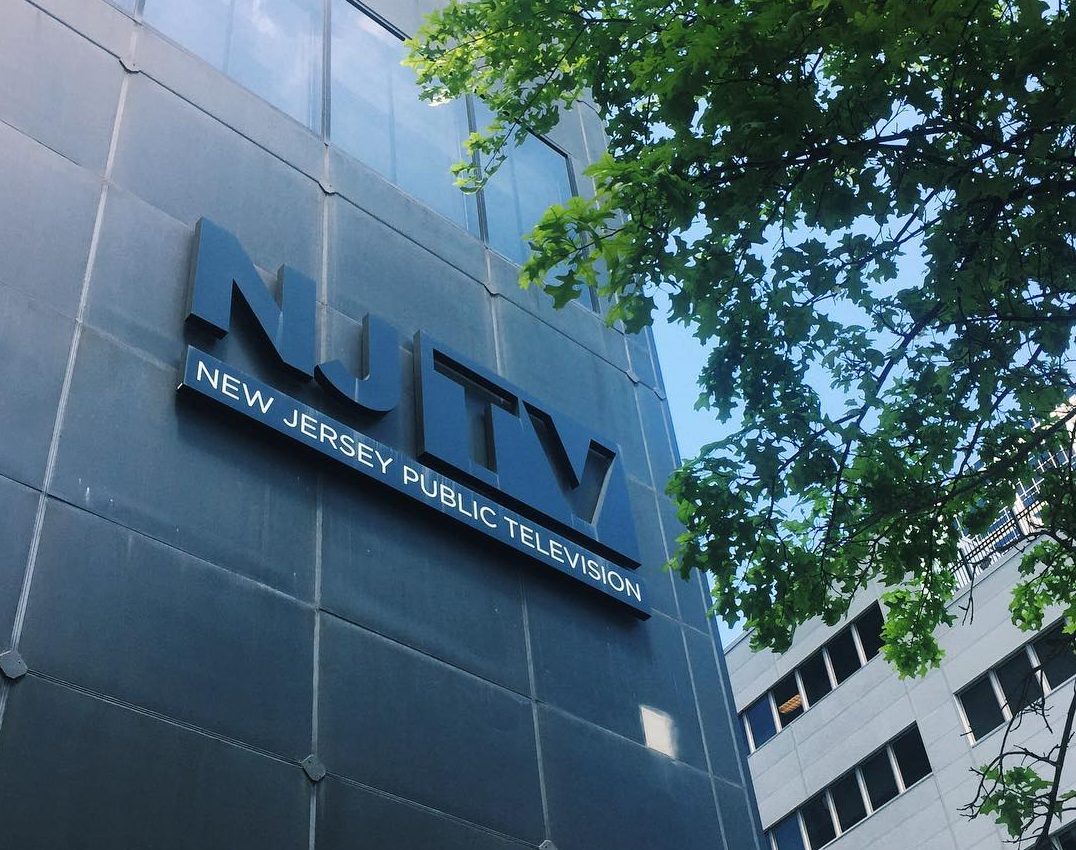
Update - Montclair State University has reportedly beaten out a competing group of former NJ PBS leaders to take over the operation from WNET.
 newjerseyglobe.com
Montclair State will get N.J. public television franchise - New Jersey Globe
A consortium led by Montclair State University has won a competitive process to take over New Jersey’s public television station, the New Jersey Globe has
newjerseyglobe.com
Glad to hear this. While most of New Jersey can get PBS via WNET or WHYY (as well as WLVT with a robust signal on RF 9), I always hate to see a state lose its native public TV presence. In many states, there is a mandate, de facto or otherwise, to cover every nook and cranny of the state, even if it requires translators in far-flung areas or those with difficult reception. Kentucky and North Carolina, just to name two, are blanketed with public TV transmitters, some of which are largely redundant. (Fun fact, the original proposal for WSJK Sneedville TN, now WETP, which had a huge signal on RF 2 that had to be licensed to that small town for spacing purposes, was for them to provide service both to Tennessee and Kentucky.)Update - Montclair State University has reportedly beaten out a competing group of former NJ PBS leaders to take over the operation from WNET.
Montclair State will get N.J. public television franchise - New Jersey Globe
A consortium led by Montclair State University has won a competitive process to take over New Jersey’s public television station, the New Jersey Globe has
Update - Montclair State University has reportedly beaten out a competing group of former NJ PBS leaders to take over the operation from WNET.
It makes a lot of sense. The tower for one of the four stations is located on the campus. The college has production facilities already. They don't have to build a physical plant. Earlier in this thread (post #23) I mentioned that having it based at one of the state colleges was the most viable plan. Rowan University, in the southern part of the state, also has an active communications department.
Here's the press release from Montclair:

Montclair State University Named New Operator of New Jersey’s Public Television Stations
The University and its College of Communication and Media will manage NJ PBS beginning July 1, 2026. The selection brings public media back home to New Jersey with broadcast-ready facilities, a statewide journalism network, and a fiscally responsible plan built for the long term.
 www.montclair.edu
Here's more coverage from Current:

NJ PBS to be managed by Montclair State University
The university is slated to take over operations of New Jersey’s public TV network July 1.
 current.org
What I'd like to see is for all of the educational resources in the state to be convened to discuss ways to best serve the people of New Jersey.
Glad to hear this. While most of New Jersey can get PBS via WNET or WHYY (as well as WLVT with a robust signal on RF 9), I always hate to see a state lose its native public TV presence.
As I said earlier in this thread, the purpose isn't about PBS. It's about local programming for New Jersey. That's what these stations were intended to do. The PBS programming fills the time, but it won't be what attracts the audience or local funding.
There was no way that the state government was going to retake operational control, so this is the best possible outcome. This should have happened in 2011, but instead Chris Christie went for the fast money.
WNJT in Trenton (flagship of the old NJN) also saw its spectrum sold back and now channel-shares with WNJS. So, NJ PBS is essentially two full-power stations.
That tower used to house WNJN's transmitter, but Public Media NJ ca$hed out WNJN's spectrum in the repack. WNJN now channel-shares with WNJB on their tower in Warren Township. The trade-off: NJ PBS's over-the-air coverage in NYC proper was all but wiped out.The tower for one of the four stations is located on the campus.
WNJT in Trenton (flagship of the old NJN) also saw its spectrum sold back and now channel-shares with WNJS. So, NJ PBS is essentially two full-power stations.
WNJT in Trenton (flagship of the old NJN) also saw its spectrum sold back and now channel-shares with WNJS. So, NJ PBS is essentially two full-power stations.
It sounds like the value here is mainly as instructional resources for students, rather than programming for the public.
If I recall correctly when the NJ PBS stations came on the air, some were saying, why? You got WNET (when PBS Channel 13 came on the air in 1962 it was WNDT), again people would say you got WNET & WHYY covering the state pretty well. I think WNET had a 1/2 hour news type program covering NJ News, but others felt the state deserved its own PBS station/s.
Actually, PBS came about in 1969 . . . so Channel 13 was an "educational station" (National Educational Television), until then.
NJ (my home state) was always looked at as "the poor state" without a commercial TV station, after WNTA went PBS in 1962. I heard they got money from many of the NYC commercial stations, to help them in their venture . . . plus the talk was to get rid of a competitor commercial station in the NYC market.
NJ got it own TV station, again - when the Channel 9, NYC license was moved to Secaucus, NJ around 1983 or so, by 1986 WOR-TV Channel 9 moved to new studios in Secaucus, NJ.
This move to Secaucus, was because the FCC was going after RKO's General licenses, RKO owned WOR-TV and may other TV & Radio stations around the country. The move to NJ by WOR kind of helped Channel 9 & RKO in its dealings with the FCC, but not totally - the FCC was still pressuring RKO to sell and they finally did.
With Montclair State taking over the operations, maybe the NJ PBS signals will all be saved.
Actually, PBS came about in 1969 . . . so Channel 13 was an "educational station" (National Educational Television), until then.
NJ (my home state) was always looked at as "the poor state" without a commercial TV station, after WNTA went PBS in 1962. I heard they got money from many of the NYC commercial stations, to help them in their venture . . . plus the talk was to get rid of a competitor commercial station in the NYC market.
NJ got it own TV station, again - when the Channel 9, NYC license was moved to Secaucus, NJ around 1983 or so, by 1986 WOR-TV Channel 9 moved to new studios in Secaucus, NJ.
This move to Secaucus, was because the FCC was going after RKO's General licenses, RKO owned WOR-TV and may other TV & Radio stations around the country. The move to NJ by WOR kind of helped Channel 9 & RKO in its dealings with the FCC, but not totally - the FCC was still pressuring RKO to sell and they finally did.
With Montclair State taking over the operations, maybe the NJ PBS signals will all be saved.
Last edited: