• Get involved.
    We want your input!
    Apply for Membership and join the conversations about everything related to broadcasting.

    After we receive your registration, a moderator will review it. After your registration is approved, you will be permitted to post.
    If you use a disposable or false email address, your registration will be rejected.

    After your membership is approved, please take a minute to tell us a little bit about yourself.
    https://www.radiodiscussions.com/forums/introduce-yourself.1088/

    Thanks in advance and have fun!
    RadioDiscussions Administrators

2024 Ford Mustang Drops AM Radio From Infotainment

Status
Not open for further replies.
I didn't see anyone mention: In 2022, Ford sold about 47,000 Mustangs (excluding the Mach-E EV variant). So the impact of this particular model remains fairly small.


I live in 9 point earthquake territory. Wnen it hits -- and it's a when, not an if -- the cell system will fail. It may last a day or two, depending on whether most of the towers survive in the most affected areas. Every cell phone has a battery, and that battery depends on power, and there will be no power. Every cell phone depends on the cell towers, and they have limited battery capacity, even for emergencies.

FEMA has stated that when that earthquake hits, power will probably be out in many areas for several months.

Frankly, if there will be widespread power outages for months, I'd be much more concerned with access to a firearm than AM radio.
 
The death of AM broadcast radio has now been prematurely speculated for a couple of decades.

I think each and every one of us here, participating in this discussion, will meet our respective demises, well before that of the AM or FM band.

This is like saying because someone survived a heart attack at 55, cancer at 65 and a stroke at 75 that there's no reason they can't make it to 95---when 85, or for that matter, 76, is a crapshoot.
 
Most AMs are not on HD, especially in medium and smaller markets, and Audacy , which currently owns what were once the CBS radio stations, some of the most powerful AM news stations in the country, has recently been turning many of its HDs off.
In medium and smaller markets, an FM translator is both more effective and cheaper. If you run an AM station in Jonesboro, Ark. and didn't acquire a translator, you done messed up. An HD subchannel is a mediocre substitute for stations in large markets where a translator cannot cover the market, or translator allocations were in short supply.

BTW, I don't think Audacy has eliminated any of their AM simulcasts on HD subchannels to date. Those don't have the music rights fees or lack of revenue that are associated with the music subchannels.

I think each and every one of us here, participating in this discussion, will meet our respective demises, well before that of the AM or FM band.
As somone still clinging desperately to his 30s, I certainly hope I can outlast AM radio!
 
Since AM gets full of static in electric cars and most AMs are on HD this is why the government should mandate that HD be placed in every car.
The FCC did not mandate all radios to have FM, ever. So mandating HD in every car when HD is proprietary, licensed system will not happen.

And, outside larger markets there are few FMs with HD. And in major markets, my guess is that the majority of FMs with HD do not have HD on their AUX transmitter(s).
 
So, are you saying that it's the government responsibility to buy AM radios and an unlimited supply of fresh batteries to the general public? And what if even if it did, do you really think the majority of the public would listen to the radio verses their smartphone?
The problem is in the occasional disasters where smartphones are nearly all "off" and there is no electricity for long periods.

In the big hurricane in Puerto Rico in 2017, less than 10% of cellphones were out. For some days, nearly 100% of electrical was out, and it took up to 3 months to get to 90% of the Island back up. Landlines were worse. Only one radio station, WKAQ, 580 AM, was on throughout the storm and its aftermath and had enough fuel to sustain operations. All significant TV stations lost their towers.

The Internet was as down as any other wired service such as electricity or landline phones.

The idea that new media will be there to "reach out and touch someone" after such a disaster is completely inaccurate.

And today, fewer and fewer people will have an AM radio and enough of the right batteries.
 
There are quite a few AM’s in my area. I do not believe any have HD capability. Only one FM broadcasts in HD.
There are apparently less than 80 AMs with HD operating still today.

But I believe the poster meant that many AM stations have their audio on an FM's HD with cleaner audio. But still, not that many FMs have HD, either.
 
Boombox, this gets a lot easier if you look stuff up first. Cell phone penetration in 2001 was 45%:

Mobile wireless penetration rate in the U.S. 2001-2011 | Statista
I do think that most households back then had one device. Now, families are being encouraged to give kids cellphones for emergencies so the figure is deceptive in the case of an emergency. And every adult member has one.

Only granny in the senior care facility does not always have one.

Today, 97% of adults have cell phones, with 100% of Hispanics having them and 99% of Blacks. The only age group with slightly less than 100% is among those over 65.

 
The problem is in the occasional disasters where smartphones are nearly all "off" and there is no electricity for long periods.
Let's take a look at the freeze in Texas last year. People were charging their smartphones in public buildings with backup power, or in their cars. There was no talk of how any particular radio station, let alone AM station came to the rescue, because other than Boomer's, people just don't turn to radio when things get bad.
In the big hurricane in Puerto Rico in 2017, less than 10% of cellphones were out. For some days, nearly 100% of electrical was out, and it took up to 3 months to get to 90% of the Island back up. Landlines were worse. Only one radio station, WKAQ, 580 AM, was on throughout the storm and its aftermath and had enough fuel to sustain operations. All significant TV stations lost their towers.
But as you know, Puerto Rico is, for the most part a neglected stepchild of the U.S. The infrastructure, including utilities, is still behind as compared with the lower 48, let alone what it was like seven years ago.
And today, fewer and fewer people will have an AM radio and enough of the right batteries.\
Agree. I get that this is a radio discussion board, but reality is; in tough times and natural disasters people turn to their trusty companion. And it ain't radio.
 
So, are you saying that it's the government responsibility to buy AM radios and an unlimited supply of fresh batteries to the general public? And what if even if it did, do you really think the majority of the public would listen to the radio verses their smartphone?
No. I said what I said. The government has a responsibility to ensure that adequate information infrastructure is available. If that means hardening every cell site instead of what they did with AMs across the US (and I think a few FMs might have been hardened and equipped as well, but I'm not sure on that) then so be it. The government did not choose that option. They chose the latter.

The AM radios are out there. They are available. They're as easy to buy online as any other item you can buy online.

Just like emergency packs, emergency food, flashlights, etc are all available already. Governments encourage people to have such supplies in case of emergencies. They can't force people to buy them. If the people don't prepare, with what is available, it's on them.

If there is no power for several weeks, smartphones won't have information, because the cell system needs power to operate. The entire cell system / internet system runs on power, right?
 
But as you know, Puerto Rico is, for the most part a neglected stepchild of the U.S.
Not really. As I lived half my life there and continue to have family there, I have to say that any deterioration of Puerto Rico was caused by the ending and lack of renewal of Section 111 of the US Internal Revenue code which encouraged investment and industry on the Island. Congress essentially stopped development of Puerto Rico and, thus, contributed to two decades of decline in revenues that caused the government-owned power and phone company facilities to disintegrate and decay.

Add in the horrible effects of the Jones Act and you had the stage for the hurricane all pre-prepared. Add wind and stir, and you have a loss of nearly 25% of the Island's population due to migration.
The infrastructure, including utilities, is still behind as compared with the lower 48, let alone what it was like seven years ago.
But 20 years ago, that was not true. If there is any blame, it's centered on Capitol Hill.
 
First of all, during 9-11 the percentage of people who had cell phones wasn't much less than today...

I live in 9 point earthquake territory.

Well I live in NYC and I was on a bus when the first plane hit the tower, and I was on the same bus when the second plane hit, so I can tell you how it was. We could clearly see the WTC was on fire. No one had a smartphone or any way to receive news unless someone called or texted them. A few people got texts and there was some murmuring. One guy said out loud that his friend texted to say a plane had hit the tower but that's all anyone knew. The same guy spoke up again when the second plane hit and that's when I got off the bus.

Once life started getting back to normal I bought a little Sangean pocket radio that I kept in my backpack in case anything like that ever happened again, but I haven't used it in years.

As for your points on the radio newsrooms -- understood. The facilities in the case you mentioned were underutilized. That's the fault of the station and networks' managements, and probably the state and federal government's lack of use of the AM facilities that you yourself admit were on the air when the cell systems were down. You're proving my point about the validity of AM transmitters as emergency infrastructure.

No I'm not. What difference does it make if the lights are on but nobody's home? Almost every radio facility is "underutilized" now, meaning the budgets have been slashed to the bone. There's virtually no news staff left and no way for them to respond to emergencies unless it's in one of the few major markets like L.A., or San Francisco that has an all-news radio station, and those ones are simulcast on big FM signals.

The fact that the infrastructure was not used as intended is a programming issue.

Yes it is. It's the same almost everywhere and it's not improving.

I am in total agreement with your last statement. If the emergency infrastructure is not used during emergencies, that is a problem.

There are a few markets with big stations that can still step up. NYC, DC, L.A., SFO, even New Orleans and Tampa where they expect hurricanes (and usually have a week to plan for it). But that's not the case in most of the country any more.
 
The AM radios are out there. They are available. They're as easy to buy online as any other item you can buy online.

Just like emergency packs, emergency food, flashlights, etc are all available already. Governments encourage people to have such supplies in case of emergencies. They can't force people to buy them. If the people don't prepare, with what is available, it's on them.

If there is no power for several weeks, smartphones won't have information, because the cell system needs power to operate. The entire cell system / internet system runs on power, right?
Agreed.

I live in one of those "active adult 55+ " communities. Everyone has his own home and lives independently -- it's not like assisted living in a group facility. It is built in hilly, forested terrain. In recent years, the propensity has been high for big wildfires, due to the drought. Every resident is encouraged to have his own emergency kit, including AM/ FM radio with extra batteries. The reasoning of local authorities is that during a wildfire in a heavily forested area, the cell phone towers may not be working. So, even residents who know how to operate a smart phone, may not be able to get cell phone service.

Some of our most elderly people here do not own computers or smart phones. They might own "jitterbug" flip phones, or something easier for seniors. They cannot connect to the internet during an emergency. So, they would still depend on terrestrial radio stations for emergency evacuation and shelter information.

I own a smart phone, but I don't use it to connect to the blue tooth in my car. I still use the radio pre-sets. When I drive through the hills on my way into the city, I listen to traffic information on KCBS 740, because the AM is stronger than the FM signal, which sometimes fades in and out in the hilly terrain. In the hills, the AM signal is stronger and steadier. Same with KNBR 680 for sports talk. Now, if you live in the city, of course, you probably would not need AM radio.

I understand why Ford eliminated the AM band from the new Mustangs. But when one needs AM radio, especially in a big fire where terrain may interfere with an FM signal, then I'm happy to have AM on the portable emergency radio, or in the car. ( My car is a 2015 model, so it's already 7 years old). JMO -- Daryl
 
No I'm not. What difference does it make if the lights are on but nobody's home? Almost every radio facility is "underutilized" now, meaning the budgets have been slashed to the bone. There's virtually no news staff left and no way for them to respond to emergencies unless it's in one of the few major markets like L.A., or San Francisco that has an all-news radio station, and those ones are simulcast on big FM signals.
I was talking about the infrastructure itself. You showed how it could have been put to use, but wasn't. During the Texas ice storm emergency, you even tuned into a few stations and it was business as usual. But the infrastructure was there. Because the cell service wasn't. I'm guessing a lot of internet was down as well.
 
I think part of the reason for broadcast radio being so lackluster is an increasing apathy from not only the public or car makers, but by the stations themselves and the corporations that operate them.

In their unyielding single-mindedness to minimize spending, they've so thoroughly gutted their news departments that they've almost completely undone decades of hard work to get things where they were before all the budget cuts. Nobody seems to value quality anymore. The quality of information coming from social media is not as reliable (or accessible, in cases where cellular and internet infrastructure becomes severely damaged or overloaded), but news orgs. are leaning hard into it because of one thing: it's cheap. They don't have to pay to staff a full time newsroom with reporters and anchormen/women. Why bother with all that when a small staff of part time IT people can collate and push the same info out to thousands of people directly? Who cares if the quality stinks? As long as the info, such as it is, gets out there, they don't care.

The bean counters are winning....

c
While I agree with some of this, I also recognize that it isn't so simple -- the proliferation of radio stations in the eighties and nineties really did gut the ability of broadcasters to afford to provide full service programming on their radio stations. The stagnant to declining revenue for broadcast radio over the last twenty years has surely made that situation even worse.

Where I do agree with you is on using terms like "lackluster" and "apathy" when it comes to radio today. Those of us who remember radio from thirty years ago or more can remember when listeners were passionate about their favorite radio stations -- the most obvious manifestation was radio station bumper stickers, which were once quite common. When I moved to Dallas in the mid-eighties, it seemed like half the cars on the road had KVIL bumper stickers. Q102, the Zoo, and K104 were also very well represented on the backs of local cars. Those bumper stickers are long, long gone -- and really, what is there in any of today's radio that would make a listener care enough to put a sticker on their car? While some of this is from streaming competition, I don't think that is a major cause -- because it seems to me that the passion starting dying in radio several years before streaming audio became common.
 
The market seems to be moving further and further toward streaming. I find that sad, because steaming is not as good as listening to a well-executed broadcast (in my opinion). There’s nothing I hate more than having to be increasingly chained to a smartphone, to a point of having to keep updating my data plan just to access the content I want to hear. Sure, we’re still lucky to have FM in the Mustang, but there could very well be a day (not too long from now) where there is no radio at all, and it’s on the consumer to stream whatever content at their leisure. It’s all fun and games until you have to pay for all of the data, and then descend the slippery slope of paying for the content itself.
 
If there is no power for several weeks, smartphones won't have information, because the cell system needs power to operate. The entire cell system / internet system runs on power, right?
We're talking reality, not theoretical aren't we? In recent Southern tornadoes, snow and floods in California, freezing across Texas, and heavy snow across the Northern/Mid areas of the U.S., consumers are relying on their smartphones for news and communication. Sure, if some freak solar flair hit the earth, wiping out the power and communications grid coast to coast, maybe people wouldn't be able to use their phones. But at the same time, chances are even radio stations would be negatively effected too. But again, that's in theory.

In reality, only Radio Nerds, Boomer's, or Prepper's obsess about the theoretical aspects of how radio would play a role in natural or man made disasters. The modern majority of the general public prefers to carry and care-for one very portable device that provides them news, entertainment, communication, plus physical and even emotional guidance.

As I mentioned prior; this expectation that radio stations keep someone on the payroll at the ready in case something happens 24/7, with no way of paying for such a role, amounts to entirely impractical criticism.
 
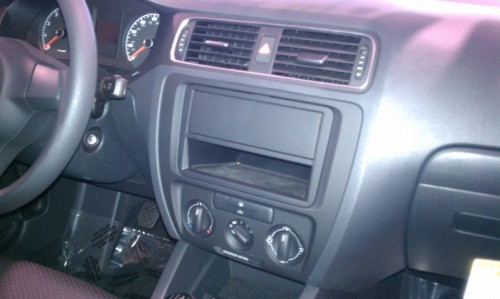
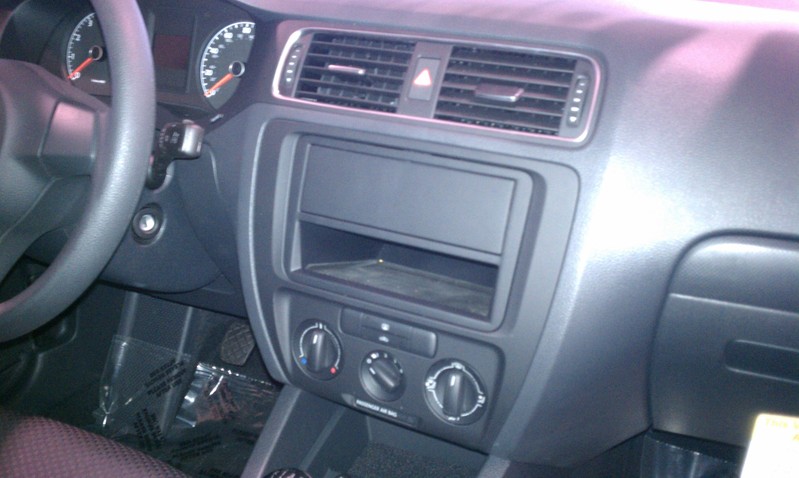
That had to be the last radio-delete vehicle.
In 2011 you could get a base model VW Jetta with no radio and no air conditioning:


Stripped-VW.jpg


I remember seeing a bunch of them show up as trade-ins with a few thousand miles on them, because people discovered that while they could live without a radio, or install an aftermarket one, they couldn't live without A/C.
 
Status
Not open for further replies.


Back
Top Bottom