• Get involved.
    We want your input!
    Apply for Membership and join the conversations about everything related to broadcasting.

    After we receive your registration, a moderator will review it. After your registration is approved, you will be permitted to post.
    If you use a disposable or false email address, your registration will be rejected.

    After your membership is approved, please take a minute to tell us a little bit about yourself.
    https://www.radiodiscussions.com/forums/introduce-yourself.1088/

    Thanks in advance and have fun!
    RadioDiscussions Administrators

2024 Ford Mustang Drops AM Radio From Infotainment

Status
Not open for further replies.
The touch screens in cars are beginning to resemble Netflix' home screen! Totally confusing and no help in finding what you want.
I think the thing to remember is that there's a big difference between your first impression of a vehicle screen and how you are after an hour, a day, a week, a month of living with it.

I'm in two different cars every week and the fact is, I rarely look at the screen, no matter how large it is, unless I'm checking the map. And then, it's a lot quicker and easier to get a brief but informative sideways glance on a 12-inch screen than it is on the low-res four-inch in my wife's ten-year-old Nissan.

Most of the climate stuff (at least for me) tends to be set it and forget it, and there's nothing to look at in terms of the radio display, really. You know it's Hotel California and you know what the album art looks like.
 
2015 is eight model years ago. I had to go back through my old reviews to be reminded of what they had at the time. It wasn't bad then, apart from being laggy on startup.
That's disappointing to hear. I also drive a Mazda of mid 2010s vintage, and the fact that I never have to interact with the touchscreen is one of the key features. In fact, I can do almost everything without my hand leaving the steering wheel.
 
That's disappointing to hear. I also drive a Mazda of mid 2010s vintage, and the fact that I never have to interact with the touchscreen is one of the key features. In fact, I can do almost everything without my hand leaving the steering wheel.
Mazda still is avoiding touchscreens---mounting them too far back to be a comfortable reach. The scroll wheel isn't bad (beats hell out of Lexus and Acura's trackpads, which they're finally ditching), but the lagginess that used to just be on start up now seems to pop up when making a selection, as well.
 
Mazda still is avoiding touchscreens---mounting them too far back to be a comfortable reach. The scroll wheel isn't bad (beats hell out of Lexus and Acura's trackpads, which they're finally ditching), but the lagginess that used to just be on start up now seems to pop up when making a selection, as well.
I think I know what you’re talking about. My partner’s 17’ model year has the large scroll wheel. I don’t like it, but it could be far worse I suppose. I don’t like all of the menu options and I don’t like having to scroll through multiple menus to access the radio, but it is what it is. It definitely seems to be geared towards Bluetooth and streaming. I’ve never used a Bluetooth device before so I don’t know how well it works.
 
I think I know what you’re talking about. My partner’s 17’ model year has the large scroll wheel. I don’t like it, but it could be far worse I suppose. I don’t like all of the menu options and I don’t like having to scroll through multiple menus to access the radio, but it is what it is. It definitely seems to be geared towards Bluetooth and streaming. I’ve never used a Bluetooth device before so I don’t know how well it works.
Bluetooth is just a wireless means of connection. Same as using a USB cable, except it doesn’t simultaneously charge your phone, and is theoretically prone to interference that a USB cable isn’T.
 
Bluetooth is just a wireless means of connection. Same as using a USB cable, except it doesn’t simultaneously charge your phone, and is theoretically prone to interference that a USB cable isn’T.
And here all this time Chimp thought Bluetooth was someone who drank lots of grape juice and ended up staining their false front tooth. ;)
 
We're talking reality, not theoretical aren't we? In recent Southern tornadoes, snow and floods in California, freezing across Texas, and heavy snow across the Northern/Mid areas of the U.S., consumers are relying on their smartphones for news and communication. Sure, if some freak solar flair hit the earth, wiping out the power and communications grid coast to coast, maybe people wouldn't be able to use their phones. But at the same time, chances are even radio stations would be negatively effected too. But again, that's in theory.

In reality, only Radio Nerds, Boomer's, or Prepper's obsess about the theoretical aspects of how radio would play a role in natural or man made disasters. The modern majority of the general public prefers to carry and care-for one very portable device that provides them news, entertainment, communication, plus physical and even emotional guidance.

As I mentioned prior; this expectation that radio stations keep someone on the payroll at the ready in case something happens 24/7, with no way of paying for such a role, amounts to entirely impractical criticism.
Agreed, but the powers that be better figure out how to make the cell systems more dependable in times of lengthy power outages or possible grid failures.

Most of the time the preppers come off like tin foil hat people, but sometimes they are indeed onto something. Everyone thought that influencers like Bill Gates were crying like Chicken Little about global pandemics until the pandemic actually hit, and shut down most of the country (and much of the world) for a period of time. Unexpected disasters do indeed happen, and the country and society would be better off if our infrastructure, including our communications infrastructure, were better able to handle long power outages.

Right now, I'm not sure the cell system, on which most communications presently lies, is up to the job when something severe hits. When the local CERT team says "we need kiosks and small neighborhood billboards to ensure information gets out in case of a big earthquake or other disaster", that's not exuding much confidence in the cell system.

I mean, who needs a cell system when you've got a piece of paper and a sharpie pen?
 
TL;DR: I agree with @boombox4

I remember when PG&E ordered a PSPS (public safety power shutoff), in October of 2019 and again in October 2020, cell service basically died after a few hours as the towers' backup power supplies were depleted.

As a result, areas that usually had decent coverage became iffy, and the iffies were basically dead altogether.

This made getting information via internet almost impossible in some places (especially in places where it was difficult even when everything was working), so radio was the only reliable alternative (and it worked, because the stations were distant enough that they were unaffected by the outages).

That said, PG&E and the wireless carriers realized this problem, and took steps to fix it. As a result, affected cell towers' backups were subsequently improved and hardened, and the problem was mostly solved.

I'm not going to say that radio is superior in all emergencies, but I do think that a reasonably strong case could be made to help stations (AM and FM) to continue existing.

As for much of Europe's radio broadcasts going digital-only, it's more feasible for them because I think their coverage areas are fairly small and more densely populated compared to the US, so the cliff effect and other range-related problems, I'm supposing, aren't too severe for them.

c
 
TL;DR: I agree with @boombox4

I remember when PG&E ordered a PSPS (public safety power shutoff), in October of 2019 and again in October 2020, cell service basically died after a few hours as the towers' backup power supplies were depleted.

As a result, areas that usually had decent coverage became iffy, and the iffies were basically dead altogether.

This made getting information via internet almost impossible in some places (especially in places where it was difficult even when everything was working), so radio was the only reliable alternative (and it worked, because the stations were distant enough that they were unaffected by the outages).

That said, PG&E and the wireless carriers realized this problem, and took steps to fix it. As a result, affected cell towers' backups were subsequently improved and hardened, and the problem was mostly solved.

I'm not going to say that radio is superior in all emergencies, but I do think that a reasonably strong case could be made to help stations (AM and FM) to continue existing.

As for much of Europe's radio broadcasts going digital-only, it's more feasible for them because I think their coverage areas are fairly small and more densely populated compared to the US, so the cliff effect and other range-related problems, I'm supposing, aren't too severe for them.

c
I remember these PG & E outages in my area. The month of October is a bad month for forest fires where I live. In the event of a fire, or if a fire is already burning, then PG & E ( the utility company for much of California), will shut off the power as a safeguard. That's why the local authorities in charge of emergency preparedness advise that a portable radio and extra batteries be available at all times.
 
@Daryl Lynn L.A. Right! The portable radio is for those inevitable cases during, for instance, a major fire (such as any of those that have happened in CA over the past decade) where the cell infrastructure is disabled due to loss of power, severely damaged or destroyed, or overloaded, thereby making one's smartphone a useless brick at worst or quite unreliable at best.

I've lost count of the times between 2015 and 2021 where a major fire somewhere in NorCal (the Valley fire in September 2015, the Tubbs fire in October 2017, the Mendocino Complex in July and August 2018, Kincade in October 2019, LNU Complex August 2020, and probably various other smaller fires scattered in between) severely impacted cell service over a fairly wide area and made my phone's connection useless, so I'm not going to rely on it when there's an emergency.

The simple fact is, in each of these disasters, cell service was often among the first of the utilities to get knocked out and the last to be fully restored, so I'm not inclined to trust it much, if at all, when something happens.

c
 
@Daryl Lynn L.A. Right! The portable radio is for those inevitable cases during, for instance, a major fire (such as any of those that have happened in CA over the past decade) where the cell infrastructure is disabled due to loss of power, severely damaged or destroyed, or overloaded, thereby making one's smartphone a useless brick at worst or quite unreliable at best.

I've lost count of the times between 2015 and 2021 where a major fire somewhere in NorCal (the Valley fire in September 2015, the Tubbs fire in October 2017, the Mendocino Complex in July and August 2018, Kincade in October 2019, LNU Complex August 2020, and probably various other smaller fires scattered in between) severely impacted cell service over a fairly wide area and made my phone's connection useless, so I'm not going to rely on it when there's an emergency.

The simple fact is, in each of these disasters, cell service was often among the first of the utilities to get knocked out and the last to be fully restored, so I'm not inclined to trust it much, if at all, when something happens.

c
Absolutely. I had to relocate to NorCal from L.A. when my family moved north; and I was here for all those fires. There were times when the power was off for more than 48 hours at a stretch. So, it's a bad situation where it's very hot, very dry, very smoky, ashes all over everything - and not only that, there's no cell phone service. No TV, of course. And a laptop can only run on battery for about 3 hours. I was really glad to have the portable radio. At least there's some news, music or sports. -- Daryl
 
Just wanted to add something way off topic here. But it has to do with car dashboard indicators. On my 2015 Toyota, most features are operated by a button on the right hand lower dashboard with an LED display showing the level of the function. For example, if I want to turn on the heater on these cold mornings, then I first have to push the button for the heater, then the LED display comes on, then I have to keep pushing the button until the LED display shows the desired temperature. In bright sunlight, the LED display is sometimes difficult to read, even if it's set to very bright. So I have to take my eyes off the road and keep looking at the display on the right hand dashboard. Same with A/C, same with defroster, same with adjusting air flow direction. ( like changing A/C air flow from the front seat to the back seat, etc.).

On my relatively old car, the only controls remaining on a switch, are the wipers and the cruise control, which are on a right-hand stick on the steering column - and the turn signals and headlights, which are on a left-hand stick on the steering column. If I have to get a new car, and the automaker has taken away the steering column sticks and moved the wipers, headlights, and turn signals to a dashboard digital button with an LED display showing different levels, which is hard to read in the sun, then drivers who grew up with manual switches, will be in trouble. My eyesight is perfect, but it would still be challenging.

If all instrumentation in new cars goes to a digital LED display on the right hand dashboard, then I would hope that the automaker could install a "personal assistant" device like a Siri or an Alexa, which could respond to voice commands.
Sorry to go off topic, but I just wanted to add my opinion. -- Daryl
 
Last edited:
Right now, I'm not sure the cell system, on which most communications presently lies, is up to the job when something severe hits.
One only needs to look at current weather events. Did you hear reports of widespread cell/PCS outages during the freezes in Texas? What about other recent natural disasters? You see, starting back in the late 90's phone companies needed to shift their focus on reliability from landlines to cell systems, because cell phone use was becoming more affordable, and wireless phone use for municipalities and consumers was in high demand. The advantage cell services have in disasters, is it's a technically de-centralized structure. You can lose several sites within a geographic region, and still have basic service.
I'm not discounting the role radio or local TV could play in disaster situations, especially for Boomer's who grew up with radio. The fact remains is for non-Boomer's, turning to anything other than a smartphone, isn't even a thought. Radio is a business that operates on money. If there's no money to support having a 24/7 news operation to satisfy the wants of a shrinking sector of the population, then don't expect it to happen.
When the local CERT team says "we need kiosks and small neighborhood billboards to ensure information gets out in case of a big earthquake or other disaster", that's not exuding much confidence in the cell system.
I wouldn't put too much credence in what any CERT organization thinks. Remember, the first letter in CERT is Citizen. These are volunteers, mostly seniors and Boomer's with Cricket phones who have little to no knowledge of how cell/PCS systems even work, let alone what it takes to run radio and TV operations. They make assumptions very similar to what's being made here, based on anecdotal data from friends and family.
I mean, who needs a cell system when you've got a piece of paper and a sharpie pen?
Sort of like the former President, creating his own hurricane forecast?
 
Agreed, but the powers that be better figure out how to make the cell systems more dependable in times of lengthy power outages or possible grid failures.

Most of the time the preppers come off like tin foil hat people, but sometimes they are indeed onto something. Everyone thought that influencers like Bill Gates were crying like Chicken Little about global pandemics until the pandemic actually hit, and shut down most of the country (and much of the world) for a period of time. Unexpected disasters do indeed happen, and the country and society would be better off if our infrastructure, including our communications infrastructure, were better able to handle long power outages.

Right now, I'm not sure the cell system, on which most communications presently lies, is up to the job when something severe hits. When the local CERT team says "we need kiosks and small neighborhood billboards to ensure information gets out in case of a big earthquake or other disaster", that's not exuding much confidence in the cell system.

I mean, who needs a cell system when you've got a piece of paper and a sharpie pen?
Our local CERT director established several LED billboards, assuming of course that there will be sufficient electrical power for them. And, responding to a recent post about CERT’s led or populated by seniors, our county’s OEM and CERT head is fortunately technologically proficient.
 
Last edited:
If all instrumentation in new cars goes to a digital LED display on the right hand dashboard, then I would hope that the automaker could install a "personal assistant" device like a Siri or an Alexa, which could respond to voice commands.
Sorry to go off topic, but I just wanted to add my opinion. -- Daryl
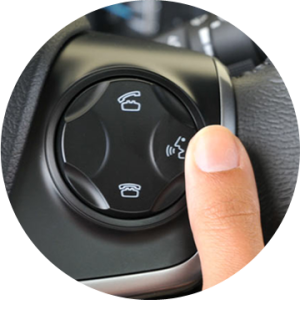
Most vehicles with stuff buried in a screen have voice command for backup. Toyota/Lexus has offered it in their vehicles for more than a decade. It's standard on some. Here's the steering wheel button for it:

hands-free.png

The early ones can handle basic functions like "fan up", "fan down" "temperature 72 degrees" "change station to (frequency)", call (number)" and, if equipped with navigation "find (address/type of business/whatever)”.
 
I wouldn't put too much credence in what any CERT organization thinks. Remember, the first letter in CERT is Citizen. These are volunteers, mostly seniors and Boomer's with Cricket phones who have little to no knowledge of how cell/PCS systems even work, let alone what it takes to run radio and TV operations. They make assumptions very similar to what's being made here, based on anecdotal data from friends and family.
I only know about CERT from being a member of a local neighborhood association (my city has formed neighborhood associations to bring communities together and create a line of communication between the City government and the neighborhoods), and the CERT program in my city is run partially by city officials, who act as liaisons to the neighborhoods. In other regions, it might be all citizen run.

I am aware of ham radio operators who seem to think ham radio will save the world in case of SHTF scenarios. I myself think that in worse case scenarios it will be word of mouth and sharpie pen on the paper at the kiosk if it gets to that point. When there is no power for weeks, all bets are off. Hopefully, no event gets to that point. And if FEMA or State emergency programs are operational, they obviously would send teams to establish communications and provide emergency supplies.

PS, officially, the letter C in CERT stands for Community, according to FEMA, who originally started the program (it's the Community Emergency Response Team program). But otherwise, I understand your point. When you involve citizen volunteers, you can get all sorts of types of people, from the mildly interested to first responder wannabes.
 
Our local CERT director established several LED billboards, assuming of course that there will be sufficient electrical power for them. And, responding to a recent post about CERT’s led or populated by seniors, our county’s OEM and CERT head is fortunately technologically proficient.
Here where I live, with two separate fault lines promising separate 8 or 9 pointer earthquakes, the City led CERT program is planning on the power being out for an extended period of time, and a way for neighborhoods to remain informed in the event that the cell system is down, internet is down, etc. I think they've coordinated with State emergency officials. The potential of a damaging earthquake is quite high here. The kiosks were mentioned as a last resort communications device. My neighborhood has two bulletin boards. They are used for local announcements, handbills, lost pet notices, etc. But they also were intended for use by city or local communications to the public if everything else is non-operational.
 
I only know about CERT from being a member of a local neighborhood association (my city has formed neighborhood associations to bring communities together and create a line of communication between the City government and the neighborhoods), and the CERT program in my city is run partially by city officials, who act as liaisons to the neighborhoods. In other regions, it might be all citizen run.
Hey any community volunteering should be applauded. That said; some CERT volunteers feel they have more power and knowledge than they actually do. That's why I've taken the tact of being quietly, but respectfully skeptical of their actual knowledge and role.
I am aware of ham radio operators who seem to think ham radio will save the world in case of SHTF scenarios. I myself think that in worse case scenarios it will be word of mouth and sharpie pen on the paper at the kiosk if it gets to that point. When there is no power for weeks, all bets are off. Hopefully, no event gets to that point. And if FEMA or State emergency programs are operational, they obviously would send teams to establish communications and provide emergency supplies.
I belong to a ham radio club that fits your accurate description. Some of the club members who want to be self proclaimed experts and big-shots making that claim. While they're getting all excited having polo's printed with their call sign, club logo, and being designated as EMCOMM responder, I'm busy taking care of the club ten repeaters at two separate sites. The polo shirts and meetings (that I don't attend) are typically around establishing who's president of what, bogged down by stupid, mind-numbing, Robert's Rules of Order-laden proceedings. Whatever turns their crank I guess...
As has happened in other communities with EMCOMM ham groups, if SHTF occurs, they usually either s*it themselves then run for cover, or jump in like some superhero wanna be, and get in the way. The deal we've made with my local municipality; in the event the County's communication systems go completely off line, our club radios and repeaters can be made available for the County use in an emergency. Everyone with the polo shirts can stay home and safe.
 
Status
Not open for further replies.


Back
Top Bottom