
• Get involved.
    We want your input!
    Apply for Membership and join the conversations about everything related to broadcasting.

    After we receive your registration, a moderator will review it. After your registration is approved, you will be permitted to post.
    If you use a disposable or false email address, your registration will be rejected.

    After your membership is approved, please take a minute to tell us a little bit about yourself.
    https://www.radiodiscussions.com/forums/introduce-yourself.1088/

    Thanks in advance and have fun!
    RadioDiscussions Administrators

95% of the worlds data is still carried via under sea cables?

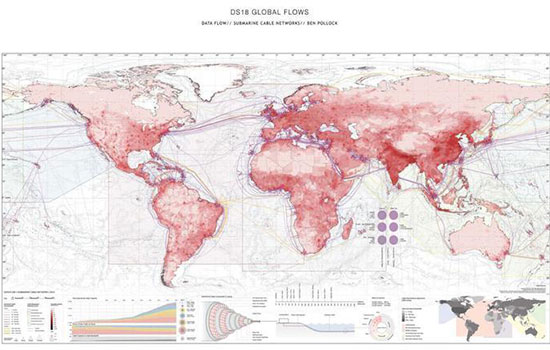
This week on NPR, they were promoting an upcoming episode of "On Point" and they mentioned that 95% of the world's data is transmitted via under sea cables. I also happened to see the site below that also mentions that fact. Curious, why this is still the case in 2023? Would satellite or other means of data transmission not be faster, simpler and potentially somewhat cheaper to implement?
 
Satellite is high latency (so, slower -- much slower) and limited in capacity.

You know the delay you see when a newscaster in New York is talking with their correspondent in Tokyo via satellite? With undersea cables, that doesn't exist. That is chiefly because the satellites doing the transmitting are tens of thousands of miles above Earth, and it takes time for the signals to travel up ... and back down from space.
 
This week on NPR, they were promoting an upcoming episode of "On Point" and they mentioned that 95% of the world's data is transmitted via under sea cables. I also happened to see the site below that also mentions that fact. Curious, why this is still the case in 2023? Would satellite or other means of data transmission not be faster, simpler and potentially somewhat cheaper to implement?
Something to remember; is the public Internet is essentially built on international phone lines, mainly fiber optic cables. As PT already mentioned, data traveling via oceanic fiber and copper undersea cables is less expensive, higher bandwidth, and the lowest latency.
 
This week on NPR, they were promoting an upcoming episode of "On Point" and they mentioned that 95% of the world's data is transmitted via under sea cables. I also happened to see the site below that also mentions that fact. Curious, why this is still the case in 2023? Would satellite or other means of data transmission not be faster, simpler and potentially somewhat cheaper to implement?

With Wavelength Multiplexing one multifiber undersea cable has more available bandwidth than all of the satellites available for use along that path not to mention lower latency due to the shorter path route.
Satellites are good for communicating to multiple devices at once, that's why they are great for broadcasting, SiriusXM, DirecTV, Dish TV, and Radio TV networks, etc. For point-to-point, it's far better to be on fiberoptic cable.
 
Status
This thread has been closed due to inactivity. You can create a new thread to discuss this topic.


Back
Top Bottom