
• Get involved.
    We want your input!
    Apply for Membership and join the conversations about everything related to broadcasting.

    After we receive your registration, a moderator will review it. After your registration is approved, you will be permitted to post.
    If you use a disposable or false email address, your registration will be rejected.

    After your membership is approved, please take a minute to tell us a little bit about yourself.
    https://www.radiodiscussions.com/forums/introduce-yourself.1088/

    Thanks in advance and have fun!
    RadioDiscussions Administrators

Breaking:FCC dismisses all the Weather Alert Radio Network LPFM Applications.

.......... We have phones now........

Ahh, that battle cry.

I recently had the millennial son of a boater holding his nifty little i-don't-know-much-phone in the air stating that marine VHF radios were passe' as a result of those little wonders being ubiquitous. When I asked him how his Dad will find the cellular number to notify that 900' freighter bearing down on his Dad in the channel when his prop shaft was damaged and he was dead in the water, he had not a clue as to what I was talking about.

Cellular service is not mission critical in any sense of the word, and is entirely built around 'blue-sky' situations....nothing special going on, sunny day, no weather events, no political events. One in 20 cell sites has a generator. Back hauls between cell sites are a mixed bag of whatever-carrier-is-cheapest data service, any of which can and are brought to a stop by a drunk hitting a pole.

My favorite example is a 2.5 Richter earthquake I experienced in Hawaii a while back. Just a minor tremor; most (including me) didn't notice it. However, cellular service was essentially nonexistent for nearly a day due to every person picking up their phone and calling someone else to ask what happened.

There are three types of people in the world....those that make things happen, those that watch things happen, and those that wonder what happened. As evidenced by the nationwide AT&T mobile outage of two weeks ago, the "we have phones now" people are card carrying members of the latter group.
 
The WARN Petition for Rulemaking is going nowhere. They are blaming "bad advice" from staff for the dismissal. Staff does not give advice that is binding. If you come to staff with an idea like this, they will usually say, file it and we will look at it. Without knowing about WARN's plans, I had been discussing with staff before the window my fear that some may try to exploit the public safety loophole as I was looking at doing rulemaking to give it more teeth to make it harder for those trying to make an end run to get multiple stations. I held off on the rulemaking because I didn't want to delay the window. REC does plan to file an omnibus petition for rulemaking soon that addresses some "lessons learned" from the last filing windows (both LPFM and NCE) and other issues that may need to be updated to reflect the evolution in the industry.
 
Again DENIED:

WEATHER ALERT RADIO NETWORK, APPLICATIONS FOR CONSTRUCTION PERMITS FOR NEW LOW POWER FM STATIONS IN COMMUNITIES IN ALABAMA, FLORIDA, GEORGIA, LOUISIANA, MISSISSIPPI, NORTH CAROLINA, SOUTH CAROLINA, AND TEXAS. Audio Division denies Weather Alert Radio Network Petition for Reconsideration of the dismissal of LPFM applications based on LPFM eligibility rules. by LETTER. (DA No. 24-735).

 
I read the Notice of Dismissal to their PoR. It is the clearest proof as to how WARN was ignorant of the rules and then did not respond properly to FCC inquiries. The Petition itself was full of unsubstantiated statements and in more than one place in the Notice the FCC pointed out that WARN did not include any documentation to support their position.

These people thought they were clever and were probably intent on making a profit using a non-commercial class of service. They were idiots to have thought this scheme would ever have been approved.
 
My favorite example is a 2.5 Richter earthquake I experienced in Hawaii a while back. Just a minor tremor; most (including me) didn't notice it. However, cellular service was essentially nonexistent for nearly a day due to every person picking up their phone and calling someone else to ask what happened.

As long as this sidebar discussion has cropped up ... I moonlighted at AT&T's predecessor, SBC Pacific Bell, for a little over four years (late 1988 to early 2003) and I had a conversation with one of the engineers at what was then called Cingular Wireless about the reliability of cell service in extreme emergencies. Remember, this was not long after the 1994 Northridge earthquake that I had lived through.

He said -- and I presume this is still the case -- when service is interrupted due to major negative effects on the infrastructure, texting is more reliable as it takes much less bandwidth ... and in very short bursts.

That's something I have kept in mind ever since. It does make sense!
 
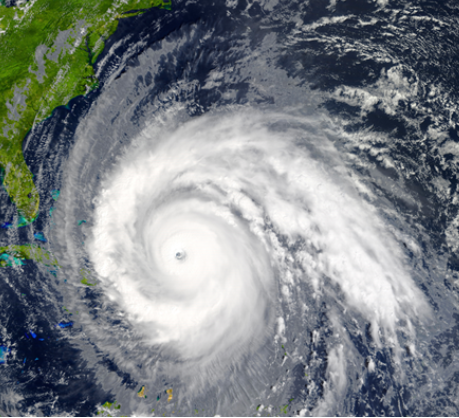
That is true. In an emergency situation: hurricane, tornado, flash flood, etc., cell phone service can be down and there's a substantial number without NOAA Weather Radios.
One could easily argue, the same goes for citizens who don't have portable battery-powered radios.
With LPFM they could offer very localized information if they had a way to get that on the air.
Yeah right. :LOL:
 
We’ve had discussions in the past about NOAA Weather Radio and it’s usefulness, and that most people likely don’t have a receiver capable of receiving the service.

Just tossing an idea out there: Might a solution involve moving the NOAA stations to a higher frequency in the low GHz range that could be picked up directly on a smartphone? Those phones already use frequencies in that general range, and the NOAA service could be an app. Instead of using the cell network the phone would receive the signal directly, so if cell service is out during a weather emergency the NOAA information is still available on a device that most everyone has these days.

This idea would of course involve a rebuild of the NOAA station system, but would make it almost universally available, though cell phone manufacturers would likely need a “nudge” to add the capability.

Thoughts?
 
It doesn't matter about the technology, if the local authorities do not use it.

They're not using radio, by and large. They're using SMS and/or email alert systems. For example, every Colorado county plus some cities have their own alert procedures using such methods. In many cases, these are opt-in. Local Emergency Managers | Division of Homeland Security and Emergency Management

(This is top of mind in Colorado right now due to extreme heat and multiple wildfires along the Front Range.)
 
They're not using radio, by and large. They're using SMS and/or email alert systems. For example, every Colorado county plus some cities have their own alert procedures using such methods. In many cases, these are opt-in. Local Emergency Managers | Division of Homeland Security and Emergency Management

(This is top of mind in Colorado right now due to extreme heat and multiple wildfires along the Front Range.)

Of course i have to be the outlier, a little different and special exception to the rule..... but they do use radio here, heavily. the city of mcgrath, in part because of me, considers KSKO to be essential to severe weather/disaster before during and after. we are absolutely essential to disaster recovery.. and i get calls late at night, early morning, etc to get the word out after a flood (which happened 2 years ago_
 
Where do you live? Clearly not in the Midwest where most people in tornado alley still have NOAA radios.
I’m in Houston where we know a thing or two about severe weather. I’ve also lived in Tornado Alley.

I would agree that ownership of NOAA weather radios is likely higher in Tornado Alley, but “most people”? I would need to see solid evidence of that.

The point of my post was getting NOAA Weather Radio into smartphones, which virtually everyone has.
 
I would agree that ownership of NOAA weather radios is likely higher in Tornado Alley, but “most people”? I would need to see solid evidence of that.

"Likely" = "I am guessing here without any facts at my disposal" in message boardspeak. 😜

The point of my post was getting NOAA Weather Radio into smartphones, which virtually everyone has.

I'm thinking that things like severe weather alerts could be merged into existing systems that use smartphones. Probably would be faster to implement than inventing a new method and then try to get the phone manufacturers to go along with it. Remember the fiasco over activating the FM function on smartphone chips, only to have it not work anyway once people switched to wireless earbuds?
 
You guys are more than welcome to post your own evidence/facts, otherwise your opinions are no more valid than mine.

Having lived in tornado alley, alot of the tv stations push weather radios, giving them away at events and helping program them.. id say its higher then average.. would i say everyone? 30 years ago yes. .now? maybe not
 
You guys are more than welcome to post your own evidence/facts, otherwise your opinions are no more valid than mine.

If we feel we need to, we certainly will, but in return I would politely ask that you use verbiage that makes it clearer that you are stating your opinion (which I agree that you are 100% entitled to).
 
Status
This thread has been closed due to inactivity. You can create a new thread to discuss this topic.


Back
Top Bottom