
Yeah, but I have liberal friends who during the last Trump term posted clips of Rachel Maddow just as conservatives do. Usually the ridicule if one side is overconfident before an election and aren't right.What typically happens there is the content is repackaged by a user for the purpose of ridicule.

-
Get involved.
We want your input!
Apply for Membership and join the conversations about everything related to broadcasting.
After we receive your registration, a moderator will review it. After your registration is approved, you will be permitted to post.
If you use a disposable or false email address, your registration will be rejected.
After your membership is approved, please take a minute to tell us a little bit about yourself.
https://www.radiodiscussions.com/forums/introduce-yourself.1088/
Thanks in advance and have fun!
RadioDiscussions Administrators
You are using an out of date browser. It may not display this or other websites correctly.
You should upgrade or use an alternative browser.
You should upgrade or use an alternative browser.
Comcast Exploring Spinoff of NBCU Cable Networks Into New Company
- Thread starter Joey1986
- Start date

If the incentives for Spinco to do that is there. But for now the transition team between Comcast and SpinCo to start the spin off process and SEC approval to do so is underway. Also the issue MSNBC and CNBC has to go through is to lower the median age from 71 to the 25-54 range is the priority MSNBC has to go forward before they could even consider a name change. Yes its going to come in the form of changing pundits on the roster.Why do MSNBC and CNBC have to be audio/video services, why can't they be audio only streaming services with an associated website containing short videos of some of their stories?
Kirk Bayne
But NBC itself got the news part over to NBC News Now via Peacock and MSNBC became more focused on the talk show hosts.
This LA Times article explains a partial factor why Comcast is spinning off MSNBC. Yes the median age part is a factor and it's at 70.

What the Comcast cable network spinoff means for MSNBC and NBC News
The home of Rachel Maddow and other progressive talking heads will move into uncharted waters once it's no longer aligned with NBC News.
 www.latimes.com
Changing the name MSNBC now would require a massive promotional campaign. Its audience of habit-bound older viewers — the median age is over 70 — may be reluctant to trust a brand they don’t recognize.
The spinoff could also increase pressure on talent salaries, which are under scrutiny across all TV news organizations that are facing shrinking audiences.

Likely nothing. Cozi is not a cable network. It is a conventional TV network distributed over the air, and is part of NBC’s Owned Television Stations division. If you’re seeing it on cable, it is due to the particular carriage agreement between your cable company and the local TV station that airs it as a digital sub-channel.What will happen to Cozi TV?

🛑Yeah, but I have liberal friends who
Circles of acquaintances are not data. They are anecdotal.

This LA Times article explains a partial factor why Comcast is spinning off MSNBC. Yes the median age part is a factor and it's at 70.
And the median age of Fox News is 68. They don't seem to be going broke, even after paying a $787 million defamation settlement for lying.
Some interesting statistics on the cable news business from veteran media industry analyst Jack Shafer, written prior to the spinoff announcement but with the knowledge that it was likely to come:
The median age of the CNN, Fox and MSNBC audiences is, respectively, 67, 68 and 71. But this isn’t necessarily a bad thing for the industry. The 50-plus age group constitutes 43 percent of the television audience. While it’s true the older demographic’s days are numbered, nature has a way of replenishing its ranks by turning people in their late 40s into cable news-friendly senior citizens.
Some interesting statistics on the cable news business from veteran media industry analyst Jack Shafer, written prior to the spinoff announcement but with the knowledge that it was likely to come:
He's absolutely right, and it's why so many cable channels market to the over-65 demo. Think of all the channels that run old off-net TV shows, old game shows, and old movies. Then look at the advertising those shows attract: Drugs, Medicare plans, insurance, and other over-65 products. Meanwhile, cable channels that once attracted young viewers, such as MTV or CMT, are now also running old movies and TV shows. Because nobody under 65 has cable. This is why all of those cable channels are being spun off. Paramount will be doing the same thing very soon.

And the median age of Fox News is 68. They don't seem to be going broke, even after paying a $787 million defamation settlement for lying.
A couple of things here. The first is that the FOX business is very different from the NBCUniversal business.
FOX blew off its ancillary cable businesses (FX, National Geographic, its share of Hulu) five years ago---selling them (and the Fox film studio) to Disney.
Having no broadcast network news, the FOX News mothership is tied to its FOX News and FOX Business channels. Yes, they own Fox Broadcasting and a group of O&Os, but the heart of the enterprise is in cable.
In selling its share of Hulu to Disney, it doesn't own its own streaming platform.
NBC's core is broadcast...it can shed cable assets without throwing away the NBC News organization. And it has Peacock for what it hopes will be a robust future in streaming (the jury's still out as to whether Peacock can/will ever get there). And they still own Universal Studios.
The second thing is that we may be about to enter a punitive era of television regulation. While FOX News has lasted through three complete Democratic administrations without interference, there are strong signals from the incoming Republican administration that MSNBC might not get the same treatment. While cable is technically not regulated, Trump has outright suggested that MSNBC's content should be considered in any renewal or possible revocation of NBC's broadcast licenses.
NBC's life gets a lot easier without the cable channels it's spinning.
FOX would have to re-invent itself if it spun its remaining cable channels. And it has a challenge ahead as cable and OTA TV (businesses FOX is invested heavily in) continue their declines and it has to spend money to lease space on a streamer it once made money from (Hulu).
Last edited:
I imagine the one company that's not happy about this spinoff is WBD. They paid billions to get CNN and a bunch of other cable channels at a time when everyone else is abandoning ship.
As pointed out in the Politico article, just because people are cutting the cable cord doesn't mean they don't still watch CNN and cable channels. They just get it through the OTT streaming providers they switched to like YouTube TV, Sling, etc.
Their ratings still aren't great and haven't been since the election. But maybe once Trump returns that will change.As pointed out in the Politico article, just because people are cutting the cable cord doesn't mean they don't still watch CNN and cable channels. They just get it through the OTT streaming providers they switched to like YouTube TV, Sling, etc.
Could Spinco get some of their networks?I imagine the one company that's not happy about this spinoff is WBD. They paid billions to get CNN and a bunch of other cable channels at a time when everyone else is abandoning ship.
Could Spinco get some of their networks?
With what money? I doubt WBD would be donating them for free.
That scenario was in an analysis somewhere, but what will WBD end up doing with so many stations...could they spin off some stations as well?With what money? I doubt WBD would be donating them for free.

A suggestion, if I might?That scenario was in an analysis somewhere, but what will WBD end up doing with so many stations...could they spin off some stations as well?
You seem to inadvertently cause some confusion on these boards with "station" vs "network."
"Station," to most of us, refers to a local TV license. I think you're using it to refer to what most here would call a "cable network," and perhaps it would be clearer if you used that terminology instead, if that's what you mean to say?
Oh, sorry. I knew that from reading this site and try not to make that error. As someone who subscribes to Philo for live TV and listens to terrestrial radio (a rarity in my age group), those blend together, but they are cable networks or channels.A suggestion, if I might?
You seem to inadvertently cause some confusion on these boards with "station" vs "network."
"Station," to most of us, refers to a local TV license. I think you're using it to refer to what most here would call a "cable network," and perhaps it would be clearer if you used that terminology instead, if that's what you mean to say?
A couple of things here. The first is that the FOX business is very different from the NBCUniversal business.
FOX blew off its ancillary cable businesses (FX, National Geographic, its share of Hulu) five years ago---selling them (and the Fox film studio) to Disney.
Having no broadcast network news, the FOX News mothership is tied to its FOX News and FOX Business channels. Yes, they own Fox Broadcasting and a group of O&Os, but the heart of the enterprise is in cable.
In selling its share of Hulu to Disney, it doesn't own its own streaming platform.
NBC's core is broadcast...it can shed cable assets without throwing away the NBC News organization. And it has Peacock for what it hopes will be a robust future in streaming (the jury's still out as to whether Peacock can/will ever get there). And they still own Universal Studios.
The second thing is that we may be about to enter a punitive era of television regulation. While FOX News has lasted through three complete Democratic administrations without interference, there are strong signals from the incoming Republican administration that MSNBC might not get the same treatment. While cable is technically not regulated, Trump has outright suggested that MSNBC's content should be considered in any renewal or possible revocation of NBC's broadcast licenses.
NBC's life gets a lot easier without the cable channels it's spinning.
FOX would have to re-invent itself if it spun its remaining cable channels. And it has a challenge ahead as cable and OTA TV (businesses FOX is invested heavily in) continue their declines and it has to spend money to lease space on a streamer it once made money from (Hulu).
True Fox News has the Fox Nation app and it's presented like it's Hulu, Netflix for conservatives.
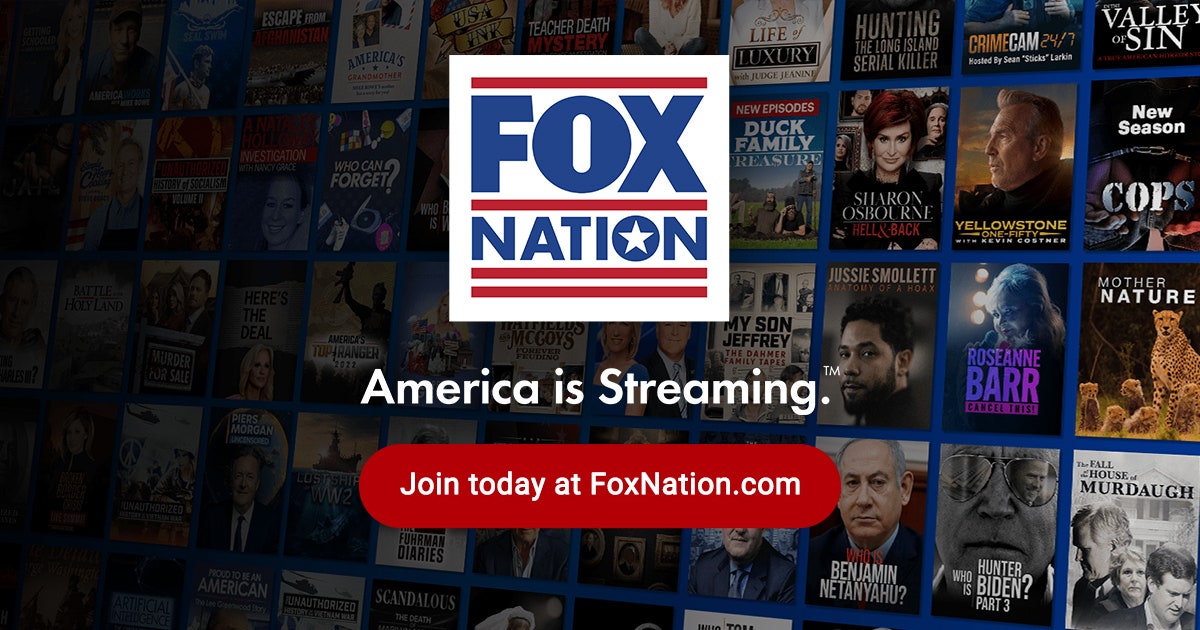
Fox Nation: Start Your Free Trial | Shows, Documentaries, & Specials
Fox Nation is an entertainment streaming service brought to you by FOX News. Stream exclusive shows, documentaries, and news stories that celebrate America.
 nation.foxnews.com
I have an idea what you mean it's Fox Broadcasting and the O&O's they have to lease space on Hulu for their prime time shows.
But some of the shows they syndicate goes through Tubi their other app.

How to watch FOX 29 Philadelphia for free on FOX LOCAL
Here’s how to stream FOX 29 Philadelphia for free on Roku, Amazon FireTV, Apple TV, Google Android TV and Vizio with FOX LOCAL.
Tubi - Wikipedia

Watch Free TV & Movies Online | Stream Full Length Videos | Tubi
Watch free on Tubi. From deep cuts to hit movies, shows, series, live TV and awarded originals. No subscription. Free forever.
Back to Peacock specifically. According to this article NBC's remaining regional sports networks will start appearing on Peacock in 2025. In other words for now those RSN's currently owned by Comcast in San Francisco, Sacramento, Philadelphia and Boston stay with Comcast for now.
In a major play to modernize its local sports offerings, NBCUniversal will reportedly make its four NBC Sports regional networks available to Peacock subscribers in those local markets. Those networks include NBC Sports Bay Area, NBC Sports California, NBC Sports Boston, and NBC Sports Philadelphia; home to high-profile teams like the Golden State Warriors, Boston Celtics, and Philadelphia Phillies.
Per the Wall Street Journal, Peacock could begin streaming these regional sports networks as soon as 2025, though the rollout could be delayed as details are ironed out. One potential plan that NBC executives are discussing is to make the networks available at an additional price through a Peacock add-on.

Report: Peacock to stream local games from NBC Sports RSNs
NBCUniversal will reportedly offer its NBC Sports regional networks to Peacock customers in those local markets.
 awfulannouncing.com
Obviously sports is driving subscriptions for Peacock:

 www.sportsmediawatch.com

 www.si.com
So that's what's behind their decision to offer RSNs to Peacock subscribers. At one time, it was looking like NBC wanted to get out of the RSN business. But not if it drives subscriptions to Peacock.
Peacock NFL playoff game averages 23 million viewers
The Peacock NFL playoff game averaged 23 million viewers according to NBC, up from last year's comparable game on regular television.
www.sportsmediawatch.com
NBC Bragged About Streaming Numbers for Peacock-Only Playoff Game, and Fans Didn’t Want to Hear It
The Peacock-exclusive playoff game drew big ratings, but fans weren’t pleased.
So that's what's behind their decision to offer RSNs to Peacock subscribers. At one time, it was looking like NBC wanted to get out of the RSN business. But not if it drives subscriptions to Peacock.