Michael, While I agree with your post I would say that calling NBA players "Thugs", "Bloods" and "Crips" is essentially the same as using the N word. The implication that Limbaugh made is clear. He also claimed the NFL was trying to make Donovan McNabb a star because he was a black quarterback. The fact that he never used the N word is irrelevant. Trump dances around the issue with the same language. It's red meat for the base and they understand what's being said...

-
Get involved.
We want your input!
Apply for Membership and join the conversations about everything related to broadcasting.
After we receive your registration, a moderator will review it. After your registration is approved, you will be permitted to post.
If you use a disposable or false email address, your registration will be rejected.
After your membership is approved, please take a minute to tell us a little bit about yourself.
https://www.radiodiscussions.com/forums/introduce-yourself.1088/
Thanks in advance and have fun!
RadioDiscussions Administrators
You are using an out of date browser. It may not display this or other websites correctly.
You should upgrade or use an alternative browser.
You should upgrade or use an alternative browser.
Glen Kuiper suspended from broadcasting A's games after on-air racial slur
- Thread starter radiofan2023
- Start date

While I find all those references reprehensible, I’m not sure you or I get to make the call that another word is equivalent to the “N” word. I would leave that to those who are most affected and injured by that particular slur.Michael, While I agree with your post I would say that calling NBA players "Thugs", "Bloods" and "Crips" is essentially the same as using the N word. The implication that Limbaugh made is clear. He also claimed the NFL was trying to make Donovan McNabb a star because he was a black quarterback. The fact that he never used the N word is irrelevant. Trump dances around the issue with the same language. It's red meat for the base and they understand what's being said...
Thanks, this is a strong list of examples of Rush’s disrespect for liberal women and Blacks. I was not aware how bad some of his rhetoric was.
Rush Limbaugh now has a Presidential Medal of Freedom. Here are just 20 of the outrageous things he's said
President Trump said he gave Limbaugh the nation's highest civilian honor for "decades of tireless devotion to our country."www.cbsnews.com
There you go DOB. A "greatest hits list" of Limbaugh's racist rants. He was a charming fellow wasn't he? He was a vile caricature. Kuiper got fired for one egregious lapse in judgement. Limbaugh built his Empire spewing trash. It's good that he's gone, but the discord he helped foment lives on...
Hi Michael, Thanks for your thorough reply.Sure. First, let's correct any misunderstandings about who said what so far.
I posted correct quotes and facts about the incidents after quotes (except Byrd's) and the facts (in all three cases) were misrepresented by DOB.
As for Rush, my comment was in response to tbolt909, who said:
And my response was an agreement on hate and vitriol, but making it clear that Rush never used the "N" word on-air and that he can't be accused of making it acceptable:
I see tbolt909 has beat me to Limbaugh's 20 terrible quotes (only a portion of which had to do with race), but there's one that's not on the list.
In September of 2009, there was a beating on a school bus in Bellville, Mo. Police said it appeared to be racially motivated, but days later, retracted that, saying it turned out to be a dispute over seating. But before the retraction, here's what Rush said on his radio show:
“You put your kids on a school bus you expect safety, but in Obama's America the White kids now get beat up with the Black kids cheering, 'Yeah, right on, right on, right on.' Of course everybody said the White kid deserved it; he was born a racist, he's White. …Now that we have a Black president, Blacks are rising up to attack White kids.”
(Ron Howard narrator voice from "Arrested Development": They weren't.)
Right. But let's be clear. Robert Byrd was not elected by anyone other than the residents of the 6th Congressional District of West Virginia (in 1952, 1954 and 1956) and to the Senate by the people of West Virginia in 1958. Byrd carried that election largely because the Republican incumbent in the race, W. Chapman Evercomb, had voted in favor of the Civil Rights Act of 1957 and lost in a landslide, with many Republicans voting for Byrd.
That has way more to do with West Virginia's population at the time (95% white) than either party's platform. And if you doubt West Virginia's conservative lean, despite electing a Democrat to the Senate, consult Joe Manchin's voting record.
The Cambridge Dictionary managed to:
"public speech that expresses hate or encourages violence towards a person or group based on something such as race, religion, sex, or sexual orientation".
As did Merriam-Webster:
"speech that is intended to insult, offend, or intimidate a person because of some trait (as race, religion, sexual orientation, national origin, or disability)"
As did the Oxford English Dictionary:
"/ˈheɪt spiːtʃ/ [uncountable] hate speech (against somebody/something) speech or writing that attacks or threatens a particular group of people, especially on the basis of race, religion or sexual orientation."
The United States Supreme Court has ruled that our First Amendment rights would be abridged by making hate speech illegal (and this was when the court was 6-3 liberal justices).
Between tbolt909's post and mine, there are 21 examples of Rush saying far worse.
You're welcome to do that if you want to invest the time and if the moderators are okay with it. My only entrance into this was to make sure that people understood that Limbaugh's show did not air the N-word and that he didn't make it okay to do so, and to correct erroneous examples given by a previous poster.
I think parts of these definitions are open to interpretation, and I think you would agree that words like “offend” in one of your definitions are too broad, since must political opinions offend someone.
I do want to correct one of your statements that only West Virginia voters elected former KKK leader and Senator Robert Byrd. Byrd. He was elected by other Democrats as the Democratic Senate leader for 12 years from 1977-1989. These senators represented the National Democratic Party of that era. His tenure as Democratic leader preceded his 2001 racist comments on Fox.
I also respectfully disagree that Joe Manchin votes as a conservative having been a key vote in passing a recent law that few if any Republicans supported. But compared to AOC or Chuck Schumer, Manchin is conservative for a Democrat.
I thank you not only for your time in answering my questions but in your excellent scoops and radio information on this radio site.
Hi Michael, Thanks for your thorough reply.
I think parts of these definitions are open to interpretation, and I think you would agree that words like “offend” in one of your definitions are too broad, since must political opinions offend someone.
Let's review:
The Cambridge Dictionary says:
"...expresses hate or encourages violence towards a person or group based on something such as race, religion, sex, or sexual orientation".
And the Oxford English Dictionary's definition uses the phrase:
"...attacks or threatens a particular group of people, especially on the basis of race, religion or sexual orientation."
The word "offend" is included in only one of the three definitions I posted....Merriam-Webster:
"...insult, offend, or intimidate a person because of some trait (as race, religion, sexual orientation, national origin, or disability)"
So, yeah, I suppose if you zero in on the weakest term of the seven (expresses hate, encourages violence, attack, threatens, insult, offend, intimidate), you could argue that it's broad.
But I don't agree that it's because most political opinions offend someone. Because that's suggesting that encouraging violence, attacking, threatening, insulting, offending and intimidating people based on their race, religion, sex, sexual orientation, national origin or disability is a political opinion. Nonsense. It's bigotry and hatred, even when expressed by a politician.
If a candidate, party or that party's supporters want to defend that as "political opinion", that says a lot about that candidate, party or party's supporters.
I do want to correct one of your statements that only West Virginia voters elected former KKK leader and Senator Robert Byrd. Byrd. He was elected by other Democrats as the Democratic Senate leader for 12 years from 1977-1989. These senators represented the National Democratic Party of that era. His tenure as Democratic leader preceded his 2001 racist comments on Fox.
Well, let's look at Byrd's leadership role (which he wouldn't have had if West Virginia voters hadn't elected him to the Senate in 1958---in part because his opponent voted for the 1957 Civil Rights Act---and re-elected him in '64 and '70.
Byrd's first move toward leadership was running for Senate Majority Whip in 1971. Sen. Edward Kennedy of Massachusetts was elected in January of 1969. Six months later, the Chappaquiddick incident happened and Byrd, observing the damage the incident did to a possible Kennedy campaign for president in 1972, saw an opportunity to move up. He moved stealthily, doing favors over time for other Senators, and then threw his hat in the ring.
While Kennedy's electoral chances nationally were in pretty bad shape, very few people took Byrd's Whip challenge seriously.
Byrd beat Kennedy by seven votes. The New York Times, in an explainer piece the day after the election, said:
"Robert C. Byrd, the junior Senator from West Virginia, is so dimly perceived by some of his colleagues that four of the folded paper ballots came out spelled “Bird.”.....Robert Byrd was able to garner votes in part because no one saw him as a rival for party leadership."
Important to note, though----while 381,745 West Virginians voted to send Robert Byrd to the Senate in 1958, a total of 31 Senate Democrats voted for Byrd for Whip.
The next rung up the ladder was Senate Majority Leader. He had a strong challenger in former Vice-President Hubert Humphrey, who had returned to the Senate, representing his home state of Minnesota. Humphrey was the likely successor to Mike Mansfield. But Humphrey was diagnosed with terminal cancer late in the contest---too late to whip up a plausible new candidate. Humphrey withdrew and implored his colleagues to vote for Byrd unanimously.
That's 61 Democrats who voted for Byrd, maximum (exact vote totals for congressional party leadership positions are proving difficult to find, and there could have been abstentions or absences).
Did they re-elect him as Whip in '73 and '75 and as Leader in '79, '81, '83, '85 and '87? Yes. But let's remember that those positions are about power and retaining it. It's tough to eject someone from either of those positions, barring a scandal like Chappaquiddick.
Should previous membership in the KKK have counted as a scandal? In my book, yes. But Byrd had said his membership was a mistake of his youth as early as the 1950s, and had renounced segregation and said he regretted voting against the '64 Civil Rights Act by 1970. In the United States Senate of the 1970s, which had members representing 15 former slave states, Robert Byrd may have looked like a poster child for reform---at least to some Senate Democrats.
Was it plausible to Democrats nationally? No. Byrd was one of the early candidates for the Democratic nomination for President in 1976. He won one state---his own. The only other name in the West Virginia Democratic primary that year was George Wallace. Byrd beat him 89% to 10%. He got less than 1% of the vote in Georgia and Florida and dropped out.
So I'd argue that Byrd's run in Senate leadership is more about the peculiarities of the Senate than about the views and principles of the Democratic Party.
And I'd suggest that Senate Democrats in 1977 could not have envisioned Robert Byrd saying the N-word on FOX News...or FOX News, for that matter...in 2001.
I also respectfully disagree that Joe Manchin votes as a conservative having been a key vote in passing a recent law that few if any Republicans supported. But compared to AOC or Chuck Schumer, Manchin is conservative for a Democrat.
Let's remember what exactly I said:
"...if you doubt West Virginia's conservative lean, despite electing a Democrat to the Senate, consult Joe Manchin's voting record."
One vote on one bill isn't an indicator of whether a Senator is liberal or conservative. And Joe Manchin is not just "conservative compared to AOC or Chuck Schumer". There is literally no Democrat in the Senate who has voted against the current administration more than Joe Manchin:
FiveThirtyEight: Manchin voting record
And that's a matter of what I said in my original quote---West Virginia's conservative lean. Republicans make up 68.9% of registered voters in the state. Democrats? 38.2%. Manchin has to vote conservative if he wants to stay in office---he won his last election by only three percentage points.
I thank you not only for your time in answering my questions but in your excellent scoops and radio information on this radio site.
That's really nice of you. Thanks!
@ILOVERADIO ---a PS:
It occurred to me that I could also look up Manchin's voting record during the previous administration. He voted 50.4% with the Trump administration---a higher percentage than any other Democrat in the Senate:
Tracking Congress In The Age Of Trump
It occurred to me that I could also look up Manchin's voting record during the previous administration. He voted 50.4% with the Trump administration---a higher percentage than any other Democrat in the Senate:
Tracking Congress In The Age Of Trump
Thanks for posting the quotes that back up every word I said. I appreciated the obviously sarcastic excuses but you really didn't exaggerate, the talking points are almost word for word. If that is the point you were making then I too share in wonder of their ridiculous.Well, not facts and not actual words.
Byrd did use the word in 2001 in a FOX News broadcast interview. "Every Democrat" did not "clap like a seal". There was outrage and Byrd made a public apology the following day.
Biden's quote was "If you have a problem figuring out whether you're for me or for Trump, then you ain't black." Far from being applauded, it was regarded within the party as a major gaffe and Biden within hours was walking it back---"“I was making the point that I never take the vote for granted and in fact I know in order to win the presidency, I need the African American vote,” Biden said. “I shouldn’t have been such a wise guy. I shouldn’t have been so cavalier.”
And Obama's quote, made on a popular radio show (Piolin) was “if Latinos sit out the election instead of saying, ‘We’re going to punish our enemies and we’re going to reward our friends’ … then I think it’s gonna be harder.” Obama pulled back from that statement after being called on it, saying he should have said “opponents.”
When you say "facts" and "actual words", the same machine you use to type can be used to look up whether what you typed was true. If it's not, it either means you didn't do that, or you didn't care whether it was or not.
I guess that this is the world of racist black holes and Guam about to sink into the ocean.

That was a well-reasoned, well-researched and well-written post. I learned a few things, so thank you for that.Let's review:
...
And that's a matter of what I said in my original quote---West Virginia's conservative lean. Republicans make up 68.9% of registered voters in the state. Democrats? 38.2%. Manchin has to vote conservative if he wants to stay in office---he won his last election by only three percentage points.
But if I may return the favor: 68.9% + 38.2% = 107.1%.
(Even assuming it was an unintended transposition, 68.9% + 32.8% = 101.7%)
That's arithmetic that even the late Chicago Mayor Richard J. Daley might envy.
That's like a preview of the leftist Marxist paradise that every Dem vote gets us closer to.
Except more than half of the states are run by the other party, and they're gerrymandering districts and changing election laws that favor them. Everyone wants to force their will on everybody else. The founding fathers knew that, having come from England.
BTW the Philly story you cite was proven false.

What Sean Hannity got wrong about Philly election fraud
City elections inspectors explain why the Fox News host's claims about 2012 election rigging are unreasonable.
 billypenn.com
Two things to consider:
1. This is one of the challenges with live broadcasts. Sometimes, you get a piece of live copy that you’re supposed to talk about, and things are written on it that are hard to say (or you may not be comfortable saying). I know that if I were in his shoes, I wouldn’t want to even say the correct name of the museum because I’d be too concerned with it being inappropriate to do so. There’s nothing worse than having a piece of copy put in front of you that has words that have the potential to be mispronounced. None of that excuses what happened, but I think that’s something to consider.
2. Sometimes, trying to be too careful makes a situation worse. There’s a phenomenon where you know you’re about to say something that needs to be handled carefully, and for whatever reason, you are unable to do so. I have no idea if that’s what happened here or not, but it does happen. One time I was I was trying my best to say something positive about a female sports team while on the radio. I knew that some people are very sensitive about how women’s sports are talked about, so I was trying to be extra careful with how it was presented. If I recall, I said something to the effect of “these gals are amazing.” Someone got mad, contacted the station, and called me sexist for using terminology that they deemed to be sexist. I didn’t mean for it to be interpreted that way. In fact, I was already concerned about trying to say anything because I wanted to be sure I got it right.
1. This is one of the challenges with live broadcasts. Sometimes, you get a piece of live copy that you’re supposed to talk about, and things are written on it that are hard to say (or you may not be comfortable saying). I know that if I were in his shoes, I wouldn’t want to even say the correct name of the museum because I’d be too concerned with it being inappropriate to do so. There’s nothing worse than having a piece of copy put in front of you that has words that have the potential to be mispronounced. None of that excuses what happened, but I think that’s something to consider.
2. Sometimes, trying to be too careful makes a situation worse. There’s a phenomenon where you know you’re about to say something that needs to be handled carefully, and for whatever reason, you are unable to do so. I have no idea if that’s what happened here or not, but it does happen. One time I was I was trying my best to say something positive about a female sports team while on the radio. I knew that some people are very sensitive about how women’s sports are talked about, so I was trying to be extra careful with how it was presented. If I recall, I said something to the effect of “these gals are amazing.” Someone got mad, contacted the station, and called me sexist for using terminology that they deemed to be sexist. I didn’t mean for it to be interpreted that way. In fact, I was already concerned about trying to say anything because I wanted to be sure I got it right.
That was a well-reasoned, well-researched and well-written post. I learned a few things, so thank you for that.
But if I may return the favor: 68.9% + 38.2% = 107.1%.
(Even assuming it was an unintended transposition, 68.9% + 32.8% = 101.7%)
That's arithmetic that even the late Chicago Mayor Richard J. Daley might envy.
I goofed. And it's a substantial goof. In a sea of numbers, my eye saw 68.9% and somehow, on cup of coffee #1 at 4:47 a.m., I typed that in as the Republican registration number. It's not. It's the percentage of population that is registered to vote in West Virginia.
The correct breakdown is:
Democrat: 38.24%
Republican: 34.87%
Unaffiliated: 22.95%
Third party/other: 3.94%
...which also upends my understanding that Joe Manchin is a Blue senator in a Red state---at least in terms of voter registration.
In practice, West Virginia has not voted for the Democrat in a presidential election since 1996, the governor is Republican, Republicans control both houses of the State Legislature and Manchin is the only Democrat in the West Virginia Congressional Delegation. So the point remains valid, but I did get the voter registration numbers all kinds of wrong.
Manchin's voting record speaks for itself.
Sounds like you're talking about this:Sounds like a Philly voting district where Obama got 107% of the vote, and all the of the ones where 50,000 votes are Democrat and 0 votes Republican. That's like a preview of the leftist Marxist paradise that every Dem vote gets us closer to.
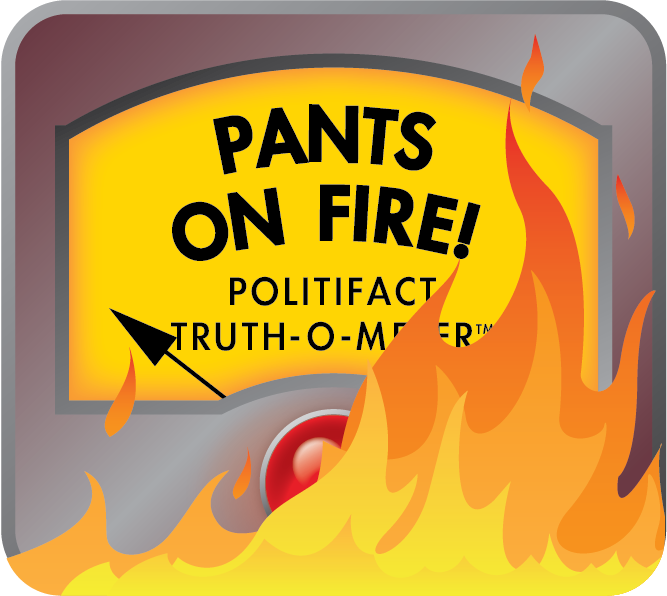
Internet: Philly rigged the 2012 presidential election. Experts: Still no
Update 5:34 p.m. Okay. So, we’re still talking about this. There’s a meme circulating on the internet that promotes alle
 www.politifact.com
50.4 percent is an almost perfect example of a moderate who agrees with each party about half the time.@ILOVERADIO ---a PS:
It occurred to me that I could also look up Manchin's voting record during the previous administration. He voted 50.4% with the Trump administration---a higher percentage than any other Democrat in the Senate:
Tracking Congress In The Age Of Trump
Michael Hagerty and I have I believe a sincere difference of opinion on how objective the term hate speech can be defined. But since this is a radio site, I’ll quit arguing about this and just thank our veterans for our freedom to agree to disagree on this Memorial Day Weekend.
Last edited:
Someone got mad, contacted the station, and called me sexist for using terminology that they deemed to be sexist. I didn’t mean for it to be interpreted that way.
All it takes is one complaint. That was Howard Stern's criticism of the FCC.
The thing I haven't seen is how many complaints NBC Sports received about this after all the press coverage the story got.
Sounds like you're talking about this:
Internet: Philly rigged the 2012 presidential election. Experts: Still no
Update 5:34 p.m. Okay. So, we’re still talking about this. There’s a meme circulating on the internet that promotes alle
50.4 percent is an almost perfect example of a moderate who agrees with each party about half the time.
Michael Hagerty and I have I believe a sincere difference of opinion on how objective the term hate speech can be defined. But since this is a radio site, I’ll quit arguing about this and just thank our veterans for our freedom to agree to disagree on this Memorial Day Weekend.
There’s two things that can be true.All it takes is one complaint. That was Howard Stern's criticism of the FCC.
The thing I haven't seen is how many complaints NBC Sports received about this after all the press coverage the story got.
1. Someone is actively a jerk, and deserves the complaint.
2. Someone is made a mistake (despite having good intentions), and now has to deal with the fallout.
Sounds like a Philly voting district where Obama got 107% of the vote, and all the of the ones where 50,000 votes are Democrat and 0 votes Republican. That's like a preview of the leftist Marxist paradise that every Dem vote gets us closer to.
Mr. Michael, I'm impressed that you were coherent enough, at 4:47 am on a Memorial Day weekend Sunday, to write that long, detailed post. I learned long ago to avoid the keyboard in my first hour of consciousness, which rarely involves 4:47 am unless it's a pee-break.I goofed. And it's a substantial goof. In a sea of numbers, my eye saw 68.9% and somehow, on cup of coffee #1 at 4:47 a.m., I typed that in as the Republican registration number. It's not. It's the percentage of population that is registered to vote in West Virginia.
The correct breakdown is:
Democrat: 38.24%
Republican: 34.87%
Unaffiliated: 22.95%
Third party/other: 3.94%
...which also upends my understanding that Joe Manchin is a Blue senator in a Red state---at least in terms of voter registration.
In practice, West Virginia has not voted for the Democrat in a presidential election since 1996, the governor is Republican, Republicans control both houses of the State Legislature and Manchin is the only Democrat in the West Virginia Congressional Delegation. So the point remains valid, but I did get the voter registration numbers all kinds of wrong.
Manchin's voting record speaks for itself.
I spent a lot of years finding and correcting program coding errors, so your minor oopsie sorta jumped out at me. It's a blessing and a curse.
I appreciate the second set of eyes, Weiserguy. In the past few years, between radio news and writing about cars, I have had as many as nine editors at the same time. They save my tail. Even though I always check facts before I write, there's the possibility (especially when it comes to math) that I'll get a detail sideways. This forum is one of the few places where I'm on my own.Mr. Michael, I'm impressed that you were coherent enough, at 4:47 am on a Memorial Day weekend Sunday, to write that long, detailed post. I learned long ago to avoid the keyboard in my first hour of consciousness, which rarely involves 4:47 am unless it's a pee-break.
I spent a lot of years finding and correcting program coding errors, so your minor oopsie sorta jumped out at me. It's a blessing and a curse.

As has been posted, this was later debunked. And the 100% to 0% one was also found to be based on a partial count that was just one precinct. As I said, debunked. Amply and thoroughly. File under "Urban Legend" in the folder right after "Big Foot".Sounds like a Philly voting district where Obama got 107% of the vote, and all the of the ones where 50,000 votes are Democrat and 0 votes Republican. That's like a preview of the leftist Marxist paradise that every Dem vote gets us closer to.
The purple remark is out of place. I have lived or worked in countries that were truly Socialist dictatorships or, at least were going through a flirtation with such ideologies. Calling the Democrats "socialists" or "Marxists" is calling a spruce a "cactus" because the leaves are prickly.
Most of us can look at Democrat ideals of universal health care and realize that such is just humane and not socialist. We can also look at the desire to expand government expenses and criticize that as dangerous efforts to win votes. And we can look at the Republican obsession with eliminating even medically sound abortions and their approval of urban dwellers having what are virtual machine guns as extending the intents of the constitution well beyond their intent.
Let's stay away from the arguing points of ignorant talk show hosts on some AM stations and stick with the subject of radio, as this is not a political forum.
I think there’s something to be said for seeing the merits of a system that is more “socialized” compared to what we have now. With that being said, one can’t help but overlook the challenges that come along with it. I’m American but now live in Canada. Many Americans, particularly those on the left, think that Canada’s social system is light years beyond America (and I’m sure some would like to move here). While that may be true, I’ve had a different experience. Between the high cost of living, the $200 per month I pay for the mandatory provincial car insurance program, and extremely overtaxed healthcare system, there’s a lot to appreciate at home. There was a story in the news just the other day about a 90 year old woman who was forced to wait 60 hours for care in an emergency room.As has been posted, this was later debunked. And the 100% to 0% one was also found to be based on a partial count that was just one precinct. As I said, debunked. Amply and thoroughly. File under "Urban Legend" in the folder right after "Big Foot".
The purple remark is out of place. I have lived or worked in countries that were truly Socialist dictatorships or, at least were going through a flirtation with such ideologies. Calling the Democrats "socialists" or "Marxists" is calling a spruce a "cactus" because the leaves are prickly.
Most of us can look at Democrat ideals of universal health care and realize that such is just humane and not socialist. We can also look at the desire to expand government expenses and criticize that as dangerous efforts to win votes. And we can look at the Republican obsession with eliminating even medically sound abortions and their approval of urban dwellers having what are virtual machine guns as extending the intents of the constitution well beyond their intent.
Let's stay away from the arguing points of ignorant talk show hosts on some AM stations and stick with the subject of radio, as this is not a political forum.
All in all, there will be pluses and minuses no matter where you live. We all are better off when we find some common ground in the middle.
- Status
- This thread has been closed due to inactivity. You can create a new thread to discuss this topic.