
• Get involved.
    We want your input!
    Apply for Membership and join the conversations about everything related to broadcasting.

    After we receive your registration, a moderator will review it. After your registration is approved, you will be permitted to post.
    If you use a disposable or false email address, your registration will be rejected.

    After your membership is approved, please take a minute to tell us a little bit about yourself.
    https://www.radiodiscussions.com/forums/introduce-yourself.1088/

    Thanks in advance and have fun!
    RadioDiscussions Administrators

In a future filled with electric cars, AM radio may be left behind (off-topic)

Look, I live in a working class area, and -- like you -- I understand basic economics. New EVs average over $65K, far beyond the reach of the average American salary ($36K a year), especially when inflation for most necessities (like food) has been hovering around 30% over the past two-year period, since 2021. New car sales in general have dropped over the past year and a half. Some of that is due to supply chain issues and availability. But a lot of it is due to inflation. You seem to think that the average American is more loaded than they really are.
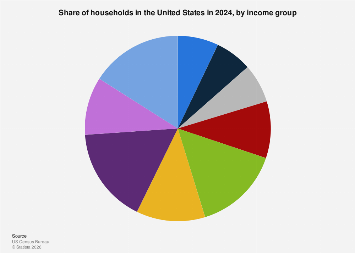
Over 35% of American households earn $100,000 and over...


While making under about $150,000 in some expensive metro areas may exclude some from the ability to purchase a new EV , in most places the newest generation of those vehicles is affordable, particularly when tax incentives and other benefits are considered.

Other apartment complexes have parking garages, with no outlets there, either. The landlords probably aren't going to dish out hundreds of thousands to have every tenant space provided with outlets, and the tenants themselves probably don't have the spare income to buy any of the $30K~ models you mentioned upthread, especially if there is no outlet handy where they live.
Today, cares under $25 to $30 thousand are fewer and fewer. The $12 to $15 thousand car of 2000 is the $30 to $35 thousand car of today. I think Mr. Hagertey can give some data on the percentage of cars in each price range sold today in the U.S.
So right now, the people who are most apt to purchase an EV live in a high value condo complex (with individual garages), or they are individual homeowners who own houses. And they are people to whom inflation is a minor deal.
Unless you are in the under 4% of the population worth over $4 million, those costs are a significant aspect of your budget.
If you own a house in most major metros of the US -- where most Americans live -- you probably have assets that put you into the top 10% of Americans, easily, and your income level isn't far behind.
No, not always. People worth under $2 million generally have most of their assets in the non-encumbered value of their home. And most home owners have mortgages, with the first 10% being mostly interest payments.

The major issue separating renters from homeowners is the down payment amount and/or poor credit. It is not about being "rich" but about just not having enough money in non-retirement savings.
Top 10% is rich.
No, the top 2.5% is well to do and some of that group is "rich". That 2.5% is the group with non-encumbered assets of over $5 million. And for you reference, a retired person (with no other income) with $5 million makes less than $140,000 a year before taxes. That is hardly "rich"
And even many of those homeowners today probably don't have the spare income to drop down $60K (even in payments, insurance, etc.) for a new car. Most Americans don't have $1000 spare to handle emergency car repairs.
That is because over a third of all American households has an income below $50,000 a year. They won't be buying any kind of new car, so including them in this analysis is not appropriate.
But those homeowners who probably have the incomes to buy new vehicles are in the top 10% to top 5%, especially if the value of their assets is concerned. That means they're rich. They're definitely rich compared to the working class, who are scraping to get by, and who number probably in the hundreds of millions.
You are way off. Over 50% of households have gross incomes of over $100,000 and that puts them in the group that can (if they have not abused credit) afford a new car.

35% of households is in the defined "working class" or middle income group, making $35,000 to $100,000. And a person living in a lower cost metro, like Albuquerque or Des Moines or Tulsa is going to be able to, prudently, buy a new car.
To bring this back to topic: By the time the infrastructure is worked out, to where the tens of millions of apartment and condo tenants and owners have easy access to AC outlets at every parking stall, and by the time that inflation drops and people have more income available -- by that time, AM radio will be further on its way out the door. It may take 15 to 20 years to get the infrastructure and economics of EV ownership available to the average American, and in 15 or 20 years AM will be a no-show, or close to it. The remaining AM stations will have to depend on streaming. Maybe enough of them will be translator only.
But other economic reasons are already making even FM usage to be in decline. In 2000, the average person used around 20 hours of broadcast radio weekly, while today it is around 6 hours or lower, depending on the market. Not all of that decline has to do with new media, but the fact is that radio has far less revenue and will eventually be twilighted without any influence from electric cars.
But people won't be tuning AM in their cars. Most aren't now.
Actually, in-car listening which is a bit under half of all listening, is where most AM listening takes place. So in-car AM services reach over 20% of all in-car listeners. That is not a low figure when we consider that most markets have only 1 or 2 AM stations that cover the whole market day and night, and some have none!
 
The generalizations about being in a “metro area” all being upper income are absurd anyway. Heck, I live in a comparative drop in the bucket of my metro area, and in the few square miles of our little hamlet, the standard of living are wildly different. Large single homes and generally newer vehicles in one end, row and twins with “beaters” in another section, and a kind of middle ground where it’s more mixed.

The next town over is larger, and the differences are more pronounced. Wildly disparate neighborhoods. The average income likely doesn’t reflect the reality for many residents. You’re balancing out the contrasting ends.
 
Hence Reason #1 why I tend to prefer AM despite it's obvious inferiority: for all the things that do happen w/re sound processing (compression, EQ, limiting, clipping, pre-emphasis, etc.), one thing that most stations don't apply to their OTA signals is lossy MP3 or AAC compression, and when they do, they do it such that the artifacts are minimized.
So, the narrow frequency response, distortion/limiting and noise is preferred? Is that a nostalgic view? Or are you mostly just a fan of the limited content available on AM?
I've always been pickier than many regarding MP3's so-called "squirrelies" though; If more people were so picky, I suspect that low-bitrate MP3 and AAC streams wouldn't be as common as they are.
And yet you prefer AM stations? Seriously?
 
So, the narrow frequency response, distortion/limiting and noise is preferred? Is that a nostalgic view? Or are you mostly just a fan of the limited content available on AM?

And yet you prefer AM stations? Seriously?
This argument is very much like people who insist that vinyl is better than digital.

If you record a vinyl album to digital it will sound exactly like the vinyl album, artifacts and all.
 
If you record a vinyl album to digital it will sound exactly like the vinyl album, artifacts and all.
Not the way many if not most CDs are mastered...someone who thinks compressed audio with near square-wave content is high fidelity!
 
The average American wage hasn't been $36K since 2005. In 2021 (most recent available), it was $60,575.

National Average Wage Index

As for EVs, here are the ten best-selling EVs in the country for 2023 (up to the third quarter) and their base price:

1. Tesla Model Y: $54,990
2. Tesla Model 3: $42,990
3. Ford Mustang Mach-E: $45,995
4. Tesla Model S: $89,990
5. Chevrolet Bolt: $26,500
6. Tesla Model X: $99,990
7. Hyundai IONIQ 5: $41,450
8. Kia EV6: $48,700
9. Volkswagen ID4: $38,995
10. Nissan Leaf: $28,040

We should note, too, that many of these vehicles are eligible for $7,500 in tax rebates.
The BLS says the average individual income is around $50K, and the US Census bureau drops it to $41K for single, non-family households, with $70K being average for all households in the US (it's lower for blacks and Hispanics, and for women in the US -- according to the BLS -- the average salary is $50.7K). And of course any median figure includes the poor people down the road along with Bill Gates, Jeff Bezos, and Elon Musk.

So your point is taken.

Doesn't mean that people can afford $99K Teslas, $45K Mustangs, or even new compact EVs, when they live with no AC outlet next to their parking stall. And still have to dish out hundreds for the insurance.

Not everyone lives in a detached house or an apartment complex with AC outlets next to every parking stall.

It's nice when people have rose tinted outlooks on the economy. The country, and the world, needs people with positive outlooks. However, such outlooks are not always realistic. Inflation is a thing, and income inequality is a thing -- and income inequality has also increased over the past decade. Some of my Democrat friends say it's increased since Reaganomics -- and it looks like they have a point.

According to the US Census Bureau the incomes for the lowest 40% of Americans dropped just under 4% during and after the Pandemic. The top 10% saw an increase of at least 5%. So yeah, there are people who can afford new EVs, because they have the money, and they also undoubtedly have the personal infrastructure needed for an EV.

Most people don't.

But we're still getting in the weeds here. I still maintain that by the time the infrastructure, and the economics, of mass EV ownership is practicable -- maybe 15-20 years hence -- AM radio will be less relevant to most audio content consumers than it is now. So, whether EV ownership changes AM radio use, or doesn't change AM radio use, is a non-issue.
 
Today, cars under $25 to $30 thousand are fewer and fewer. The $12 to $15 thousand car of 2000 is the $30 to $35 thousand car of today. I think Mr. Hagerty can give some data on the percentage of cars in each price range sold today in the U.S.
First, and always, way more people buy used than new every year. Roughly 3 to 1. Last year, it was 43.1 million used passenger vehicles sold in the USA vs. 15.3 million new.

Second: Mass-market electric vehicles have now been around for 12 years (assuming we start the clock with the Nissan Leaf), so these cars are increasingly coming up on the used market as well. Meaning what was a $35,000 2011 Leaf is a $6,000 used car today. Newer examples of the Leaf and the EVs that followed it will cost more, but they'll cost less than new.

Third: EVERYBODY in these conversations acts like you have to have $45,000 to buy a $45,000 car. Very few people buy cash (usually the wealthiest customers), and very few buy without a down payment of some type (quite often a trade-in that knocks $10,000-$15,000 or more off the amount being financed).

Fourth: It's not smart, but most people just want to know what the monthly payment is going to be. And if the dealer can get them in a car for a number they're comfortable with, they're not going to sweat the bottom line on the window sticker.

Finally, to David's question, I don't know that I can break it out that way, but here are the 14 best-selling cars in America last year (all those that sold at least 200,000 units---#5-13 are all between 295,201 and 207,763):

1. Ford F-Series pickup (726,003)
2. Chevrolet Silverado pickup (529,765)
3. RAM pickup (468,344)
4. Toyota RAV4 (366,741)
5. Toyota Camry
6. GMC Sierra pickup
7. Honda CR-V
8. Tesla Model Y
9. Jeep Grand Cherokee
10. Toyota Highlander
11. Toyota Corolla
12. Toyota Tacoma pickup
13. Chevrolet Equinox
14. Ford Explorer


The Tesla Model Y has the highest base price and the only base price over $50,000. The Jeep Grand Cherokee has the second-highest base price at $41,530. Where they go from there is a matter of how you option them.
 
I don't see any "average $65K" pricing on these models.


And that we agree.
I got the $65K figure from average sales, as related by a pro-EV publication called insideEVs. Tesla still sells more EVs than other makes in the US, and the other makes that sell in the US are usually the higher end models apparently.

Glad we agree on something, though. :cool:
 
Not the way many if not most CDs are mastered...someone who thinks compressed audio with near square-wave content is high fidelity!
I mastered CDs for a living for more than ten years. Basically a mastered, vinyl sourced CD track sounded just like the vinyl. If there was indeed any difference it was due to whatever tech was used by the mastering app (we used the Sonic System for years until we switched to Adobe Audition).

A lot of what you hear when you play -- or master -- an LP to CD depends on the turntable you may use, but CDs basically had enough headroom and fidelity available that a vinyl LP on CD sounded like the vinyl.
 
I got the $65K figure from average sales, as related by a pro-EV publication called insideEVs. Tesla still sells more EVs than other makes in the US, and the other makes that sell in the US are usually the higher end models apparently.
But citing that number is not valid if many, many people aren’t spending that much. This is a case where the “average” from a questionable site is meaningless. A bunch of people buying higher end ones does not mean people need to pay that much.

But setting that aside, there have always been higher end price tag vehicles. Big ol’ trucks and SUVs that can seat a football team. Expensive status symbols and the like. That some are now electric doesn’t change that the same economic cycles have been at play for decades. EV adoption is growing, and it doesn’t cost 60 large to get into that space if you want to spend less.
 
I got the $65K figure from average sales, as related by a pro-EV publication called insideEVs. Tesla still sells more EVs than other makes in the US, and the other makes that sell in the US are usually the higher end models apparently.

Glad we agree on something, though. :cool:
When a 2022 Rivian R1S with only 1500 miles is on a dealer lot today in western Washington with a price of $115k...

...it's hard to tell if that is a higher-spec vehicle or not.
 
That sentiment is repeated often on this discussion board by non-industry folks: If only radio played more variety. Radio isn't bringing in younger people because there isn't the DJ/personality anymore, or my favorite; just play music on AM and young people will return.
All nothing more than nostalgia from when they were kids and radio was the only game in town. GenZ have literally hundreds of choices for news and entertainment today, not just radio.
There's a Facebook group devoted to AM stereo where the level of unrealism (for lack of a better term) often gets sky-high. I mean, I have a certain emotional attachment to AM stereo and, when I've been in Portland for my primary client, I've made it a point to listen to KBPS...and to record it. But ...
* Even just a few miles from the transmitter site, there's noise even if the signal is otherwise steady.
* The radios (at least the Sony radios) are tricky to tune and there's often a certain amount of "grit" (presumably off-channel distortion) that's hard to eliminate.
* It's a one-of-a-kind operation that doesn't have commercial or even underwriting pressures.
In evolutionary terms, I believe we refer to that as overspecialization.
Sure, FM radio has its problems, too. And it's probably going down the same road - it's just started its journey to irrelevance. I hate to say that, too. But it has technical and mindshare challenges...they're just different ones from AM radio.
 
Not the way many if not most CDs are mastered...someone who thinks compressed audio with near square-wave content is high fidelity!
All due considerations made, I believe wadio's point is that if non-processed copies are made it would be a perfect copy of the original. Not that any commercial copy would do that though as they would probably want to make it as close to modern as possible sans imperfections.
 
way more people buy used than new every year. Roughly 3 to 1. Last year, it was 43.1 million used passenger vehicles sold in the USA vs. 15.3 million new.
Interesting - I'm surprised the number of people buying used vehicles outnumbers new by that much. While my primary vehicle was purchased new, it's because at that time I was going for best in class fuel economy and the model was so new that they weren't appearing on used lots yet, but besides that one, that last 2 cars we did buy used. One came from CarMax - It was less than a year old, very low mileage, in pristine condition inside and out save for 1 scratch that later buffed out, the full remaining factory warranty transferred to us without any haggling and we got it for several thousand less than brand new ones were going for at the dealership about 1/2 block down the street, even with incentives. Based on a few things we saw inside the vehicle when test driving, I'm guessing it was purchased new by a family with kids and maybe proved to be too small for their needs so they traded it for something larger.
It's not smart, but most people just want to know what the monthly payment is going to be. And if the dealer can get them in a car for a number they're comfortable with, they're not going to sweat the bottom line on the window sticker.
The last time I bought a new car, they tried that with me. I went in with a print out from KBB showing what my trade in should fetch for me, and also had a printout showing what the new car I was purchasing should cost me based on options and what others had paid for the same in my particular market. When I first sat down, he asked what I needed my monthly payments to be. I immediately called BS and reminded him that, if I needed my payments to Be $150 per month, he could just spread out any loan over enough time to meet that. I wanted to see the price of the car and the price of the trade. He did the usual game of going into the corner office to "talk with his manager". He came back with a price, all totaled for everything. It was several thousand higher than I needed to be. I gave him the printouts from KBB and the other site and told him that's where he needed to meet me on price, or I was walking as I wasn't necessarily unhappy with the vehicle I was driving at the time. Actually I think it helped us both as it cut out a lot of negotiation. He went back in to talk to his manager and came back out with an offer that was within $200 overall of what I was willing to pay. We shook hands and signed the paperwork.
 
When a 2022 Rivian R1S with only 1500 miles is on a dealer lot today in western Washington with a price of $115k...

...it's hard to tell if that is a higher-spec vehicle or not.
Remember though, the Rivian is now an orphan.
 
I got the $65K figure from average sales, as related by a pro-EV publication called insideEVs. Tesla still sells more EVs than other makes in the US, and the other makes that sell in the US are usually the higher end models apparently.
Yes, but that average is made up of people paying more, less and (I guess) in some cases, exactly that. And there are some low-volume SUVs with epic price tags. But here (again) is your top ten, half of which have base prices under $45,000 before incentives:

1. Tesla Model Y: $54,990
2. Tesla Model 3: $42,990
3. Ford Mustang Mach-E: $45,995
4. Tesla Model S: $89,990
5. Chevrolet Bolt: $26,500
6. Tesla Model X: $99,990
7. Hyundai IONIQ 5: $41,450
8. Kia EV6: $48,700
9. Volkswagen ID4: $38,995
10. Nissan Leaf: $28,040

The average of that list is $51,764, before tax rebates, which would drop it to $44,264.
 
Fourth: It's not smart, but most people just want to know what the monthly payment is going to be. And if the dealer can get them in a car for a number they're comfortable with, they're not going to sweat the bottom line on the window sticker.
Which is also why a great number of car sales by dealers go out the door with their buyers underwater.

And bear in mind that the more debt you carry (we're talking about a car loan here) the higher interest rates you're likely to have to pay on your other personal loans.
 
Status
This thread has been closed due to inactivity. You can create a new thread to discuss this topic.


Back
Top Bottom