
Got a source for that, Tuna?No longer in production. The town of Casa Grande, AZ just lost its biggest non-AG business.

-
Get involved.
We want your input!
Apply for Membership and join the conversations about everything related to broadcasting.
After we receive your registration, a moderator will review it. After your registration is approved, you will be permitted to post.
If you use a disposable or false email address, your registration will be rejected.
After your membership is approved, please take a minute to tell us a little bit about yourself.
https://www.radiodiscussions.com/forums/introduce-yourself.1088/
Thanks in advance and have fun!
RadioDiscussions Administrators
You are using an out of date browser. It may not display this or other websites correctly.
You should upgrade or use an alternative browser.
You should upgrade or use an alternative browser.
In a future filled with electric cars, AM radio may be left behind (off-topic)
- Thread starter DMK
- Start date

The Rivian vehicles are built in Illinois, at a former Chrysler plant.No longer in production. The town of Casa Grande, AZ just lost its biggest non-AG business.
You're thinking of Lucid, which does manufacture in Casa Grande, and they are undergoing a layoff -- but not a total closure (yet).

In fact, I've been able to compare sales techniques from my experience with "main cars" and the "extra cars" we kept at our second or third homes.Fourth: It's not smart, but most people just want to know what the monthly payment is going to be. And if the dealer can get them in a car for a number they're comfortable with, they're not going to sweat the bottom line on the window sticker.
Those "extra cars" were to always have a second car even when we drove in just one to our other homes. In those cases, we picked fun or practical cars: a Kia Soul in one place and a Jeep Wrangler at the other. In both cases, among the first questions was "what is your budget for the payments?"
That shows the validity of your "sticker" evaluation. It's not the sticker price, it is the payment amount.
When I bought my Cayenne last month, the question was "are you thinking of a lease or cash?" They never considered asking me about term payments. I was not dressed any differently, but somehow they knew which road to take.
Which brings me to a friend who sold cars for a number of years while trying to "make it" in Hollywood. He said that one of the key things he had learned in the Los Angeles suburbs was that you can't judge people by their appearance; speech patterns and tangible signs of self-confidence were more important. He said that movie producers and executives in particular tended to car shop on an off day and they dressed comfortably, usually in ancient and even tattered clothing. It was in the questions that the intent to purchase might be found; asking about adjustable seats or separate left and right A/C controls were signs of being close to the time for a trial close.
I was the next "up" for a good seller once. When I asked about whether the radio had HD back 15 years or more, he immediately asked if I was "in the business". When I simply said, "yes" he asked if I was in the developer side or the station side. He knew that establishing that link would build trust in a business where trust is in very short supply.
Apples and oranges. "Remastered" CDs are often over-compressed. But if you record a vinyl album to CD without any added processing, it will sound that same.Not the way many if not most CDs are mastered...someone who thinks compressed audio with near square-wave content is high fidelity!
Yeah, you don't lay off 18% of your workforce if you're going to stop building cars. That's when you lay off 100%.The Rivian vehicles are built in Illinois, at a former Chrysler plant.
You're thinking of Lucid, which does manufacture in Casa Grande, and they are undergoing a layoff -- but not a total closure (yet).
That brings up the lack of understanding of "average", "mean" and "median".But citing that number is not valid if many, many people aren’t spending that much. This is a case where the “average” from a questionable site is meaningless. A bunch of people buying higher end ones does not mean people need to pay that much.
In radio, it is why we peel off what we call "outliers" who behave significantly differently from the other 90% or so of consumers within a research sample cell. Those very anti-typical people will influence the results so that we end up being less "likable" to the core audience than were we to do no research at all.
The same goes in sociology where people with IQs over 140 and below 60 are excluded. Statistically, they are the extreme percent or two of the population but behaviorally they can be extremely different.
A lot of the selection at the status symbol end is based on perception. I was very seriously considering the smaller Genesis. Terrific revues, beautiful interior. But how would it look where my neighbors all have a BMW or a Mercedes? It was still like going from a Beemer to the old-fart favorite, the Lexus!But setting that aside, there have always been higher end price tag vehicles. Big ol’ trucks and SUVs that can seat a football team. Expensive status symbols and the like. That some are now electric doesn’t change that the same economic cycles have been at play for decades. EV adoption is growing, and it doesn’t cost 60 large to get into that space if you want to spend less.
So the tipping point is likely perception and image, not style and mechanics.
And I have a working AM radio still..
There are more factors involved. One is whether the original was recorded digitally or in analog and whether there was DAC or ADC conversion by the time you and I would get the copy we wanted to record.Apples and oranges. "Remastered" CDs are often over-compressed. But if you record a vinyl album to CD without any added processing, it will sound that same.
Is this the same thing as "we" saw in the first 3 or 4 decades of automobiles where there were many, many new brands and as many failures.Yeah, you don't lay off 18% of your workforce if you're going to stop building cars. That's when you lay off 100%.
Or getting back to radio, look at magazines from the 20's and 30's where there were hundreds of brands of receivers. As the best of the new technologies became copyrighted, we ended up with just dozens of brands and the little ones which could offer no unique selling proposition went away.
Vintage vinyl records weren't recorded digitally!There are more factors involved. One is whether the original was recorded digitally or in analog and whether there was DAC or ADC conversion by the time you and I would get the copy we wanted to record.
Making cars is hard. Doing it from scratch is even harder.Is this the same thing as "we" saw in the first 3 or 4 decades of automobiles where there were many, many new brands and as many failures.
And truth be told, brands have been walking the plank with remarkable regularity. We hadn't really had one go under since 1966 and Studebaker, then DeLorean bit the dust in '82. Chrysler ate AMC just to get Jeep in '88 and everything from that but Jeep was dead by '98. Geo did a fade around that time.
Since then, Plymouth (2001), Oldsmobile (2004), Saturn (2010), Hummer (2010), Pontiac (2010), Mercury (2011), Scion (2016).
It's a miracle Infiniti and Jaguar are still breathing.
But the ones with the toughest climb will be the EV startups like Lucid, Rivian and VinFast. And honestly, now that there's competition and some self-inflicted wounds from the CEO, I wouldn't bet rent money on Tesla being bulletproof.
Depends on your definition of "vintage". Ry Cooder's BOP TIL YOU DROP was recorded digitally in 1979, and released on vinyl because CDs hadn't been introduced yet. And there were others, but Ry was first:Vintage vinyl records weren't recorded digitally!
Bop Til You Drop | Just for the Record
But remember, many if not most mainstream genres had their mix "tested" using small speakers that showed how consumer gear would sound.Vintage vinyl records weren't recorded digitally!

5 of the World's Smallest studio Monitors | 2026 Edition
Making beautiful music in tiny spaces is now within every producer's reach. A full roundup of the smallest studio monitors with the biggest sound
 soundref.com
That's why there would be a set of 5" speakers to the left and right of the $100,000 mixer back in the 70's and 80's... so that the producer and engineer could hear how the end user would "feel" the music.
I liked JBL 4401's as a compromise between "real world" and "studio sound" when I was doing syndicated programing and we only used EQ to avoid harshly different sounds on good songs that were either too "bassy" or too "crisp" for them to make good segues.
Fine.Depends on your definition of "vintage". Ry Cooder's BOP TIL YOU DROP was recorded digitally in 1979, and released on vinyl because CDs hadn't been introduced yet. And there were others, but Ry was first:
Bop Til You Drop | Just for the Record
But the point is, if you re-record a digitally produced vinyl album to CD, it will sound like the vinyl album, not the digital master.
Digital replication doesn't change the sound of an analog recording regardless of how the recording was made.
In the context of this thread, some people prefer vinyl over CDs, and some people prefer AM radio over streaming.
There's no justification that either sounds "better" but, whatever floats your boat, I guess.
That's going down a rabbit hole. Please see my reply to M.H.But remember, many if not most mainstream genres had their mix "tested" using small speakers that showed how consumer gear would sound.
5 of the World's Smallest studio Monitors | 2026 Edition
Making beautiful music in tiny spaces is now within every producer's reach. A full roundup of the smallest studio monitors with the biggest sound
That's why there would be a set of 5" speakers to the left and right of the $100,000 mixer back in the 70's and 80's... so that the producer and engineer could hear how the end user would "feel" the music.
I liked JBL 4401's as a compromise between "real world" and "studio sound" when I was doing syndicated programing and we only used EQ to avoid harshly different sounds on good songs that were either too "bassy" or too "crisp" for them to make good segues.
Except you've removed the original master tape from the equation, eliminating tape hiss and greatly enhancing dynamic range. Yes, you have the limitations of the vinyl and the means of playback, but you had that AND the limitations of tape previously.Fine.
But the point is, if you re-record a digitally produced vinyl album to CD, it will sound like the vinyl album, not the digital master.
Digital replication doesn't change the sound of an analog recording regardless of how the recording was made.
Here's a fascinating history: https://www.aes.org/aeshc/pdf/fine_dawn-of-digital.pdf
And let's face it, playback is a HUGE variable in vinyl. Just tripped over this channel yesterday---a guy with a $12,000+ turntable posting entire albums:
https://www.youtube.com/@hiresvinyl
https://www.youtube.com/@hiresvinyl
That guy has a Brinkmann Oasis turntable. Wow. I checked, and it does not appear that those are even available online. Apparently, the company is based in the U.K.
Wouldn't that be like the kind of turntables radio stations had when they played vinyl 45's and 33's? They must have had very expensive turntables which were engineered for extreme durability and usage 24/7.
That's like people who drive Bentleys as opposed to people who drive Toyota Corollas. The driving experience is vastly different. Of course, vinyl will sound magnificent when played on that kind of equipment.
Wouldn't that be like the kind of turntables radio stations had when they played vinyl 45's and 33's? They must have had very expensive turntables which were engineered for extreme durability and usage 24/7.
That's like people who drive Bentleys as opposed to people who drive Toyota Corollas. The driving experience is vastly different. Of course, vinyl will sound magnificent when played on that kind of equipment.
Last edited:
Studio turntables were rugged, but not luxury pieces and not outrageously priced. I'm guessing something between $500 and $1,000 back in the day, depending on which brand and model.That guy has a Brinkman Oasis turntable. Wow. I checked, and it does not appear that those are even available online.
Wouldn't that be like the kind of turntables radio stations had when they played vinyl 45's and 33's? They must have had very expensive turntables which were engineered for extreme durability and usage 24/7.
David, do you remember what they cost, say in the 60s or 70s?
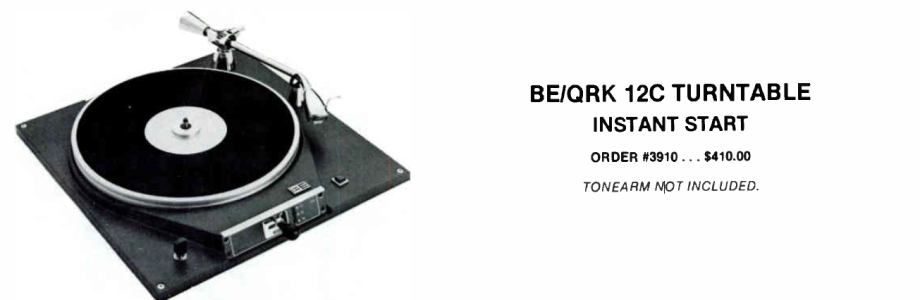
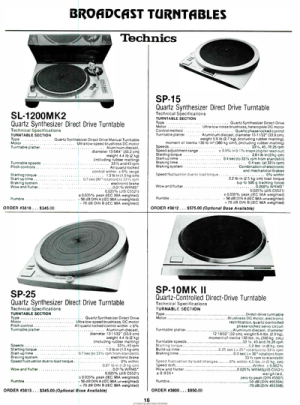
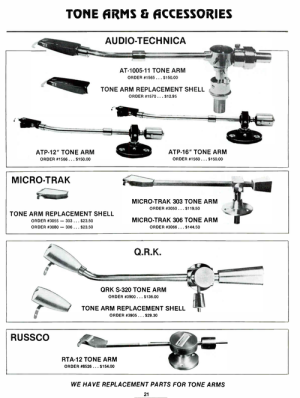
By the end of the 60's and during most of the 70's we used those turntables with the recessed area for 45's. They were in the $400 range. Tonearms were $100 and up. Semi-pro Technics were up to nearly $1000 each.Studio turntables were rugged, but not luxury pieces and not outrageously priced. I'm guessing something between $500 and $1,000 back in the day, depending on which brand and model.
David, do you remember what they cost, say in the 60s or 70s?
Often we would keep a spare shell with cartridge in the studio in case one of them got damage in use... keeping in mind that the better cartridges did not particularly like being cued by turning the turntable backwards.
Thank you Michael, David, and everyone ! 😊

- Status
- This thread has been closed due to inactivity. You can create a new thread to discuss this topic.