
I stand corrected, it's only San Luis Potosi now. The Monterrey 540 migrated to FM, and the AM was shut down in April 2020. But I cant find anything in regards to a lower power.Picky point, but XEWA is in San Luis Potosí. They do have a 1.5kw day/1kw night synchro in Monterrey, however.
You would need to compare ground conductivity to judge groundwave coverage for CBK and XEWA.
The XEWA night signal into Texas is not as good as it once was, so they may be running much less than 150kw.

-
Get involved.
We want your input!
Apply for Membership and join the conversations about everything related to broadcasting.
After we receive your registration, a moderator will review it. After your registration is approved, you will be permitted to post.
If you use a disposable or false email address, your registration will be rejected.
After your membership is approved, please take a minute to tell us a little bit about yourself.
https://www.radiodiscussions.com/forums/introduce-yourself.1088/
Thanks in advance and have fun!
RadioDiscussions Administrators
You are using an out of date browser. It may not display this or other websites correctly.
You should upgrade or use an alternative browser.
You should upgrade or use an alternative browser.
Is CBK 540 The Best Coverage AM Station in North America in The Daytime?
- Thread starter Gregg.
- Start date

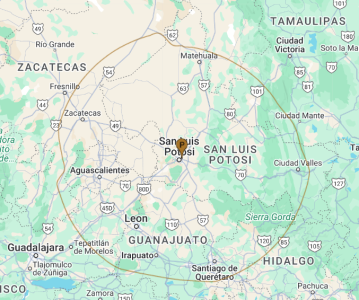
That is far less primary coverage than that of CBK. The conductivity in that area of Mexico is poor due to rough and often mountainous terrain.This is the only coverage map I could find for XEWA. It's from radio locator, and it's based on 150kw, which may no longer be accurate.
XEWA-AM Radio Station Coverage Map
Presets on a late 1940s radio:
570 WNAX Yankton, SD
590 WOW Omaha (now KXSP)
830 WCCO Minneapolis
1110 KFAB Omaha
1360 KSCJ Sioux City
1470 KTRI Sioux City (now KWSL)
Was there even any FM in Sioux City back then?

570 WNAX Yankton, SD
590 WOW Omaha (now KXSP)
830 WCCO Minneapolis
1110 KFAB Omaha
1360 KSCJ Sioux City
1470 KTRI Sioux City (now KWSL)
Was there even any FM in Sioux City back then?
Those were not "manufacturer" presets. Radios came with little light cardboard sheets with perforated tabs for just about ever station in the country. Back then, pushbuttons were actually preset tuned circuits set by the radio dealer or service tech for the stations that the purchaser could listen to in their location. Some sets came with five or six cards with 50 to 60 pop-out button cards that the dealer would insert into the push button when they tuned and delivered it.Presets on a late 1940s radio:
570 WNAX Yankton, SD
590 WOW Omaha (now KXSP)
830 WCCO Minneapolis
1110 KFAB Omaha
1360 KSCJ Sioux City
1470 KTRI Sioux City (now KWSL)
Was there even any FM in Sioux City back then?
You can find sets of button "fillers" on eBay quite often.

KSCJ-FM signed on in 1947 at 94.9 with 11.6kw. It went off the air by 1951-52.Was there even any FM in Sioux City back then?

I'm in Winnipeg and can report CBK is easily audible here day and night, just as it was when I was in Calgary last month.
The ground conductivity here is stellar, of course. KFYR is almost local, and WNAX is audible, albeit down in the noise a bit. It wouldn't have been heard here back when CKY 580 was on.
The ground conductivity here is stellar, of course. KFYR is almost local, and WNAX is audible, albeit down in the noise a bit. It wouldn't have been heard here back when CKY 580 was on.
Wonders if there's a better map, or one showing Mexican stations' penetration into the U.S.This is the only coverage map I could find for XEWA. It's from radio locator, and it's based on 150kw, which may no longer be accurate.
XEWA-AM Radio Station Coverage Map
I think I heard the station the other morning here in Austin, Texas. It was clearly Spanish language.
That’s really impressive. Have you tested out CBW 990 at all (on your travels to other parts of the prairies)? I know their footprint is also huge, but the band position is not as stellar.I'm in Winnipeg and can report CBK is easily audible here day and night, just as it was when I was in Calgary last month.
The ground conductivity here is stellar, of course. KFYR is almost local, and WNAX is audible, albeit down in the noise a bit. It wouldn't have been heard here back when CKY 580 was on.
For 150kw, that is rather poor coverage. I used to pick them up at night in Phoenix. Once again, the culprit is poor ground conductivity.Here's the official coverage map from Mexico's IFT
View attachment 8059
Absolutely. I've been in all Mexican states but two, and the region that XEWA covers is predominantly mountainous. And not just Blue Ridge Mountain green not-so-tall mountains, but bare, tall and very rocky peaks with plenty of nice valleys in between, but overall horrible conductivity... much like that found in the area between Atlanta, Chattanooga and Knoxville.For 150kw, that is rather poor coverage. I used to pick them up at night in Phoenix. Once again, the culprit is poor ground conductivity.

I was in Des Moines earlier this week and brought along my Qodosen DX-286. I had forgotten how good AM reception could be there, and refreshed my memories for what I heard when I was a kid growing up in southern Iowa. Even in the difficult environment of a hotel room, 540 KWMT was quite listenable, with just a little hiss, at least on its daytime power and pattern. 600 WMT Cedar Rapids was like a local. Omaha stations on 590, 660, and 1110 were easily receivable. Chicago's 670 WSCR, too...and this was daytime.
Is XEWA pumping out 150,000 watts anymore? All the superpowered Mexican AM stations I know of have reduced their power in recent years. Even quarter-million watt 900 XEW Mexico City is now a mere 100,000 watts. There are about 10 100,000 watt stations in North America, most in Mexico plus 1190 Radio Martí in Marathon FL. I don't think any North American AM station goes higher.CBK 540 is NOT the radio station with the largest coverage area in North America....
That distinction goes to 540 XEWA in Monterrey, Mexico (Mexico is in North America). With a monster signal of 150,000 watts at the lowest end of the AM dial.. ..well, you do the math.
Is 540 XEWA getting heard much these days in the U.S.? Even with 100,000 watts non-directional, it should be an easy pick up in Texas and adjacent states. That's even with the rugged terrain that David describes around San Luis Potosí. The Texas border is only a few hundred miles north. According to Wikipedia, XEWA has an FM simulcast. Maybe with 103.9 FM playing the Top 40 hits, simulcast 540 XEWA has further reduced its output but hasn't told anyone.
Last edited:
The shutting down of XEWA hasn't been allowed yet, despite being an AM to FM migration. That's due to having areas of no radio service in the coverage area, an IFT requirement . They are simulcasting their FM which is XHEWA.Is XEWA pumping out 150,000 watts anymore? All the superpowered Mexican AM stations I know of have reduced their power in recent years. Even quarter-million watt 900 XEW Mexico City is now a mere 100,000 watts. There are about 10 100,000 watt stations in North America, most in Mexico plus 1190 Radio Martí in Marathon FL. I don't think any North American AM station goes higher.
Is 540 XEWA getting heard much these days in the U.S.? Even with 100,000 watts non-directional, it should be an easy pick up in Texas and adjacent states. That's even with the rugged terrain that David describes around San Luis Potosí. The Texas border is only a few hundred miles north. According to Wikipedia, XEWA has an FM simulcast. Maybe with 103.9 FM playing the Top 40 hits, simulcast 540 XEWA has further reduced its output but hasn't told anyone.
Cool photo. I don't think there were any FM stations in or near Sioux City in the 1940s. There were FMs in Cedar Rapids and Iowa City, IA, by 1947, and Ames, IA, in 1949. There was an FM in Rapid City, SD, far west of Sioux City, that also began in 1949. I don't think Omaha had any FM stations until the late 50s. I don't believe any of those would have been even remotely audible in Sioux City.Presets on a late 1940s radio:
570 WNAX Yankton, SD
590 WOW Omaha (now KXSP)
830 WCCO Minneapolis
1110 KFAB Omaha
1360 KSCJ Sioux City
1470 KTRI Sioux City (now KWSL)
Was there even any FM in Sioux City back then?
Just to repeat the post above:Cool photo. I don't think there were any FM stations in or near Sioux City in the 1940s. There were FMs in Cedar Rapids and Iowa City, IA, by 1947, and Ames, IA, in 1949. There was an FM in Rapid City, SD, far west of Sioux City, that also began in 1949. I don't think Omaha had any FM stations until the late 50s. I don't believe any of those would have been even remotely audible in Sioux City.
KSCJ-FM signed on in 1947 at 94.9 with 11.6kw. It went off the air by 1951-52.
KSCJ-FM actually lasted a few years longer. It began August 18, 1947 at noon, at first with 3 kw and plans to broadcast eventually with 280 kw, according to newspaper articles at the time. It went off the air March 25, 1955. Apparently there was little if any announcement before going off the air for the last time, judging by a brief article in the Sioux City Journal of March 27, 1955.Just to repeat the post above:
KSCJ-FM signed on in 1947 at 94.9 with 11.6kw. It went off the air by 1951-52.
Lack of interest in the static-free type of broadcast was given as the reason for the decision of the management of KSCJ radio station for discontinuance of its FM broadcast schedule, effective when the station left the air Friday night {March 25}.
Two weeks earlier, Perkins Brothers, the owner of KSCJ and the publisher of the Journal, acquired a 50% interest in KTIV (channel 4). I suspect these events may have been related.
Thanks, none of the references I had found listed it beyond 1952.KSCJ-FM actually lasted a few years longer. It began August 18, 1947 at noon, at first with 3 kw and plans to broadcast eventually with 280 kw, according to newspaper articles at the time. It went off the air March 25, 1955. Apparently there was little if any announcement before going off the air for the last time, judging by a brief article in the Sioux City Journal of March 27, 1955.
It's a regular at night here in Austin, Texas, area.Is 540 XEWA getting heard much these days in the U.S.? Even with 100,000 watts non-directional, it should be an easy pick up in Texas and adjacent states.
- Status
- This thread has been closed due to inactivity. You can create a new thread to discuss this topic.