Good point. A lot of things were better in the 1990s ... talk radio, CNN, and County music for example.Now, this was the 1990s, but programmers started harming the format by only programming mostly political shows.

-
Get involved.
We want your input!
Apply for Membership and join the conversations about everything related to broadcasting.
After we receive your registration, a moderator will review it. After your registration is approved, you will be permitted to post.
If you use a disposable or false email address, your registration will be rejected.
After your membership is approved, please take a minute to tell us a little bit about yourself.
https://www.radiodiscussions.com/forums/introduce-yourself.1088/
Thanks in advance and have fun!
RadioDiscussions Administrators
You are using an out of date browser. It may not display this or other websites correctly.
You should upgrade or use an alternative browser.
You should upgrade or use an alternative browser.
Is Today's Political Climate a Direct Result of Talk Hosts, Beginning in the 1990s?
- Thread starter Mikey Radio
- Start date
- Status
- Not open for further replies.
Great economic news, but MAGA talk is all "but the country is a dystopian hellscape"Really? Even the most superficial exposure to right-wing media makes it clear that they're not pushing a hopeful message -- it's fear and anger all the way down. And that goes all the way back to the early days of right-wing talk radio, when Rush Limbaugh was ranting about "feminazis" and pushing ridiculous conspiracy theories about the Clintons.

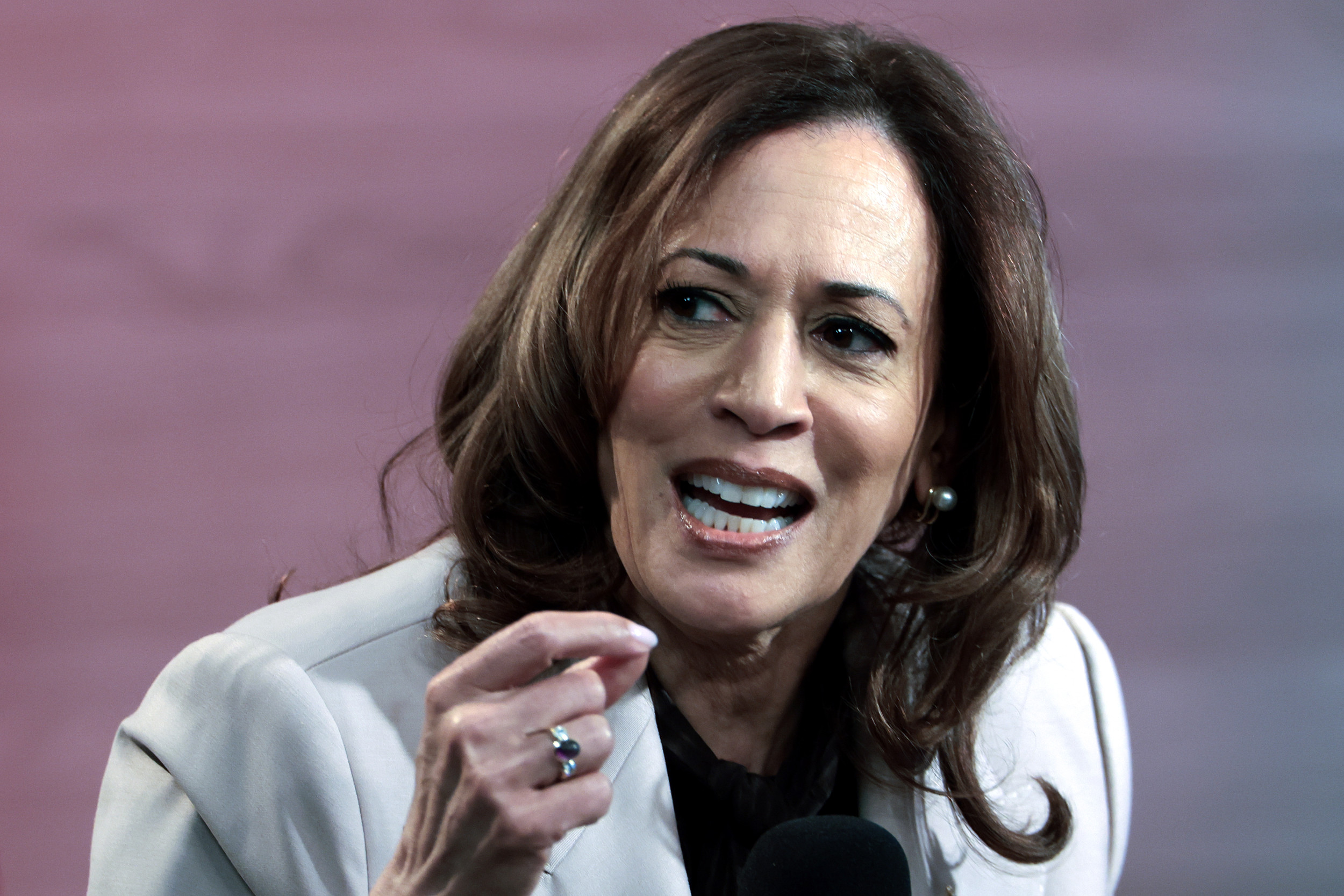
Tim Pool sues Kamala Harris HQ over 'Project 2025' post
The conservative podcaster claims that the Democrats have cost him millions of dollars.
 www.newsweek.com

The right-wing podcasters turned Russian propaganda dupes, explained
An unsealed DOJ indictment seems to implicate Tenet Media in Russian propaganda.
 www.vox.com

The Tenet Media Incident
Influencers have front-row seats this election cycle. They have been invited to party conventions, rallies, and even the White House; President Biden has called them the “new source of news.” This “royal treatment,” as the Associated Press put it last month, stems from the fact that influencers...
 www.cjr.org

MPs want Canadians tied to alleged Russian influencer op to testify at committee
MPs on the public safety and national security committee voted unanimously to launch an investigation into an alleged Russian ploy to dupe right-wing influencers into sowing division among Americans.
Tim Pool sues Kamala Harris campaign for defamation. Woah this is crazy there was a time prior to Trump where conservatives were against filing frivolous lawsuits.
How was this defamation in Tim Pool's case while he faces a criminal investigation in both the United States and Canada because he is with Tenet Media with lead pundit Lauren Chen for getting money from Russian State media is yet to be seen here. All Tim Pool is doing here is showing us that right wing talk show hosts are the very snowflakes they accuse others of being. Yes the current right wing pundits on Podcasts, YouTube and Cable News is more like let's parrot all of the Putin Administrations talking points in it's current state. See the current state of the right wing pundit is not just repeat everything Putin talking points said at that time but also spread the propaganda from the United States to other countries like Canada in this case.
How was this defamation in Tim Pool's case while he faces a criminal investigation in both the United States and Canada because he is with Tenet Media
They're unrelated.
True too.They're unrelated.
Original question... Is today's political climate a result of "talk radio"? In part, yes. Along with Fox News Channel and other conservative media. But in a free society, media is allowed to broadcast what it wants, short of shouting fire in a crowded theater. As someone who leans liberal, I can't figure out why listeners would want to hear this. No matter what happens, Rush Limbaugh taught hosts that you must be ALL conservative ALL the time. Even when you know your side is wrong. No compromise.
Second question... Why doesn't Progressive Talk work? First, I don't think people who lean liberal want a diet of only liberal talk. That's why NPR stations are doing so much better today than 10 or 20 years ago. There's an NPR station in the top ten in so many markets now, even in some conservative parts of the country. NPR is NOT liberal talk. But it looks at questions from all sides. And I think that satisfies liberals.
Second question... Why doesn't Progressive Talk work? First, I don't think people who lean liberal want a diet of only liberal talk. That's why NPR stations are doing so much better today than 10 or 20 years ago. There's an NPR station in the top ten in so many markets now, even in some conservative parts of the country. NPR is NOT liberal talk. But it looks at questions from all sides. And I think that satisfies liberals.
Second question... Why doesn't Progressive Talk work?
Have you listened to Charlamagne Tha God? He's pretty progressive.

Charlamagne tha God predicts 'corrupt, illegitimate' SCOTUS will steal election if Trump loses
Attorney and election law expert Marc Elias has been warning that Donald Trump and his allies will do everything they can to overturn the 2024 presidential election results if he loses — only this time, his operation is much better prepared than it was in 2020.Radio host Charlamagne tha God is...
 www.alternet.org
In answer to your question, it works when it's done with music aiming at a potentially liberal audience.
Howard Stern is another example
But if you only look at AM radio, you'll mainly see conservatives.

It's an interesting question -- and I think it is possible that you're right and it simply isn't the case that liberal listeners want to listen to a constant stream of liberal talk. As someone who leans liberal myself, I'd say that I'd just rather be listening to something else. So when I look for political commentary, I general prefer it in written form.Second question... Why doesn't Progressive Talk work? First, I don't think people who lean liberal want a diet of only liberal talk. That's why NPR stations are doing so much better today than 10 or 20 years ago. There's an NPR station in the top ten in so many markets now, even in some conservative parts of the country. NPR is NOT liberal talk. But it looks at questions from all sides. And I think that satisfies liberals.
But it may also be that attempts at doing liberal talk have centered around taking the conservative talk radio format and just flipping it politically. It was the obvious thing to try because conservative talk enjoyed a lot of success, and the easiest thing to do is to take an existing formula that works and just try applying it in a different context. I'd say that has been done quite a bit with music formats -- if something works for one format, try it another format. Sometimes it works, sometimes it doesn't. Of course, just as something that works for Top 40 listeners may not translate so well to, say, soft rock, so it is that what works with conservative listeners just may not work for liberal listeners. Unfortunately, no one has figured out what might work -- so until someone does, liberal talk is DOA.
I contend the birth of conservative talk was simply a reaction to what had been a format that served an otherwise unserved group. It's popularity was directly caused by the ineptness of Congress, both sides, in working for the people at large. As we know politicians rarely vote against their party and accomplish less because of politics. But conservative talk was still rooted in a general set of morals shared by conservatives versus being simply about politics itself. Liberal Talk seemed, from my listening, to be about 50% qualified hosts and about 50% that really shouldn't be doing a show. By the time liberal talk showed up the Rush copycats had turned conservative talk toward anger. Liberal talk seems to follow that lead. It was less about what liberals have in common as a root and more about politics itself. Liberals tend to be all over the place in views where conservatives tend not to, creating a tough situation in reaching the bulk of liberals.
Has today's political climate been the result of talk radio? I think it has fueled the flame but it is really the frustration of both the conservative and liberals share for a government that does little because the political party is what they're all about.
Has today's political climate been the result of talk radio? I think it has fueled the flame but it is really the frustration of both the conservative and liberals share for a government that does little because the political party is what they're all about.

The differences I see as the programmer of talk stations in both the U.S. and several nations in Latin America is that, at least for talk radio, conservatives focus on politicians, political parties and government. Liberals do focus on parties, but more as an instrument of specific causes. There are liberal voices ranging from the environment to education to foreign policy and immigration and the partisans of one of those causes don't necessarily share common interests in other areas.Of course, just as something that works for Top 40 listeners may not translate so well to, say, soft rock, so it is that what works with conservative listeners just may not work for liberal listeners. Unfortunately, no one has figured out what might work -- so until someone does, liberal talk is DOA.
I contend the birth of conservative talk was simply a reaction to what had been a format that served an otherwise unserved group. It's popularity was directly caused by the ineptness of Congress. Liberal Talk seemed, from my listening, to be about 50% qualified hosts and about 50% that really shouldn't be doing a show. By the time liberal talk showed up the Rush copycats had turned conservative talk toward anger. Liberal talk seems to follow that lead.
But then, why haven't some middle of the road talk shows succeeded? Nearly all syndicated talk programs are very conservative, following the Rush Limbaugh playbook.
If you are a radio station looking for non-polarizing talk, you have hardly anything to choose from. There's Dave Ramsey. And a couple of shows only heard in some markets, Our American Stories with Lee Habeeb and CBS Eye on The World with John Batchelor. At one time, Jim Bohannon hosted a nightly show on Westwood One that was mostly about interviews with authors and celebrities of the past. But Bohannon died in 2022 and was replaced with a standard Conservative Talk show hosted by Rich Valdes.
If your station doesn't have the budget to hire your own hosts, there's nothing you can do. It's either conservative talk or nothing.
But then, why haven't some middle of the road talk shows succeeded? Nearly all syndicated talk programs are very conservative, following the Rush Limbaugh playbook.
The syndication money is for conservative talk. Listen to the ads. They aren't "middle of the road" ads.
Also where would the middle of the road syndication air? It's a completely different format. It wouldn't fit with Bongino and Levin.
One syndicated show that's more entertainment than politics is Jimmy Failla & Fox Across America:
But it's not carried in a lot of markets.

David Pakman is pretty successful. I wonder why there isn't more airtime for hosts like him?It's an interesting question -- and I think it is possible that you're right and it simply isn't the case that liberal listeners want to listen to a constant stream of liberal talk. As someone who leans liberal myself, I'd say that I'd just rather be listening to something else. So when I look for political commentary, I general prefer it in written form.
But it may also be that attempts at doing liberal talk have centered around taking the conservative talk radio format and just flipping it politically. It was the obvious thing to try because conservative talk enjoyed a lot of success, and the easiest thing to do is to take an existing formula that works and just try applying it in a different context. I'd say that has been done quite a bit with music formats -- if something works for one format, try it another format. Sometimes it works, sometimes it doesn't. Of course, just as something that works for Top 40 listeners may not translate so well to, say, soft rock, so it is that what works with conservative listeners just may not work for liberal listeners. Unfortunately, no one has figured out what might work -- so until someone does, liberal talk is DOA.
His weekday one-hour podcast is used by a few Progressive Talk stations. And both Stephanie Miller and Thom Hartmann continue to do three-hour shows for the handful of Progressive Talk stations and Sirius XM.David Pakman is pretty successful. I wonder why there isn't more airtime for hosts like him?
But as said above, there just doesn't seem to be much success for Progressive Talk. There is 820 WCPT Chicago and 950 KTNF Minneapolis. But that's it for Progressive Talk stations in large markets. Pakman makes most of his money from podcasts and You Tube. Miller and Hartmann are helped by having their shows on Sirius XM.
I see Pakman's videos on YouTube. There's no shortage of liberal leaning material online, some mixed with comedy, such as "liberal redneck" Trae Crowder.His weekday one-hour podcast is used by a few Progressive Talk stations. And both Stephanie Miller and Thom Hartmann continue to do three-hour shows for the handful of Progressive Talk stations and Sirius XM.
But as said above, there just doesn't seem to be much success for Progressive Talk. There is 820 WCPT Chicago and 950 KTNF Minneapolis. But that's it for Progressive Talk stations in large markets. Pakman makes most of his money from podcasts and You Tube. Miller and Hartmann are helped by having their shows on Sirius XM.
Why don't more radio stations do progressive talk? The late night hosts basically are that, and there is definitely an audience for it.His weekday one-hour podcast is used by a few Progressive Talk stations. And both Stephanie Miller and Thom Hartmann continue to do three-hour shows for the handful of Progressive Talk stations and Sirius XM.
But as said above, there just doesn't seem to be much success for Progressive Talk. There is 820 WCPT Chicago and 950 KTNF Minneapolis. But that's it for Progressive Talk stations in large markets. Pakman makes most of his money from podcasts and You Tube. Miller and Hartmann are helped by having their shows on Sirius XM.
We've spent pages and pages on this subject in the past. The audience for that material isn't on AM radio. It's on podcasts and YouTube.Why don't more radio stations do progressive talk? The late night hosts basically are that, and there is definitely an audience for it.
Posts have been on why no middle ground talk shows or liberal shows, etc. First, radio goes with what is working. From a station owner's perspective, I see conservative talk working. I know the liberal network failed and there are virtually zero choices for middle ground. If I'm banking my investment on talk, guess which one I pick: the one with the proven track record. Radio station owners always go with something that has a track record of generating income. No proven recent history and I say come back when you have a recent history of success. Station owners care about profit because radio is a business and that takes precedence over politics.
I'd say it was Rush himself, not the copycats.By the time liberal talk showed up the Rush copycats had turned conservative talk toward anger.
His early shows were fun and focused on topics that weren't mainstream at the time.
When Rush was invited to spend the night at the White House, in the Lincoln bedroom, he changed and became a very vocal activist. The show was never the same.
The copycats that followed that paradigm shift carried the anger forward.
That was the moment where Newt convinced Rush he was a kingmaker.I'd say it was Rush himself, not the copycats.
His early shows were fun and focused on topics that weren't mainstream at the time.
When Rush was invited to spend the night at the White House, in the Lincoln bedroom, he changed and became a very vocal activist. The show was never the same.
The copycats that followed that paradigm shift carried the anger forward.
- Status
- Not open for further replies.