
But they had to pay a ton of money for being found guilty of lying about Dominion Voting Systems and others, which should put the fear of god into anyone else who thinks they can do anything similar and not end up paying for it.It goes back to what we heard during the Dominion lawsuit. The people at Fox News only cared about the stock price. The truth doesn't matter. When that's how actual people in the news business think, we're all screwed.

-
Get involved.
We want your input!
Apply for Membership and join the conversations about everything related to broadcasting.
After we receive your registration, a moderator will review it. After your registration is approved, you will be permitted to post.
If you use a disposable or false email address, your registration will be rejected.
After your membership is approved, please take a minute to tell us a little bit about yourself.
https://www.radiodiscussions.com/forums/introduce-yourself.1088/
Thanks in advance and have fun!
RadioDiscussions Administrators
You are using an out of date browser. It may not display this or other websites correctly.
You should upgrade or use an alternative browser.
You should upgrade or use an alternative browser.
MMJ Reporters in E. WA Making Less Than Working Fast Food
- Thread starter Kelly A
- Start date
But they had to pay a ton of money for being found guilty of lying about Dominion Voting Systems and others, which should put the fear of god into anyone else who thinks they can do anything similar and not end up paying for it.
The lawsuit was for defamation, not lying. The thing they learned from that experience is that as long as they don't say the name of a company, they can still lie all day. They didn't get fined for lying, but rather for lying about a company. If you don't say the name of a company, lying is OK. That's what they do. But the bigger problem is they allow others to lie without correcting them. As long as the other people don't say the name of a company, lying is OK.
Kari Lake is a graduate of Syracuse University's esteemed Newhouse School of Communications. She was an anchor and reporter who went rogue one day on TV. Now she's a nut case filing election lawsuits.
All of this demeans and devalues the work of real journalists, and there's absolutely nothing anyone can do about it.
Last edited:

Here's how essential journalists are:

L.A. Times to lay off at least 115 people in the newsroom
The L.A. Times began laying off 115 newsroom employees on Tuesday. Owner Dr. Patrick Soon-Shiong said the cuts were necessary to trim heavy financial losses.www.latimes.com
Your confusing an essential role in a free society with Patrick Soon-Shiong's need to balance his books.
This is a big issue. People want news but they don't want to pay for it. So how do professional journalists get paid? One group I'm a part of is talking about that. Because the professionals are losing their jobs to amateurs with a website.
Good. Let us hear the creative solutions when you get there. Or do you tell those people that this is non-essential and warm bodies with a camera can do it, too?
Actually, that's true, but most people want to hire a Certified Public Accountant. Lawyers have to pass the Bar, and meet certain standards and qualifications. But if you have a $100 camera, you can take part in a press conference.
Taking part is simply showing up. It's what happens after that's the journalism part. Good writing, clarity, perspective, fact-checking, a thorough knowledge of libel, slander and defamation laws. And one helluva lot more.
Also, nobody can just walk into a press conference -you have to have/get credentials. And if you somehow managed to sneak in with either no credentials or faked ones, if you got found out you'd get thrown out, probably before you even got to ask a question.
Or like anyone with a garden hose can be a firefighter.
What I think we have here is the Dr. Nick Riviera* view of the world. Whatever brings in the money is OK.
There is more to a profession than getting the job done. There are codes of ethics, there is a base of knowledge, there is a community of peers, there is guidance and possibly even mentorship. There often is some notion of credentials, though that can be controversial. (I'll spare you the discussions that rage in cybersecurity regarding credentialism. Otherwise we will go far, far off-topic.)
It takes knowledge and skill to be an accurate and fair reporter. The fact that even the notion of fairness is heavily disputed tells me that you need to know what you're doing when covering something. It's easy to get things wrong. Every reporter has done it, even with the best of intentions. That's why you need editors, even in a system where the intent of most actors is benign.
The current environment increasingly places the burden on the reader, listener, or viewer to detect inaccuracies or bias or flat-out ill intent. Increasingly, readers, listeners, and viewers are expected to be editors. Most readers, listeners, or viewers are not well equipped to do this. They may not want to do this. They may not have the energy to do it. But the middleman that provides that necessary function is under stress and the system, particularly its economics, is breaking down. It's being replaced by outlets who tell readers, listeners, or viewers what they want to see or hear. In a way, we're back to the 19th century when anyone with a printing press and a case of type can start a newspaper and print any old crap. And they did, along with frequent pleas to subscribers to keep their subscriptions paid up.
Caught in the middle of all this reversion to partisan spheres of information are the people practicing actual journalism. Telling them to suck it up is not a helpful answer and just lets the downward spiral spin on.
* = one of the more obscure Simpsons characters. (I also had to edit this to fix the name. See? I could've used an editor!)
All of this.
While the Constitution prohibits government interference with print and online content, we really should have kept news as a condition of holding a broadcast license, along with giving enough weight to listener/viewer complaints about inadequately serving communities to put a license at risk for doing it poorly.
Your confusing an essential role in a free society with Patrick Soon-Shiong's need to balance his books.
I'm not confusing anything. You're ignoring the truth.
You forget that I work every day in this business. Your fight is not with me.Let us hear the creative solutions when you get there. Or do you tell those people that this is non-essential and warm bodies with a camera can do it, too?
Tell that to the people doing the hiring. Obviously nobody taught that to Fox News. They get paid a lot more than you or me.Taking part is simply showing up. It's what happens after that's the journalism part. Good writing, clarity, perspective, fact-checking, a thorough knowledge of libel, slander and defamation laws. And one helluva lot more.
Sure, and instead we have Fox News. What you say is true, and unfortunately is it doesn't matter. It goes back to what we heard during the Dominion lawsuit. The people at Fox News only cared about the stock price. The truth doesn't matter.
Which should make them an unfit licensee, and get their broadcast licenses yanked, leaving them with only their cable and online product---which would impact the stock price.
When that's how actual people in the news business think, we're all screwed.
We agree.
we really should have kept news as a condition of holding a broadcast license, along with giving enough weight to listener/viewer complaints about inadequately serving communities to put a license at risk for doing it poorly.
The problem is ''we'' don't make the laws. All of that is wonderful in theory. The FCC has no say over streaming or the internet, and that's where people get their news now. All of those bloggers with $100 cameras don't work for licensed radio or TV. They work for themselves. And people get their news from them.
Also, nobody can just walk into a press conference -you have to have/get credentials. And if you somehow managed to sneak in with either no credentials or faked ones, if you got found out you'd get thrown out, probably before you even got to ask a question.
Depends on the press conference. Yesterday, I covered one with the Sacramento County District Attorney, Sacramento County Sheriff, Sacramento Chief of Police and the Chief of the California Highway Patrol. Now, they know me, so I didn't need to show credentials, but in addition to the gaggle of media in this Walmart parking lot in South Sac were a whole bunch of citizens with their cellphones.
a whole bunch of citizens with their cellphones.
I compete with this every day. The crazy part is when I go to a press conference with my $1000 Canon camera with two-foot lens, and I get told I can't bring a professional camera in. But every schmo with their cellphone can film whatever they want. I had to explain to the bouncer that this is a press conference. I'm in the press. They called me here to get media coverage. That's why I have this huge camera. People don't understand because everyone has a camera in their phone. Once again, if anyone can do it, this demeans and devalues the work done by real professionals.
Which should make them an unfit licensee, and get their broadcast licenses yanked, leaving them with only their cable and online product---which would impact the stock price.
They claim the first amendment allows them to lie.

Fox Cites First Amendment In Urging FCC To Renew Broadcast License In Face Of Challenge Over Coverage Of Donald Trump’s False Election Claims
Fox says that the First Amendment limits the FCC from considering whether its news coverage of Donald Trump’s false election claims should play a role in the license renewal of its Philadelph…
 deadline.com
They also wrote that “as explained by Chairwoman [Jessica] Rosenworcel a few years ago, the government making editorial decisions about content in the course of a broadcast license renewal proceeding ‘would be an affront to our First Amendment tradition.'”
The way newspapers handled this was labeling opinion as such. Do you think such a label would affect viewers? I don't.

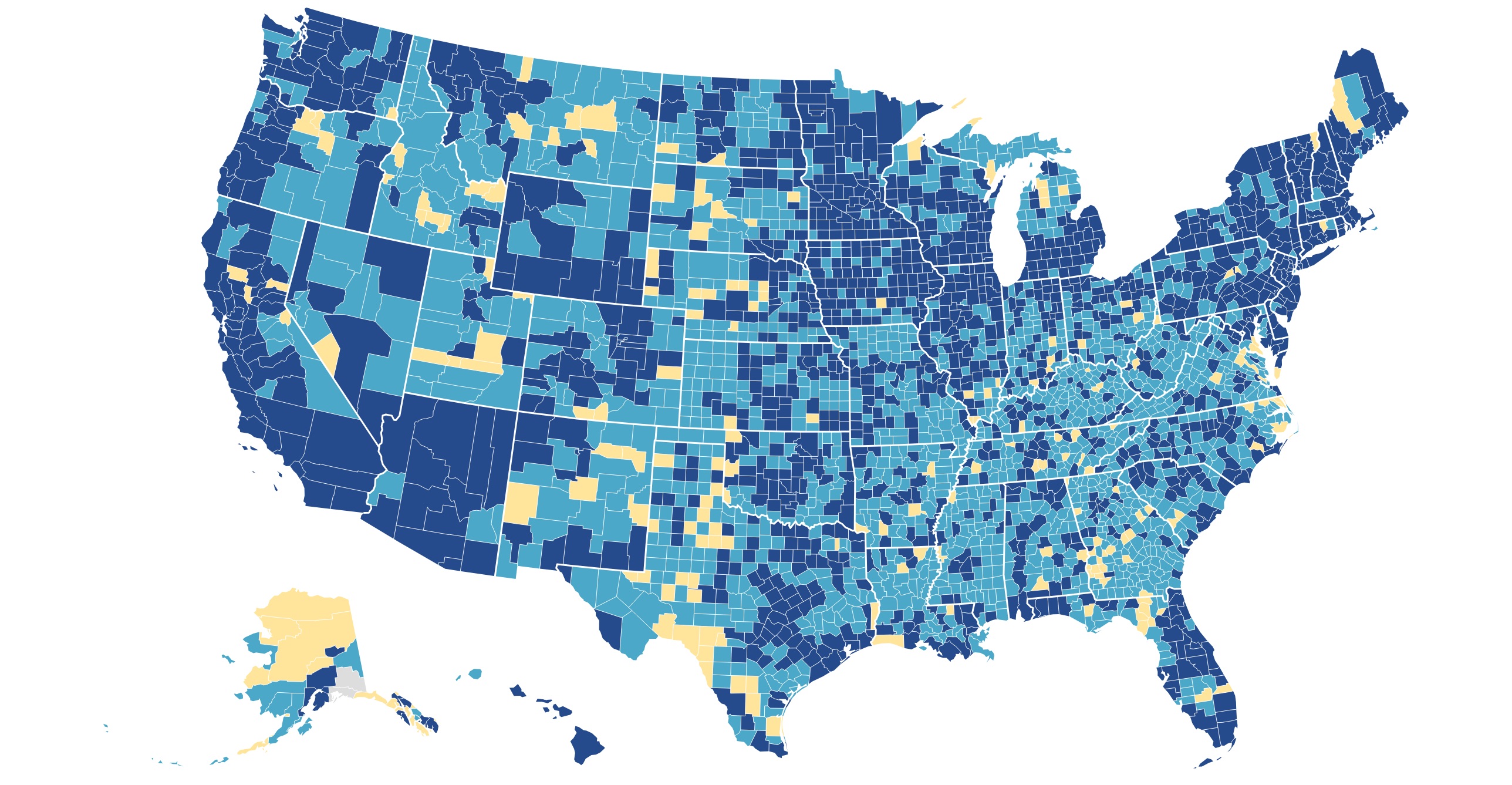
The State of Local News
Executive Summary Introduction Newspapers Digital Public Broadcasting Ethnic Media The Possibilities for Reviving Local News Executive Summary There was both good news and bad news for local journalism this past year. The good news raised the possibility that a range of proposals and programs...
 localnews.knilab.com
Here is a study on the current state of local news around the USA and how many each county has. Some counties have no local news outlets as of 2024 in this study.

Why Your Best Young TV Journalist Just Left
I won’t say her name because there are so many just like her. While she was still in high school, her father — a friend — asked me to talk with her about her ambition to someday be a great journalist, perhaps on the Today show. As I always do in such cases, I told the truth. It’s a hard...
 tvnewscheck.com

I wonder about their data. They left out local commercial radio (often a no-op anyway) and local commercial television.The State of Local News
Executive Summary Introduction Newspapers Digital Public Broadcasting Ethnic Media The Possibilities for Reviving Local News Executive Summary There was both good news and bad news for local journalism this past year. The good news raised the possibility that a range of proposals and programs...
Here is a study on the current state of local news around the USA and how many each county has. Some counties have no local news outlets as of 2024 in this study.
For my original hometown county, Boone, in Missouri, they list two "public broadcasting" outlets and no ethnic outlets. If they mean radio, then that is not entirely accurate. If they mean television, it's wildly inaccurate. Perhaps the status of KOMU-TV, a commercial outlet owned by the state university, confused them. And there is one ethnic outlet, a Chinese Christian LPFM.
A better study could have been done. I think there are some problems with definitions in this one.

Okay with that in mind, are you responsible for the quality of a radio programming, even if only for a single station or show?I'm not confusing anything. You're ignoring the truth.
You forget that I work every day in this business. Your fight is not with me.
If so, if you were told to cut personnel costs, would you find someone off the street with little to no experience, but willing to work for just above minimum wage, then stick them on the air?
Do you do any hiring? Do you frequently hire incompetent folks just because they work cheap?Tell that to the people doing the hiring.
Recall that I got out. I also have insight into how employers think because I ended up in some fairly important management positions (I admit, not in broadcasting, but management is management). But, somehow, 30 or 40 years ago, there were compensating forces in broadcasting that balanced out the race to the bottom, and now they seem to be gone.Remember: I still work in radio. So I see this every day. What I'm saying is what employers think. It would be wonderful if rank & file workers were in charge of hiring. Things would be very different. But they don't. The people doing the hiring are looking to cut costs. So yes, whatever brings in the money is OK. If they're bloggers or podcasters and they have an audience, they get hired to be radio hosts. That's how Ben Shapiro and Don Bongino became radio stars. Not because they went to college or know what they're talking about.
The other thing that makes this discussion challenging for me is that I can't quite tell what position you're arguing from here. There's no way I can know your interior mental furniture. At various times, it seems to be one or more of:
- Journalists are treated like crap in broadcasting*, and that's OK because they signed up for it, for whatever reason - or -
- Journalists are treated like crap in broadcasting, and so what? - or -
- Journalists are treated like crap in broadcasting, because there's no longer a robust market for their services - or -
- Journalists are treated like crap in broadcasting, and that's just the way it is, and there's nothing we can do about it - or -
- Journalists are treated like crap in broadcasting, which is lamentable, but there's nothing we can do about it.
Aside from point #5, I'm not seeing any indication that there's any kind of consideration of public service at work here. You can, and probably will, argue that the people making these decisions are looking solely at the bottom line, and public service is not a consideration for them. My argument is that this is short-term-ism at its worst and is ultimately destructive in multiple ways. Moreover, news still brings in money. It doesn't make sense to stint on the quality of the product. (I bet Boeing wished they had paid more attention to those door plugs. Same principle.)
Not that this discussion is going to change anything. This is a message board, after all.
Fox is a propaganda channel that occasionally uses news as window dressing.When that's how actual people in the news business think, we're all screwed.
For this trip, my travel reading has been American Midnight, by Adam Hochschild, about the repressive actions of all levels of government, as well as society generally, during World War I and its aftermath. One key theme that recurs in the book is the federal government's ability to squelch dissenting publications, which, of course, were all in print at the time, through the heavy hand of a man who's been considered "the worst human being ever to serve as postmaster general" (Hochschild quoting another historian, G.J. Meyer), Albert Burleson. Burleson's postal service confiscated numerous publications that opposed the war and/or were pro-labor in nature and/or were Socialist Party publication and/or were Black-oriented publications that questioned the racist status quo ante. Burleson apparently did so with glee, exceeding his original remit from President Woodrow Wilson, but Wilson was a weak leader obsessed with his dreams for the League of Nations, and so didn't do much of anything to stop Burleson. Plus Burleson was a racist and Wilson was rather sympathetic to racists.They claim the first amendment allows them to lie.
Of course, the post office is a constitutionally chartered agency. But think of the post office of 1920 as being the Internet of 2020, or the radio of 1940, or the TV of 1970 and beyond. Congress has tried to regulate these media in various ways, but such regulation has been mild at most. The point I'm trying to make is not whether or not they should be regulated, but that it can be, and that such regulation could be quite far-reaching, particularly if politically motivated. Fox's claim is a subtle way of undermining the current weak consensus that media regulation is something to be done with caution.
The other thing that makes this discussion challenging for me is that I can't quite tell what position you're arguing from here.
That's because I'm not arguing. I'm discussing. As I said, I was in AFTRA and NABET. Withdrew from each to go into management and ownership. So I understand all of the positions because I've lived them.
Okay with that in mind, are you responsible for the quality of a radio programming,
I'm responsible for my square foot. Nothing more, nothing less.
Super! Then does your 'square foot' involve hiring on-air personnel?I'm responsible for my square foot. Nothing more, nothing less.
- Status
- This thread has been closed due to inactivity. You can create a new thread to discuss this topic.