
And exactly what's broken apparently. As I mentioned; kids use Wikipedia for research material. If completely unqualified people like vchimp are posting on subjects they know zero about, that's REALLY messed up. We already know that Wikipedia was unreliable. He just confirmed that premise in spades.I usually do try to choose a subject I know about before editing, but that's the beauty of references. Think of Wikipedia as more of a launchpad. When you type in something on Google or Bing, usually wikipedia is the top result you get. Wikipedia provides a summary of the information, but the site offers you a way to dive in deeper of you want to. Sometimes experts can't really simplify things for people to understand. It takes Wikipedia to bridge this gap.

-
Get involved.
We want your input!
Apply for Membership and join the conversations about everything related to broadcasting.
After we receive your registration, a moderator will review it. After your registration is approved, you will be permitted to post.
If you use a disposable or false email address, your registration will be rejected.
After your membership is approved, please take a minute to tell us a little bit about yourself.
https://www.radiodiscussions.com/forums/introduce-yourself.1088/
Thanks in advance and have fun!
RadioDiscussions Administrators
You are using an out of date browser. It may not display this or other websites correctly.
You should upgrade or use an alternative browser.
You should upgrade or use an alternative browser.
News/talk ratings skyrocketing due to high gas prices
- Thread starter wastedtalent23
- Start date
Most grade-school teachers and even college professors I've met usually has some sanctions on Wikipedia use because sometimes kids are not that bright. There was one teacher (High-School) who did things a bit differently. She encouraged the use of Wikipedia, for how it was MEANT to be used, with her saying that her class can use Wikipedia to either jump-start a project or close it down, but her students must follow any links that 'Pedia provides to outside resources, and then read those sources. She notes that finding good sources on the internet is hard, and Wikipedia helps give us a direct link to these other sources, however, it is not the end all be all of knowledge.And exactly what's broken apparently. As I mentioned; kids use Wikipedia for research material. If completely unqualified people like vchimp are posting on subjects they know zero about, that's REALLY messed up. We already know that Wikipedia was unreliable. He just confirmed that premise in spades.
Education is key to break the cycle of kids copying and pasting from Wikipedia. We shouldn't entirely discourage Wikipedia use, but we should show our kids how do it right. And maybe wait until they're capable of processing complex actions, like using Wikipedia as it was meant to be used, before we give them unfettered access to the internet. Also, just about everyone here should be mature enough to know better, so when I'm not feeling very trusting of Wikipedia (often), I just find another site to use. If I can prove that something on Wikipedia is factually inaccurate, based on several other resources, then I can use those resources to make the article more accurate.
Also, the fact that we are only talking about Wikipedia here is odd, because if one takes anything at face value on the internet, not just Wikipedia, but anything from blogs to online newspapers (like CNN and FOX News) to even government websites, they might need some help.
But other than spelling and grammar, what rationale would someone contribute-to, or edit something that they know nothing about, let alone be qualified to edit? You don't see anything wrong with that? Really?That is inevitable, but good editors will fact-check their work at least a few times before they hit that submit button, and if they missed something, either they can correct it themselves, or there's plenty of users on Wikipedia, your mistake will be noticed shortly.
What vchimp is admitting to is knowing about something only because they looked it up on line. There is no way of knowing whether what they're posting is accurate or in the proper context. He still hasn't answered the question as to his motivation for doing this. Even if he did, it would probably defy logic like the fact that he does it to begin with.I usually do try to choose a subject I know about before editing, but that's the beauty of references.
Yes, and if the information is contributed by people with no actual knowledge of the subject matter, that means the information is no better than the knowledge of the contributor. Wikipedia is always begging for support. Being armed with this tidbit from you guy's, I'd tell anyone to NOT contribute to a service built on potentially fraudulent contributions.Think of Wikipedia as more of a launchpad. When you type in something on Google or Bing, usually wikipedia is the top result you get.
You mean bridge a reality or fact gap?Wikipedia provides a summary of the information, but the site offers you a way to dive in deeper of you want to. Sometimes experts can't really simplify things for people to understand. It takes Wikipedia to bridge this gap.
As far as I know, most teachers and professors do not accept Wikipedia as a legitimate sourceMost grade-school teachers and even college professors I've met usually has some sanctions on Wikipedia use because sometimes kids are not that bright. There was one teacher (High-School) who did things a bit differently. She encouraged the use of Wikipedia, for how it was MEANT to be used, with her saying that her class can use Wikipedia to either jump-start a project or close it down, but her students must follow any links that 'Pedia provides to outside resources, and then read those sources. She notes that finding good sources on the internet is hard, and Wikipedia helps give us a direct link to these other sources, however, it is not the end all be all of knowledge.
Education is key to break the cycle of kids copying and pasting from Wikipedia. We shouldn't entirely discourage Wikipedia use, but we should show our kids how do it right. And maybe wait until they're capable of processing complex actions, like using Wikipedia as it was meant to be used, before we give them unfettered access to the internet. Also, just about everyone here should be mature enough to know better, so when I'm not feeling very trusting of Wikipedia (often), I just find another site to use. If I can prove that something on Wikipedia is factually inaccurate, based on several other resources, then I can use those resources to make the article more accurate.
Also, the fact that we are only talking about Wikipedia here is odd, because if one takes anything at face value on the internet, not just Wikipedia, but anything from blogs to online newspapers (like CNN and FOX News) to even government websites, they might need some help.
At least we've made it clear that you don't.I can assure you this; if I were to contribute to Wikipedia,
I do as well. However, ironically, one of Wikipedia's rules as that you can't be too close to the subject you are working on, or they label it as "bias".it would be on a subject that I'm an expert on. Not do it just to do it.
I'll have to sit on that one for a while before I respond to that one. Surely Wikipedia's founders thought about that. I do see what you mean, though.Maybe because they see what you're doing could be considered fraudulent? Not in an illegal sense, but certainly from a moral perspective.
I would imagine that the people with more than enough knowledge on a subject to "comment" about it simply don't have the time to be on Wikipedia. They're doing the work, putting the information together, and Wikipedia connects us to that info. I guess the website has never really made me feel like I was infringing upon anyone's business, so I shrugged it off. The ideal Wikipedia article would be short, but still providing satisfactory information for beginners, while providing plenty of links to people who want to understand more. But for some relatively light reading, 'Pedia is good at simplifying things into layman's terms while still getting the subject across. Simplification will always be a little off, but the public will always need it. I don't always edit on Wikipedia, but when I do, it feels like I'm practicing being an editor, and other users critique my work until it becomes top-notch material.But other than spelling and grammar, what rationale would someone contribute-to, or edit something that they know nothing about, let alone be qualified to edit? You don't see anything wrong with that? Really?
Right, he'll need to answer that question.What vchimp is admitting to is knowing about something only because they looked it up on line. There is no way of knowing whether what they're posting is accurate or in the proper context. He still hasn't answered the question as to his motivation for doing this. Even if he did, it would probably defy logic like the fact that he does it to begin with.
The reason Wikipedia is still around today is because the majority (I would guesstimate 85%) of the edits are with the best intentions in mind. The best edits are ones that properly summarizes information, always cites their sources, and doesn't turn the article into their own soundboard. Wikipedia has in fact been taken to trial a few times for defamation, and yet they still stand today. There will always be a fair-share of vandals anytime the "public" is allowed to speak their mind, or fraudulent copying and pasting, but as so long as you have an action plan against vandals (Wikipedia does), and that vandals are in the tiniest minority, then websites like Wikipedia can continue onward. Fun fact about one of Wikipedia's sister projects: The company that owned Wiki-travel decided to put ads on their site in 2004, and all the users decided to fork over to Wiki-voyage, and that's where it stands today. When the general public comes together for the good of their community, than that community can survive. Also, I'm willing to beat you haven't heard of Wikitravel, because it effectively disappeared into history, whereas Wikipedia, Wiki-voyage, and several others continue forwards.Yes, and if the information is contributed by people with no actual knowledge of the subject matter, that means the information is no better than the knowledge of the contributor. Wikipedia is always begging for support. Being armed with this tidbit from you guy's, I'd tell anyone to NOT contribute to a service built on potentially fraudulent contributions.
Let's put it this way: If Wikipedia tells you that during the Northeast US blackout of August 2003, the power was restored as early as 6pm on August 14th in some places, the average reader should consider it to be relatively accurate for their needs, however we know that this is simplified, and may not contain more complex details. So, the reader, wanting to learn more, clicks on the little reference tag, and is taken to a CNN article that is more detailed, which explains that "Planes were still grounded at New York's JFK Airport as of 8:30 p.m.", but also notes that different neighborhoods had their power restored at different times, between 6pm and Midnight, which is also noted in the Wikipedia article, but simplified.You mean bridge a reality or fact gap?
So, the processes that New York City had to go through are way to complicated for a reader to take interest in, but the event itself sparks awe. So Wikipedia proves an interesting summary of the events, but if I want to go through the nitty-gritty details, there's 40 other websites I can go visit.
Yep, I am aware of that. The teachers I run into say the same thing. If Wikipedia is used correctly, it wouldn't be considered a "source" in the first place.As far as I know, most teachers and professors do not accept Wikipedia as a legitimate source
One of the very few factual edits I've made on Wikipedia was the very first. I'm a longtime country music fan, and have written about country music for a newspaper. Kathy Mattea is one of my favorite country artists, so when I saw her Grammy-winning "Where've You Been" credited to only her songwriter husband, Jon Vezner, in the Wiki article on Mattea, I added the name of his co-writer, Don Henry, to the article.
Again, I was 100 percent sure. I owned the physical, vinyl album the song was on, and the song is a co-write both on the back cover and on the label. Just another example of the kind of correction people should be doing to improve the accuracy of Wikipedia.
Again, I was 100 percent sure. I owned the physical, vinyl album the song was on, and the song is a co-write both on the back cover and on the label. Just another example of the kind of correction people should be doing to improve the accuracy of Wikipedia.
Agreed 1000% with you, @CTListener. We need more of those. Still, they would rather you cited an article covering Kathy's album, but in this case, you were spot on!
Somewhere between pages 4 and 5, we lost track of the original subject of this thread, News/Talk stations, and gas prices.
So, people are always looking for an "answer", or perhaps someone to blame, so News/Talk is the way to go for that. The prices in my town is $4.25 now. The only way we are going to see a drop in the future, is if we can improve the supply of oil, and/or calm down the Ukraine war.
Somewhere between pages 4 and 5, we lost track of the original subject of this thread, News/Talk stations, and gas prices.
So, people are always looking for an "answer", or perhaps someone to blame, so News/Talk is the way to go for that. The prices in my town is $4.25 now. The only way we are going to see a drop in the future, is if we can improve the supply of oil, and/or calm down the Ukraine war.
Sorry to continue taking this discussion thread off topic, but are you saying that even you, @vchimpanzee, can log onto Wikipedia, make edits, add or change information at will that's been posted there and "clean things up" (which to me sounds subjective) and voila, it goes live on the site? It doesn't first go to a fact checker or senior editor who needs to review your edits and changes and approve them before they go live on the site?Incidentally, I went and looked at a general article on oil prices and it was a mess. I cleaned it up as best I could. There was some good information there, but multiple people added it without paying attention to what others had done.
If so, and I say this as a generality and nothing personal against you, but that's a bit frightening. What if, for instance, when "cleaning things up" you removed information and details that added context or were even critical to previous entries or how the Wikipedia page had previously been worded? @DavidEduardo has called out Wikipedia for flawed information and inaccuracies a few times in the past. I'm starting to understand how/why that's the case.
Last edited:
It doesn't, however some articles are locked so that new users can't edit them. Additionally, excessive abuse of an account will get that account blocked. Otherwise, there is no vetting process.It doesn't first go to a fact checker or senior editor who needs to review your edits and changes and approve them before they go live on the site?
Was just on FalseApedia. Clean up on https://en.wikipedia.org/wiki/KJR_(AM). Can you spot the miss information?
Here's a serious question. Can Wikipedia be sued by a company that is misrepresented by the false information on their site?
Here's a serious question. Can Wikipedia be sued by a company that is misrepresented by the false information on their site?
Here's a serious question. Can Wikipedia be sued by a company that is misrepresented by the false information on their site?
That sounds like a Section 230 issue. An online company can't be sued for the content created by a user.
Specifically, Section 230 provides legal immunity from liability for internet services and users for content posted on the internet.
Whereas not a topic about radio formats, Dolby Atmos, ATSC 3.0, nor 6+ ratings, pulling back the curtain on potential misinformation posted as facts by people who have no business doing so, is an actual impactful revelation. Had these guys told me they were robbing banks for a living, I'd be less repulsed than hearing they post things they know nothing about on Wikipedia.
There are people watching for bad edits, though. I get "reverted" occasionally.It doesn't, however some articles are locked so that new users can't edit them. Additionally, excessive abuse of an account will get that account blocked. Otherwise, there is no vetting process.
I still want to know why you do it. "It's like a train wreck." "So horrible, yet you can't look away.."There are people watching for bad edits, though. I get "reverted" occasionally.
I can't answer the question. One day I reported an error and was told I could correct it myself. That was 60,000 edits ago. I see something that needs to be there, or something that needs to be updated, and I do it. If no one thinks what i did was wrong, it stays. Some people improve my wording.I still want to know why you do it. "It's like a train wreck." "So horrible, yet you can't look away.."
Not to mention the sense of community you get at Wikipedia, and the feeling that you are contributing to something larger than all of us combined.I can't answer the question. One day I reported an error and was told I could correct it myself. That was 60,000 edits ago. I see something that needs to be there, or something that needs to be updated, and I do it. If no one thinks what i did was wrong, it stays. Some people improve my wording.
Wikipedia is like a doorway. You read it, and then look for documentation. And then you usually have to vet the documentation. But it's that way for most sources. Even traditional encyclopedias like Britannica had documentation at the end of their articles. Most non-fiction books have bibliographies and the like. They used to teach this in university history, science, writing, and social science courses, and hopefully they still do. Documentation. Is there any? Is it credible? How about the opposing side's documentation? I've seen Wikis that had it, and others that don't have much. Some Wikis are PR fluff pieces. Others seem to have been written by science majors and the like, with sometimes hundreds of sources below the article. They're all over the map.Also, the fact that we are only talking about Wikipedia here is odd, because if one takes anything at face value on the internet, not just Wikipedia, but anything from blogs to online newspapers (like CNN and FOX News) to even government websites, they might need some help.
The only changes I've ever made to a Wiki were grammatical. Or correcting a stray typo.

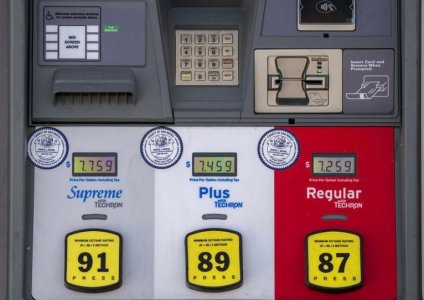
Californians Struggle Under High Gas Prices Ahead Of Primaries
Californians Struggle Under High Gas Prices Ahead Of Primaries
Keep in mind the issue in California is mainly caused by the state, not the fed gov
- Status
- This thread has been closed due to inactivity. You can create a new thread to discuss this topic.