• Get involved.
    We want your input!
    Apply for Membership and join the conversations about everything related to broadcasting.

    After we receive your registration, a moderator will review it. After your registration is approved, you will be permitted to post.
    If you use a disposable or false email address, your registration will be rejected.

    After your membership is approved, please take a minute to tell us a little bit about yourself.
    https://www.radiodiscussions.com/forums/introduce-yourself.1088/

    Thanks in advance and have fun!
    RadioDiscussions Administrators

Song you wondered how they they ever got played on Top 40 radio

Thankfully, KMPC and KFI avoided those like the plague.


Well, it appears you did.
Bill Heywood was responsible for that happening. He would play them at first on his morning show, and were such a hit with listeners, they became part of the regular playlist throughout the day.

I got distracted with a phone call, came back and started retyping what I already typed. It's now edited
 
Bill Heywood was responsible for that happening. He would play them at first on his morning show, and were such a hit with listeners, they became part of the regular playlist throughout the day.

I got distracted with a phone call, came back and started retyping what I already typed. It's now edited

I worked with Bill at KTAR. Just a lovely guy.
 
I like the Helen Reddy tune, 'You And Me Against The World', but did we really need the little girl at the end. The song is already enough of a tearjerker! 😭
There was a mono promo 45 edit that removed the child from the beginning and from the end. The promo version was never released in stereo.
 
Okay. I've gone (mostly) through this very long thread, responding to a few things. Now I'll list my few "How the hell did top 40 radio ever play these songs."

My first one is Barry White's "I'm Gonna Love You Just a Little More, Baby," from 1973. While it is true that Sylvia, Chachakas, and Jane Birkin had hit the top 40 (or the top 100 in the latter case) with orgasms from the female's perspective, this was the first time I ever heard the same from a male's perspective. I kept waiting for KRIZ, KRUX, and KUPD to stop playing the song but they never did. (In fact, nationally, the song would peak at #3 on Billboard's charts in late June of 1973.)

The next song I would have to pick would be Paul Anka's "(You're) Having My Baby," from 1974. There was no profanity or drug lyrics in the song and I suppose it was catchy (I could hear it on the radio roughly every 30 minutes at the time.) As an 11-year-old, I could never understand why radio would play a song like that. Especially a song that was being adopted by the anti-abortion movement...

Much later, I would hear an interview with Paul Anka (he also composed the song.) During that interview, he stated that he had written that song for his then-wife who was pregnant at the time. He never dreamed that it would become a rallying cry for anti-abortionists...

My next choice would have to be the Eagles' "Life in the Fast Lane," and its use of the word "goddam" in its lyrics. It was the first song I ever heard with that word in its lyrics (though it was followed on the charts almost immediately by Firefall's "Cinderella," which also uses the same word and which I thought (and still think) was a much better song.) What struck me was back in 1977 when I first heard the song, none of the Phoenix radio stations, top-40, album rock, or oldies (KOOL-FM briefly played that one as a current) tried to erase the word goddam from the song's lyrics. It was only during the 2000s and later that I heard an edited version of the song, mostly on IHeart stations online. I assume the growing prudishness announced by the arrival of Christian nationalism had a lot to do with that.

The final song I will list here is "Good Girls Don't", The Knack's follow-up to their 1979 monster, "My Sharona." Like the Charlie Daniels Band's song, "The Devil Went Down to Georgia," discussed earlier in this thread, there were some differences in the lyrics between the album and 45 versions. Playboy magazine (which I was receiving in braille at the time) noted them quite correctly. On the album version, part of the first verse reads:

"and she makes you want to scream
Wishing you could get inside her pants."

However, on the 45 version, those two lines read:

"And she makes you want to scream
Wishing she was giving you a chance."

The other edit in the song comes during the middle bridge which is repeated twice. On the album, part of that bridge's lyric reads:

"And in between each madness that you know it generates
Till she's sitting on your face."

But the same portion of the 45 bridge's lyric reads:

"And in between each madness that you know it generates
Till she puts you in your place."

That single version, with its changed lyrics, peaked at #11 on Billboard in November of 1979.

I have a recreated promo 45 version of Cinderella from Firefall on my hard drive. The 'god' in goddam girl is muted somewhat so you hear "and I said ___damn girl..."
 
The child on "You and Me Against the World," was, if I remember correctly, the child of one of Helen Reddy's neighbors. And the child (I can't remember now if it was a boy or a girl) appears at both the song's beginning ("Tell me again Mommy,") and the song's end ("I Love You Mommy.") Helen Reddy would say in later interviews that the song's message was intended for her then-husband, Jeff.

Again, Ted, nope.

For you and @KilowattKat:

Paul Williams and Kenny Asher wrote it as a straight-up love ballad and Paul recorded it first on his album "Here Comes Inspiration".


In her autobiography, Helen says the lyrics struck her as "too paternalistic" and...


Remember when the circus came to town
And you were frightened by the clown
Wasn't it nice to be around
Someone that you knew
Someone who was big and strong
An lookin' out for

You and me against the world


Okay. Yeah. Yikes. Even in 1974, any girl I knew would have rolled her eyes at a guy doing the whole "you need a big, strong man to look out for you" thing---and it is worse if it's Helen singing it to Jeff.

So, Helen. again, in her autobiography, says she switched it to a mother singing to her child, and that's her daughter, Traci, who was 11, on the record.


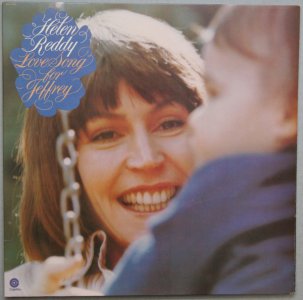
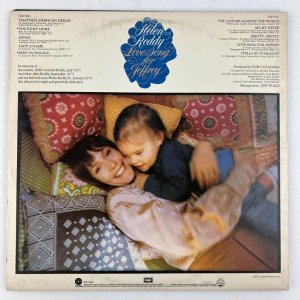
What confuses the issue is that the song was on an album called Love Song for Jeffrey, and the photos on the album cover, both front and back, picture her with her two-year old son Jordan.

R-12683859-1539997524-5721.jpg

s-l1200.jpg


"Love Song for Jeffrey" was a song that Helen wrote with Peter Allen for her husband, Jeff Wald, and was released as the B-side of the 45 "You and Me Against the World".


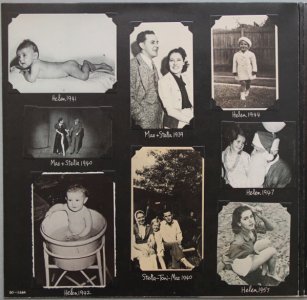
R-12683859-1539997524-4557.jpg

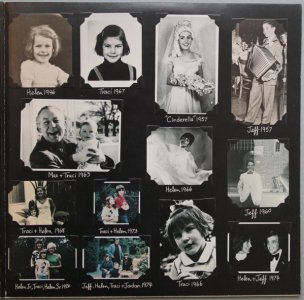
R-12683859-1539997527-9847.jpg

Helen's mom, dad and aunt had all passed within the past year, so Helen did a very sentimental album (this is the inside of the gatefold cover).

And finally, here's the promo 45, without Helen's daughter:

 
Last edited:
Ted, I hate to keep correcting you, but I'm not gonna let that stop me.

This is the original 45 of "Aquarius/Let the Sunshine In", and it's 4:49. It's the only version ever commercially available on 45, and it's identical to the album version (though that shows on the LP as 4:51).

View attachment 10683


He expected Drake to be bowled over.

Drake: "It's good, Bones, but it's long. Can you get me an edit?"

Bones: "Sure, Bill. Can I come back tomorrow?"
I've got that 45...in mono on Soul City Records. Bought it brand new in 1976 as what was supposed to be an oldies reissue. I didn't even realize that "Aquarius/Let the Sunshine In" existed in a stereo version until I started hearing it a year or two later when the area got an FM pop station that played it.

A couple decades later, a friend was leafing through my record collection, noticed it, and asked where I'd gotten it from. I told him I'd bought it as a reissue in 1976 and he corrected me by noting that Soul City Records was long gone by 1976. Apparently that record had been kicking around warehouses for quite a few years before someone repackaged it and sold it to me as a reissue.

On a different note, I've seen several comments on people going back and forth on whether 1961 was a good year for pop music or not. And while we all have our personal taste, I do believe that 1961 is generally considered a bad year for pop music. For many decades, pop music seemed to run in a recurring cycle where the industry would go overly heavy on a trend that created a backlash, and that would be followed by a couple year period of musical doldrums until something new came along to breathe life back into the business. AFAIK, around 1961 was considered one of those doldrums periods (backlash to early rock & roll, but before the British invasion), with another one a decade later (early 70s backlash to acid rock), and again a decade later (early 80s backlash to disco), and yet again a decade later (early 90s backlash to early rap).

But that doesn't mean that we as individuals won't fondly remember and like songs from those doldrums periods. For example, I graduated high school in 1980 and have fond memories of a lot of music from 1980 and 1981, even though I will also acknowledge that it wasn't overall a great couple of years for pop music. Specifically, it was a period dominated by ballads, so the tempo mix was a bit off.
 
I've been immersed in 1961 the past few days (don't ask why; I've had a bad cold), and my opinion is that there were some genuinely good songs that year (many, in fact), even though it sounds rather like 1958, but a bit more refined (the early rock & roll sound is mostly gone, but Doo Wop is still quite present and traditional pop pretty much represents the core of the overall sound).

Fast forward to 1962, and you get an interesting increase in folk and some exciting R&B crossovers, but it's mostly "let's '61 some more."

Ditto for '63.

Then The Beatles happened.

Music from 58 through 63, while lacking the overall impact of the more exciting sounds of R&R and the British Invasion, still has some decent hits, and is, I feel, a bit underrated and underappreciated.

c
 
I've been immersed in 1961 the past few days (don't ask why; I've had a bad cold), and my opinion is that there were some genuinely good songs that year (many, in fact), even though it sounds rather like 1958, but a bit more refined (the early rock & roll sound is mostly gone, but Doo Wop is still quite present and traditional pop pretty much represents the core of the overall sound).

Fast forward to 1962, and you get an interesting increase in folk and some exciting R&B crossovers, but it's mostly "let's '61 some more."

Ditto for '63.

Then The Beatles happened.

Music from 58 through 63, while lacking the overall impact of the more exciting sounds of R&R and the British Invasion, still has some decent hits, and is, I feel, a bit underrated and underappreciated.

c
Don't forget the Motown machine, which was revving up a few years before the British Invasion. The Miracles were on the charts and Top 40 radio before anyone here had ever heard of the Beatles. "Shop Around" came out in 1961, as did the Marvelettes' "Please Mr. Postman." Mary Wells' "The One Who Really Loves You" charted in 1962.
 
Don't forget the Motown machine, which was revving up a few years before the British Invasion. The Miracles were on the charts and Top 40 radio before anyone here had ever heard of the Beatles. "Shop Around" came out in 1961, as did the Marvelettes' "Please Mr. Postman." Mary Wells' "The One Who Really Loves You" charted in 1962.

Speaking of 1961, one song that had to have some changed lyrics and that wasn't on the history of banned rock website, was Jimmy Dean's song, "Big Bad John." First pressings of the single had John's epitaph reading:

"At the bottom of this mine lies one hell of a man."

Many radio stations objected to the use of the word "hell," in the epitaph (though they did not object to the same word being used earlier in the song but in a different context) so Jimmy Dean went into a completely different recording studio and changed the epitaph to read:

"At the bottom of this mine lies a big, big man."

The rest, as they say, is history as "Big Bad John," with the new epitaph went all the way to #1 in the U.S. in early November of 1961.
 
Speaking of 1961, one song that had to have some changed lyrics and that wasn't on the history of banned rock website, was Jimmy Dean's song, "Big Bad John." First pressings of the single had John's epitaph reading:

"At the bottom of this mine lies one hell of a man."

Many radio stations objected to the use of the word "hell," in the epitaph (though they did not object to the same word being used earlier in the song but in a different context) so Jimmy Dean went into a completely different recording studio and changed the epitaph to read:

"At the bottom of this mine lies a big, big man."

The rest, as they say, is history as "Big Bad John," with the new epitaph went all the way to #1 in the U.S. in early November of 1961.
I seem to recall Judy Collins' "Someday Soon" being cited as the first song to break the "damn" barrier on Top 40 radio ("He loves his damned old rodeo as much as he loves me."), in 1969. Earlier songs, most notably Roger Miller's "Dang Me" (1964) used milder forms of that oath, usually "darn." I don't believe there was a radio edit or alternate recording of "Someday Soon" that eliminated "darned" or replaced it.
 
I seem to recall Judy Collins' "Someday Soon" being cited as the first song to break the "damn" barrier on Top 40 radio ("He loves his damned old rodeo as much as he loves me."), in 1969.

Judy was first with "damned", but "damn" goes to Spanky and our Gang in 1968:


Glad you specified "Top 40 radio" because Spanky peaked at #43 and Judy at #55.

I don't believe there was a radio edit or alternate recording of "Someday Soon" that eliminated "darned" or replaced it.

There was not.
 
I seem to recall Judy Collins' "Someday Soon" being cited as the first song to break the "damn" barrier on Top 40 radio ("He loves his damned old rodeo as much as he loves me."), in 1969. Earlier songs, most notably Roger Miller's "Dang Me" (1964) used milder forms of that oath, usually "darn." I don't believe there was a radio edit or alternate recording of "Someday Soon" that eliminated "darned" or replaced it.

Another song with the word "damn" changed (actually it was deleted on the 45) was the Kingston Trio's 1963 version of "Greenback Dollar." Interestingly, Hoyt Axton who both wrote the song and recorded the original version opted to use the word "darn" in that version.
 
What about R&B/Soul/Black/Urban radio? Did it play hell/damn songs before the Top 40 stations did, and if so, what were they?

I assume country radio was the last to smash the taboo, its listeners being more conservative than those of other formats.
 
The only two hit songs that I can think of that used that phrase it were edited. Johnny Cash's "A Boy Named Sue" bleeped it and the Charlie Daniels' Band's "The Devil Went Down To Georgia offered a radio edit where the phrase "son of a gun" was substituted.
The Johnny Cash single also contained another edit. In the uncut version, he ends with "...any damn thing but Sue." The single edit takes out the "damn" and he ends up saying "anything but Sue."
 
Using AI, I was able to take the stereo version of the Helen Reddy song with the child and remove the child from the intro and the end. Thus, I now have a stereo without child version.
 
Here's one that The History of Banned Rock (which I linked to in an earlier post) got partially right. The Swingin' Medallions *did* have to rerecord "Double Shot (Of My Baby's Love)," before it became a hit but not because of the line "The worst hangover that I ever had," which appears on both versions of the single; rather, it was one word that was changed three times in the first verse before radio stations would play the song. Here are the lyrics from the last part of the first verse on the hit version of the song:

"What happened to me last night
This Girl of mine, she loved me so right.
Oh, she loved me so long and she loved me so hard
I finally passed out in her front yard."

Now here are the original lyrics that were forced to be changed:

"What happened to me last night
This girl of mine she kissed me so right.
She kissed me so long and she kissed me so hard
I finally passed out in her front yard."

Apparently the act of kissing could lead to a sexual encounter so the line was changed. (The song with the original lyrics can be heard on Volume 4 of the "On The Radio," CD, a copy of which I have.)


Back
Top Bottom