
So the Beatles being the only other artist/group having that many hits in the Billboard top 40 was?The charts didn't work that way back in Ronstadt's prime years, nor did her labels (Capitol and Asylum) push anything other than her selected single to radio at any one time. Even if her fans were playing every track on "Heart Like a Wheel" or "Simple Dreams," Billboard had no way of knowing that. Another cross-generational comparison that doesn't work.

-
Get involved.
We want your input!
Apply for Membership and join the conversations about everything related to broadcasting.
After we receive your registration, a moderator will review it. After your registration is approved, you will be permitted to post.
If you use a disposable or false email address, your registration will be rejected.
After your membership is approved, please take a minute to tell us a little bit about yourself.
https://www.radiodiscussions.com/forums/introduce-yourself.1088/
Thanks in advance and have fun!
RadioDiscussions Administrators
You are using an out of date browser. It may not display this or other websites correctly.
You should upgrade or use an alternative browser.
You should upgrade or use an alternative browser.
They played We Belong by Pat Benetar on KZOK
- Thread starter Cobra14
- Start date
Oops! You're right about the Beatles, but that was pretty much a one-off phenomenon until the current chart methodology was introduced. The only remotely similar one I can think of before the current era of chart methodology started was the number of Monkees tracks from their first album that found their way onto radio. But even then, I don't think they came close to 19 out of 40 -- or 19 at all.So the Beatles being the only other artist/group having that many hits in the Billboard top 40 was?

Right. That's a modern phenomenon. I was just trying to help bobdavcav with a comparison that, as I said, tends not to line up neatly. Taylor is a singer-songwriter, which Linda wasn't and Taylor is a huge seller over several years, which Joni wasn't.Linda Ronstadt never had 19 of the top 40 hits in a single month.
So the Beatles doing the same was a modern phenomenon too?Right. That's a modern phenomenon.
AgreeI was just trying to help bobdavcav with a comparison that, as I said, tends not to line up neatly. Taylor is a singer-songwriter, which Linda wasn't and Taylor is a huge seller over several years, which Joni wasn't.
The Beatles had 14 songs on the Billboard Hot 100 the week ending April 11, 1964. Five were in the top ten. Two more were in the top 40. The other seven were between number 48 and number 81---and they were not all from the same album, so it's by no means an exact comparison.Oops! You're right about the Beatles, but that was pretty much a one-off phenomenon until the current chart methodology was introduced. The only remotely similar one I can think of before the current era of chart methodology started was the number of Monkees tracks from their first album that found their way onto radio. But even then, I don't think they came close to 19 out of 40 -- or 19 at all.
In fact, they weren't even from the same record label---product from Capitol, Tollie, Swan and Vee Jay all were on the chart for the Beatles that week. And "All My Loving" and "Love Me Do" are shown as "Capitol of Canada".
Last edited:

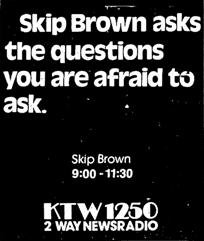
They flipped KTW-FM to progressive rock and KTW-AM to News/Talk. KTW 2 Way Newsradio 1250 vets include Aaron Brown of KING, KIRO, CNN and PBS fame, (then known as Skip Brown on KTW) and Wayne Cody of KIRO.Oops...memory fail.
SRO acquired KTW (1250) and KTW-FM (102.5) 10-13-1973; but format on the FM listed as progressive rock right out of the chute. Not sure if the playlist referenced above for 1974 is from something else and mis-attributed?
SRO was also planning to bump KTW-AM up to 1590 for 24 hour broadcasting and there was a purchase. But SRO had to offload 1250, per the ownership rules back then. So SRO kept 1590, using it occasionally as a simulcast of KZOK-FM. At a time when FM hadn't quite become status quo in cars yet, this was a good, if unprofitable move and boosted KZOK's profile with then young people with second hand AM only radios in cars from the '60s and early 1970s back in the late 1970s. They ended the simulcasting and went to an automated AC/Oldies hybrid "Solid Gold 16 KZOK" before becoming the legendary KJET in 1982.
KYAC picked up 1250. Now 1250 Seattle had a serious problem since forever; It had to sign off between local sunset and midnight (skywave interference problems with KWSC Pullman) when KTW can return to the air, per KWSC (now KWSU)'s 6am-Midnight operating hours. And since KWSC was on that frequency first, KTW had to abide.
This schedule actually works fine for brokered religious programming, which was KTW's stock and trade for decades as a radio station of the First Presbyterian Church of Seattle.
But it is absolutely impossible for any other coherent radio format. Yet this schedule actually lasted into the 1970s. They loosened up the rules and 1250 KYAC (and 770 KXA) were allowed to go 24 hours. I think that was 1980-81.
Attachments

The Beatles were in the right place at the right time. There were many dimensions to this but a combination of rock music that sounded new and powerful combined with a sad time after the JFK assassination certainly cleared the runway. They were not the first rock and roll band, but they satisfied a sad nation after JFK. Their first hit happened just a couple months after JFK. I suppose some could argue they would have been a success regardless, but I believe the times were mostly responsible for their success. The Beatles hysteria in the mid 60’s was certainly due to baby boomers coming of age, but I also believe to relieve the sadness of a young generation. As in a focus to the future.
Last edited:
Will there be another Beatles?
I think not. The application of new artists has changed. The Beatles had only two ways of being noticed. Radio and records. Today there are 5x more ways to listen to new music. This defuses any hope of grand slam records. That era is over. Today it just getting a slice of the pie, mainly through online.
I think not. The application of new artists has changed. The Beatles had only two ways of being noticed. Radio and records. Today there are 5x more ways to listen to new music. This defuses any hope of grand slam records. That era is over. Today it just getting a slice of the pie, mainly through online.
The application of new artists has changed. The Beatles had only two ways of being noticed. Radio and records.
Keep in mind The Beatles made their debut on Ed Sullivan in February 1964. They had released records in the US before that, but they never had the impact of TV. They were a VISUAL band. They made videos before there was MTV. They made movies to promote their music. Yes, so did Elvis, but he was already established. Hard Days Night came out one year after their Sullivan debut.
There was a huge teen magazine market in the 60s. That doesn't exist now, but instead it's all online. But yes they had great support from radio after the Sullivan debut. Not as much before that,
Hard Day’s Night was six months after Sullivan, and HELP! was a year after that.Keep in mind The Beatles made their debut on Ed Sullivan in February 1964. They had released records in the US before that, but they never had the impact of TV. They were a VISUAL band. They made videos before there was MTV. They made movies to promote their music. Yes, so did Elvis, but he was already established. Hard Days Night came out one year after their Sullivan debut.
There was a huge teen magazine market in the 60s. That doesn't exist now, but instead it's all online. But yes they had great support from radio after the Sullivan debut. Not as much before that,
True, but that doesn't mean as much as her past successes, which I think cement her as a superstar of the 2010's and early 2020s.. The charts work differently. Her biggest successes arguably happened before the Hot 100 became a merry-go-round of 'hit churn'. By having 19, and then 21, hits on the Hot 100 at the same time,Taylor only slightly outperformed such other mega-talented 'superstars' like Gunna and Lil Baby.Linda Ronstadt never had 19 of the top 40 hits in a single month.
The charts work differently. It's like trying to compare station ratings before and after PPM. Sure, it can be done, but the PPM changed the metric. The dominance of streaming as the largest method of music consumption changed the metric of the charts.
I think it still can happen. Some artists videos go viral. That happened with Lil Nas X / Billy Ray Cyrus in 2018/2019. Old Town Road was a big hit. It was a 'grand slam', in a way. But it's not common. And Lil' Nas X hasn't achieved the household name status the Beatles, or Taylor Swift did.Will there be another Beatles?
I think not. The application of new artists has changed. The Beatles had only two ways of being noticed. Radio and records. Today there are 5x more ways to listen to new music. This defuses any hope of grand slam records. That era is over. Today it just getting a slice of the pie, mainly through online.
I don't think there will be another Beatles. Just as there never will be another Walter Cronkite, or another John Wayne. The media works differently now. It's completely fragmented.
The few remaining vestiges of the media behemoths (Taylor Swift, the NY Times, CBS News, Disney, etc.) are a hangover from the era of the old school, 'mass' media. Musically, radio will have to straddle the fence, as it probably does now. Radio stations have playlists, and they probably don't have the massive level of churn the Hot 100 seems to have. I don't pay super attention to radio charts anymore, but do they pump and dump 20% of their playlist every week? And, especially with the recurrent / gold categories, I think it keeps radio charts a bit more stable. And because radio is mostly free, it will undoubtedly still be around for a while.
Either way, fifteen years from now there won't be any superstars of the Beatles, or even Taylor Swift's status. We don't have three or four networks anymore, we don't have charts that really indicate star status (who's Gunna? Who's Lil Baby? They technically outdid the Beatles, Elvis, and almost matched Taylor Swift's recent accomplishment. But who are they?).
There undoubtedly will be some media figures who achieve mass recognition status for a few minutes. The internet and various social media are far reaching, so that may still happen. We see viral videos giving individuals their fifteen seconds of fame right now.. Any such flashes of superstardom are usually short lived, though. That's the trend.
Dude, she was a popular artist in the day, but no where near the multi-generational staying power of a band like the Rolling Stones, Beatles, or now potentially; Taylor Swift. Just because Ronstadt is one of your favorites, doesn't change her standing as an artist in history.True, but that doesn't mean as much as her past successes, which I think cement her as a superstar of the 2010's and early 2020s..
Really? How so?The charts work differently.
And there was no "hit churn" back in the 60's through today? Ever hear the term; one hit wonder? An artist who writes, produces, and performs 19 out of the top 40 songs in a given month isn't a one hit wonder.Her biggest successes arguably happened before the Hot 100 became a merry-go-round of 'hit churn'. By having 19, and then 21, hits on the Hot 100 at the same time,Taylor only slightly outperformed such other mega-talented 'superstars' like Gunna and Lil Baby.
Again, really? You keep saying that, so please explain the differences.The charts work differently.
Okay, then whats the comparison of comparing music sale-tabulation/popularity vs diary and PPM?It's like trying to compare station ratings before and after PPM. Sure, it can be done, but the PPM changed the metric.
This is going to be interesting...
Maybe it's changed the way music is consumed, but not popularity. One could easily argue it's easier to accurately track consumption in the digital space than record companies reporting sales.The dominance of streaming as the largest method of music consumption changed the metric of the charts.

And, as a sidebar: Ronstadt was relatively unknown in Latin America, despite being of Mexican heritage.Linda Ronstadt never had 19 of the top 40 hits in a single month.
Did tracks from her "Canciones de Mi Padre" album get any airplay in Mexico?And, as a sidebar: Ronstadt was relatively unknown in Latin America, despite being of Mexican heritage.
No, the PPM did not change the metric; it refined it by introducing more precision and removing human memory from the equation.The charts work differently. It's like trying to compare station ratings before and after PPM. Sure, it can be done, but the PPM changed the metric.
The diary is based on people, perhaps late in the day or a day or two later remembering what they listened to and writing it down. The PPM removes the memory factor. The two things that changed are more precise exact listening times and better data on peoples second, third, fourth choice stations.
Yes, for traditional charts it removed the "what songs do they like?" part of album sales and added "what exact songs are they listening to and how many times?"The dominance of streaming as the largest method of music consumption changed the metric of the charts.
In the 50's and 60's, single songs on 45's were a major sales indicator. Later, albums were the main sales metric, and radio had to do research to tell which songs were the hits. Now, we are back to measuring songs again, not albums.
The return to singles based rankings does not change the metrics for radio airplay as that is based on spins and each station's audience size.
Not a lot, as it was not condisered authentic enough for grupera (the correct name for "Regional Mexican") stations to play and was too regional Mexican for pop stations to play.Did tracks from her "Canciones de Mi Padre" album get any airplay in Mexico?
Sort of paralleling the "too rock for country/too country for rock" resistance she faced on US radio until the mid-'70s.Not a lot, as it was not condisered authentic enough for grupera (the correct name for "Regional Mexican") stations to play and was too regional Mexican for pop stations to play.
How did it change? There wasn't any streaming to speak of before 2005-2010, when streaming began to dominate music consumption. In the past, music sales figured into the Billboard charts. There were separate charts for airplay, naturally.Dude, she was a popular artist in the day, but no where near the multi-generational staying power of a band like the Rolling Stones, Beatles, or now potentially; Taylor Swift. Just because Ronstadt is one of your favorites, doesn't change her standing as an artist in history.
Really? How so?
And there was no "hit churn" back in the 60's through today? Ever hear the term; one hit wonder? An artist who writes, produces, and performs 19 out of the top 40 songs in a given month isn't a one hit wonder.
Again, really? You keep saying that, so please explain the differences.
Okay, then whats the comparison of comparing music sale-tabulation/popularity vs diary and PPM?
This is going to be interesting...
Maybe it's changed the way music is consumed, but not popularity. One could easily argue it's easier to accurately track consumption in the digital space than record companies reporting sales.
Now the Hot 100 is dominated by streaming, because there are no sales to speak of. That to me is different.
Streaming became the dominant method of consuming music in 2015, according to the RIAA. That's just 7 years ago. Sales comprise maybe 5% of music consumption. The rest is streaming.
You want to tell me how many times relatively unknown acts swamped 20% he Billboard Hot 100 every other week, before 2015? I'll wait for your answer. I already know it rarely, if ever happened. Even the Beatles didn't have 20% of the Billboard 100 chart.
As for PPM vs. diaries, even David Eduardo has stated several times on RD that the diaries clearly were not accurate. The PPM is accurate. That's quite a difference.
The diary keepers were entering blocks of time for a station that they weren't listening to for much of that time. The PPM showed that during that same period of time the radio could have been on 2-3 other stations during that same time period.
To me, that's a different metric. One is based on memory and convenience to the user. The other one is a direct recording of whatever they actually were listening to.
I don't care to argue with people here about the definition of what makes a different metric. The fact is that the chart reflects the popularity of music differently from how it reflected it in 1999. There are no sales. The chart is based on what junior calls up on his Spotify or Pandora from minute to minute. The only similarity is that it is music consumption. That's where the similarity ends.
In 1992 there were no Gunna's taking up 12 slots of the Hot 100, or Lil Baby's taking up 20% of the chart for a week. before disappearing within 14 days or so. That kind of thing didn't happen.
As for one hit wonders, Vanity Fare was a one hit wonder band, and their hit "Hitchin A Ride" lasted on the chart for much longer than a week. Disco Duck was a one hit wonder that lasted on the chart longer than a week, too. Many one hit wonders had hits that lasted on the chart longer than a week or two. They may have only had one hit, but their hits often had some longevity on the chart. None of the one hit wonders took up 20% of the national chart, only to disappear the next week. Your idea of 'churn' and my idea of 'churn' are obviously different concepts.
As for your last statement, we're in total agreement. Remember how one Garth Brooks album shipped platinum, and then it was revealed that record companies were shipping multiple crates of CDs to stores, and many of those CDs weren't sold to the consumers for a couple months or so? The shipments to the record stores alone drove the album up the charts. Finally they came up with a system to more accurately track sales -- sound something or other (Soundscan?). Can't remember the name of the system. Where they actually tracked sales, at the checkout stands, of each individual CD, and that data was used for the charts.
PS, Ronstadt isn't one of my favorites. I was stating that she didn't have the generational impact that Taylor Swift, the Beatles, or Nirvana had. She was popular, but not the same sort of superstar that the others were.
Last edited:
With all due respect: Duh. Billboard's Top 100 is still determined by purchase/plays. Rather than a young Boombox4 going to Tower Records to buy a single or album, now they download it to their phone, or have it play on a smartspeaker. The question remains; what does any of that have to do with yesterday verses today when it comes to with ranking consumption? It's still amounts to tracking consumption. One could argue that it's so much faster and convenient now to download music now. Streaming, is similar to what radio used to exclusively be, but tracking plays is still being done. Billboard still ranks based on 'sales' and popularity/number of plays. Doesn't matter how music is purchased/played.How did it change? There wasn't any streaming to speak of before 2005-2010, when streaming began to dominate music consumption. In the past, music sales figured into the Billboard charts. There were separate charts for airplay, naturally.
So, are you saying that tracking streaming-listening is different than plays via the radio?Now the Hot 100 is dominated by streaming, because there are no sales to speak of. That to me is different.
Again, what does that have to do with Billboard tracking a list of hit music? Your point is apples and avocados.As for PPM vs. diaries, even David Eduardo has stated several times on RD that the diaries clearly were not accurate. The PPM is accurate. That's quite a difference.
I know how PPM works, thanks. You were comparing it with Billboard tracking hits. Still trying to understand that analog .The diary keepers were entering blocks of time for a station that they weren't listening to for much of that time. The PPM showed that during that same period of time the radio could have been on 2-3 other stations during that same time period.
According to who, you personally? Or do you have actual data to back up your claim?I don't care to argue with people here about the definition of what makes a different metric. The fact is that the chart reflects the popularity of music differently from how it reflected it in 1999.
Gee that's strange. I purchased 'Unglued' by Stone Temple Pilots just yesterday via iTunes. Needless to say, Taylor Swift's latest has several million downloads yesterday too. Are you saying those aren't sales?There are no sales.
How else would you determine popularity? It's always been ranked based on consumption.The chart is based on what junior calls up on his Spotify or Pandora from minute to minute. The only similarity is that it is music consumption. That's where the similarity ends.
- Status
- This thread has been closed due to inactivity. You can create a new thread to discuss this topic.