Would A.I even work?

-
Get involved.
We want your input!
Apply for Membership and join the conversations about everything related to broadcasting.
After we receive your registration, a moderator will review it. After your registration is approved, you will be permitted to post.
If you use a disposable or false email address, your registration will be rejected.
After your membership is approved, please take a minute to tell us a little bit about yourself.
https://www.radiodiscussions.com/forums/introduce-yourself.1088/
Thanks in advance and have fun!
RadioDiscussions Administrators
You are using an out of date browser. It may not display this or other websites correctly.
You should upgrade or use an alternative browser.
You should upgrade or use an alternative browser.
This is terrible news for the future of on-air talent
- Thread starter MarkW
- Start date
Yes it does, and depending how it's programmed, it can be more current than a voice-tracked DJ.Would A.I even work?
I don't remember Perfect Paul, but the early synthesized voices were pretty awful, certainly unusable for radio. What I find interesting about the AI voice technology is that if you don't like the "reading" you're getting, you can regenerate the voice, change a few perameters and get a different reading; different emphasis, different pronunciation. But I'm thinking that AI works best for short intros and sponsorship mentions. I'm less convinced about using this technology for long form narration, although I've heard that it is being used for this.Synthesized voices have come a long way. Remember "Perfect Paul," the artificial voice of NOAA weather radio? "He" had a vaguely Scandinavian accent, and the phrasing was never quite right. Now, you can scarcely tell the difference.

They have been wanting something like A.I. for decades. Whatever screws everybody else but themselves and their pathetic shareholders. Funny thing is the dynamics are different than 50 years ago.I think it is more likely than not A.I. will prove tremendously destructive to the availability of on-air jobs.
Both Audacy and Beasley are mentioning "A.I." in their corporate-speak blather these days. They probably are not alone, but those happen to be the two examples I've seen firsthand.
It doesn't take a rocket scientist to figure out how they wish to deploy it.

Audacy Partners With ElevenLabs For AI Voices
Audacy has announced a partnership with voice AI research and deployment company ElevenLabs to utilize their library of artificial voicesradioinsight.com
In the old days, management used to play on the radio personality mindset, where a radio career was everything and everyone toed the line if they knew what was good for them. That mindset is vanishing now, even amongst the most hardcore radio enthusiasts. And when that's finally gone, where's their leverage now?
The other thing is in my experiments with A.I, I noticed numerous flaws; First, you still need a human to program it unless you just want it to spit liners out. Artificial, yes. But certainly not intelligent.
Second, there's no human relatability in A I. TV personalities make it a point to sound relatable. If that doesn't exist in commercial radio anymore, then it's officially a dead medium.
A.I. still has no sense of humor, no depth of thought, no analytical sense, no understanding of emotion (a really bad thing during a major event like a disaster or a Super Bowl win.)
A.I. has decades to go before it's even close enough to merely acceptable. Putting it on the air full time now is only going to make public it's embarrassing shortcomings. And add another cliche to the others that are making the radio industry a parody of itself since the 1990s.
They have been wanting something like A.I. for decades. Whatever screws everybody else but themselves and their pathetic shareholders. Funny thing is the dynamics are different than 50 years ago.
Keep in mind the place where AI is getting use is in streaming, and those companies have no shortage of money.
Those "pathetic shareholders" include people who likely have no idea they hold that company's stock, as it's part of a package put together by their financial advisor IRA or 401(k) manager. And what's so "pathetic" about trying to make your retirement more comfortable? Are we all middle class folks bad guys for having tech stocks as a big part of our retirement nest eggs?They have been wanting something like A.I. for decades. Whatever screws everybody else but themselves and their pathetic shareholders.

A.I. still has no sense of humor, no depth of thought, no analytical sense, no understanding of emotion (a really bad thing during a major event like a disaster or a Super Bowl win.)
A.I. has decades to go before it's even close enough to merely acceptable. Putting it on the air full time now is only going to make public it's embarrassing shortcomings. And add another cliche to the others that are making the radio industry a parody of itself since the 1990s.
While some of those personality observations are true, some A.I. voices already sound quite natural and convincing. I hear one being used a lot on social media that sounds like a modern-day Thurston Howell, III -- usually narrating a 'did-you-know' type of video clip -- that is especially realistic and authoritative sounding. (Added link with v/o below).
I could easily envision hearing that guy on the radio reading liners, weather, whatever, and it would (unfortunately) be very easy to listen to...in certain formats
The writing is on the wall, I'm afraid.
Last edited:
A.I. has decades to go before it's even close enough to merely acceptable. Putting it on the air full time now is only going to make public it's embarrassing shortcomings. And add another cliche to the others that are making the radio industry a parody of itself since the 1990s.
Where is AI on the air full time?
What I hear on the air full time is a lot of recorded music. There was a time when radio was a place where you heard live performances by musicians in the radio studio. The only place where you can hear that regularly now is when WSM runs the Grand Ole Opry. That's what radio used to sound like in the 20s, 30s, and even 40s. When the studio musicians were replaced by recorded music, it didn't mark the end of radio.

But the reason why most non-network originating stations had studio orchestras or bands was the American Federation of Musicians. It's later-30's well into the 50's leader James Petrillo who forcefully required stations that wanted to play the "new" recorded music to have live musicians on staff.Where is AI on the air full time?
What I hear on the air full time is a lot of recorded music. There was a time when radio was a place where you heard live performances by musicians in the radio studio. The only place where you can hear that regularly now is when WSM runs the Grand Ole Opry. That's what radio used to sound like in the 20s, 30s, and even 40s. When the studio musicians were replaced by recorded music, it didn't mark the end of radio.
In markets as small as Chattanooga, stations had to have staff musicians. Petrillo was so strong for a while that he even paralyzed music recording and production during WW II.
Only the weakening of Petrillo's influence and the profusion of new radio licenses allowed Top 40 and other recorded music formats to be successful as the 50's began.
It's interesting to note that the hits prior to the post-WW II years were the songs, not the singers. Since radio played much less recorded music, individual singer's versions did not rise to the top the way they did starting after the War. Some of that stayed for more than another decade, with many hit Top 40 songs having multiple simultaneous versions.
But the reason why most non-network originating stations had studio orchestras or bands was the American Federation of Musicians. It's later-30's well into the 50's leader James Petrillo who forcefully required stations that wanted to play the "new" recorded music to have live musicians on staff.
But I see no record of radio audiences objecting to the use of recorded music. This is being viewed by some here as though this will be the death of radio. They don't realize that we've been here before.

An equally large factor are passively-managed mutual funds and ETFs linked to an index. You essentially buy an entire basket of stocks, not individual ones. Some will profit, some won't. The idea is to track the overall market and not to beat it because, given a large enough horizon of time, reversion to the mean will kick in and it becomes much, much harder to beat the market.Those "pathetic shareholders" include people who likely have no idea they hold that company's stock, as it's part of a package put together by their financial advisor IRA or 401(k) manager.
Money has no morality. That's not a moral judgment; that's just the way it is.And what's so "pathetic" about trying to make your retirement more comfortable? Are we all middle class folks bad guys for having tech stocks as a big part of our retirement nest eggs?
Anyone remember the Nifty Fifty? (This Nifty Fifty: Nifty Fifty - Wikipedia, not the one in India) How many of those companies are still around? About half. Again, reversion to the mean. It's inexorable.
I have hosted shows recently spotlighting particular years, beginning with 1950, and just did a show today highlighting 1956. Today saw the same song by two different groups, but earlier years had up to three. Thank you for the clarification!But the reason why most non-network originating stations had studio orchestras or bands was the American Federation of Musicians. It's later-30's well into the 50's leader James Petrillo who forcefully required stations that wanted to play the "new" recorded music to have live musicians on staff.
In markets as small as Chattanooga, stations had to have staff musicians. Petrillo was so strong for a while that he even paralyzed music recording and production during WW II.
Only the weakening of Petrillo's influence and the profusion of new radio licenses allowed Top 40 and other recorded music formats to be successful as the 50's began.
It's interesting to note that the hits prior to the post-WW II years were the songs, not the singers. Since radio played much less recorded music, individual singer's versions did not rise to the top the way they did starting after the War. Some of that stayed for more than another decade, with many hit Top 40 songs having multiple simultaneous versions.
Last edited:
OK, agreed in principle, but I think he's referring to the corporate attitude of "screw the customers, let's max the dividend and stock prices while we turn out lower quality stuff with no customer service whatsoever --- and, oh yeah, lay off a bunch of people" more than any attitude amongst the shareholders themselves.Those "pathetic shareholders" include people who likely have no idea they hold that company's stock, as it's part of a package put together by their financial advisor IRA or 401(k) manager. And what's so "pathetic" about trying to make your retirement more comfortable? Are we all middle class folks bad guys for having tech stocks as a big part of our retirement nest eggs?
I don't think AI will need 10 more years to be workable.

That depends on what a station is trying to sound like. At the extreme, AI is more than good enough today to sound like an automated station from the seventies or early eighties (think TM Stereo Rock or Drake-Chenault XT40). I suspect that AI would also be adequate to duplicate a lot of voice-tracked shifts where the DJ is mostly just parroting station slogans and other generic content.I don't think AI will need 10 more years to be workable.
For spoken word content that is actually interesting, I think that could prove to be the radio equivalent of the self-driving car -- always just a few years in the future.

Like…millions of people whose investment funds are invested in stocks?They have been wanting something like A.I. for decades. Whatever screws everybody else but themselves and their pathetic shareholders.
Look around. The entire world is different t than half a century ago.Funny thing is the dynamics are different than 50 years ago.
Whose leverage? Again, this isn’t the old world for both good and bad.In the old days, management used to play on the radio personality mindset, where a radio career was everything and everyone toed the line if they knew what was good for them. That mindset is vanishing now, even amongst the most hardcore radio enthusiasts. And when that's finally gone, where's their leverage now?
Um, yeah. Programming matters. No one said it was become sentient.The other thing is in my experiments with A.I, I noticed numerous flaws; First, you still need a human to program it unless you just want it to spit liners out. Artificial, yes. But certainly not intelligent.
Not everyone wants talk. Or relatability. Give me the music I want and I’ll listen.Second, there's no human relatability in A I. TV personalities make it a point to sound relatable. If that doesn't exist in commercial radio anymore, then it's officially a dead medium.
Yeah, the people programming Siri and Alexa definitely have never worked humor into them. It can absolutely be programmed into AI. (Super Bowl? Huh?)A.I. still has no sense of humor, no depth of thought, no analytical sense, no understanding of emotion (a really bad thing during a major event like a disaster or a Super Bowl win.)
Welcome to 2024. It’s acceptable and accepted. It has lots of runway ahead of it, but this ain’t 1992.A.I. has decades to go before it's even close enough to merely acceptable.
This is kind of comical. Nothing of the sort is true.Putting it on the air full time now is only going to make public it's embarrassing shortcomings.
Adapting to the realities of a changing world is not parody. Business models change.And add another cliche to the others that are making the radio industry a parody of itself since the 1990s.
We have to remember that commecial radio is a marketing platform first and foremost. Which is why it was regulated by the commerce department to begin with. The entertainment aspect is just the loss leader for the marketing. It sucks, but that is just the way it is. With A.I., the entertainment can be generated in a more cost effective manner, while acomplishing the goal of attracting an audience. Some participants in the free market will follow. The results to be determined. It is sad to see, but I don't see it a a jock replacement just yet. If anything, I see jocks and sales staff leveraging it as a tool to make themselves more creative, effective, and efficient.
Meanwhile, today Apple said it is getting behind moves to increase AI in its phones and devices:

 www.nbcnews.com

 abcnews.go.com
So this thing is not going away.
AI is coming to your iPhone: Five takeaways from Apple’s big announcement
Apple hopes to succeed where other big tech companies have so far failed: making AI both useful and normal.
www.nbcnews.com
Apple launches AI-fueled tools for iPhone, Mac and iPad
Apple CEO Tim Cook described AI capability as "the next big step for Apple."
So this thing is not going away.
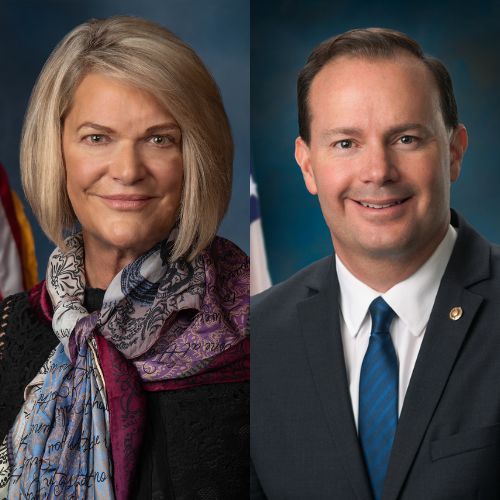
The FCC is trying to regulate the use of AI in advertising, and a group of Senators claim it's election interference:
 radioink.com
So he wants transparency, as long as he agrees with it. This is why we should never allow politicians to get anywhere near the Communications Act.
Senate GOP Submits Bill To Stop 'FCC Meddling In Our Elections' - Radio Ink
Republican lawmakers on Capitol Hill are moving to block proposed new regulations from the FCC about AI disclosure in political ads.
radioink.com
Senator Lee told The Daily Caller he supports transparency around AI, just not by a Democrat-led FCC. “The FCC’s proposal to impose new regulations on political speech involving AI, just months before one of the most consequential elections in our history, represents a clear overstep of their regulatory authority.”
So he wants transparency, as long as he agrees with it. This is why we should never allow politicians to get anywhere near the Communications Act.
You do know who enacted the Communications Act, right?So he wants transparency, as long as he agrees with it. This is why we should never allow politicians to get anywhere near the Communications Act.
- Status
- This thread has been closed due to inactivity. You can create a new thread to discuss this topic.