• Get involved.
    We want your input!
    Apply for Membership and join the conversations about everything related to broadcasting.

    After we receive your registration, a moderator will review it. After your registration is approved, you will be permitted to post.
    If you use a disposable or false email address, your registration will be rejected.

    After your membership is approved, please take a minute to tell us a little bit about yourself.
    https://www.radiodiscussions.com/forums/introduce-yourself.1088/

    Thanks in advance and have fun!
    RadioDiscussions Administrators

What Stations Would You Describe As "Chicken Rock" In The 60s And 70s?

One thing that many people don't know is that Docket 80-90 and subsequent related rule makings actually INCREASED many distance separation requirements, particularly Class A to Class A and Class A to Class B minimum distance requirements for allotments, and left many existing 3 kW Class As with no way to meaningfully upgrade to 6 kW. Directional 6 kW Class As were better off with 3 kW nondirectional in many cases. In the case of Class As and Class Bs to Class Bs, that used to require 40 miles on second and third adjacent channels, the increase to 43 or 46 miles often requires ridiculously directional antennas, and the actual measured pattern is often even much worse than the stylized FCC pattern envelope, where full nondirectional facilities used to be allowed. This is based on circa 1960 FM radio performance, which has improved substantially over the years. Gone are the days of tube radios with AFC where strong local stations blotted out everything 600 kHz or more from the local station. You might find a few still in existence at antique shows and stored away, but not regularly used. The oscillators in those also often exceed Part 15 radiation limits. This manifested itself with interference to radios in neighbors' homes, and even bizarre and perplexing IF Beat interference complaints that station engineers were initially at a loss to explain when called out to peoples' homes.
 
Last edited:
Gone are the days of tube radios with AFC where strong local stations blotted out everything 600 kHz or more from the local station.
Not just those. Hi-Fi tuners in the 1970s traded selectivity for low distortion. That was fine in those days, when the dial wasn't crowded with translators and LPFMs wedged into the traditional 800 kHz spacing.

I still have the Advent 400 FM radio (mono, but Hi-Fi) that I bought in 1975. While sensitive, it has trouble with today's FM dial. There's an especially nasty tangle in Denver that I call the Denver Triangle around 94 MHz: a translator at 93.7, an LPFM in Aurora at 93.9, another translator at 94.1, and sometimes an out-of-market signal from Colorado Springs' KILO at 94.3. Newer radios can separate them; the Advent can't.

My first stereo receiver was an NAD 7020. The audio coming out of its FM section was beautiful, with great separation and warmth...because it accepted signals from a fairly wide bandwidth. I wasn't able to move it to Denver due to component failure, so I can't tell you how it would have performed in the 94 MHz Denver Triangle. My later-generation NAD 4300 tuners have no problem with that 94 MHz garbage dump, even in their normal mode (they also have a narrow bandwidth available) and sound very good but they lack the "warmth" of that 7020.
 
I remember hearing KILO in Genesee County, MI on a Sony AM FM Cassette Recorder, during a Sporadic E opening, with just the telescoping antenna, in the 1970s. I recorded it and many other stations. I couldn't tell exactly what frequency it was on the slide rule dial. I looked it up later. Wasn't it AOR, and wasn't "KILO" kind of a double entendre drug reference, especially with the long e pronunciation? I seem to remember a female announcer saying "KEELO" quite a few times, whereas scientists and engineers pronounce it "KILLO", kHz, kg, kW, km, etc. "MKS" units, as they call them.

The best tuners have wide and narrow switchable selectivity, some super narrow with a tradeoff of audio bandwidth and separating closely spaced stations. It took some fancy work with the antenna to get first adjacents next to strong locals with the Sony. The Panasonic Portables and Technics Tuners toward the late 1970s had better first adjacent selectivity. Doesn't matter as much with the IBOC sidebands and second adjacent translators, etc. Has anyone built one of the very high Front to Largest Side Lobe ratio FM antenna designs from the k6sti site, and how did it work to reject all the band congestion?
 
Last edited:
I remember hearing KILO in Genesee County, MI on a Sony AM FM Cassette Recorder, during a Sporadic E opening, with just the telescoping antenna, in the 1970s. I recorded it and many other stations. I couldn't tell exactly what frequency it was on the slide rule dial. I looked it up later.
It started out on 94.3 as a class A, then moved to 93.9 in 1974 and onto Cheyenne Mountain in 1976. In 1994, it applied to move back to 94.3, which was no longer exclusively for class A stations by then.

Wasn't it AOR,
Yes, it was. (These days it's more like active rock.) I heard it on a trip from Missouri to New Mexico, taking the long way around, in 1981 or 1982. I could pick it up starting just outside Limon, after US 24 branched off from Interstate 70. In those days, US 24 went right into downtown Colorado Springs - now it's bypassed - and I managed to make a recording of it, which I think is in storage right now.

and wasn't "KILO" kind of a double entendre drug reference, especially with the long e pronunciation?
I would have expected that in Aspen, but what do I know?

I seem to remember a female announcer saying "KEELO" quite a few times,
Yep, that's how they pronounced it. Maybe they were fans of the metric system. :confused:

whereas scientists and engineers pronounce it "KILLO", kHz, kg, kW, km, etc. "MKS" units, as they call them.

The best tuners have wide and narrow switchable selectivity, some super narrow with a tradeoff of audio bandwidth and separating closely spaced stations.
I never had a "super narrow" tuner; I got the first NAD 4300 in 1989 when I was trying to get reception of St. Louis stations from 120 miles away in central Missouri using a Channel Master Stereo Probe Nine outdoor antenna. This was before 80-90 had much of an impact on the radio dial there, and before there were any translators at all, but the narrow bandwidth was sometimes helpful with rejecting unwanted noise from certain pesky stations. Sometimes Kansas City stations would come in on the back lobe of the antenna even though it was pointed toward St. Louis, so I would need to reject Kansas City's 94.9 in favor of St. Louis's 94.7. Where there were two stations on the same frequency in those two directions - 106.5 is an example - that didn't work, of course.
 
KAAY had a great night signal in Springfield, IL, but not on the east and west sides of Little Rock.
I can vouch for both of those from my own travel experience. I can also go so fae...literally...to add Winnipeg. Manitoba to the "KAAY great signal" list :)
 
I can vouch for both of those from my own travel experience. I can also go so fae...literally...to add Winnipeg. Manitoba to the "KAAY great signal" list :)
They ought to see what they can do with the existing standing two towers. The major lobes would be wider, but less intense, with whatever power is possible with the two towers. The new skywave model decreases the extent of WBAL's skywave signal, and lessens the KAAY signal somewhat toward WBAL, so such a single pair of broadside towers, with much more than 80 watts, is possible.
 
I think many stations in smaller markets tended to be "Chicken Rock" to widen appeal for sales, especially the Class IVs and Daytimers.

As far as major stations, and group owners, I would regard Westinghouse's WBZ, WOWO, and WIND as usually Chicken Rock. Also ABC's WXYZ Detroit from around 1970 until they went Talk. Any examples from smaller markets you can think of offhand? By the mid to late 1970s, most identified as Adult Contemporary, and their many 20 something listeners were growing into the format. The hard rock fans began moving to FM when the non duplication rules took full effect. Then FM rock really took off on February 14, 1971, when the ABC owned FMs all changed call letters and identity.
The last days of KOL 1300 Seattle might be considered Chicken Rock. KOL was once a powerhouse Top 40 in a legendary fight with dominating rival KJR in the 1970s. After KOL AM-FM were sold, they really watered down KOL's Top 40 format from what it was back then. I think it was automated too. (I was 5-6 then and 50 years removed, memories get fuzzy. But I know I never heard Bachman-Turner Overdrive on KOL. I did on KJR and KING. But not KOL. KOL gave up the ghost and became the original Country KMPS in 1975.

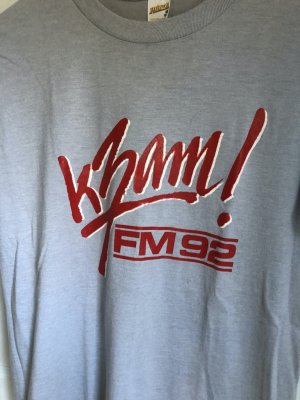
Other Seattle examples (and perhaps closer to the definition of Chicken Rock) was KZAM-FM 92.5. In the 1970s and 1980s, it was an anomaly in Seattle. Even back then, Seattle was developing a strong lean towards Heavy Metal and KISW (which helped usher it in) and KZOK at that time both had about 30-40% Metal in their playlists. KZAM-FM had absolute ZERO metal.

KZAM-FM's early '80s rock format sounded like something you'd hear in Denver or Minneapolis. Not Seattle. It was rock with few edges (Pat Benatar was played on KZAM, Judas Priest was not.) Heavy on classics from the 1970s and late 1960s with stuff like Bonnie Raitt, Jackson Browne, Bob Seger ("We've Got Tonight" Yay, "Her Strut" Nay.) Not a note of New Wave either (at a time when even KISW was playing Missing Persons) KZAM had an AM sister that played "The Rock of The '80s" before that format was flipped to Jazz in 1982. But that music never made it to KZAM-FM. KZAM-FM became AC KLSY in 1983.

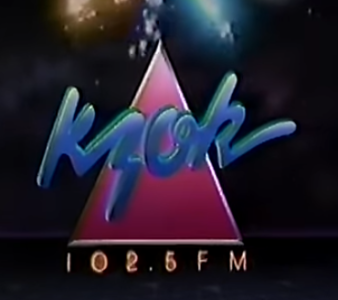
But the epitome of Chicken Rock in Seattle was KZOK's "Quality Rock" fiasco in 1985. They removed all the Heavy Metal from the playlist (to the uproar of thousands of listeners), and put in stuff like James Taylor, Carly Simon. KZOK's Quality Rock was just KZAM reborn. They even had similarly stylized logos.

il__byxdcypq6_fullxfull.2681200923_71ql.jpg
(Above) KZAM-FM, early 1980s. (Below) KZOK, 1985-86

Screenshot 2024-03-29 013611.png

"Quality Rock" was such an unmitigated disaster, by Summer 1986. They started dumping the soft music and oddball pop cuts from Eurythmics ("Missionary Man") and Sade ("Never As Good As The First Time") and playing what would become known as Classic Rock. In the TV spots promoting the change, KZOK stopped mentioning their own call letters, referring to themselves in TV spots as "102.5 FM". After a bumpy first year, KZOK reestablished themselves as the Classic Rocker of Seattle. And nothing like Quality/Chicken Rock was ever tried in Seattle ever again. Every mainstream rock station here that has come and gone/still here understands you can't fight the Heavy Metal angle in Seattle no matter how hard you try.
 
The last days of KOL 1300 Seattle might be considered Chicken Rock. KOL was once a powerhouse Top 40 in a legendary fight with dominating rival KJR in the 1970s. After KOL AM-FM were sold, they really watered down KOL's Top 40 format from what it was back then. I think it was automated too. (I was 5-6 then and 50 years removed, memories get fuzzy. But I know I never heard Bachman-Turner Overdrive on KOL. I did on KJR and KING. But not KOL. KOL gave up the ghost and became the original Country KMPS in 1975.

Other Seattle examples (and perhaps closer to the definition of Chicken Rock) was KZAM-FM 92.5. In the 1970s and 1980s, it was an anomaly in Seattle. Even back then, Seattle was developing a strong lean towards Heavy Metal and KISW (which helped usher it in) and KZOK at that time both had about 30-40% Metal in their playlists. KZAM-FM had absolute ZERO metal.

KZAM-FM's early '80s rock format sounded like something you'd hear in Denver or Minneapolis. Not Seattle. It was rock with few edges (Pat Benatar was played on KZAM, Judas Priest was not.) Heavy on classics from the 1970s and late 1960s with stuff like Bonnie Raitt, Jackson Browne, Bob Seger ("We've Got Tonight" Yay, "Her Strut" Nay.) Not a note of New Wave either (at a time when even KISW was playing Missing Persons) KZAM had an AM sister that played "The Rock of The '80s" before that format was flipped to Jazz in 1982. But that music never made it to KZAM-FM. KZAM-FM became AC KLSY in 1983.

But the epitome of Chicken Rock in Seattle was KZOK's "Quality Rock" fiasco in 1985. They removed all the Heavy Metal from the playlist (to the uproar of thousands of listeners), and put in stuff like James Taylor, Carly Simon. KZOK's Quality Rock was just KZAM reborn. They even had similarly stylized logos.

View attachment 6801
(Above) KZAM-FM, early 1980s. (Below) KZOK, 1985-86

View attachment 6802

"Quality Rock" was such an unmitigated disaster, by Summer 1986. They started dumping the soft music and oddball pop cuts from Eurythmics ("Missionary Man") and Sade ("Never As Good As The First Time") and playing what would become known as Classic Rock. In the TV spots promoting the change, KZOK stopped mentioning their own call letters, referring to themselves in TV spots as "102.5 FM". After a bumpy first year, KZOK reestablished themselves as the Classic Rocker of Seattle. And nothing like Quality/Chicken Rock was ever tried in Seattle ever again. Every mainstream rock station here that has come and gone/still here understands you can't fight the Heavy Metal angle in Seattle no matter how hard you try.


"Quality Rock" was a short-lived national thing, a phrase first uttered by Lee Abrams at the January, 1984 Superstars convention in San Francisco. A week later, Lee gave an interview to R&R and explained what that was and why his stations were doing it:


By the '85 convention, the phrase was nowhere to be found:


Imitators who'd jumped on what they thought was a "Quality Rock" bandwagon started picking up the tempo and calling it "Quality Rock and Roll" before dumping the word "Quality" altogether.


By '86, the "Quality Rock" phrase was pretty much the domain of soft AOR stations, which lured KNX-FM in L.A. back into the format after KKHR cratered. And that really didn't work, either.
 
The last days of KOL 1300 Seattle might be considered Chicken Rock. KOL was once a powerhouse Top 40 in a legendary fight with dominating rival KJR in the 1970s. After KOL AM-FM were sold, they really watered down KOL's Top 40 format from what it was back then. I think it was automated too. (I was 5-6 then and 50 years removed, memories get fuzzy. But I know I never heard Bachman-Turner Overdrive on KOL. I did on KJR and KING. But not KOL. KOL gave up the ghost and became the original Country KMPS in 1975.

Other Seattle examples (and perhaps closer to the definition of Chicken Rock) was KZAM-FM 92.5. In the 1970s and 1980s, it was an anomaly in Seattle. Even back then, Seattle was developing a strong lean towards Heavy Metal and KISW (which helped usher it in) and KZOK at that time both had about 30-40% Metal in their playlists. KZAM-FM had absolute ZERO metal.
I lived in Seattle for a couple years in the mid 70s. During my time there I would have classified KING as chicken rock. They had a more adult presentation (with the exception of night jock Andy Barber, who I don't recall being there very long) than either KJR or KTAC, and they seemed to avoid the edgier music too. When I revisited the city on a business trip in the late 70s ISTR them being full-on AC.
As far as KZAM, I'd consider what they were doing in 1976 as an early form of AAA...kind of a soft AOR leaning towards kind of obscure stuff. I would not consider them chicken rock. At the time the AM & FM were simulcast, their legal ID wasn't quite kosher, IIRC it was "KZAM & FM Bellevue" (I think that was their CoL).

I don't recall Seattle being a particularly "rock" town when I lived there.

By '86, the "Quality Rock" phrase was pretty much the domain of soft AOR stations, which lured KNX-FM in L.A. back into the format after KKHR cratered. And that really didn't work, either.
Yeah, Boston sister station WHTT tried the same "quality rock" thing in 1986, didn't realize that was a corporate move. There were 4 CHRs in Boston at the time (with Kiss 108 beating the other 3 combined), so I just figured it was related to that. Didn't work any better in Boston than it did in LA, and in less than a year they were oldies. IIRC they used some lame positioning statement like "music too good to be on the radio" or something like that.
 
Outside of the industry, who even knew the term existed?
Take it from the listener's perspective. That person thought in more direct terms: either it was "my station" or "not my station." If they heard "I've Got a Name" alongside "Reelin' in the Years" and "Keep on Truckin'," it might well have been what the listener concluded was "my station." However, if the competition down the dial played "I've Got a Name" alongside "One Less Bell to Answer" and "Dreams of an Everyday Housewife," that listener could easily determine that it was "not my station."
 
Take it from the listener's perspective. That person thought in more direct terms: either it was "my station" or "not my station." If they heard "I've Got a Name" alongside "Reelin' in the Years" and "Keep on Truckin'," it might well have been what the listener concluded was "my station." However, if the competition down the dial played "I've Got a Name" alongside "One Less Bell to Answer" and "Dreams of an Everyday Housewife," that listener could easily determine that it was "not my station."

You are correct, the format was very female targeted Post high school females who listened to top 40 in high school in the 1950s and 60s were the P1. The first station could have been top forty, the second one was aimed at females and could considered Chicken Rock. The were not a lot of oldies stations back then.

I didn't realize folks would get uptight about format "purity". There were stations that wobbled "off format musically". An example WFLI in Chattanooga was a often weeks or a month ahead of playing non Motown soul songs (Spinners Al Green etc) before they gained traction on the top 40 charts. If you played a lot of Southern Rock like the old AOR WKDA FM did, was that Country like their sister WKDA AM was at that time.

IMHO: Chicken Rock was a bridge that a lot of AM stations crossed on their way to AC, Full service AM or Talk. The term Adult Contempary was not in wide use then and MOR was usually a lot older crowd.

BTW I doubt the sales folks ever used the term Chicken Rock when talking to Clients.
 
Status
This thread has been closed due to inactivity. You can create a new thread to discuss this topic.


Back
Top Bottom