• Get involved.
    We want your input!
    Apply for Membership and join the conversations about everything related to broadcasting.

    After we receive your registration, a moderator will review it. After your registration is approved, you will be permitted to post.
    If you use a disposable or false email address, your registration will be rejected.

    After your membership is approved, please take a minute to tell us a little bit about yourself.
    https://www.radiodiscussions.com/forums/introduce-yourself.1088/

    Thanks in advance and have fun!
    RadioDiscussions Administrators

WLW 500 kW Directional vs. 50 kW Nondirectional 5 mV/m and 1 mV/m 50% Skywave Map

Compared to the boundary of the city of Cincinnati?
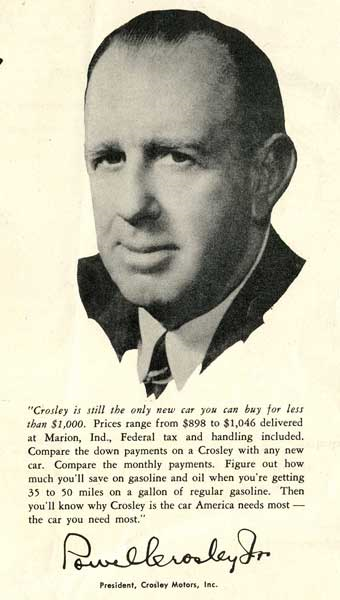
WLW was a very early station and "got there first"... like a number of early "bigger" stations they were financed by radio manufacturers. In WLW's case, it was Crosley as Powel Crosley was based in Cincy.

 
I get your point The BigA. Everyplace was smaller back then. Perhaps at that time DC radio might not have had a sponsor i.e. owner with big money and desire to have a huge signal, or motivated engineers who built the gear. Times change, look what reality of DTV did to the TV station that was on Mt. Washington in New Hampshire.

Who knows what it must have been like for broadcasters in DC back then. I've read that DC was unbearable in summer prior to widespread air conditioning.
 
Those low frequency AMs were arguably better than WTOP 1500. believe they were well protected III-As, close to 2.5 mV/m NIF, and plus they had better groundwaves than WTOP.

The District Of Columbia was originally 100 square miles, 10 miles X 10 miles. The part South of the River was split off later to Virginia.
 
It could be much worse. You could be KTMZ (AM) 1220 Pomona, CA 250 watts three tower DA. Unexpected comment from a tower climber "that thing is about as close to being off the air as you can be"
 
I get your point The BigA. Everyplace was smaller back then. Perhaps at that time DC radio might not have had a sponsor i.e. owner with big money and desire to have a huge signal, or motivated engineers who built the gear. Times change, look what reality of DTV did to the TV station that was on Mt. Washington in New Hampshire.

Who knows what it must have been like for broadcasters in DC back then. I've read that DC was unbearable in summer prior to widespread air conditioning.
Today, Washington is unbearable... with no modifiers.
 
WLW was a very early station and "got there first"... like a number of early "bigger" stations they were financed by radio manufacturers. In WLW's case, it was Crosley as Powel Crosley was based in Cincy.

I know the story well, and I know that by that time RCA was becoming more interested in TV. It's interesting though how decisions made 80 years ago still have repercussions today, even after years of changes to the rules. Had radio not experienced a revival in the late 50s and 60s, and then the growth of FM in the 70s, I wonder where we'd be.

We continually hear the complaints from media rights activists about these big corporations, and how they control what we hear and see, and that story plays out in 1934.
I get your point The BigA. Everyplace was smaller back then. Perhaps at that time DC radio might not have had a sponsor i.e. owner with big money and desire to have a huge signal, or motivated engineers who built the gear.

I agree, consider that LA and Dallas were not as big as San Francisco or Boston. So size matters, even in 1934, and money matters as well. Because the US government decided in 1920 that it wasn't going to build the broadcasting system in this country. That it would leave it to the marketplace and to corporate leaders to make those decisions. A "public-private partnership." And all that brings us to where we are today, with people complaining about the power of "big tech" and "corporate powers."
 
Because the US government decided in 1920 that it wasn't going to build the broadcasting system in this country. That it would leave it to the marketplace and to corporate leaders to make those decisions. A "public-private partnership." And all that brings us to where we are today, with people complaining about the power of "big tech" and "corporate powers."
And that is what happened in nearly every nation in the Western Hemisphere except for some of those that were total French or British colonies like Jamaica, Monseratte, French Guayana, British Honduras and Guadelupe. Practically everywhere else, from Argentina to Canada had a very open commercial / private system. And in many places, government voices like the CBC or "Radio Nacional" in places like Argentina, Peru, Chile, Guatemala, etc. did not come about until private commercial radio was way along.

While Mexico has some government operated stations, they have no national network or system like the CBC or PBS & its affiliates. Outside of Europe, and in many cases, the more totalitarian the government was at some point the stronger the national government controlled radio system is.
 
I know the story well, and I know that by that time RCA was becoming more interested in TV. It's interesting though how decisions made 80 years ago still have repercussions today, even after years of changes to the rules. Had radio not experienced a revival in the late 50s and 60s, and then the growth of FM in the 70s, I wonder where we'd be.
When Crosley first built WLW, and as he upped it to 50 kw, TV was only a dream. It was not on Sarnoff's mind to capitalize on TV until he saw that it might be practical and commercial.

While the new head of RCA, Sarnoff, bought Zworykin's theoretical TV project in 1929, it was not until almost exactly a decade later that the April 1939 experimental transmissions were begun. Crosley, on the other hand, had experimental stations in 1921, one of which would be the predecessor of WLW, licensed in March of 1921.

I have bios of both Crosley and Sarnoff at BOOKSHELF Biographies of inventors, innovators and stars of radio and TV
 
Last edited:
I got a 1940 era Farnsworth AM SW Console radio at an antique sale circa 2001. I wondered why it didn't have a Magic Eye Tube. I just discovered that Allen DuMont invented the Magic Eye Tube. So then I wondered if it was because there was some bad blood between Philo Farnsworth and Allen DuMont like with Sarnoff.
 
One thing I didn't understand is why Clint Eastwood left the door to his house open, knowing that the psycho fan girl could walk right in. Second, in general, I didn't understand why, for security reasons, they ever left the door open. And third, aren't there mosquitoes and flies in that canyon?
I didn't get where Clint's character could put on that 7 inch reel of tape, go home and rescue his girlfriend from the deranged fan, and get back before the end. I'm figuring a half hour playing time tops
 
Well, I see that WWRC 570 has a 9.8 mV/m NIF according to a recent application. So that's not exactly III-A quality, though not that bad by newer station standards.
 
If my recollection is correct, I saw an FM Exciter with a Magic Eye Tube. I was running a proof for the co-owned, co-located AM station. Station owner had lined interior of FM transmitter room with copper sheet. At that time my full time job was assistant engineer at a station that used Harris MS-15 exciter, so seeing this older FM transmitter and its tube filled exciter was interesting.
 
I didn't get where Clint's character could put on that 7 inch reel of tape, go home and rescue his girlfriend from the deranged fan, and get back before the end. I'm figuring a half hour playing time tops
Didn't some real life DJ, seems like it was a college radio station, put a tape like that on, go murder somebody, come back, and think he had a perfect alibi? Or was that a TV show or movie too? Could have been a Hallmark Murder Mystery, sounds exactly like one of their predictable plots.
 
Going back to the beginning of this discussion, A Class 1-A station was protected to its 0.1mv/m contour and because of a lack of man-made interference, you didn't need much signal to hear it. As late as the 70s, with a substantial antenna, I could hear WLW just fine at night in Portland Oregon and that's only 50KW. When I was a kid, I always heard about how radio signals used to be much better: Sometime in the 20s, KGW Portland did a test to see if you could hear them inside the Oregon Caves. That's probably 250 miles away, in a cave and they thought it would work, at 500 watts! This leads me to believe that there was no problem outside of the cave! With all of that in mind, imagine how well 500,000 watts could do!
 
Didn't some real life DJ, seems like it was a college radio station, put a tape like that on, go murder somebody, come back, and think he had a perfect alibi? Or was that a TV show or movie too? Could have been a Hallmark Murder Mystery, sounds exactly like one of their predictable plots.
It sounds like an episode of Columbo.
 
Back in the late 1920s, my father did a few on air live guitar band gigs at WREO (Ransom E. Olds owned it) in Lansing, which was 500 watts, on around 1300 kHz as I recall reading somewhere. The station was only on for a few years. They used to get mail from listeners in Montana, but not in caves.
 
I remembered reading this article about the development of Directional AM Broadcast Antennas (there's some interesting history in this read about WLW and WOR as well, inlcuding the coverage map that was posted initially in this discussion). I remember being surprised at the reason the first directional antenna was called for in the first place: A station in Milwaukee, WI was complaining of interference...From a station in Tampa/St. Pete, Florida pumping out a whole 2 kW on 620 kHz. As someone else stated, a smaller station like that might interfere with a modern-day clear channel, but what would the chances be today of a 2kW signal transmitting from Tampa, causing serious interference in Milwaukee?

 
Last edited:
I remembered reading this article about the development of Directional AM Broadcast Antennas (there's some interesting bits in this read about WLW and WOR as well). I remember being surprised at the reason the first directional antenna was called for in the first place.. A station in Milwaukee, WI was complaining of interference...From a station in Tampa/St. Pete, Florida pumping out a whole 2 kW on 620 kHz. As someone else stated, a smaller station like that might interfere with a modern-day clear channel, but what would the chances be today of anyone coming close to detecting a 2kW signal in Milwaukee, transmitting from Tampa?

Remember that in the early 30's there were very few stations, and WTMJ was a big network affiliate for much of eastern Wisconson, from Green Bay to the outskirts of Chicago. A 2 kw non-directional station from Tampa can very easily interfere in the fringe areas of WTMJ if it is non-directional many, many nights of the year.

No, it would not interfere in downtown Milwaukee. But in Sheboygan or Kenosha or Fond du Lac it could and would. And in those days, the prime time for radio was evenings, making interference in the fringe areas very important.
 
Last edited:
At that time could WLW get to Hawaii?
It still does with "just" 50 kw for DXers. It is heard in Europe, and frequently reported in New Zealand and Australia. I used to hear it fairly regularly in Quito, Ecuador, too.

But back in the 30's, there were far fewer stations world wide, and WLW could be heard just about everywhere with a decent radio (and patience for good conditions).
 
Last edited:
Status
This thread has been closed due to inactivity. You can create a new thread to discuss this topic.


Back
Top Bottom