Based on the description in the first post, it sounds just like a station where I worked and being sold out to a religious broadcaster is what happened (not long after I moved on). The same thing happened to other stations in the region that match the description. Now all they do it take religious programs off a satellite.Religious broadcasters don't generally buy "small town stations" as the heading of this thread indicates. Unless there is a local church that can afford a station and all its expenses, this is not an option.

-
Get involved.
We want your input!
Apply for Membership and join the conversations about everything related to broadcasting.
After we receive your registration, a moderator will review it. After your registration is approved, you will be permitted to post.
If you use a disposable or false email address, your registration will be rejected.
After your membership is approved, please take a minute to tell us a little bit about yourself.
https://www.radiodiscussions.com/forums/introduce-yourself.1088/
Thanks in advance and have fun!
RadioDiscussions Administrators
You are using an out of date browser. It may not display this or other websites correctly.
You should upgrade or use an alternative browser.
You should upgrade or use an alternative browser.
You've got a small town station — how do you compete in the 21st century?
- Thread starter tomservo
- Start date

Steve Bridges has said on air that was the same thing he had to show the FCC when he bought KCJJ in 1994.In 1974 (the only time I was involved in a start-up) it was three years' operating capital.

Thank you so much to everyone who has responded so far! This has been one of the most educational threads I've read on this site in a while. I really appreciate everyone giving their feedback and appreciate everyone sharing their knowledge. I did try to keep the initial question as open-ended as possible — while still keeping specifically to Alabama — to generate a broad array of responses.
Michael, you offered a ton of useful advice, but I want to focus on these three questions. I'd say, in a typical smaller Alabama town, the station is either going to be voicetracked or a music jukebox, but also with a reasonable local spot load. There is definitely room for improvement in both the programming (lack of locality) and in the transmitter plant itself. That seems to be all too sadly common outside of our major metros. Stations that are more or less afloat but doing so on borrowed time with some maintenance being neglected.
For the sake of argument, let's say this is not a viable option because it's an area that's already saturated with a mix of noncommercial religious broadcasters, on both AM and FM, some locally licensed and some not, but all satellite-fed and not local. This is extremely common everywhere in the state already.
Doing all that work, do you think the station would have seen even a fraction of its success if it lacked the FM translator? I hear a lot of radio people say that "people will listen if the content is compelling, even on AM" but I am not sure that's true anymore outside of a few high powered big city stations.
Any particular reason why you'd pass on an AM with translator? I know plant maintenance for a directional array is insane and the people with the knowledge to keep them running well are few and far between, but the majority of small town AMs with translators are pretty simple setups with one tower and the translator on said tower.
As a lifelong scanner enthusiast I can certainly relate to this, but luckily, at least in Alabama, many of the smaller town public safety offices are still unencrypted. They're just scattered out on multiple digital systems that may require an expensive scanner to monitor. Just where I live we have a P25 phase 2 trunked system, a NXDN trunked system and several standalone P25 phase 1, DMR and a few analog holdouts. It's a mess.
It's also been my experience that outside of bigger cities, police don't even really post anything online at all about crime statistics or incidents. Small town police Facebook pages tend to be hit and miss for content, the same as small town radio station Facebook pages. I know far too many of each that are just "one post every 6 months with 1 like", showing a total lack of engagement or effort.
I'm not one to yuck anyone else's yum, but the sheer number of religious broadcasters in Alabama who just pull programs off the net or satellite is disheartening. Now, granted I live in a larger metro area, but there's only one locally owned/operated/programmed religious station in this entire area. Two if you're willing to count a far-far-far rimshot from outside the DMA. Even the LPFMs owned by churches have zero local programming. The simple opportunity of broadcasting their own services live? Nope, too much work I guess.
But for the purposes of this discussion we'll say that all the religious bases are covered so selling or doing that format aren't an option.
My first question is "What are they doing now and how well does that work?"
Second question: Is there room for improvement, and if so, given the state of local radio, the listener and advertiser base in the town, the condition of the facility and other listening options, is it likely to attain that improvement?
Third question: How much will it cost to attain that improvement? Equipment, repairs, promotion?
Michael, you offered a ton of useful advice, but I want to focus on these three questions. I'd say, in a typical smaller Alabama town, the station is either going to be voicetracked or a music jukebox, but also with a reasonable local spot load. There is definitely room for improvement in both the programming (lack of locality) and in the transmitter plant itself. That seems to be all too sadly common outside of our major metros. Stations that are more or less afloat but doing so on borrowed time with some maintenance being neglected.
Find some religious broadcaster. You can probably sell the station for more than it's worth.
For the sake of argument, let's say this is not a viable option because it's an area that's already saturated with a mix of noncommercial religious broadcasters, on both AM and FM, some locally licensed and some not, but all satellite-fed and not local. This is extremely common everywhere in the state already.
I work for a station that was insignificant 15 years ago and high on the AM dial. With a translator, the station is consistently #1 by a longshot. In my years here, 1 in 8 listen and an average 1/3rd of radio listeners. We're ultra local. Local news, weather, high school sports. If some event happens, we're there. Totally voice-tracked. I was told by KOTO in Telluride, Colorado when they were a 10 watt FM the plan was to involve someone in every home with the station. The idea was if they could reach one person, they had a household that was aware of KOTO and likely listened. To bolster that, they placed fish bowls at store counters for customers to give their change to KOTO because it produced money and the station logo was seen everywhere in town.
Warning: My owner told me he went 5 years without a paycheck building the station to the point he could get a paycheck from the station.
Doing all that work, do you think the station would have seen even a fraction of its success if it lacked the FM translator? I hear a lot of radio people say that "people will listen if the content is compelling, even on AM" but I am not sure that's true anymore outside of a few high powered big city stations.
I'd only accept it if it was an FM station. If it were an AM station, even with a translator in a smaller town, I wouldn't. I'd also get to know the local emergency services chiefs or community liason officers (not every police department has one but they're becoming more popular), so you could possibly get more info than what's in dispatch reports if there's a fire, robbery, etc.
Any particular reason why you'd pass on an AM with translator? I know plant maintenance for a directional array is insane and the people with the knowledge to keep them running well are few and far between, but the majority of small town AMs with translators are pretty simple setups with one tower and the translator on said tower.
Unfortunately some emergency services departments have gone to encrypted communications and have changed their public facing websites with reports that just give the bare bones information of where a call was dispatched and a few words for the reasons, knowing local news has been so hollowed out that nobody is going to bother trying to sue the city to get access to the full written emergency dispatch reports, so their attitude seems to be, "you get what you get and kick rocks if you don't like it".
As a lifelong scanner enthusiast I can certainly relate to this, but luckily, at least in Alabama, many of the smaller town public safety offices are still unencrypted. They're just scattered out on multiple digital systems that may require an expensive scanner to monitor. Just where I live we have a P25 phase 2 trunked system, a NXDN trunked system and several standalone P25 phase 1, DMR and a few analog holdouts. It's a mess.
It's also been my experience that outside of bigger cities, police don't even really post anything online at all about crime statistics or incidents. Small town police Facebook pages tend to be hit and miss for content, the same as small town radio station Facebook pages. I know far too many of each that are just "one post every 6 months with 1 like", showing a total lack of engagement or effort.
Based on the description in the first post, it sounds just like a station where I worked and being sold out to a religious broadcaster is what happened (not long after I moved on). The same thing happened to other stations in the region that match the description. Now all they do it take religious programs off a satellite.
I'm not one to yuck anyone else's yum, but the sheer number of religious broadcasters in Alabama who just pull programs off the net or satellite is disheartening. Now, granted I live in a larger metro area, but there's only one locally owned/operated/programmed religious station in this entire area. Two if you're willing to count a far-far-far rimshot from outside the DMA. Even the LPFMs owned by churches have zero local programming. The simple opportunity of broadcasting their own services live? Nope, too much work I guess.
But for the purposes of this discussion we'll say that all the religious bases are covered so selling or doing that format aren't an option.
That station you mention did not get a translator until after it was number 1 in the county for about 5 years with no FM translator. Go back 5 years, now closer to 6. So even in today's climate for AM radio it is possible but extremely rare. And yes, it is voice-tracked...was then and is now.
Because the FM translator might not cover the whole area well enough & would be up against stronger signaled FM stations. Plus the expense of running the AM side for whatever listeners it had, would mean the FM wouldn’t be that much of a help.Any particular reason why you'd pass on an AM with translator? I know plant maintenance for a directional array is insane and the people with the knowledge to keep them running well are few and far between, but the majority of small town AMs with translators are pretty simple setups with one tower and the translator on said tower.
An example is KPRT. It’s a heritage AM with a translator and still doesn’t register much in the ratings. Though KC isn’t a small market, the stuff I mentioned still applies to it.
Small town radio is really interesting to me. I grew up listening to small town radio, worked in small town radio, and hope to see it remain viable.
If you're looking to buy, the most important question is how many high dollar, stable advertisers does the station have, and what are the prospects for adding more?
One of the problems with doing business in small towns is not only that the total market is smaller, but many businesses have local monopolies and don't feel much urge to advertise. If there's only one place to buy a refrigerator or a dining room suite within 20 miles, how do you convince those companies to advertise? If the station already has these kinds of businesses on, don't mess with a good thing! And if not, try to understand why. It could be as simple as the existing owner had trouble keeping enough good salespeople to properly prospect, or a personal tiff between the outgoing radio owner and the shopkeeper.
As far as programming goes, the format would depend on the local competitive scene. I would probably aim for AC or hot country unless that was precluded by competition. I'd like to avoid trade ads as much as possible, so that means formats in a box with their 3minutes per hour are out. I'd have voice trackers whenever the budget would allow.
If you're looking to buy, the most important question is how many high dollar, stable advertisers does the station have, and what are the prospects for adding more?
One of the problems with doing business in small towns is not only that the total market is smaller, but many businesses have local monopolies and don't feel much urge to advertise. If there's only one place to buy a refrigerator or a dining room suite within 20 miles, how do you convince those companies to advertise? If the station already has these kinds of businesses on, don't mess with a good thing! And if not, try to understand why. It could be as simple as the existing owner had trouble keeping enough good salespeople to properly prospect, or a personal tiff between the outgoing radio owner and the shopkeeper.
As far as programming goes, the format would depend on the local competitive scene. I would probably aim for AC or hot country unless that was precluded by competition. I'd like to avoid trade ads as much as possible, so that means formats in a box with their 3minutes per hour are out. I'd have voice trackers whenever the budget would allow.

Michael, you offered a ton of useful advice, but I want to focus on these three questions. I'd say, in a typical smaller Alabama town, the station is either going to be voicetracked or a music jukebox, but also with a reasonable local spot load. There is definitely room for improvement in both the programming (lack of locality) and in the transmitter plant itself. That seems to be all too sadly common outside of our major metros. Stations that are more or less afloat but doing so on borrowed time with some maintenance being neglected.
Okay.
First, everything I wrote stands. Unless the station is making a profit and the audience knows and loves the station, there's work to do.
Do not make any assumptions about format. No offense to the people who've suggested formats, but until you do that research you have no clue what the target audience currently listens to and if they love it, like it, or are tolerating it because they can't find what they really like anywhere. If that last is the case and you miss it, you've missed the opportunity entirely.
If---and I know it's a BIG if----but if you can figure out a way to be live in at least one daypart---and I'd suggest morning drive---do it. If that means you do mornings, if that means your one sales guy does mornings---make that happen.
In a small town, as someone pointed out here, stuff like school and road closings, school lunch menus, etc---are important. And by having a live human walking them through the first three hours of the day with that information, you're connecting with them on a common interest. Same with the PSA for the school play.
This is the stuff that you absolutely can't do in a major or even medium market these days. Jukebox it for the other 21 hours of the day and over the weekend if you have to, but a warm personality (not the same as a warm body) who not only knows the town, but the people----who was AT the school basketball game the night before and can talk about how good the players were (by name) and how tasty the popcorn was is a way of making the station and the community bond.
Last edited:
Cold Coffee
Banned
A small town FM that I built in a resort town 36 years ago is still in the family and profitable. My nieces who run it broadcast just about every community event. They even create community events. They've won awards from the state broadcasters association.
I have started several new radio stations over the years. None of them went dark. Keep in mind that I checked out those towns before I petitioned the FCC to allot the channels.
I would be reluctant to start a new radio station in 2025.
I have started several new radio stations over the years. None of them went dark. Keep in mind that I checked out those towns before I petitioned the FCC to allot the channels.
I would be reluctant to start a new radio station in 2025.
I think there are good reasons you just don't see some young couple who can't wait to buy the local radio station. There are a million more attractive businesses with better ROI and much less headachesA small town FM that I built in a resort town 36 years ago is still in the family and profitable. My nieces who run it broadcast just about every community event. They even create community events. They've won awards from the state broadcasters association.
I have started several new radio stations over the years. None of them went dark. Keep in mind that I checked out those towns before I petitioned the FCC to allot the channels.
I would be reluctant to start a new radio station in 2025.
I think there are good reasons you just don't see some young couple who can't wait to buy the local radio station. There are a million more attractive businesses with better ROI and much less headaches
Classic example---the town where I grew up and started my career, Bishop, California. Population 3,700. For the county, 18,500, spread over more than 10,000 square miles.
An AM-FM combo (KBOV/KIBS) sold to a young couple in 2004. They paid $965,000.
They sold it last year---for $550,000.
When I have time I need to look up the history of WNKS, a longtime Top 40 in Charlotte NC. That station went through some bad years, and every time it was sold until the Top 40 format began in the mid-90s, the price was lower.Classic example---the town where I grew up and started my career, Bishop, California. Population 3,700. For the county, 18,500, spread over more than 10,000 square miles.
An AM-FM combo (KBOV/KIBS) sold to a young couple in 2004. They paid $965,000.
They sold it last year---for $550,000.
In my area in 2014, a 1000-watt AM with no translator yet and a standards format sold for $600,000. The man who sold it still runs it, but he has been quite successful, even if he relied primarily on satellite music. A year after the sale it switched to Good Time Oldies (60s and 70s) but recently it started playing 70s and 80s and I've quit listening. The station has used the translator frequency since the translator was added and hardly mentions the AM frequency.
Great observations! A good example would be the BCI-owned stations outside of Pittsburgh (WKHB, WKFB, WEDO, etc)It really, really, REALLY depends on the town.
You'll find it much harder to build a culture of "local" radio listening/media consumption/advertising sales in places that have lost their own sense of localism or never had one in the first place.
If it's a Sunbelt community that's relatively new and young and full of chain stores and transplants from somewhere else who have only arrived in the last few years, what sort of community are you going to be able to build around your radio station?
Compare that to a community that might be the same size on paper, but with residents who are less transient, more interested in local news and politics and more likely to have local businesses still chugging along in their town. Maybe it's a place where the local newspaper folded not long ago or was hollowed out by a chain like Lee or Gannett.
Places like the second one may not seem as shiny or glamorous, but they have enough "there" there so that a savvy operator who can work relatively inexpensively can still come in and get a few good years out of doing local sports and news, especially if they can get a digital "newspaper" up and running in tandem with radio.
Music format? That's just about the LAST thing I'd be thinking about at this point, because it's not what's going to make your radio station uniquely valuable when the locals can already stream and listen to big city radio just like everyone else.
The music is what will fill the holes around your unique local content, assuming you can can come up with THAT. If your market skews older, do the classic hits or classic country that the big city might not touch because of sales demos. If you're somewhere with a unique local music flavor (beach oldies in the Carolinas or bluegrass in the hills or red dirt country in Texas), sure, lean that way.
But I stand by my premise that it's really what's surrounding the music that will make your hypothetical station succeed or fail.
They appear to be doing decently (so far as I know, I haven't seen their books) by catering to a local Yinzer audience.
As you know the Pittsburgh area has a very strong sense of local identity that is lacking in some of the sunbelt locations you mentioned.
You cater to that with local playlist oldies, polkas and ethnic shows, brokered hosts with a local flair, etc. Also the Pittsburgh area skews to an older
demographic which, although advertisers HATE that, they are the people most likely to tune into terrestrial AM radio.
The tough part is finding enough local merchants who have faith in your ability to increase their sales that they are willing to pay for spots.
That's tough. They have a lot of other options out there. I know a guy who quit a job in sales because he was experiencing guilt pangs over taking money from small business owners when he wasn't really sure that their sales were going to benefit.

My suspicion is that when it comes to small town radio, the music format can't make the station, but the wrong music format can be a guaranteed killer.Do not make any assumptions about format. No offense to the people who've suggested formats, but until you do that research you have no clue what the target audience currently listens to and if they love it, like it, or are tolerating it because they can't find what they really like anywhere. If that last is the case and you miss it, you've missed the opportunity entirely.
35 years ago, I listened to a small town station that carried an automated adult Top 40 format, but their automation gear needed to be replaced and so they went the cheap route and switched to a then-available satellite-delivered Top 40 format (SMN's "The Heat"). The change did not go down well, and the station in short order became known as that "rap" station -- not a particularly accurate assessment of the music they played, but that hardly matters. Local advertisers did not want to be associated with the music the station played and the station had trouble selling advertising. Needless to say, that format did not last long. The problem was that the satellite format proved to be polarizing in their local market, at least for advertisers -- and that made it a no go.
A lot has changed in 35 years, but I suspect that the basic lesson still applies -- whatever the music is that goes between the local content, it needs to be a type of music that is widely palatable to both listeners and prospective advertisers. In many small markets, that means it is going to be some form of country or adult contemporary music, or maybe classic rock or classic hits. Why? Because those are formats that local advertisers generally are comfortable being associated with.

ive actually been in this situation, in a way. a little under a decade ago, i was recruited by a company who knew me and they wanted me to run a station cluster for them that they were buying, with them knowing the stations needed modernization and updating.
this was a market i knew pretty well already, did i did alot of studying of the stations in questions and nearby stations. knowing what i knew about sales, demographics and what this station cluster wasnt doing, i spent a week writing up a 4-5 page plan for the stations.....details on format flips and or modifications i was reccomending along with jock schedules, service elements.. what was being done that needed to be eliminated, paired back or kept but modified.
i also spent 2 weeks in the community unbeknownst to anyone else listening to the stations and their competition... and i identified several weak points with the competition and knew our company could exploit this weak points and make them our strong points.
this sale didnt end up closing but it was a real learning expierience for me, only one or two other people on this board know which group im referring to
And what i did there would transfer to the OP's question with a little modification.
id go to the market. spend 2 weeks to a month listening to the station that had fallen into my lap, listen to its competitors.. find out what my station was doing right, find out what my compeitors weak points work and make those my strong points.
thats the way it goes for the standalone i do work for in WY. single fm standalone thats locally owned in a cluster universe... 3 owned by a lawyer, 2 owned by a big company........ there are things those 2 can do better than we can... one company can offer better rates and multiple demographics with 3 stations... another is much better with news and digital. we dont try and compete where we can win...... even with a live morning show 5 days a week (tracked on saturdays) and 2 out of market talent, we still beat the pants off them in localism in so many ways and smash them in TSL
Its knowing/understanding your market, knowing what your competitors do, dont do and what you can do better then them. In WY, our competitors are predictable so we work to that advantage, cuse in certain cases.. we know exactly what theyre goign to do
this was a market i knew pretty well already, did i did alot of studying of the stations in questions and nearby stations. knowing what i knew about sales, demographics and what this station cluster wasnt doing, i spent a week writing up a 4-5 page plan for the stations.....details on format flips and or modifications i was reccomending along with jock schedules, service elements.. what was being done that needed to be eliminated, paired back or kept but modified.
i also spent 2 weeks in the community unbeknownst to anyone else listening to the stations and their competition... and i identified several weak points with the competition and knew our company could exploit this weak points and make them our strong points.
this sale didnt end up closing but it was a real learning expierience for me, only one or two other people on this board know which group im referring to
And what i did there would transfer to the OP's question with a little modification.
id go to the market. spend 2 weeks to a month listening to the station that had fallen into my lap, listen to its competitors.. find out what my station was doing right, find out what my compeitors weak points work and make those my strong points.
thats the way it goes for the standalone i do work for in WY. single fm standalone thats locally owned in a cluster universe... 3 owned by a lawyer, 2 owned by a big company........ there are things those 2 can do better than we can... one company can offer better rates and multiple demographics with 3 stations... another is much better with news and digital. we dont try and compete where we can win...... even with a live morning show 5 days a week (tracked on saturdays) and 2 out of market talent, we still beat the pants off them in localism in so many ways and smash them in TSL
Its knowing/understanding your market, knowing what your competitors do, dont do and what you can do better then them. In WY, our competitors are predictable so we work to that advantage, cuse in certain cases.. we know exactly what theyre goign to do
Last edited:
My suspicion is that when it comes to small town radio, the music format can't make the station, but the wrong music format can be a guaranteed killer.
35 years ago, I listened to a small town station that carried an automated adult Top 40 format, but their automation gear needed to be replaced and so they went the cheap route and switched to a then-available satellite-delivered Top 40 format (SMN's "The Heat"). The change did not go down well, and the station in short order became known as that "rap" station -- not a particularly accurate assessment of the music they played, but that hardly matters. Local advertisers did not want to be associated with the music the station played and the station had trouble selling advertising. Needless to say, that format did not last long. The problem was that the satellite format proved to be polarizing in their local market, at least for advertisers -- and that made it a no go.
A lot has changed in 35 years, but I suspect that the basic lesson still applies -- whatever the music is that goes between the local content, it needs to be a type of music that is widely palatable to both listeners and prospective advertisers. In many small markets, that means it is going to be some form of country or adult contemporary music, or maybe classic rock or classic hits. Why? Because those are formats that local advertisers generally are comfortable being associated with.
I agree to a point.
Again, there's a unique opportunity here to talk to the town and find out what they want but can't get, or can't get enough of. You're right that odds are it will be country or AC---especially in that part of the country. But maybe not the type of country or AC that the nearest large market has.
I'm a West Coast kid, pulled out of L.A. at age nine and transplanted to a rural town of 3,000 people 270 miles away. Literally two different worlds---and that's in California. Alabama's gotta be another galaxy.
Without knowing specifics, it's hard to give good advice on the music.
About 15 years ago, a friend of my ex-wife moved to Mt. Airy, North Carolina---from Los Angeles(!). You know what she found and loved? WPAQ.
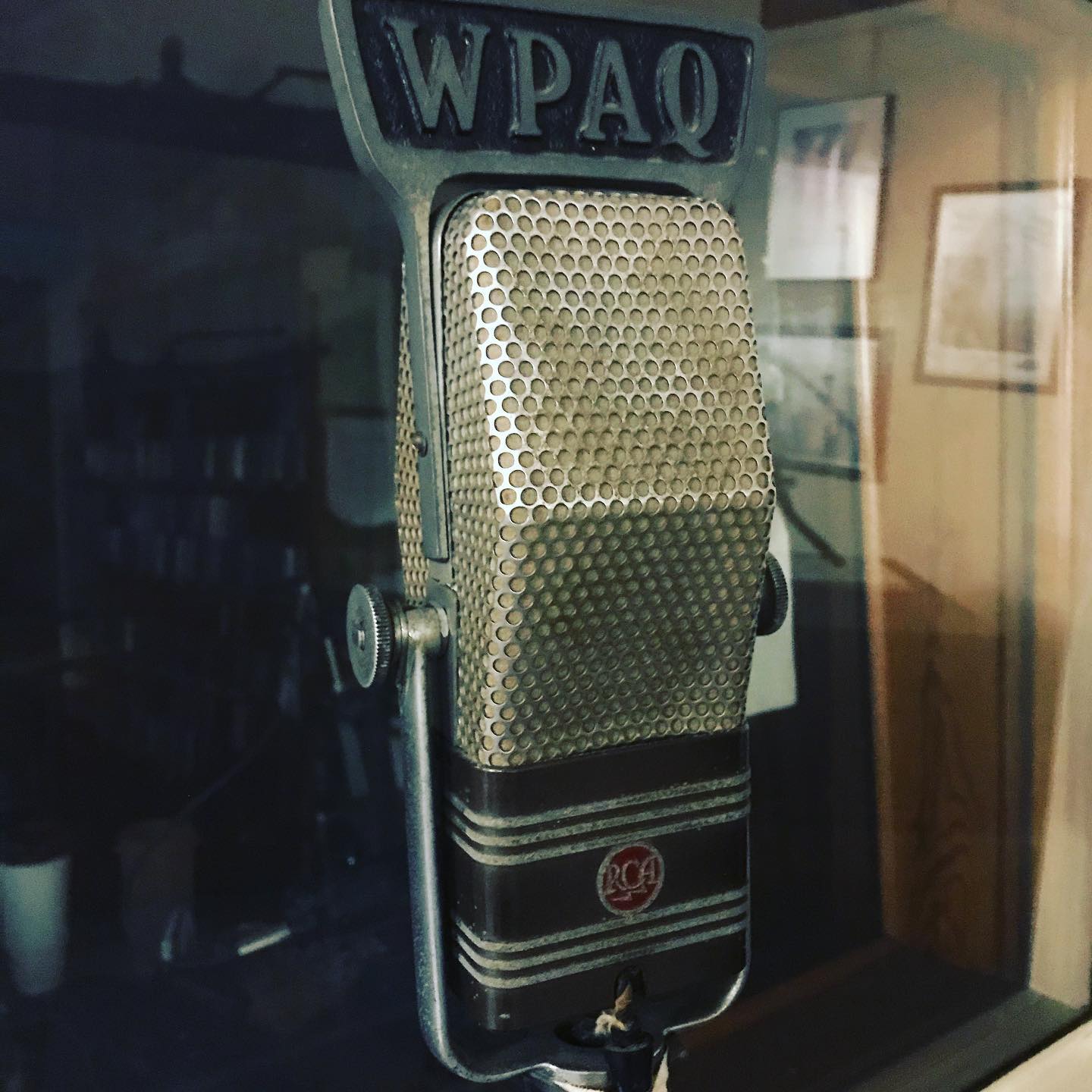
WPAQ 740 • Bluegrass, Old-Timey, and Gospel Radio Online
WPAQ can be heard on 740 AM and 106.7 FM. We play bluegrass, old time, gospel, and religious programs plus local live music on Saturday's Merry-Go-Round.
 www.wpaq740.com
They're 40 miles outside Winston-Salem-Greensboro (market #47). 10,000 people in Mt. Airy. And they've absolutely got a unique situation---a station stil in the same hands since 1948 that, by all appearances, is making it by being pretty much what they were in 1948.
A lack of debt service is certainly working in their favor---but the OP for this thread talks about the station "falling into your lap", so maybe that's the case here, too.
I'd amend my recommendations to add this: Find out if there was ever a time when the station was beloved in the town---considered an essential resource. Find out what they did, and see if there's a case for tying back into that identity. "W*** is back home again." "Come home to W***." "You can come home again. Set your radio to (frequency) W***."
Again, gotta go ask, though.
We had a station like this, in a satellite town of my local market. It started off as a general local AC station for the town, but then started trying to rimshot the larger market with indie and alternative music. They got a small but devoted following in the larger adjacent market - I was a fan myself - but the ratings in the place where they were actually in the book and trying to sell ads dropped like a stone, they stunk, down from a 4-5 share to <1.My suspicion is that when it comes to small town radio, the music format can't make the station, but the wrong music format can be a guaranteed killer.
The programming was great, if you were into that type of music it was a fantastic listen, they had knowledgeable presenters, a wide music selection, regular appearances from musicians, some of the talent involved went onto way bigger things in the format. But it didn't work in the market they were actually in, and they weren't commercial enough to figure out how to sell in the big city they were rimshotting, so eventually it failed, got sold, and flipped right back to what it was originally. It never really recovered, though - the listeners went elsewhere during the indie "experiment" and didn't come back.
We had a station like this, in a satellite town of my local market. It started off as a general local AC station for the town, but then started trying to rimshot the larger market with indie and alternative music. They got a small but devoted following in the larger adjacent market - I was a fan myself - but the ratings in the place where they were actually in the book and trying to sell ads dropped like a stone, they stunk, down from a 4-5 share to <1.
The programming was great, if you were into that type of music it was a fantastic listen, they had knowledgeable presenters, a wide music selection, regular appearances from musicians, some of the talent involved went onto way bigger things in the format. But it didn't work in the market they were actually in, and they weren't commercial enough to figure out how to sell in the big city they were rimshotting, so eventually it failed, got sold, and flipped right back to what it was originally. It never really recovered, though - the listeners went elsewhere during the indie "experiment" and didn't come back.
One more thing, and another reason why you need to ask the people in the town:
Nobody---NOBODY---in broadcasting for a living, or interested in broadcasting, thinks like the average person in a small town. Completely different mindset.
There is ZERO cool factor to what you do. You can be trusted, relied upon, respected. But nobody, and certainly not everybody is gonna say "oh wow" because you play x, y or z. "Bitchin' segue" is not in their vocabulary.
By all means, you should have the highest standards in terms of your technical sound and your on-air production, but you do that so nobody will notice anything bad, not because they'll marvel at how tight you are and how good the processing is.
Had a similar situation at a small town station I started in 1973. We started with what was then top forty, tie a yellow ribbon, some soul from Detroit but nothing hard or too up temple. Well, the merchants thought it was horrible " that rock and roll crap" and after two years we switched to beautiful music which was instrumental covers of top forty hits. The first six seven months the merchants lined up to sign up but then started dropping off saying, " Oh it's a great station and I love the music, I play it in the store and at home all the time but it doesn't seem to get customers in", " I GUESS RADIO JUST DOESN'T WORK ". After a year with country which again the merchants all through was great but didn't bring in business Nothing changed we didn't bill that much more or less during these times so I thought screw it and went CHR then we had a chance to host a Boy Band concert and every kid in town went. The next week merchants were climbing all over themselves to buy. They were all saying we had done a wonderful thing and proved we could move the merchandise. I never understood why getting kids out made the merchants think it would bring adults to their businesses but they did.My suspicion is that when it comes to small town radio, the music format can't make the station, but the wrong music format can be a guaranteed killer.
35 years ago, I listened to a small town station that carried an automated adult Top 40 format, but their automation gear needed to be replaced and so they went the cheap route and switched to a then-available satellite-delivered Top 40 format (SMN's "The Heat"). The change did not go down well, and the station in short order became known as that "rap" station -- not a particularly accurate assessment of the music they played, but that hardly matters. Local advertisers did not want to be associated with the music the station played and the station had trouble selling advertising. Needless to say, that format did not last long. The problem was that the satellite format proved to be polarizing in their local market, at least for advertisers -- and that made it a no go.
A lot has changed in 35 years, but I suspect that the basic lesson still applies -- whatever the music is that goes between the local content, it needs to be a type of music that is widely palatable to both listeners and prospective advertisers. In many small markets, that means it is going to be some form of country or adult contemporary music, or maybe classic rock or classic hits. Why? Because those are formats that local advertisers generally are comfortable being associated with.
If you're referring to the late, great 96.2 The Revolution, which I also loved, there may be a bit more nuance to that situation, imo.We had a station like this, in a satellite town of my local market. It started off as a general local AC station for the town, but then started trying to rimshot the larger market with indie and alternative music. They got a small but devoted following in the larger adjacent market - I was a fan myself - but the ratings in the place where they were actually in the book and trying to sell ads dropped like a stone, they stunk, down from a 4-5 share to <1.
Looking at the figures shown on the station's Wikipedia page, it appears they were doing decently (4.6 in the 2nd book of 2005, around a 5 share through 2006) and then plunged to 1.5 and 0.8 in 2007. So after the flip, it looks like they actually gained audience. I don't know what exact month in 2005 they changed format.
XFM in Manchester, the metro Rev (Oldham) was a rimshot for, signed on in March of 2006. So it appears the sign on of XFM was a huge blow to them. Then you had Rock Radio 106.1 sign on in May of 2008, so they got squeezed on both the indie and traditional rock sides, which would be a difficult scenario to continue in.
Now, they may well have been unable to monetize that 5 share to advertisers in their home town, but it appears from a ratings standpoint when they had an exclusive, there was some significant audience. I imagine it's like a number of other situations I've seen, rimshot independent against well financed full-market competition and lack of marketing/sales leverage on the part of the indie.
That being said, I have no idea how good the 96.2 signal was or wasn't in Manchester proper. It may have been no one in Oldham listened or bought ads, and that half of Manchester proper couldn't hear it clearly.
Last edited:
We have a church in the Parkersburg, WV area that bought a heritage AM. For whatever reason, no doubt financial playing a primary part, they decided to end the experiment. Understanding that three FM stations played some Christian format, and they were basically a preaching/teaching outlet, it was a wise move.Religious broadcasters don't generally buy "small town stations" as the heading of this thread indicates. Unless there is a local church that can afford a station and all its expenses, this is not an option.
- Status
- This thread has been closed due to inactivity. You can create a new thread to discuss this topic.