• Get involved.
    We want your input!
    Apply for Membership and join the conversations about everything related to broadcasting.

    After we receive your registration, a moderator will review it. After your registration is approved, you will be permitted to post.
    If you use a disposable or false email address, your registration will be rejected.

    After your membership is approved, please take a minute to tell us a little bit about yourself.
    https://www.radiodiscussions.com/forums/introduce-yourself.1088/

    Thanks in advance and have fun!
    RadioDiscussions Administrators

Do you know any non DXers who listen to out of market stations?

I know us DXers listen to out of market stations all the time. I know tons of folks (especially on the I Love AM Radio Facebook group) who listen to WSM for the Grand Old Opry. I was wondering though about just regular people who listen to out of market signals.

Here in the Charleston market, we have a few of these. I know some people in the southern part of the market (closer to Savannah, but still in Charleston County) who listen to 106.9 from Hilton Head for country music. It doesn't have a large listenership, but it is there.

Another is our main sports station, 98.9 FM. Their signal goes past Georgetown, to within a few miles of Myrtle Beach. People in Surfside Beach and Murrells Inlet (who commute to Myrtle Beach for work) listen to 98.9 for ESPN programs the local shows they have, and South Carolina Gamecocks sports. They have two local shows, while the sports station in Myrtle Beach only has one.

What about you?
 
It is probably more common than you think. But the people doing it have probably never even heard the term "DX". If a station is on the dial, it comes in dependably and regularly, they listen like they would any local signal.

Like any DX, it was probably more common in past decades before the station glut of translators and low power on FM, and the general station glut on AM. A good example was my home town of Midland in the 60's and 70's. The local top-40 station KCRS was censored by the tastes of the Scharbauer family (the S in KCRS, with the C and R the initials of a couple of them. KOMA from Oklahoma City was not censored, and was strong as a local at night. A little fading, but since when is radio - even local, and especially these days HD - dependable? A few of us expanded our horizons further to WLS, which at a thousand miles was showing a bit of weakness for people that had cheap radios. Still, I can't help but think of the multitude of listeners throughout the midwest who were tuned to WLS, KOMA, or on the East Coast WABC. And their lower powered regional counterparts. If you are a kid in a town of 1000 people and the city is 100 miles off, you are a DX'er by necessity, not by choice. And that hold true today, although it is probably more sports enthusiasts or talk show enthusiasts who do the DX'ing for the home team after they move. I still remember the days after Katrina, when NO refugees had portable radios tuned to WWL for hometown news. I would say in refugee centers like the Astrodome - most radio listening at night was DX of WWL. Not that those folks ever hear the term DX, nor would know what a QSL was.

Given the improvement in car radios - just to keep HD marginally coming in reliably - I am sure many people on road trips are DX'ing home town stations without realizing it. Given the 2000 foot towers in Texas, 100kW ERP on FM, and flat terrain you can listen for 150 to 200 miles in some cases. Way outside of the market. DX? You bet and sophisticated equipment.

As far as AM, DX doesn't have to be a flamethrower hundreds of miles away. Getting a 10W low power translator or LPFM 30 miles away qualifies as every bit as demanding. I go in a gas station in some parts of town, there is a middle eastern format from quite a distance, or an Indian one, or Chinese, or Spanish. I don't speak some of those languages, but those people are DX'ing in some cases with haphazard antennas strung high on the ceiling.

And AM - a station 80 miles away just goes ahead and identifies as Houston, advertises Houston, programs Houston. It is actually in Beaumont. And in the Southwest part of town, a 1030 from Corpus Christi booms in like a local. I remember their former format, they were advertising Houston, talking about Houston, acting like a Houston local. And well they should because they peeled paint here. WBAP still programs a lot of information only of use to rural ranchers. You hear them in gas stations as much as 260 miles away (Colorado City rest stop). To those people, it is just a strong station on the dial they enjoy listening to. The very suggestion that they are doing something unusual wouldn't make any difference. They are aware of the city of origin, because of the ID at the top of the hour. But their attitude would be - "don't all stations go this far?"

I often relate my own experience with a new generation of DX'ers. It only took one song from radio Disney, played at a local pool, to get me surrounded by bikini-clad teenagers asking about my radio. Visiting a couple of homes, I found a situation very similar to my own when I was a teenager. An "all American five" tube radio handed down from a grandparent hooked to a long wire antenna, considerably weaker reception than my GE Superadio 3. Somebody else with a really decent portable that was picking up the station. A good knowledge of when KMKI came in best, when an 1160 from San Antonio did better, and when 1690 from Denver came in better. These were self-taught kids, maybe getting advice from parents, friends, the internet - whereever they could get information. I think I spurred the purchase of quite a few GE Superadio 3's in the Lubbock area! Just as kids from the 60's were DX'ing for content, these kids were DX'ing for content.

When it comes to the NFL - adults used to go crazy to DX TV. I have articles on how to build a dedicated pre-amp, for any VHF channel from 2 to 13. Detailed schematic, board layouts, and parts list published by an electronics magazine for football fanatics when the game was blacked out locally. And right there in the article were ads for TV antennas tuned to just one VHF channel, so people could get the game from 100 miles out, 200, even 300 miles out. And that trend continued into the 90's when a friend in Keystone Heights, FL, wanted me to make an antenna for channel 2 Orlando. A quick trip to the hardware store for some 300 Ohm twinlead, and he was set. It was such a good dipole he had trouble with channel 2 Atlanta interfering.

DX is as much about content - denied or embargoed in one location, and people determined to get that content from another location. As long as that type of thought control goes on, DX will go on.

 
Plenty of people I know here in Columbus listen to WLW on a somewhat regular basis, especially for the Reds and Bengals coverage. I wouldn't consider any of them DXers.
 
A few examples in Michigan:

93.7 WBCT and 105.7 WSRW are "home" to the Grand Rapids market, but both have significant listenership in Kalamazoo, Battle Creek, Muskegon, and Lansing (which are all separate radio markets)
94.1 WWDK (Lansing/Jackson market) has had listenership in Kalamazoo and Battle Creek
In Ludington, 103.5 WTCM is more popular than in-market country station 94.9 WKZC (same in Cadillac with TCM being more popular than 96.7 WLXV)
 
Sports fans still have lots to choose from on Ancient Modulation. Chicago alone has plenty: WSCR 670 (Cubs, Univ. of Illinois), WGN 720 (Blackhawks & Northwestern Univ.), WBBM 780 (Bears), WLS 890 (White Sox and Bulls), and WMVP 1000 (AHL Wolves & Northwestern games not aired on WGN), all 50 kW blowtorches. The NYC stations and other 50 kW outlets are sports-heavy as well.
 
Now that we have covered radio...
hqdefault.jpg
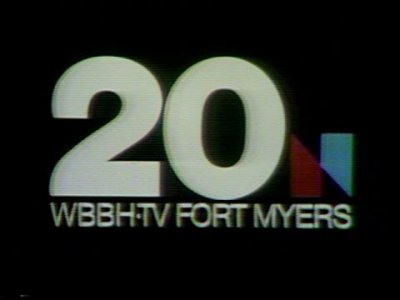
In the nineteen-seventies, there were gobs of huge TV antennæ throughout the Miami area pointing toward a Fort Myers NBC TV affiliate that did not blackout unsold out Miami Dolphins football games.
The feds eventually extended the blackout distance by something like five miles to encompass the distance from the Orange Bowl to the WBBH transmission site.
Of course, many expats listened to news from their home countries on shortwave and I began listening to shortwave because I wanted to hear alternative perspectives.
 
Last edited:
Back in the day, stations like CKLW (Windsor/Detroit) had ratings in Cleveland and Toledo.

WAPE 690 from Jacksonville had listeners well into South Carolina (along the coast).

KTSA had listeners in Austin and Corpus Christi.

99.5 KISS used to show up in the Austin book (less than a 1 share, but they had listeners up there.
 
Now that we have covered radio...
View attachment 1000
In the nineteen-seventies, there were gobs of huge TV antennæ throughout the Miami area pointing toward a Fort Myers NBC TV affiliate that did not blackout unsold out Miami Dolphins football games.
The feds eventually extended the blackout distance by something like five miles to encompass the distance from the Orange Bowl to the WBBH transmission site.
Of course, many expats listened to news from their home countries on shortwave and I began listening to shortwave because I wanted to hear alternative perspectives.

Same with Chicago, where there were bars with 50-100 foot towers and antennas pointed toward either the CBS affiliate in Rockford (WIFR-TV/23) or South Bend (WSBT-TV/22) to get blacked-out Bears home games. Prior to 1973, that meant all home games.
 
Interesting topic.

Sports broadcasts, of course, are a "natural". When I was growing up, the Chicago Bears blacked out home gamesw were on WREX-TV, Channel 13 from Rockford, IL, before they moved to UHF Channel 23, WIFR. WREX produced a viewable signal in the Northwest Suburbs. But in the city itself, you could always find a local bar where you could watch the game by simply looking for a big antenna on the roof.

On the radio side, my middle son, who has no interest in DX whatsoever, listens to University of Iowa football and basketball games regularly on WMT (or WHO at night).

But my daughter is the best example of in my experience. As I've posted before, her fluency in French began when I gave her an old Realistic portable, on which she discovered CJBC.
 
Off the top of my head, not really, except for people who listen to larger market stations from surrounding smaller markets (or WLW from various places in their coverage area).
It was more common years ago when there was a dearth of formats in a lot of places. People would put up antennas in Lima, Ohio to hear WIOT, the AOR station in Toledo. WOXY (and predecessor WOXR) Oxford Ohio had listeners in distant parts of Dayton and Cincinnati.
 
Off the top of my head, not really, except for people who listen to larger market stations from surrounding smaller markets (or WLW from various places in their coverage area).
It was more common years ago when there was a dearth of formats in a lot of places. People would put up antennas in Lima, Ohio to hear WIOT, the AOR station in Toledo. WOXY (and predecessor WOXR) Oxford Ohio had listeners in distant parts of Dayton and Cincinnati.

If you were a teenager in many, if not most small towns in the Midwest with no semi-local rocker, you tuned your radio to The Big 89 (WLS) or The Voice of Labor, Super 'CFL (WCFL) in Chicago, the Big 8 in Detroit (CKLW Windsor), or even 77-WABC in Noo Yawk.

I'm not sure any western station had that kind of coverage. The big LA stations (KHJ, KRLA) weren't blowtorches.
 
If you were a teenager in many, if not most small towns in the Midwest with no semi-local rocker, you tuned your radio to The Big 89 (WLS) or The Voice of Labor, Super 'CFL (WCFL) in Chicago, the Big 8 in Detroit (CKLW Windsor), or even 77-WABC in Noo Yawk.

I'm not sure any western station had that kind of coverage. The big LA stations (KHJ, KRLA) weren't blowtorches.

You forget the rural Midwest and eastern Rockie's really big station: KOMA.
 
A lot of people up and down the West Coast used to tune in to KGO at night, people who weren't DXers. I knew of a few during the late 80's. A few of us would tune into fringe FM rock stations for a different flavor of rock. However, today I can't think of anyone who listens to out of market stations -- of anyone that I know.

f they're under 25, they don't listen to radio at all. They get their music on YouTube and Spotify and the like, and get their info on FB and online news / infotainment outlets. Over 25? It's local FM for music (although I know a couple NPR aficionados, all three over 30) and TV and online for information.

I would think that rural people probably do more non-DX DXing than urban people, if only because of the distance from the major cities and looking for more choice in FM music. But that's just a guess -- I don't know any rural people anymore. The ones I knew all moved to the city.
 
I have a friend who listens to KPQ 102.1/Wenatchee regularly. About 50 miles but on a high peak (Mission Ridge) so the signal is excellent in Yakima, even though the other Wenatchee's come in irregularly via tropo scatter, or not at all for some of them. He also listens to KZIU-101.9 Weston OR once in a while (Hank FM classic country). The signal is quite weak in Yakima but gets better down south in the lower valley, even with KPQ next door. We don't have one here since KTCR-980 flipped to ESPN Deportes.
I also went into a shop at Pike Place Market once in Downtown Seattle where the intercom was playing 96.9 KGY (now KYYO) when they were Real Country. KMPS has a horrible signal on the waterfront thanks to multipath from hills. Olympia is almost line-of-sight from the Seattle waterfront.
 
In 1971, the popular NYC DJ, Dan Ingram is known to have come up with this now-famous line,
"I just got some terrible news. I read the ratings, and WABC is only the 13th ranked station…
in Pittsburgh, Pennsylvania!"
 
f they're under 25, they don't listen to radio at all.

Yeah, it's horrible how only 93% of people between 18 and 34 listen to the radio any more, and they only listen an average of 11 hours a week.

And to think that way back in 1985, a huge 95% of people in that age group listened to the radio.

(Good example of how fake news gets started).
 
Forgot to mention the most extreme example of ordinary people DX'ing without knowing - or caring - thinking it is normal. Long story, but the bottom line is I needed to use the bathroom at a friend of a friend's apartment in the South part of Dallas in the late 70's. Playing (loud) on their stereo was KRBE Houston. Dipole on the floor, but a third story apartment facing South. I asked them about it - they said it came in better than 106.1. End of discussion - I left, thoroughly impressed by KRBE's engineering staff.


You forget the rural Midwest and eastern Rockie's really big station: KOMA.

Yes, I forgot about them. Audible in Phoenix but not where I grew up in Indiana.

Another one I forgot about was KAAY 1090 Little Rock, but they switched to religion sometime in the 1970s.
 
Yes, I forgot about them. Audible in Phoenix but not where I grew up in Indiana.

Another one I forgot about was KAAY 1090 Little Rock, but they switched to religion sometime in the 1970s.

KAAY is anything but a blowtorch in Texas. I don't think I have ever heard it here, at least not recently. I don't recall it from the 60's playing top-40. And I explored the dial quite a bit. It is possible they are directional - the wrong way for Texas, but that wouldn't make much sense with a 1090 in Baltimore. Maybe to protect KRLD, which had a brief life as an album rock station in the early 1970's and developed quite a following.

I think the point of this thread is clear - for DX to transition over to mainstream, what is required is (1) a strong, reliable signal, and (2) a compelling format that people want to hear. Condition (1) has been eroded by a glut of new stations jamming every frequency at night, combined with CFL bulbs, home networking, and aluminized siding in house. Not to mention that the home radios are cheap pieces of junk - so hard to tune that the IF is wide as a barn door so you can get a half inch dial on a frequency. In cars by inadequate antennas and new sources of noise. Condition (2) has been eroded by the availability of esoteric formats on the internet, combined with corporate radio formats that just don't work as "one size fits all". If it is creative, you won't find it on the radio, because the lawyers are afraid the station will get sued. So you end up with bland fluff that is not compelling for anybody to DX, and is probably available on multiple frequencies anyway. You have tastes anywhere out of the mainstream, you are out of luck. Advertisers won't pay for a KZEW any more - the announcers might say something that would offend somebody and give their brand a bad name.
 
Last edited:
If they're under 25, they don't listen to radio at all.
...only 93% of people between 18 and 34 listen to the radio any more, and they only listen an average of 11 hours a week.
...in 1985, a huge 95% of people in that age group listened to the radio.
I must be somewhere in between,
I am constantly listening to a radio service,
but not to terrestrial stations.
Does that count?
 
Status
This thread has been closed due to inactivity. You can create a new thread to discuss this topic.


Back
Top Bottom