• Get involved.
    We want your input!
    Apply for Membership and join the conversations about everything related to broadcasting.

    After we receive your registration, a moderator will review it. After your registration is approved, you will be permitted to post.
    If you use a disposable or false email address, your registration will be rejected.

    After your membership is approved, please take a minute to tell us a little bit about yourself.
    https://www.radiodiscussions.com/forums/introduce-yourself.1088/

    Thanks in advance and have fun!
    RadioDiscussions Administrators

Florida Radio Reflections

For a good number of years, I’ve posted a “reflections” string on the North Florida board at year end. You might say I’m into keeping with traditions. Since moving to Florida’s “Treasure Coast,” the Florida board is the only appropriate “local” board in which to post. So, we’ll give this a whirl!

There was a time I had a good number of on-air tapes in my collection. My cousin was responsible for many of them. He was in a military family and he also traveled cross country for vacation. These were mainly from AM hit music stations in their heyday.

While listening to these stations, I wasn’t always sure where the city was located. Before the internet, we relied mainly on an atlas and encyclopedias for research. The info in the encyclopedia was not detailed but we made do with what we had at the time. The internet opened up an entire world.

To me, some stations sounded better than others. My ears rarely failed me. There were regional differences, especially with song position and rotation, and the commercials. Still, there was many elements of a national hit music.

As we moved into the technology age, there was a wealth of information at my fingertips about radio and virtually everything else that I will detail in the next segment. My early feelings about what I perceived to be a successful radio station often came to fruition from online research. Virtually all of my opinions were based on a station’s overall sound. A question I’ve asked, even since being a kid is “What drives a station’s success?”

A number of years ago, Publix aired a brilliant and inspiring Thanksgiving commercial. Vast majority of Publix’s spots are outstanding IMO. A Grandmother making a casserole dish says “When the right ingredients come together, it’s magic.” Indeed, it is. This message hit home with me on many levels. We’ve probably all have experienced right and wrong ingredients during our career. I’ve read accounts from various radio legends who speak of both great moments and bloody hell ones.

Radio and other businesses often try to duplicate great results. A new format becomes the rage and flips across the country happen. Lightning doesn’t always strike twice. Sometimes, when those right ingredients exist, we can experience a better product than the original. Then again, a successful programmer in Market A moves on to Market B and fails. Things don’t always turn out as expected. There’s many variables at play and we'll probably discuss a number of them here.

The underlying theme for this string is about “the right ingredients.” When a radio station or even a cluster fires on all cylinders, it truly is magic. It's a win/win for both the company and listeners. The right people represents a big part of the mix. In thinking about Florida radio, past and present, there are “magicians” who should receive kudos. Good participation will hopefully allow for that. I've a few I'd like to acknowledge.

Next: Technology, research, and radio.
 
In 1997, the company transferred me from Ft. Lauderdale to Jacksonville for an opportunity in Project. Management. From a pure radio perspective, I looked forward to hearing WAPE live and local. WAPE (690 AM) was one Florida station I had heard on tape numerous times from decades earlier. Of course, the station had moved to FM as many others had done. I hadn’t actively listened to CHR actively for over 10 years. WAPE broke that trend.

As far as the right ingredients go, I felt WAPE of the late 90s was all of that and more. There was great imaging and jocks, creative promotions, an established brand, killer TV commercials, and it was simply fun on the radio. Ratings were high and the station was clearly a winner and sounded like one too.

My new job responsibilities required extensive computer knowledge of which I lacked. But I caught on quickly. This World Wide Web thing was addictive. Looking back, some things were primitive compared to today but it was something new and exciting.

America Online (AOL) was the rage as web portal and online service provider. The signing on process had a distinctive sound. Lots of patience was needed as lines were busy or sometimes you had to try signing in multiple times to get through. It sounded like this:

https://www.youtube.com/watch?v=x5L37RrODtA

Instant messenger was a vehicle for which friends saw each other online and chatted. There were also chat rooms under various subjects and locations.This was the genesis of social media. At the time, I made no connection to what affects technology would have on radio. In the late 90's, radio of the day did not look like it would undergo major change. That did come, but society itself was changing and radio does mirror society in lots of ways. We don't have to agree with all the methods. I'll probably go into more detail on this in additional posts.

As time moved along, I discovered radio repositories where old radio broadcasts were stored. It was like being a kid in a candy store. Early on, most were from the biggest stations in the biggest markets. As the web got more expansive, airchecks from smaller markets were found and it was interesting seeing the contrasts.

From a competitive standpoint, the stations that could afford extensive jingle packages and premium talent had an edge. I saw a correlation between great ratings and bigger budgets. But not always. Most major radio talent started their broadcasting career in a smaller market. Whether Florida or beyond, it became easy to figure who was the star or better yet, who was destined for greatness. They stood out.

If we consider a station’s success based on “All the right ingredients” criteria, it takes a lot more than just a standout talent or two on the airteam. It’s a great start though to build on.

One other AM station from the past, I’d like to mention here is Miami’s WQAM. “Tiger Radio” was huge. A great talent lineup and a soundtrack that fit South Florida well. I would think if you compared the old WQAM Miami to the old WAPE in Jacksonville, the former probably earned a lot more in revenue. Still, WAPE had a big city sound. Their jocks probably didn’t earn as much compared to a Miami gig, but they still delivered in my view. There is that certain something. Perhaps it's edginess and avoiding getting stale at all costs. There's a drive and an intense desire to win. Perceptive ears will hear that.

When the right ingredients come together, it’s magic. Big markets don’t hold a monopoly on that.

Next: More to come on research and programing to specific market
 
Last edited:
WAPE had a big city sound. Their jocks probably didn’t earn as much compared to a Miami gig, but they still delivered in my view. There is that certain something. Perhaps it's edginess and avoiding getting stale at all costs. There's a drive and an intense desire to win. Perceptive ears will hear that.

When the right ingredients come together, it’s magic. Big markets don’t hold a monopoly on that.

That's very true. What big markets bring is the potential for big audiences, and (as you correctly pointed out) big paychecks. That can be a lure if you happen to be talented. You want to perform for big crowds. Just like musicians, who want to play in bigger venues. They know they're talented, they know they can attract an audience, so they move from a club to a theater to an amphitheater to a stadium. Next thing you know, they're playing two nights in a stadium, as Taylor Swift did in Dallas last year.

That same drive and desire exists in people who become radio talent. Fifty years ago, the huge 50kw AM blowtorches were the stadiums of their day. If you were talented, that was where you wanted to play. The other lure was to work for certain PDs of that time. Or certain stations that had built a stable of talent where creativity was celebrated. My point is that 50 years ago, there were only a few places where talented people could build their careers. One was radio, and you saw a few famous radio DJs become multi-platform talents, starting with Bing Crosby or Orson Welles in the 30s, but much later you had Dick Clark. Then you had Casey Kasem. Now you have Ryan Seacrest. The mold has been cast. You start out in radio and grow to other things.

However, now we see a new way to achieve the same goals. Fifteen years ago, a kid from Canada posted a video of him singing on YouTube. The video was seen by a record producer in Atlanta, who brought the kid to a major label. We know that kid as Justin Bieber. Lots of other kids took the same route. Now we're seeing radio people build fan bases in podcasts and online, then getting national radio shows. That happened in sports radio with Clay Travis. It happened in talk radio with Ben Shapiro. The point being that where once radio may have been the easiest and cheapest way to build a fan base, now people can do it with the internet. Which is why fewer talented people start in radio. It can take too much time, it doesn't grow or build fast enough. Unless you're with a big company that recognizes your talent and offers to syndicate your show, or make it available by premium choice. On the one hand that may seem bad for local radio, but it's good for talented people seeking big audiences.

But that's part of the motivation for great talent. Being at a small station in the treasure coast is only useful if it's a bridge to someplace else. It might be easier and quicker to move to another place, where there are more people, or more of a chance to be syndicated. And for some, leaving home for a job isn't as difficult as it sounds. You were willing to get transferred from south Florida to Jacksonville. Talented kids are equally willing to move away from home if it means they will have access to larger audiences. Or maybe they just stay home and self-syndicate themselves on the internet. That's an option that didn't exist 50 years ago.
 
Being at a small station in the treasure coast is only useful if it's a bridge to someplace else. It might be easier and quicker to move to another place, where there are more people, or more of a chance to be syndicated. And for some, leaving home for a job isn't as difficult as it sounds. You were willing to get transferred from south Florida to Jacksonville. Talented kids are equally willing to move away from home if it means they will have access to larger audiences. Or maybe they just stay home and self-syndicate themselves on the internet. That's an option that didn't exist 50 years ago.

^ Great analysis in the previous post tying the past and present. I’d like to expand on TheBigA’s points regarding market size and talent.

Smaller markets such as Florida’s Treasure Coast, do serve as a way to gain experience and notoriety. For a young broadcaster, performing well and working hard can lead to opportunity in a bigger market and ultimately making more money.

iHeart has a major presence on the Treasure Coast. Heath West is a midday personality on iHeart’s Classic Hits WQOL. I see him as a major talent. He injects personality in his presentation. He’s able to say quite a lot in very few words. I believe he has other roles with iHeart. Personally, I’d love to see him remain on WQOL. But nowadays, with Premium Choice programing and voice tracking, what listeners may perceive as a local host isn’t local at all. I'd say he has a future with iHeart or other big company.

But there’s another consideration regarding smaller markets. There is seasoned talent with impressive track records and success who feel satisfied with their accomplishments. They may be living comfortably and no longer want the pressures of working in a big market, despite the bigger bucks. Throughout the country and Florida, there are stations in less populated, rural areas that have veteran broadcasters.

On the subject of the right ingredients, that may be the case for Flagler Broadcasting here in Florida. For those of you not familiar with Flagler County, this would be the county north of Daytona Beach/Volusia County and south of St. Augustine/St. John’s County.

The Flagler area receives many of the big signals from both Orlando and Jacksonville. But, Flagler Broadcasting super serves the local community. Residents probably don’t identify with Jax or Orlando and so there is a niche market served very well. I visited the studios there once and there must be well over hundreds of years of broadcasting experience in that building.

There’s a News Talk/format, two Adult Hits stations (Flagler and St. John’s County), Country, and an oldies station. Practically something for everyone. I’m most familiar with “J.T.” whose radio name is John Thomas. He’s been PD on numerous stations as well as on Flagler Broadcasting. His is an impressive broadcasting history. He was the midday guy on Detroit’s Classic Hits WOMC. As I recall, he even filled in on legendary Classic Hits WRBQ in Tampa.

It’s all about that “big fish in a small pond” kind of mentality. Nothing wrong with that. Big markets get most of the attention and even “action” on the radio boards. It’s the nature of the beast. But there’s a lot of great radio in places many of us never heard of.

I’ll get back to what I planned on discussing upcoming. I thought TheBigA’s remarks were a great contribution to this subject string and therefore required a detailed response from me.
 
But there’s another consideration regarding smaller markets. There is seasoned talent with impressive track records and success who feel satisfied with their accomplishments. They may be living comfortably and no longer want the pressures of working in a big market, despite the bigger bucks. Throughout the country and Florida, there are stations in less populated, rural areas that have veteran broadcasters.

Where one works is a personal decision, often made for personal reasons. Some veteran talents choose to stay in their smaller markets because they married and had kids. The decision is sometimes made to keep the kids in the same school system with their friends. Or perhaps they just prefer the lifestyle of living near the water. Not much different from those who choose other lines of work, such as banking.

One more thing I was reminded of while watching the 60 Minutes interview with Paul McCartney last night. When Paul was with The Beatles, they recorded at Abbey Road studios, and later at Apple. But Paul's latest record was made at his home studio. He even has the chimes he used in "Penny Lane" and the mellotron used for Strawberry Fields at his home studio. Changing technology allows for changes in where records are made. Same with radio. There was a time when you needed a radio studio or big expensive FCC licensed towers and transmitters to get your talent to an audience. Not any more. Technology has changed the way talent works and the way the audience receives radio.
 
Happy New Year!

Research represents an important element in the business of radio. From music testing to navigating through uniqueness of the market, it’s long been fascinating to me. Music should be the bread and butter of a music station. I say ‘should be’ because that’s not always the case. Without getting into the weeds, let’s just say I’ve experienced more than enough sloppy music scheduling and other mistakes that prove costly.

With a new year comes a new start. With the holidays behind us and listeners returning to normal routines, radio listening returns to normal too. Florida has a number of PPM markets and stations doing the Christmas format will usually show a large spike in the holiday book. With each New Year, the audience naturally grows a year older too.

Many stations will start the year off by making subtle changes to the playlist. I've especially noticed this among stations that flip to Christmas music and return to normal programing. Do nothing and you run the risk of seeing more listeners grow out of the demo. Make too many changes and listeners get uneasy. That can also adversely affect your brand. When the “right ingredients” are present, a little tweaking can make that successful format even stronger.

A while back a poster with 40+ years in radio stated “A radio station cannot be better than the G.M.” I tend to agree with that statement. Senior managers are supposed to be leaders who inspire and bring out the best in their teams. But, I believe that statement can go even further. Everyone on that team from the G.M. down to the receptionist must be vested in success. Everyone is an advocate for that station and/or cluster. These are critical elements to all the right ingredients in my view.

There are two radio stations I’d like to bring up to make points. Both are gone now. One station I’ll discuss in this post.

When I arrived in Jacksonville in 1997, I became a big fan of WKQL which was known as “Cool 96.9.” There were personality DJs, clever promotions, fun music features, and a great variety of oldies music with lots of Motown. I held the PD in high record. He knew the market very well.

Here’s an aircheck of the station from 2000. https://www.youtube.com/watch?v=Q4yJIDKh5qE BTW, there's only 1 70's song that hour - Want Ads.

At the time, the cluster had an 80s format too. There wasn’t much wiggle room future growth. Logically, Cool FM should have added more 70’s. By doing so gradually over time, the brand would not be negatively impacted. Some stations that took that approach eventually became classic hits. Cool 96.9 never did until just before they flipped four years later under a new, highly respected PD who just didn’t know or understand the market. Too many changes and way too fast. Radio 101 teaches us that approach rarely works.

As for having all the right ingredients, I long thought WKQL did. But they did not.The Cool story is not unique. Why so many oldies stations didn’t move the music sweet spot up a little sooner is something I’ll never understand. We can be conspiracy theorists and think the system is rigged against certain formats anyway. It's why little was done to position oldies stations more competitively. You decide.

The mention of this station serves as a reminder that being proactive is also a very necessary ingredient to long term success.
 
Last edited:
Having lived in Broward for many years, I was on board from Day One in the mid-1980s when Magic 102.7 (WMXJ) began as an oldies station. What I’ll always treasure was their talent, extensive community involvement, and their incredible shows at the old Sunrise Musical Theater. Of course, there was the music. The jocks were extended family. For many years, I defined Magic as a successful radio station because they had all the right ingredients and it was truly “magic.”

Today, we can all play Monday morning quarterback after the fact. What's true is there were tactical errors made over time to include not appealing more to Hispanics when they had the opportunity. Eventually, the station did 80s weekends. But unfortunately, their brand was tarnished. Changes came too late. When Entercom became the new official owner in July of 2015, Magic’s very long run was destined to come to an end and it did in December of that year.

I recall a poster describing Magic 102.7 as a station that could just as soon work in Kansas because it was generic sounding. I should have realized that as well. Perhaps in some ways I did but my devotion to the station clouded my judgement. Emotion can negatively affect decision making.

There were a good number of years that I worked on marketing projects. We researched songs appropriate for a variety-based classic hits format from 2005 to 2013. I presented them on the North Florida board as a "music special." It proved to be a very popular feature with R.D. readers. Eventually, we played scoped airchecks of what we regarded as the best performing classic hits stations in the country to listening panels. Magic 102.7 was one of them.

What’s interesting to note is Magic 102.7 tested extremely well among typical Jacksonville area listeners who enjoyed classic hits. I wasn’t surprised. However, Jax and Miami are two very different radio markets. Performing well in Jax was actually not a good thing for “Miami’s Greatest Hits.”

Magic 102.7 has been rebranded to 102.7 The Beach. With a new talent lineup and a more pronounced rhythmic playlist, the station sounds like the soundtrack for Miami and South Florida. Kudos to MD DJ Holiday who is one of the few who survived from Magic 102.7. Ratings have improved in 25-54. If I were still involved in testing, I would bet 102.7 The Beach would not fare well in Jacksonville. It’s all about reflecting the local market. That’s another one of those right ingredients.

There are right ingredients that are easy to identify. Many of them can be heard right out of the speakers. Making critical and correct decisions in a timely manner are in there too. Magic had an incredible run. Some of the talent was there over 25 years. In radio’s revolving door, that remains an impressive record. I admit to missing them very much.

The Miami/Ft. Lauderdale market has long been my favorite radio market in the entire country. Today, there is a station there that I clearly see as one that has all the right ingredients. It’s in fact my favorite radio station currently. There are a number of people I’d like to recognize as well.

That’s upcoming. Stay tuned.
 
Last edited:
A South Florida station that I believe had so many of those “right ingredients” was Love 94. (93.9 WLVE, formerly WWWL) When I first heard the station in the very early 80s, the format was described as Mellow Rock. But, with power rotations of smooth and jazzy songs from artists such as Al Jarreau and George Benson, to name just two, it helped give the station a unique sound.

The Love 94 of the early to mid-1980s was almost a throwback to early FM like from the 1960s. This wasn’t reflected in the age of the music but rather in the presentation style of the jocks. Let’s just say it was all very laid-back sounding. Because it was pulled together so well, Love 94 escaped the stigma of being labeled a station that could put you to sleep. That honor belonged to a station up the dial known as Joy 107.

For those of you who are jazz fusion lovers, you’ve no doubt heard of “Return to Forever.” My cousins are related to Al Di Meola who played guitar in the group. My Uncle played their albums on visits and I took a strong liking to that sound. I have his albums in my collection as well. We met a few times at family dinners etc. In many ways, Al broadened my own musical appreciation. This probably explains why I enjoyed listening to Love 94 as much as I did.

Love 94 used jingles around the theme “I Love 94.” On the surface, that may sound like something that wasn’t too clever. In my view, the simpler the better. Why complicate things? Between the good amounts of love songs the station played and the easy going style of the “DJs,” their jingles worked because listeners could easily remember it and it reinforced the “Love” brand.

Developing clever and effective promotions not only can help increase odds for success, but it’s yet another element to all those right ingredients. Love 94 ran a number of commercial spots featuring a good looking guy interacting with the ladies. My writing can’t do this justice so here’s the story about those fantastic spots. Great energy, sex appeal and all those P1s saying “I love 94.”

https://www.youtube.com/watch?v=KFsVRRXfZvk

Love 94 will probably always be remembered as a Smooth Jazz station. But, they were also Mellow Rock/hybrid jazz and they did an incredible job in that end too. Lots of interesting characters and talented folks graced their airwaves. Miami/Ft. Lauderdale has long been a tough and competitive radio market. But, diversity can also make for some interesting radio and strategies.

So, the story was the same. Another Smooth Jazz station bites the dust. 93.9 WLVE Miami Beach, FL changed format to Rhythmic AC. If I’m not mistaken, there were changes to Hot AC and now I believe it’s yet another 80s, 90s, and today AC format. Just what South Florida needs.

But, that’s the business of radio. Tastes change. Markets change. Ad agencies rule. Everything is temporary.

More South Florida Radio Reflections upcoming, including present day kudos.
 
Last edited:
We continue with the subject of the right ingredients but with a twist. I wasn’t planning on talking about radio budgets but I do believe it’s appropriate for this topic. In the North Florida board, poster David Eduardo answered a question regarding format costs in this way:

“The two questions on cost of operation are 1) live, voice tracked or syndicated and, 2) local morning show, no show or syndicated show. Generally, all music formats with the same operational system (live, tracked or syndicated) will run in the same ballpark on costs.”

As someone who grew up in the NYC metro area, big operations were the norm. When I moved to Ft. Lauderdale in the late 70s, there was a lot of that too, not to the extent of a NYC, L.A., or Chicago but still impressive.

Perhaps the word “impressive” shows some bias on my part. Comparatively speaking, formats that are in markets where there is a full roster of talent, big dollar promotions, and the best management and programmers that money can buy help create a superior and competitive station. Is that really true?

Formats fail no matter the size of the market, budgets, and for all kinds of reasons. In my view, creativity must be at the center. When I arrived in Jacksonville in 1997 from South Florida, it was obvious that I was no longer in a big market. But, there were stand-out stations from the rest to include unique promotions, weekend music specialty programing, and community involvement. As I saw from ratings, that helped them win.

Big market vs. small market both have their advantages and disadvantages. Speaking now in my listener hat, I much prefer hearing a station that has personalities on morning, noon, and night compared to an automated jukebox. Again, that’s just my opinion. I’m not the one that has to make do with a budget. But, then again, I don’t have to listen to lifeless radio either.

I’ve been promising to highlight a radio station that I believe has all the right ingredients. Today, it’s my favorite radio station hands down. But, I’ll also compare that station to its sister in another market that doesn’t operate on a big budget.

I’ve long discussed the role of talent. The right talent, in my view, is an asset and not a liability. The right talent contributes along with all those right ingredients increase odds for success. The right talent doesn’t have to cost the most either. In my second post in this string, I recalled the big market sound of the old 690 WAPE from Jacksonville. It can all come together but it takes an extraordinary amount of teamwork and a drive to win. I don’t always see that fire in radio anymore.

Anyway, I thank David Eduardo for adding another dimension to this subject. More to come on this subject.
 
Quite by accident, I found “The Totally 80’s Weekend” on South Florida’s 97.3 The Coast. (WFLC) I was hooked. I wound up listening for many years mainly via streaming in Jacksonville. It was the first time, I became familiar with Gary Williams who was the PD as I had to find out who was behind the station.

To this day and with so many stations and formats doing their 80s thing, nobody did it better in my view. “Gnarly Charlie” was one of the weekend DJs and was a standout. I was literally transported back in time to my clubbing days where I was in the DJ booth. My friend was the DJ, not me. I was more into gauging reactions. Even in much younger years, I lived and breathed research.

As with all good things, the totally 80s weekends eventually came to an end. Some years later, in WMXJ’s (Magic 102.7 discussed earlier) final year or so, they resurrected all 80s weekends and even brought back Gnarly Charlie but it just wasn’t the same. Gary’s weekend playlist would not have gone over well in many places but it was 100% South Florida. As a Freestyle music lover, it was pure fun and joy to listen to.

When Cox Media Group launched Easy 93.1 (WFEZ) on December 26, 2010, I had a feeling the format would prove to be formidable. Many of the posters on Radio Discussions thought Easy would siphon upper end 25-54 away from market leader AC WLYF, in effect just giving WLYF a little haircut.

There were music adjustments over time as one would expect. An incredible airteam was set in place and many came from WLYF itself. It was a good move at the time. Listeners already knew who most of the players were.

It’s been extremely interesting watching the ratings ascend. The “Easy” brand in South Florida has become something very strong. Listeners know exactly what they are going to get as there has been a consistency in sound.

Over the last couple of years, there have been some talent changes. They surprised me. While I don’t know what goes on behind the scenes, it probably has to do with beefing up the Easy brand even more and appealing to the diverse South Florida market. More on the talent next.

It’s a great talent lineup. Gary has assembled an incredible team. As I mentioned earlier, big markets and big budgets do have advantages. It can make for a far more great sounding radio station. I’m sure you’ve figured by now that Easy 93.1 is my favorite radio station in the entire country. Trust me, I check out many stations. I can’t think of a thing I’d change. Still, I’m sure Gary Williams is thinking ahead. Change is constant, isn’t it? “When the right ingredients come together, it’s magic.” In this case, it’s Easy 93.1

More on Easy 93.1 upcoming…
 
When Cox Media Group launched Easy 93.1 (WFEZ) on December 26, 2010, I had a feeling the format would prove to be formidable. Many of the posters on Radio Discussions thought Easy would siphon upper end 25-54 away from market leader AC WLYF, in effect just giving WLYF a little haircut.

Did you know that the first four years after flipping to WFEZ were not considered a success?

In fact, there was consideration of a format flip. WFEZ began as a near copy of WDUV, Cox' apparently very successful Tampa Bay station which did an old-fashioned easy listening format and was a solid #1 12+, although billings lagged and were generally around 15th.

Cox thought that the Miami market was a lot like Tampa, with the large retirement community and so on. They were wrong, as the cost of living had made Miami a less desirable retirement area, and the bulk of the 65 and over were the original Cuban refugees, not New Yorkers getting away from the snow.

The station did very poorly in 25-54. And Miami, being a big agency center, as well as a top 15 market, did not afford much opportunity for a station that was mostly 55+ and did not have a big Hispanic appeal.

They broke from the WFEZ model in around 2014, and started analyzing the market better. They dropped the similarities with WDUV and the numbers began to improve in 25-54. About two years ago they made the final adjustments and started challenging WLYF in 25-54, and are now pretty big contenders for a regular 25-54 #1 position.

So big was the win, that after more than a decade at #1 in 12+ and #15 in revenue and 25-54, WDUV made some sweeping changes and copied the style of WFEZ, climbing to the top couple of positions in 25-54 and rapidly improving billings.

It's important to note that in Miami, the key was appealing to Hispanics. At present, just under 60% of the listening is Hispanic and the interesting thing about that is that nearly 80% of the Hispanic listeners are Spanish dominant. That, of course, meant that WFEZ had to find a playlist that was equally appealing to non-Hispanic whites and Hispanics.

Another interesting thing is that WFEZ did not take as much listening from WLYF as one might expect. By far more listeners came from Miami's "other" AC station, WAMR, which had also been the #1 biller in the market for the last nearly 20 years. Spanish language AC music was going through a transition, and the newer product is almost all rhythmic; WAMR was pushed to update and the result was a huge mass of somewhat unhappy listeners in the 35-54 demos who did not like the bulk of newer music.


Did you know that the first four years after flipping to WFEZ were not considered a success?

.

Appreciate the detailed analysis and clarifications. I knew there were issues but had no idea or forgotten that this was a 4 year period. I now recall this better. You have on several occasions, one in my own posts, explained the WFEZ situation. In my last post I said "There were music adjustments over time as one would expect." As much as I was trying to not get in the weeds, that comment conveys minor music tweaks and that was not the case.

When WFEZ launched, you may also remember the oldies that were hitting the airwaves was being applauded by people all over the country, and especially New York. I'll confess, it was nice while it lasted. The same case is true for WDUV. The music they featured a good number of years ago was in a word awesome. Their ratings were stellar, usually double digits but as you point out, they were no way near being a top biller.

David Eduardo wrote: "Another interesting thing is that WFEZ did not take as much listening from WLYF as one might expect. By far more listeners came from Miami's "other" AC station, WAMR, which had also been the #1 biller in the market for the last nearly 20 years. Spanish language AC music was going through a transition, and the newer product is almost all rhythmic; WAMR was pushed to update and the result was a huge mass of somewhat unhappy listeners in the 35-54 demos who did not like the bulk of newer music."

I didn't know about WAMR impacts. . I recall WMXJ's numbers took big dips as it seemed the oldies audience was leaving Magic in droves. Perhaps you could verify that. In the end Cox had good judgement in making the necessary corrections and stuck with the format. They have a winner for sure.
 
Last edited:
In the last post which was a reply to David Eduardo, I’ve got some more comments.

When WFEZ as Easy 93.1 was born, there was quite a lot of buzz on the boards, and not just in South Florida. And that’s just it, it’s very easy to get swept up in the moment. I suspect that the vast majority of posters who were delighted in what they were hearing were Boomers. That sort of thing can become contagious. Easy had, early on, featured light pop hits as far back as the 50s and 60s.

To David’s earlier points, Miami was “thought” to be another Tampa. What worked in Tampa should work in Miami. But, that was not the case. I joined the bandwagon myself making the case for Soft AC in Jacksonville on the boards. That never happened in Easy 93.1’s first years and it’s obvious we now know why.

When the “Easy format was brought to Jacksonville in September 2015, these were the songs that were featured in the first hour of WEZI - A Cox Media Group station and sister to WFEZ.

Gino Vannelli – Living Inside Myself
Stevie Nicks & Don Henley – Leather and Lace
Tina Turner – I Don’t Wanna Fight
Barbra Streisand & Andy Gibb – Guilty
Genesis – Follow You Follow Me
Stevie Wonder – Part Time Lover
Elton John – Little Jeannie
Billy Joel – Honesty
Michael Jackson – Man In The Mirror
Bananarama – Cruel Summer
Doobie Brothers – What A Fool Believes
Kool and the Gang – Joanna
Bette Midler – From A Distance

I found the sound “Dove-like” and I was loving it. If there were lessons learned from WFEZ’s start, it wasn’t obvious to me. I believe there’s only 1 90s song featured. 60s songs were on the playlist as well. Over time, the playlist changed dramatically. The station also moved to a full market signal in 2017 branded as Easy 102.9. I don’t consider it a Soft AC at all as they feature plenty of 90’s + music, including rock tunes.

There are huge differences between a Top 20 market and a middle market. There’s only two jocks at WEZI. One is management and the other from what I’ve been told is on the air at another station in the cluster. Morning drive is automated. How do you compete? Apparently, there’s a tight operating budget. Tampa’s WDUV and Miami’s WFEZ get the lions’ share of attention.

WDUV added an afternoon drive talent. Giselle Andres voicetracks from Miami’s WFEZ. With The Dove's notoriety and popularity, they were long automated/jockless after morning drive. I have no idea how well WEZI is doing in 25-54 or in revenue. If they wind up with an AM drive talent, then they’re probably exceeding expectations or they are just expected to run on the cheap.

But in the meantime, WFEZ has got it all together. Theirs is a large airteam, great personality, superior brand. I’ve gotten off track and I really wanted to discuss that stations talent including a superstar in my book. That’s upcoming!
 
Utilizing social media effectively is a must. WFEZ does an outstanding job in that end. Here's a link to their Facebook page:

https://www.facebook.com/Easy931

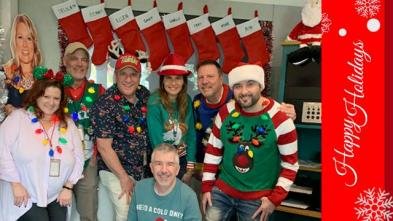
Everyone on the airteam contributes to the page. They also identify themselves when they post which makes a lot of sense. In this way, you can continue to build relationships with your listeners. There's a nice picture of the team that was posted over the holidays. You'll see that on top of the page. As readers may read this string weeks or even months from now, I've attached a photo here as I'm sure it was disappear soon.

Easy Team.jpgEasy Team.jpg

There's a lot of years of experience for sure. The gentleman you see at the bottom is Rob Sidney who was the creative genius behind AC WLYF which is now in direct competition with WFEZ. I'm not sure exactly what happened but Rob created a brand that was in no way cookie cutter. He voicetracks a weekend shift but maybe he consults with the station too. If someone knows more, please update us. A long time ago, I met Rob Sidney at a station function. He has long Florida roots. I remember him on the old WAXY when they were doing oldies. I couldn't even tell you when that was.

The station does a tremendous job getting out in the community. Ellen Jaffee who is in white and to the left of Rob have worked together for quite a long time. She does a lot of pet rescue type features. The listeners love that sort of thing. There's lots of pet owners and animal lovers around. Ellen was mentored by the legendary Rick Shaw way back when. She worked on the "original" WAXY. She's part-time now but what an incredible long and impressive career all in one market - South Florida.

There were some recent airteam changes over the past couple years. The morning show is a team. Giselle Andres and Jeff Martin have created a fun and enthusiastic morning show. Giselle conveys positivity. You can hear her smile as she speaks. With South Florida's large Hispanic population, Giselle, no doubt, solidifies relationships with the listeners. In my view, even if Miami was only 25% Hispanic, she would be a great choice to host morning drive. Giselle and Jeff are in the center of the picture.

To the right of them is Gary Williams, the PD I spoke about earlier. To the right of Gary is Mike Kruz who came from the CHR part of the building - WFLC. He brings energy and I wouldn't doubt younger listeners with him and that certainly doesn't hurt as well. Replacing the talent in both morning drive and afternoon drive was in no doubt not the easiest decision. Both former jocks were long time S. Florida personalities. Why these things happen, we don't always know but I suspect it all has to do with the brand and the community served.

There's a cardboard image of Delilah at the top left. She's gained quite a lot of publicity and I suppose popularity too with her son's suicide. Her presence on the station still seems like a good fit. To Delilah's right is Denny Miller, part-timer, as well. Amazing the station has 3 part-timers which is more than an entire airteam at many stations. Denny has been with the market a long time as well and yet another WLYF transfer from years ago.

Each brings their own unique personality to the station that already has so many positives going for her. It's great to experience radio like this. When all the right ingredients come together, it truly is magic.
 
Last edited:
The genesis of a giant.

In the majority of my throwback posts, I’ve paid tribute to the old CHR WHYI Y-100, Miami/Ft. Lauderdale. What’s left to say? Well, there’s always new readers and new perspectives. When I think about all those right ingredients coming together, Y-100 was king of the hill.

I believe I first heard Y-100 at 100.7 FM in 1975 during a family trip to South Florida. It’s been reported on many instances that South Florida was among the first markets to make the music transition to FM. I can understand why. Having grown up in the NYC area and WABC, I knew nothing about nighttime patterns, reduced power, or even interference from Cuba. But it was all there.

Here’s an aircheck of Y-100 from just one year earlier in 1974:

https://www.youtube.com/watch?v=UoOBSLRNsPs

There’s tremendous energy, interaction with listeners, and a cool contest. The jock, Robert W. Walker, is quite clever in his presentation. To me, he sounded more genuine than AM counterparts who were trying to sound hip. Robert W. as he was better known later on had a good run on Y-100.

As I listened to the aircheck, the music was identical to WABC and mirrored the biggest hits a listener would find on Casey Kasem’s American Top 40. But that would change. In 1974, Y-100 was only a year old. So, it would make sense to play it safe at least musically. Listeners needed to feel comfortable with a new station.

When I moved to South Florida in late 1979, I noticed Y-100 sounded much better than anything else I heard in the format. It was beyond great but the early 1980s would be even better. The station departed greatly from AT40. It was as if they were spinning in their own orbit.

While I never experienced Y-100 make the transition from typical Top 40 you’d find anywhere to a unique cosmopolitan sound, I suspect the disco era helped move the station’s needle to a more rhythmic sweet spot. But it wasn’t just dance tunes. I also experienced a rise in dance clubs. That must have had some influence too. We can't forget K.C. & The Sunshine Band originated in S. Florida too and they were a phenomenon. The station featured lots of genres of music, not just dance hits. There was rock and pop, oldies, ballads, even novelty songs. It worked incredibly well.

When the internet grew in popularity and I checked out songs there and with Joel Whitburn’s Top 40 Billboard books, I discovered that a good number of songs on Y’s playlist weren’t big hits on AT 40. In later years, I discovered many of Y 100’s songs were smashes on R&B, soul, dance surveys etc.

Y-100 of the earlier 80s was, in my view, the last truly mass appeal hit music station. Here’s a very small example of songs I loved that were big hits on Y-100 in the early 80s but didn’t chart high (Top 10) on Top 40 Billboard:

Double Dutch Bus – Frankie Smith
All This Love – DeBarge
The Look of Love – ABC
Mama Used to Say – Junior
Genius of Love – Tom Tom Club
A Night to Remember* - Shalamar

* A Night to Remember hit #1 on Y-100 for 4 weeks and was that station’s #1 song for the year 1982. The song never cracked the Billboard Top 40 but came close. It showed Y-100 was not a cookie-cutter station. Their research worked. They picked the right tunes. It was the soundtrack of South Florida.

1982 was an incredible year for hit music. In my view, “The Amazing FM” was at its very best that year. Certainly, all the right ingredients came together. I’ve spoken about the PD, Bill Tanner, so very frequently on these boards that I don’t want to repeat myself for the umpteenth time. So, all I’ll say is I have a number of radio heroes and Bill Tanner is one of them. It was a great time to listen to the radio and it was awesome hearing what came out the speakers. I miss those (younger) days.
 
Last edited:
I’ve long been a student of history – all kinds of history. Not everybody appreciates history. Still, there’s much we can learn. We can approach lessons learned positively or negatively. This string was about Florida radio at its best, past and present. There’s lots I did not cover. Florida is a huge state and participation is key to identifying past or present stellar performance.

It’s human nature to respond more to negativity. I see it in social media trends. There’s a definite negative side to how certain radio management operates. I’ve done my share of writing novellas about that. In Jacksonville, I experienced costly radio mistakes, incompetence and rigged outcomes. It was enough to sour one’s love of radio. But, that’s all in the past and I have a new perspective.

We’ve all experienced many radio horror stories. Many of you in the business can probably recall injustices against you too. I truly believe that most who make radio a career today work exceedingly hard and are decent people. We just don’t seem to hear enough about them.

I love success stories. There’s something uplifting of the underdog station that beats the odds and wins. It can all be very motivating. There’s been lots of historic radio battles. AM was in the fight of its life when FM music challenges rose. It’s easy to talk about the handwriting on the wall but giving up should never be an option. Once everything possible is done, then it’s time to move on to something else.

I was fortunate to live in South Florida in the 1980s and most of the 90s. Work and family saw me visit there 6-8 times a year, even when I moved to Jax. Besides the music stations, I discussed earlier, there was also live and local talk shows on AM. They were quite good. Neil Rogers earned incredible AM numbers when he became a “shock jock.” It seemed like AM would survive as a non-music band. Today, it’s become a wasteland where AM has gotten a booster via an FM translator. It’s yet another example of how much can change in radio and why the business of radio is so interesting, at least to me.

We hear a great deal about a stations image. Oldies stations and other gold-based formats can earn the reputation of being your grandparents’ station. The outcome is almost certain to be a flip. I can recall a station just to my south in West Palm Beach – WOLL KOOL 105.5. Today this is an AC with the tagline “More Variety from the 80’s to Now.” Amazing the “KOOL” brand has survived all these years. But, it takes work and making the right decisions to change listener perceptions.

The Mo and Sally Show have been on in morning drive for years. Middays is Mike Perry who also voicetracked middays a number of years ago at Jax’s now defunct Classic His WJGH. I remember Mike used to take requests and dedications when WOLL was an oldies station. He’s been there all that time. I think it says a lot where you can re-imagine yourself. It’s one thing to do that with a station but it’s not always easy to do personally.

At any rate, recognizing great performance and winning radio strategies may not prove the most interesting subject, but it’s deserving.

Next: Final Thoughts & More
 
Final Ramblings

Whether it’s a radio station, small business, or a corporation, what drives success? It’s been the theme of this string as I highlighted successful radio stations and the “magicians” behind them.

There’s no easy answer as to what drives success but I believe each of us holds the keys based on our own experiences. Think about your career. You can probably recall the times you thoroughly enjoyed your job and those times your job was like going in for a root canal.

For a radio station, success can be heard over the air. When all cylinders are firing, that station becomes a standout. I don’t believe people who make radio a career are any different than anyone else in the workforce. When your manager is approachable, listens attentively to your concerns and ideas, and makes you feel valued, that’s an incredible morale booster. It's a foundation that is absoultely required if success is to be achieved. These are just a few attributes and ones that I’ve arrived at in my own experiences. You may have even more.

As simple as it may sound, happy workers make for a productive and successful work environment. Surrounding yourself with a team that loves their job manifests itself throughout the organization. On the flip-side, an employee who is negative, complaining, and a trouble maker can bring others down, if not dealt with quickly. Make a poor decision with a song add, and that problem will appear over and over impacting success potential. It’s the same thing with a rotten apple employee.

The worst case scenario is when the manager and/or management team lack true leadership qualities. I’ve seen that in my own career and I’ve been privy to some inside radio issues as well. The “No radio station can be better than the G.M.” quote I mentioned in this string appears to carry a lot of weight.

Around the New Year, radio predictions spring up on “Radio Discussions.” I used to dabble in them but my track record isn’t that good on that sort of thing. When I first saw the movie “I, Robot” back in 2004, I joked that radio stations would eventually have a bunch of robots on the air. I’ve since read articles on Artificial Intelligence and the potential negative impact to workers in the future. So, who really knows?

2019 is underway. As much as I enjoy writing nostalgia pieces, I do think a great deal about the future. What will radio be like in 5, 10, 15, 20 years? 2019 may see lots of changes too. We’ll have to wait and see. If Radio Discussions stays around decades to come, you have to wonder what the hot topics will be.

Just when you think you’ve figured it all out, radio has a way to surprise. It’s what keeps the business of radio so very interesting. Borrowing the commercial line from Publix one more time: "When the right ingredients come together, it's magic." No matter what, that does hold true.

Hope you enjoyed the 2019 version of Radio Reflections.
 
You mention work environment and good management and how that is a key to success. I agree. When you love where you are working I honestly believe the listener perceives as they listen. We as humans have an amazing ability to interpret a person's mindset even if over the radio. I'd even call it somewhat of a wildcard that helps get past any weaknesses in the format itself. Even if you only have 8 seconds twice an hour on air, if you are happy, I think the listener, likely without even being aware of it, finds themselves tuning in because happiness is just as infectious as a yawn.
 
Thank you, b-turner for your comments. It’s so true. When a team consists of happy and motivated employees, great things can be accomplished.

In my last post, I thought I had finalized what needed to be said. However, I became aware of a significant milestone and thought it appropriate to extend well-deserved recognition in this string. Freddie Cruz of WHQT (Hot 105) in the Miami/Ft. Lauderdale market has recently retired after nearly 35 years at the station and hosting “The Quiet Storm.” He and the station are long-term winners.

Here’s an article from The South Florida Sun Sentinel marking the event: http://bit.ly/2RKpJzl

You may also enjoy this video celebrating Mr. Cruz. It’s loaded with lots of interesting tidbits, especially about the studios in Hollywood: https://www.youtube.com/watch?v=bBaFjl6twao

Many Urban formats have presented “The Quiet Storm” over the years. For the music lovers out there, you’ll probably recall Smokey Robinson’s mid 70’s album of that same name. Freddie Cruz refers to Smokey in the video as he did on the air as well. That name was resurrected for the smooth and relaxing music featured. The Quiet Storm also appears in the lyrics in Sade’s hit “Sweetest Taboo.” Perfect.

Freddie Cruz clearly put EACH listener in the center. He opened his show using terms of personal endearment such as “Hello, Love.” Radio is at its very best when that one-on-one relationship is established. Mr. Cruz never opened his show saying “Good evening, EVERYBODY.” We all want that personal experience. Is the jock talking directly to me or does it sound like he’s/she's speaking to thousands of people? The answer to that question correlates greatly to success achieved in my view.

The average listener probably doesn’t hang on every word uttered on the air. But, over time, that personable style helps create positive listener impressions. Add being real, as Mr. Cruz certainly is, and that is a huge element of all the right ingredients coming together. His years on the air were truly magic.

What an incredible run in a tough and competitive market. We wish Freddie Cruz well. He’s earned a happy and fun retirement. He will be missed by many of his loyal listeners.
 
Last edited:
Utilizing social media effectively is a must. WFEZ does an outstanding job in that end. Here's a link to their Facebook page:

https://www.facebook.com/Easy931

Everyone on the airteam contributes to the page. They also identify themselves when they post which makes a lot of sense. In this way, you can continue to build relationships with your listeners. There's a nice picture of the team that was posted over the holidays. You'll see that on top of the page. As readers may read this string weeks or even months from now, I've attached a photo here as I'm sure it was disappear soon.
<Sniop>

You touched on two things I absolutely agree with. I've been on air in small market radio for 15 years and in the last 5, I've seen FAcebook EXPLODE in use and become a necessary additional tool for radio stations. It allows you to get news out, sometimes in more detail or with visuals.. that radio can't allow you to. Or radio doesn't have time for.

It also makes a personal connection with the listener beyond what radio can do.. when a jock posts about something personal, like a trip, a vacation, an errand.. it lets the listener know them a bit more and even a simple sharing of a funny MEME where the jock puts their name at the end of the post.. it identifies the jocks personality, sense of humor and just another small connection with the listener
 
Status
This thread has been closed due to inactivity. You can create a new thread to discuss this topic.


Back
Top Bottom