• Get involved.
    We want your input!
    Apply for Membership and join the conversations about everything related to broadcasting.

    After we receive your registration, a moderator will review it. After your registration is approved, you will be permitted to post.
    If you use a disposable or false email address, your registration will be rejected.

    After your membership is approved, please take a minute to tell us a little bit about yourself.
    https://www.radiodiscussions.com/forums/introduce-yourself.1088/

    Thanks in advance and have fun!
    RadioDiscussions Administrators

Challenges with moving your radio studio?

I recently purchased an AM station and have floated the idea of moving my station to another building in town. The building we are currently in is outdated and there's opportunities for us to move.

I was just wondering what challenges may I run in to? Moving our current phone line that is connected to the towers may be the biggest challenge. I'm just wondering if anyone has any advice or thoughts on moving a radio station to another building in the same time its currently in?

Thanks.
 
It's a large capital outlay because you have to have enough equipment at both facilities to run before the cutover and after, unless you're willing to go off the air for a couple of days. It's also going to cost in labor a lot to wire up the new studios.

If you're using a balanced/equalized phone line, yes that could definitely be a challenge to get provisioned again -- mostly because the phone company doesn't do much of that kind of work, so you may have to cycle through several phone company technicians to get it working right. On the other hand, it might be a good time to consider another type of STL link.

One of the biggest challenges my company had with finding a studio space was finding a building where we could mount satellite dishes and a small tower. (This was some time ago, and we still used VHF RPUs pretty extensively).
 
It's a large capital outlay because you have to have enough equipment at both facilities to run before the cutover and after, unless you're willing to go off the air for a couple of days. It's also going to cost in labor a lot to wire up the new studios.

Not necessarily. If the station has a production studio, then that can be moved first; a spare office computer and maybe even a laptop can be rigged to run any digital storage system for a day or so.

The station's engineer (likely a contract engineer) can get an electrician to pre-wire any special studio needs and to get any required permits. A small station is not gong to need a lot of wiring other than Cat5/6 cables between studios and the interconnect point in stations and the TELCO and ISP access points. If the equipment is old, then conventional audio cables can be put in too.

If the station is not using more modern digital audio handling inside the building, this is the time to convert as the other gear will become increasingly obsolete.

The cost may be just laying cables and having them ready for carrying the equipment, which could be done overnight even if there is no production studio to use temporarily. I'd say the most complex portion is moving the digital storage / automation if there is no backup computer that can be moved without disturbing the on-air one.

I've seen fully automated stations carry a duplicate computer to the transmitter site where it runs the whole station over a weekend while the physical plant is moved.

If you're using a balanced/equalized phone line, yes that could definitely be a challenge to get provisioned again -- mostly because the phone company doesn't do much of that kind of work, so you may have to cycle through several phone company technicians to get it working right. On the other hand, it might be a good time to consider another type of STL link.

Good point. It may be that the connection is via a Barix box or similar, which is easier. In any event, using leased audio lines is something that should be abandoned in favor of a different technology. There are fewer and fewer phone company techs who know about lines, so eventually that is a dead end.

One of the biggest challenges my company had with finding a studio space was finding a building where we could mount satellite dishes and a small tower. (This was some time ago, and we still used VHF RPUs pretty extensively).

Another consideration for the future is whether the building has, or can easily be wired for newer technology. Looking for a smart building is important, and that included finding out if the neighborhood has fiber pre-wiring, capacity, etc.

The station contract engineer should sit down with the owner and make a checklist of all these issues.

 
I recently purchased an AM station and have floated the idea of moving my station to another building in town. The building we are currently in is outdated and there's opportunities for us to move.

I was just wondering what challenges may I run in to? Moving our current phone line that is connected to the towers may be the biggest challenge. I'm just wondering if anyone has any advice or thoughts on moving a radio station to another building in the same time its currently in?

Thanks.

Is the station AM or FM? If AM, is it a daytimer? Do you have a production studio independent of the main studio? What kind of digital storage system do you have (Audio Vault, Wide Orbit, Zetta, etc)? Is the line to the transmitter site an audio line, or do you connect digitally?

Does your station have an engineer, or do you contract with an outside engineering service? Have you asked them for a project cost and feasibility study? Do you have satellite dishes and if so does the new building have an unobstructed view of the satellite or are there trees, hills, buildings in the way?
 
I can remember a studio move involving one of those behemeth old school automation systems. No fun.


Not necessarily. If the station has a production studio, then that can be moved first; a spare office computer and maybe even a laptop can be rigged to run any digital storage system for a day or so.

The station's engineer (likely a contract engineer) can get an electrician to pre-wire any special studio needs and to get any required permits. A small station is not gong to need a lot of wiring other than Cat5/6 cables between studios and the interconnect point in stations and the TELCO and ISP access points. If the equipment is old, then conventional audio cables can be put in too.

If the station is not using more modern digital audio handling inside the building, this is the time to convert as the other gear will become increasingly obsolete.

The cost may be just laying cables and having them ready for carrying the equipment, which could be done overnight even if there is no production studio to use temporarily. I'd say the most complex portion is moving the digital storage / automation if there is no backup computer that can be moved without disturbing the on-air one.

I've seen fully automated stations carry a duplicate computer to the transmitter site where it runs the whole station over a weekend while the physical plant is moved.


Good point. It may be that the connection is via a Barix box or similar, which is easier. In any event, using leased audio lines is something that should be abandoned in favor of a different technology. There are fewer and fewer phone company techs who know about lines, so eventually that is a dead end.


Another consideration for the future is whether the building has, or can easily be wired for newer technology. Looking for a smart building is important, and that included finding out if the neighborhood has fiber pre-wiring, capacity, etc.

The station contract engineer should sit down with the owner and make a checklist of all these issues.
 
I'm just wondering if anyone has any advice or thoughts on moving a radio station to another building in the same time its currently in?

Hire someone who can assist. There are consulting engineers who can anticipate all of the problems, many of which are technical, some of which are legal.

I was at a non-com that moved studios and transmitter at the same time, and had we tried to do it alone, it would have been a disaster. Just moving the office was a lot of work. And we did it in the winter.
 
AM station and we are live 6 a.m. - 10 p.m. The production studio is separate from the main studio. We are currently on DJB.

Our engineer mentioned the challenge will be getting the phone line that connects to the transmitter switched over to another building in town. He said he's seen other stations try and move and phone company techs told them it would take up to six months to move that phone line that connects the station to the transmitter.

We do have one satellite dish so that will also need to be addressed once we find a new building.

I'm just worried about that phone line and maybe there's another way to attack the moving process.

Thanks again, everyone for the feedback. Appreciate it.
 
Our engineer mentioned the challenge will be getting the phone line that connects to the transmitter switched over to another building in town. He said he's seen other stations try and move and phone company techs told them it would take up to six months to move that phone line that connects the station to the transmitter.

The way I remember it is you order the new line, they install it, and then they make the switch internally at the central office. The installation may take some time, depending on location. But the switch should happen instantaneously. Obviously you're paying for two lines for a period of time. Plus the installation and the switch. But they don't actually "move" the line, as far as I know. I sorta thought most people use STLs today (studio-transmitter link) to alleviate the need for equalized phone lines. That's a business the phone company is trying to get out of. But I don't know your situation. As for the dish, I'd try to find a way to install it on or next to your new building. We had a full sized dish (for NPR) installed on the roof. It saved us the cost of the line as well as rent for the land.
 
I sorta thought most people use STLs today (studio-transmitter link) to alleviate the need for equalized phone lines.

Yeah, equalized phone lines aren't popular at all these days. I can't remember the last time I heard of a radio station using one before today. It's a long time, possibly best measured in decades.

To that end, OP, see what your options are for an RF STL. Your contract engineer should have an idea whether it is even possible, or whether terrain, distance or other factors will be problematic. I also usually encourage having internet at the transmitter site for equipment monitoring and emergency STL with a Tieline box or equivalent.
 
Yeah, equalized phone lines aren't popular at all these days. I can't remember the last time I heard of a radio station using one before today.

In another thread, we heard about 1340 WXKX in West Virginia. They delivered their program audio with a phone line (presumably an equalized one -- although that is unspecified).

WXKX filed earlier this week for silent authority, saying that their telephone provider would not repair their line, so they were needing to provide an alternate STL. This after intermittent reports of a "busy signal" being broadcast on 1340 for weeks.

https://www.radiodiscussions.com/showthread.php?721982-AM-1340-Telephone-Busy-Signal/page2
 
Yeah, equalized phone lines aren't popular at all these days. I can't remember the last time I heard of a radio station using one before today. It's a long time, possibly best measured in decades.

To that end, OP, see what your options are for an RF STL. Your contract engineer should have an idea whether it is even possible, or whether terrain, distance or other factors will be problematic. I also usually encourage having internet at the transmitter site for equipment monitoring and emergency STL with a Tieline box or equivalent.

Yeah, forget phone lines and RF STL paths. Given this is a stand-alone AM, all you need to do is get a public Internet connection at the new studio and one at the transmitter site. Then purchase a Barix (meh) or Comrex Briclink (better) pair for your STL. Not only will your audio quality be better than any phone line, the overall cost will be much less. Just make sure your engineer changes the default passwords on the codecs.

Phone companies haven't done good audio lines for years. An RF microwave path is too expensive and will require a separate license.
 
#smallmarketradio

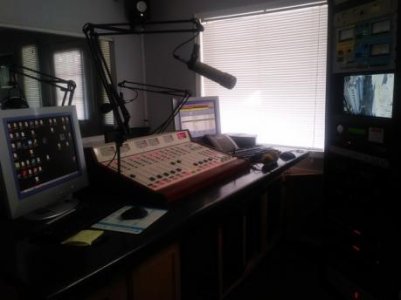
We moved our studio last year in our own building. Since I am a staff of one (and one other friend that helped with the move), around 10PM we moved the automation to the transmitter site (yep directly to the optimod). We did traffic and VTing for a week in advance. Everything was wired and put in place in 72 hours. It took about 5 days to get is wired. We used a Barix setup to keep us going. Total down time about 90 min. (late night).

A picture from day 6 is attached.

Note: NEVER put a studio on the second floor unless you have a moving team.

I'm getting too old. So it will be the last move I will do. I'll leave the next move to the new owner when I retire.
 

Attachments

  • 640_480.jpg
    640_480.jpg
    18.5 KB · Views: 40
Status
This thread has been closed due to inactivity. You can create a new thread to discuss this topic.


Back
Top Bottom