• Get involved.
    We want your input!
    Apply for Membership and join the conversations about everything related to broadcasting.

    After we receive your registration, a moderator will review it. After your registration is approved, you will be permitted to post.
    If you use a disposable or false email address, your registration will be rejected.

    After your membership is approved, please take a minute to tell us a little bit about yourself.
    https://www.radiodiscussions.com/forums/introduce-yourself.1088/

    Thanks in advance and have fun!
    RadioDiscussions Administrators

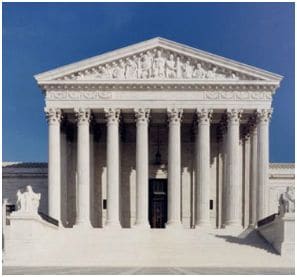
Supreme Court Sides With FCC

The Supreme Court has ruled in a unanimous decision (which is rare) that the FCC was justified in its new ownership rules.

 
The acting Chairman of the FCC offered this response to the Supreme Court decision:

WASHINGTON, April 1, 2021—FCC Acting Chairwoman Jessica Rosenworcel issued the following statement in response to the Supreme Court’s decision on the Prometheus Radio Project v. FCC court case. In today’s decision, the Supreme Court affirmed the deference provided to the agency to reform the media ownership rules in order to promote competition, localism and diversity. In doing so, the Supreme Court notes the limited data the Commission used in assessing the effects on minority and female ownership. “While I am disappointed by the Court’s decision, the values that have long upheld our media policies—competition, localism, and diversity—remain strong.

Interesting that she's "disappointed" in the court's decision, which should be seen as a victory for the FCC. But she voted against the rules that were part of this case. I'm sure she also won't agree with Justice Thomas' view about minority ownership.

Thomas made it clear that “the FCC had no obligation to consider minority and female ownership” when engaging in its rule rewrite some 3 1/2 years ago. Why? “Nothing in §202(h) of the Telecommunications Act of 1996 directs the FCC to consider rates of minority and female ownership,” Thomas said. “Nor could any court force the FCC to consider ownership diversity … Courts have no authority to impose ‘judge-made procedures’ on agencies.”
 
Given that it was a unanimous decision, Chair Rosenworcel should definitely not be disappointed and should get to work implementing the rules that were held up by this case.
 
There are many people who are minorities that own radio stations in the USA,
Most of them are pirates though.
Down with rules that have been a barrier to minority ownership. Good for the Chairwoman!
 
Given that it was a unanimous decision, Chair Rosenworcel should definitely not be disappointed and should get to work implementing the rules that were held up by this case.

The court didn't command the FCC to implement those rules. The previous administration reinstated the old rules completely. That's where they stand now. The decision was about if the FCC had to consider minority ownership in its ownership rules. The court said it didn't. The FCC has the authority to loosen ownership rules. That's all it said. It's now up to this new FCC to either proceed with loosening ownership rules, or keeping them where they are. The clock ran out before the court decision.

Here's an article about what the FCC did in 2019, reinstating the old rules:

 
Last edited:
I think the new administration will be concerned about the lack of minority ownership in FCC broadcast licensing. Some real changes need to come about.
 
I think the new administration will be concerned about the lack of minority ownership in FCC broadcast licensing. Some real changes need to come about.

Sure, they've been concerned for 25 years, but they've failed to come up with a plan to promote minority ownership. Why? Because it takes MONEY to own broadcasting.

Byron Allen doesn't need some government program to buy broadcast stations. He does it himself. That's what's needed here.

 
I think the new administration will be concerned about the lack of minority ownership in FCC broadcast licensing. Some real changes need to come about.
The issue in this area is not the FCC, and there are really no regulatory issues that can improve minority ownership.

The impediments for minority ownership are in the realm of financing as well as prepared and educated minority group members who want to own radio or TV today.

My wife and I had a plan to get into ownership going back about 10 years. We were able to put together some "safe" deals that were not over-leveraged and had multi-market presence which is pretty much essential to get bank or private equity financing. But we looked at a lot of markets and stations, while watching radio revenues stagnate and iPhones propagate. After several years of tire-kicking and station visits and even stage one due diligence, we decided that we could make more in low risk investing and not be burdened with debt.

Since we would have had a legitimate minority enterprise and true minority management, we can say that one of the real issues is that, like our situation, many groups that have significant or total minority control may decide, like we did, that it's just not a good long term investment for small and medium enterprises.

There is no guarantee that Asians, Blacks and Hispanics are rushing to buy radio stations... or even anxious to find financing to do so.

We had a number of skilled, talented possible associates who are also qualified minority group broadcast professionals. None of them, today, has any interest in owning a station or investing in stations with a group.
 
There is no guarantee that Asians, Blacks and Hispanics are rushing to buy radio stations... or even anxious to find financing to do so.
The potential minority ownership entities seem to be mostly interested in television, not radio.

In larger radio markets, new ownership groups would have to pry existing stations away from current owners, which will be difficult, even with the collapse in radio station values and the availability of cheap debt. You would likely find such ownership winding up with deficient signals that are a money pit, thus the reason the previous owner got rid of them.

Sometimes the best financial decisions are the ones you don't make.
 
Don't you need to be born in the USA to own a radio station? What's up with that? Maybe some concern about our media being infiltrated with foreign propaganda -- but I think recent history has proven that even U.S.-born citizens are capable of doing that just fine.
 
Don't you need to be born in the USA to own a radio station?

What happens when a radio station is owned by a company? Do all the stockholders have to be citizens? How do you know if the stockholders are citizens? They don't have to prove citizenship to buy stock.

The "foreign propaganda" thing is completely separate. There is a radio station in the DC area owned by a US citizen who leases his signal to Sputnik. So the station is owned by a citizen and also puts out propaganda.
 
The "foreign propaganda" thing is completely separate. There is a radio station in the DC area owned by a US citizen who leases his signal to Sputnik. So the station is owned by a citizen and also puts out propaganda.
True. Anyone heard of RTV? Cable channel available in all large markets who is wholly owned by the Russian government and programmed from Moscow. How about CCTV? Wholly owned and programmed by the Chinese government and programmed out of Beijing Can't get any more propagandized than those two examples.
 
It isn't only minorities who aren't interested in buying radio stations. With one exception that I know of, everyone who'd buying AMs with translators or marginal FM signals are radio guys at retirement age. The richest guy in my city was more interested in a baseball stadium than a radio cluster that was for sale not that long ago.
 
Media and companies around the world are generally owned (controlling interest) by citizens of the country they are located. As a US Citizen, I cannot own a Canadian radio station or one in Mexico. If I have a controlling interest partner that is a citizen, then that changes, perhaps with media as well. At least here in the USA one can lease their station to whomever they choose. A good point was made about stockholders of publicly traded companies not having to be citizens. This is forcing an issue with the FCC.

Minority ownership has not substantially increased over the years even with the various incentives the FCC instituted. Instead of being worried about ownership percentages going to various ethnic groups, perhaps analysis of markets that demonstrate ethnic minorities have access to stations or are already being served through various formats. I contend the issue is resolved not by ownership but content and/or access. That in itself brings on another question, of all the various ethic groups, how many prefer music centered on their ethnic group? My point is ownership does not automatically mean an ethnic group is served by the owner.
 
Media and companies around the world are generally owned (controlling interest) by citizens of the country they are located. As a US Citizen, I cannot own a Canadian radio station or one in Mexico.
Actually, you can own up to 50% of a station in Mexico, and you can have the Mexican partner be a "silent" one where you own, each, half but own 100% of the marketing rights so you program and sell and manage and pass a fee to the ownership interests.

Emmis owned stations in Argentina. I owned stations in Ecuador. The Spanish group PRISA owns stations outright or via partnerships in Chile, Argentina, Colombia, Costa Rica and Mexico.

Clear Channel owned controlling interests in England and Australia as well as a partnership with ACIR in Mexico. Metromedia owned stations in Russia, Bulgaria and several others. Emmis owned in Hungary.

The real issue is not whether you can own them, but whether a highly regulated business in all nations is a good risk with good profit potential.
If I have a controlling interest partner that is a citizen, then that changes, perhaps with media as well. At least here in the USA one can lease their station to whomever they choose. A good point was made about stockholders of publicly traded companies not having to be citizens. This is forcing an issue with the FCC.
Univision now has consent to be over half foreign owned, and they just applied to extend that further.
Minority ownership has not substantially increased over the years even with the various incentives the FCC instituted. Instead of being worried about ownership percentages going to various ethnic groups, perhaps analysis of markets that demonstrate ethnic minorities have access to stations or are already being served through various formats. I contend the issue is resolved not by ownership but content and/or access. That in itself brings on another question, of all the various ethic groups, how many prefer music centered on their ethnic group? My point is ownership does not automatically mean an ethnic group is served by the owner.
Valid point. The African American TV owner who has general market stations is asking for more money to be spent based on ownership, not ratings. This is a radical departure from media sales that have, for centuries been based on circulation, readership, listenership, viewership, or page views as specific metrics.

And even some of the minority serving companies, like SBS and Urban One, are public companies and the shareholders may be, in their majority, "old white guys" or, in any case, not members of the ethnic group the stations they own serve.

 
Don't you need to be born in the USA to own a radio station? What's up with that? Maybe some concern about our media being infiltrated with foreign propaganda -- but I think recent history has proven that even U.S.-born citizens are capable of doing that just fine.
No, you do not have to be a born US citizen to own radio stations. A naturalized citizen can also own stations outright.

And, for many years, there were limits on the extent of foreign ownership, limiting it to less than 50%. But there have been cases granted in the last couple of years to non-citizens owning stations in Alaska, South Texas and Florida; they are British, Italian and Mexican citizens.

Several of the public companies have filed for exceptions since they can't attribute share ownership to specific nationalities because much stock ownership is in custodial accounts. And then Univision just filed to have over half of the company owned by non-US nationals to allow a UK investment firm to participate along with the large interest Mexican Televisa already has.
 
Status
This thread has been closed due to inactivity. You can create a new thread to discuss this topic.


Back
Top Bottom