• Get involved.
    We want your input!
    Apply for Membership and join the conversations about everything related to broadcasting.

    After we receive your registration, a moderator will review it. After your registration is approved, you will be permitted to post.
    If you use a disposable or false email address, your registration will be rejected.

    After your membership is approved, please take a minute to tell us a little bit about yourself.
    https://www.radiodiscussions.com/forums/introduce-yourself.1088/

    Thanks in advance and have fun!
    RadioDiscussions Administrators

House Passes Media Diversity Bills


The House Tuesday passed a bill and a resolution aimed at achieving greater media diversity.


The votes on each were 319-105 — they were part of a block vote on a handful of communications-related bills.

H.R. 1754, the MEDIA (Measuring the Economics Driving Investments and Access) Diversity Act, was introduced by Reps. Billy Long (R-Mo.) and Marc Veasey (D-Tex.). It would require the FCC to take into account market entry barriers to market entry for “socially disadvantaged individuals.”
 
This is fine. But we have been talking about it for forty years. And, it's been nothing but talk.
 
This is fine. But we have been talking about it for forty years. And, it's been nothing but talk.
The markets with the highest number of "socially disadvantaged individuals" tend to be urban in the North and Midwest, both urban and rural in the South and West. Competitive signals don't become available very often in any market, and when they do, EMF can outbid any patchwork coalition of such "individuals" that might try bidding for the signal.

Of course, right-wing evangelical Christians will complain from here to Calvary and back that they're somehow "disadvantaged" when it comes to media access, which is about as far from reality as they can get.
 
This is fine. But we have been talking about it for forty years. And, it's been nothing but talk.
The real question is why any group, minority or otherwise, would want to buy a radio station today.

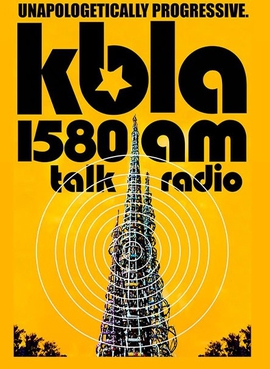
On the other hand: the very high price paid for 1580 AM in LA. A high price for a very bad signal.
 
The real question is why any group, minority or otherwise, would want to buy a radio station today.

On the other hand: the very high price paid for 1580 AM in LA. A high price for a very bad signal.
Exactly. Folks who want to get into the radio business, need to spend a lot of time for not only shopping around, but with seasoned owners who can give them a heads up on what to do, and what to avoid. As we all know, not all radio properties or markets are created equal.
 
The markets with the highest number of "socially disadvantaged individuals" tend to be urban in the North and Midwest, both urban and rural in the South and West. Competitive signals don't become available very often in any market, and when they do, EMF can outbid any patchwork coalition of such "individuals" that might try bidding for the signal.
This is why members of minority groups have, even recently, overpaid for really bad stations. As cited in my prior post, KBLA in Santa Monica (LA).
Of course, right-wing evangelical Christians will complain from here to Calvary and back that they're somehow "disadvantaged" when it comes to media access, which is about as far from reality as they can get.
You raise a good point as to whether religious groups will be considered "disadvantaged" and given breaks on purchases.

I support stations and groups like EMF, which program for all varieties and sects of Christians. I am a little disturbed that every little evangelical church seems to need its own station... which nobody listens to. On the other hand, those groups keep otherwise useless AMs on the air in many cases; I'd rather see a thinning of the herd to allow the remaining stations to improve coverage
 
Exactly. Folks who want to get into the radio business, need to spend a lot of time for not only shopping around, but with seasoned owners who can give them a heads up on what to do, and what to avoid. As we all know, not all radio properties or markets are created equal.
Somehow I think that KBLA went for way more than it is worth because the buyer remembered its era as the very successful and important KDAY during an earlier era.

Scan down to the KDAY era in the KBLA wiki article:

 
Status
This thread has been closed due to inactivity. You can create a new thread to discuss this topic.


Back
Top Bottom