Lew and John were only concerned about the NASH format, not WNSH.
They did a similar thing a couple years later with KSJO, attempting to bring NASH to San Francisco. They results were even worse.

Lew and John were only concerned about the NASH format, not WNSH.
Where did the NASH format/brand even work? I can't think of a single station/market (not counting NASH Icon, which actually DID work at WSM-FM).They did a similar thing a couple years later with KSJO, attempting to bring NASH to San Francisco. They results were even worse.
They are playing songs that go from a couple of years old to 20 year old or so. That is definitely a young adult format.
In the case of that station, I'd say they don't matter at all. Listeners who liked the station likely don't even know that it was "WNSH."I wonder what will happen to the WNSH calls. Will Audacy park them somewhere, or let them loose since they really don’t mean anything to them?
Agreed. A station I once worked at had the same calls and format for several decades. Then in the past 8 or 10 years they've changed formats three times - each time they changed formats, they also changed their call letters to reflect their new on-air offering or to align with their positioning. I really don't think it matters. Many know the stations in their market by the frequency, "name" and branding, rather than the actual call letters.Awhile back, a station I worked for changed their call letters to reflect the new branding, and I was like..."why?"

Oldies "took off" in the very late 60's with ones like WMOD in DC in '68 and WEEL in Fairfax following about 6 months later. They played back as far as about '65 and '66, or a 12 to 13 year span.In a two hour sample of yesterday's playlist (5-7pm) the average year was 1998, or 23 years old.
If this were 1985, that would be 1962.
So the songs are as old as Oldies were when Oldies took off as a format.
Remember, time buyers at agencies don't see the names. They see the call letters only in Nielsen reports. So changing calls is a "reset" and it avoids the agency seeing the old format.Agreed. A station I once worked at had the same calls and format for several decades. Then in the past 8 or 10 years they've changed formats twice - each time they changed formats, they changed their call letters as well, to reflect their new on-air offering or to align with their positioning. As you say, I really don't think it matters. Many know the station in their market by the frequency, "name" and positioning, rather than the actual call letters.
They may be the only people who actually care about callsigns. To be honest, identifying stations by calls is antiquated and should be retired (have it done by RDS or something).Remember, time buyers at agencies don't see the names. They see the call letters only in Nielsen reports. So changing calls is a "reset" and it avoids the agency seeing the old format.
Oldies "took off" in the very late 60's with ones like WMOD in DC in '68 and WEEL in Fairfax following about 6 months later. They played back as far as about '65 and '66, or a 12 to 13 year span.
I think you're having a brain fart. 1968 "oldies" stations, if they existed at all, wouldn't be playing songs from 1965 and 1966, which would be only 2 or 3 years old. Did you mean that the early oldies stations started in 1978, or that they were playing songs from as far back as 1955 or 1956?Oldies "took off" in the very late 60's with ones like WMOD in DC in '68 and WEEL in Fairfax following about 6 months later. They played back as far as about '65 and '66, or a 12 to 13 year span.
Can you tell fanduel that penn st shouldve made that 2 pt conversion to win in OT so i win my bet.In many ways, he was right. If it were not for the station's owner wishing to have a "national station" and needing at least a NYC "affiliate", this would never have been done.
Country music in the '70s was in a very different place. Much of it could have passed for MOR, and indeed, there were plenty of country crossover hits. WHN avoided whatever twangy, rural, fiddle-and-steel-heavy tracks were making the national charts. They just didn't get played in New York City, period. There's very little contemporary country that fits that mold now. Dan + Shay, perhaps, or some of Kenny Chesney's gentler ballads. But most of today's country artists write and sing of a lifestyle foreign to New Yorkers, and while many of the tracks feature electric guitars and loud percussion, you'll also hear steel guitar, fiddles, Dobros and even banjos prominent in the mix.While I realize the 1970s are ancient history and New York demographics have changed over the last 40+ years, it is inaccurate to say that country has NEVER been successful in the New York market.
WHN did very well in the 1970s. In the Spring 1977 Arbitron, WHN was tied for 2nd (with WCBS) in adults 25-54. WABC was first.
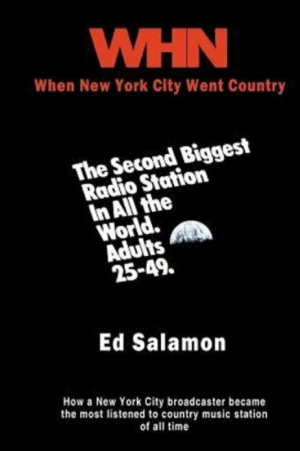
Ed Salomon wrote a book I highly recommend about WHN’s success called “When New York City Went Country.”
Again, I get this is not relevant to country radio‘s potential in 2021, but I have read numerous comments on various discussion boards that no country station has ever succeeded in New York and that would simply not be historically correct.
Yep!They may be the only people who actually care about callsigns. To be honest, identifying stations by calls is antiquated and should be retired (have it done by RDS or something).
No, WMOD (Barry Richards, PD) and WEEL (Where I briefly in 1969 worked looking for FMs to buy) were started in the late 60's and they played as far back as Little Richard, Buddy Holly, Danny & The Juniors, Paul Anka and an amount of Doo Wop even.I think you're having a brain fart. 1968 "oldies" stations, if they existed at all, wouldn't be playing songs from 1965 and 1966, which would be only 2 or 3 years old. Did you mean that the early oldies stations started in 1978, or that they were playing songs from as far back as 1955 or 1956?
Ed Salomon wrote a book I highly recommend about WHN’s success called “When New York City Went Country.”