• Get involved.
    We want your input!
    Apply for Membership and join the conversations about everything related to broadcasting.

    After we receive your registration, a moderator will review it. After your registration is approved, you will be permitted to post.
    If you use a disposable or false email address, your registration will be rejected.

    After your membership is approved, please take a minute to tell us a little bit about yourself.
    https://www.radiodiscussions.com/forums/introduce-yourself.1088/

    Thanks in advance and have fun!
    RadioDiscussions Administrators

SBS Launches Salsa 106.3 Miami


Spanish Broadcasting Systems used Thanksgiving Day to launch a fourth brand in Miami FL.

SBS launched “Salsa 106.3” on 106.3 WRAZ-FM Leisure City/Homestead and 106.3 W292GE Miami/92.3 WCMQ-HD2 Hialeah. The new brand is described as featuring “a wide variety of salsa, in the tropical format including international stars like, Marc Anthony, Willy Chirino, Oscar D’ Leon and other tropical (salsa) sounds, from artists such as Luis Vazquez, Frankie Negron and many more”. The new brand is a localized version of the programming heard on “Z93” WZNT San Juan PR.

Branding started on Thanksgiving day.
 
Does Miami really need a salsa station? I would think this is sbs competing against themselves .. I don’t see some salsa targeting a different demographic
 
Does Miami really need a salsa station? I would think this is sbs competing against themselves .. I don’t see some salsa targeting a different demographic
That is like saying that a country station and an urban station compete.

Each form of music does not necessary cover different demographics; they cover different tastes. And in the case of Hispanics, they cover different regions or nationalities.

The other SBS FMs cover various forms of contemporary music, such as reggaetón and Cubatón, and classic pop / ballad music.

Salsa is a very different format. And the Miami format is patterned after WZNT in San Juan, which has been Top 5 in ratings since it made its debut at 6:45 PM on December 29, 1979 when I pushed the "plate on" button. I mention this because I am very familiar with the salsa format.
 
That is like saying that a country station and an urban station compete.

Each form of music does not necessary cover different demographics; they cover different tastes. And in the case of Hispanics, they cover different regions or nationalities.

The other SBS FMs cover various forms of contemporary music, such as reggaetón and Cubatón, and classic pop / ballad music.

Salsa is a very different format. And the Miami format is patterned after WZNT in San Juan, which has been Top 5 in ratings since it made its debut at 6:45 PM on December 29, 1979 when I pushed the "plate on" button. I mention this because I am very familiar with the salsa format.
Oddly enough they tried this format with WCMQ as Z-92, even copying the Puerto Rican flag logo, but with a Cuban flag; however, they later returned to a classic hits format (not the same one from before, but with more recent hits).
 
Oddly enough they tried this format with WCMQ as Z-92, even copying the Puerto Rican flag logo, but with a Cuban flag; however, they later returned to a classic hits format (not the same one from before, but with more recent hits).
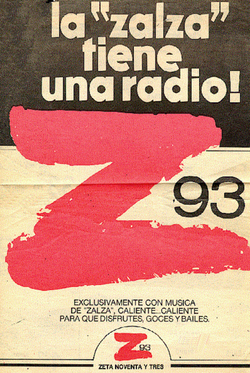
The Z-93 logo in Puerto Rico is a brushstroke "Z" and not a flag. The original logo was painted by me in my backyard in Los Frailes, Guaynabo, PR, in 1978 and then taken to my agency, Compton Saatchi & Saatchi, to be cleaned up and adapted.

1638065698250.png

Story of Z-93 in Puerto Rico: https://www.davidgleason.com/1979-Z-93-Puerto-Rico.htm

The Cuban and the Puerto Rican flags are essentially "reversals" of each other.

Salsa is, today, mostly a 40+ format, so it is a good option for a secondary signal as it has no competiton.
 
The Z-93 logo in Puerto Rico is a brushstroke "Z" and not a flag. The original logo was painted by me in my backyard in Los Frailes, Guaynabo, PR, in 1978 and then taken to my agency, Compton Saatchi & Saatchi, to be cleaned up and adapted.
I know that logo, but I am referring to the updated logo that they used long after SBS acquired the station.

5e948c6882812cf282342487.svg

5e948cd882812cf28234248d.svg


This logo, of course, was meant to mark Z-93 as "la emisora nacional de la salsa", which their competitor, Salsoul, mocked in some promos since of course, being an SBS station, their bosses were stationed in Florida, while Uno Radio is based in Hato Rey.
 
I know that logo, but I am referring to the updated logo that they used long after SBS acquired the station.

5e948c6882812cf282342487.svg


This logo, of course, was meant to mark Z-93 as "la emisora nacional de la salsa", which their competitor, Salsoul, mocked in some promos since of course, being an SBS station, their bosses were stationed in Florida, while Uno Radio is based in Hato Rey.
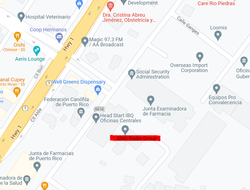
UnoRadio is based in Río Piedras, not Hato Rey. They are in the building I built for WUNO in 1971 in the Cerezal neighborhood of Río Piedras. They are across from the Social Security and health services building.

1638067146771.png

Salsoul was more than a competitor. In 1975, when they were last in the market, I came back from Miami and we tightened the format, did research and went on to be #1 for the next 32 years during which time I was the consultant, the sales manager, the VP and back to consultant.

The "logo" is the same brush-stroke Z which has barely changed in 42 years. The logo was not intended to mark the station as anything special except the play on salsa being written as "zalza". The "Día Nacional de la Salsa" was an offshoot in Year 2 of WZNT following the record success of "El Concierto Mayor" soon after Z-93 hit #1 after three weeks on the air.
 
Last edited:
UnoRadio is based in Río Piedras, not Hato Rey. They are in the building I built for WUNO in 1971 in the Cerezal neighborhood of Río Piedras. They are across from the Social Security and health services building.
Ah, I confused them with la Super Kadena, which was based "en el corazón de Hato Rey", and whose frequencies were taken over by Uno Radio, moving them from 1320 to the more powerful 630.

The succesor to SKN, Radio Isla, is indeed based at Avenida Chardón near the Colosseum.
 
Ah, I confused them with la Super Kadena, which was based "en el corazón de Hato Rey", and whose frequencies were taken over by Uno Radio, moving them from 1320 to the more powerful 630.
Not only did ARSO Radio get 630 and get rid of 1320, they got 910 in Ponce and 760 in Mayagüez. Combined with 1280 in Arecibo and 1430 in Caguas, that is a powerful news/talk network that comes close to covering 100% of the Island with a usable signal.
The succesor to SKN, Radio Isla, is indeed based at Avenida Chardón near the Colosseum.
And, as the noise level increases due to newfangled aparatos, 1320 does not even cover the San Juan metro area particularly well.
 
That is like saying that a country station and an urban station compete.

Each form of music does not necessary cover different demographics; they cover different tastes. And in the case of Hispanics, they cover different regions or nationalities.

The other SBS FMs cover various forms of contemporary music, such as reggaetón and Cubatón, and classic pop / ballad music.

Salsa is a very different format. And the Miami format is patterned after WZNT in San Juan, which has been Top 5 in ratings since it made its debut at 6:45 PM on December 29, 1979 when I pushed the "plate on" button. I mention this because I am very familiar with the salsa format.
Cubatón?

Edit: To answer my own question: "Cubaton is a musical movement that derives from the Caribbean island, influenced by the traditional sounds of the Cuban culture and fused with urban rhythms — or simply put, it's reggaeton Cubano." - Billboard.

Interesting. This is the first I've heard of it.
 
Last edited:
Cubatón?

Edit: To answer my own question: "Cubaton is a musical movement that derives from the Caribbean island, influenced by the traditional sounds of the Cuban culture and fused with urban rhythms — or simply put, it's reggaeton Cubano." - Billboard.

Interesting. This is the first I've heard of it.

Yep. That's popular here (South Florida) obviously.
 
Yep. That's popular here (South Florida) obviously.
It's surprisingly that WRMA's format has lasted this long. When SBS tries unique, hyper-regional formats (Central American in Los Angeles's KZAB, Dominican-centric in Puerto Rico's WRXD, the preceding Colombian Cumbia and Vallenato on WRZA itself) it usually doesn't go well.

Granted, those formats had signal issues.
 
It's surprisingly that WRMA's format has lasted this long. When SBS tries unique, hyper-regional formats (Central American in Los Angeles's KZAB, Dominican-centric in Puerto Rico's WRXD, the preceding Colombian Cumbia and Vallenato on WRZA itself) it usually doesn't go well.

Granted, those formats had signal issues.
The LLA Central American format got an absolutely amazing 1.8 to 2.0 share, and was only sold because SBS had to dispose of some less important facilities to pay down debt.

WRXD in San Juan did well in numbers, but horribly in sales. I don't think that the Miami based SBS management understood that the agency community (95% of revenue in San Juan is agency derived) thinks poorly of the disposable income level of Dominican migrants and, overall, there is resentment against Dominicans for taking local jobs in a market with over 20% unemployment.

The issue with any format on that South Dade signal is the signal itself.
 
WRXD in San Juan did well in numbers, but horribly in sales. I don't think that the Miami based SBS management understood that the agency community (95% of revenue in San Juan is agency derived) thinks poorly of the disposable income level of Dominican migrants and, overall, there is resentment against Dominicans for taking local jobs in a market with over 20% unemployment.
I guess SBS looked at their WSKQ money and mistakenly thought they'd get the same result in Puerto Rico without considering the market differences.

To be fair, they wanted to do News/Talk beforehand, but the costs of running it plus the lack of a West Coast simulcast killed that concept. So they just relegated it to morning drive on WZNT, as salsa and news talk both share older demographics.

Every one wants a share of that news talk pie. Rocky the Kid once joked that the major morning shows on other stations were all "smoking news-talk weed". The most political "El Despelote" ever gets was making fun of WAPA Radio's call-in show.
 
The issue with any format on that South Dade signal is the signal itself.
Probably the best quote ever! Format might work if people traveled just a short distance but people in South Florida tend to travel a lot of miles and would be out of the signal area quickly.
 
The signal has less issues now since it now has a translator in Miami proper. Still nothing in Broward, though, unless you got an HD radio that tunes to WCMQ.
 
I guess SBS looked at their WSKQ money and mistakenly thought they'd get the same result in Puerto Rico without considering the market differences.
What they did not take into account is that Z-93 in San Juan had an initial perception problem because even then agency buyers were predisposed against salsa, thinking it to be low class and low income. We had to do some extensive promotion at the client level to gain acceptance.
 
How long before you completely trash the FM band with noise from other stations? It was not meant for there to be a station on every single frequency from 92.1-107.9. Most of the radios except for the more expensive ones, just can’t handle it. They aren’t selective enough.
 
Status
This thread has been closed due to inactivity. You can create a new thread to discuss this topic.


Back
Top Bottom