• Get involved.
    We want your input!
    Apply for Membership and join the conversations about everything related to broadcasting.

    After we receive your registration, a moderator will review it. After your registration is approved, you will be permitted to post.
    If you use a disposable or false email address, your registration will be rejected.

    After your membership is approved, please take a minute to tell us a little bit about yourself.
    https://www.radiodiscussions.com/forums/introduce-yourself.1088/

    Thanks in advance and have fun!
    RadioDiscussions Administrators

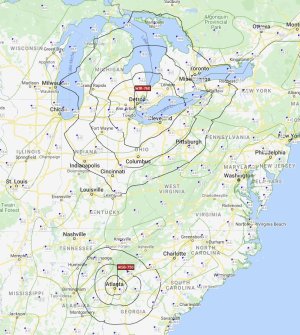
Dramatic Radio Locator Maps-WJR And WSB On The Same Scale Map

Great example of the differences in ground conductivity between the two sites. WJR still blasts 100 or more miles from its transmitter, while it looks like WSB is pretty weak at that distance.
I've said before and maintain that if WJR isn't overall the best AM signal in the Toledo metro, about 40 miles south of its tower, it's a close second to the locals that are on higher frequencies and affected by nighttime directional patterns and/or power drops.
I will say I've been impressed with the WSB signal on the Athens SDR. A little static and not as clear as a 50K would sound up here, but at 60 or so miles it sounds pretty strong.
 
Wow, yep the Rust Belt of the US has a lot better ground conductivity than the swampy southeast! CFZM also benefits from this as well.
 
Doesn't affect the groundwave per se, but when I attended college in Toledo WSB could be heard at night if one was willing to tolerate considerable slop from WJR. The unfortunate thing there is given the geography, one can't really turn their radio away from one of those stations to null the other. That can be done with WABC, but you still get the WJR slop.
 
Doesn't affect the groundwave per se, but when I attended college in Toledo WSB could be heard at night if one was willing to tolerate considerable slop from WJR. The unfortunate thing there is given the geography, one can't really turn their radio away from one of those stations to null the other. That can be done with WABC, but you still get the WJR slop.
I can get WJR here in Wyoming if I turn my portable to the east to avoid KDFD (formerly KDSP), but it's a challenge.
 
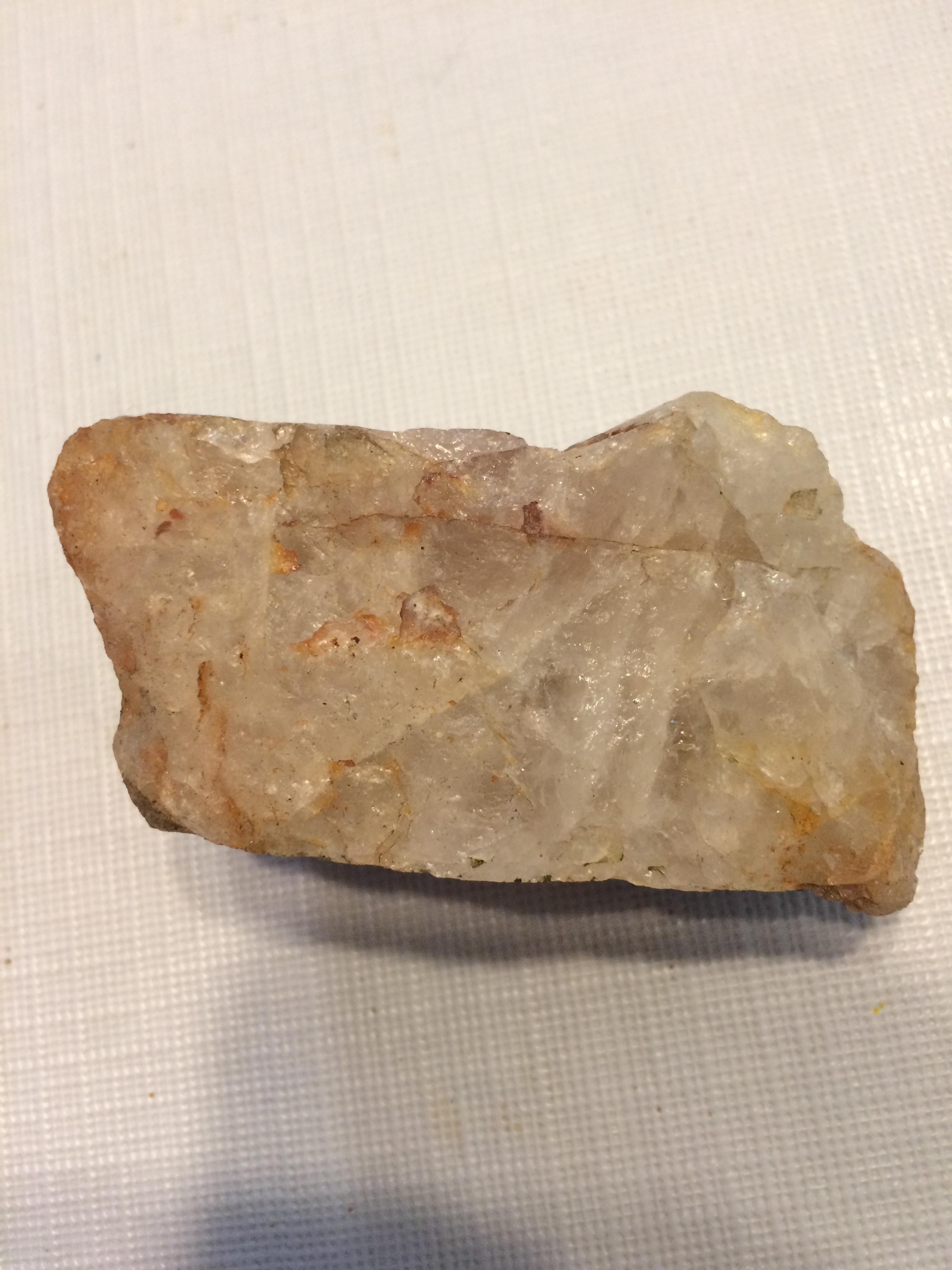
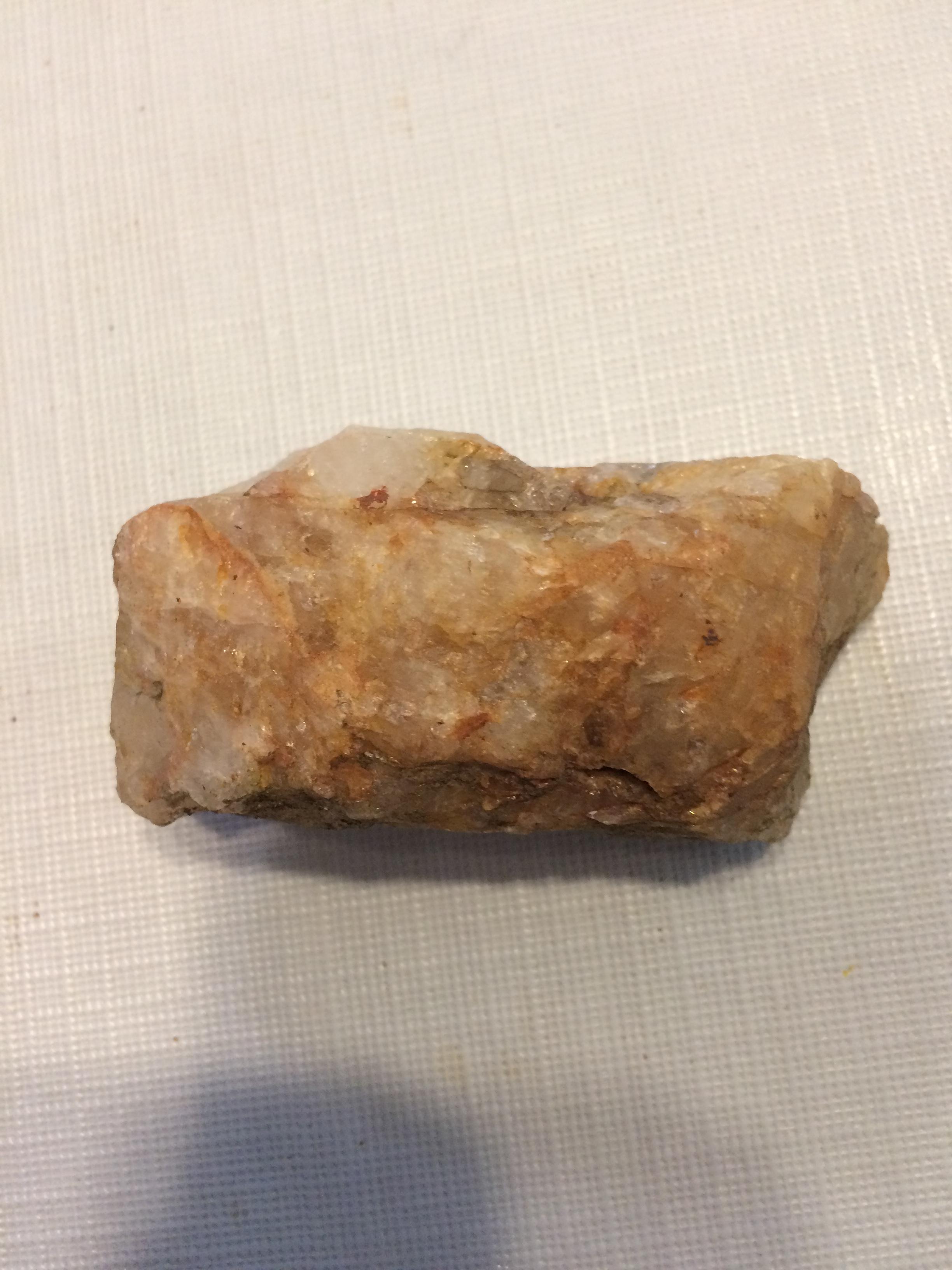
The WSB tower is at Lavista Rd and 285 so that makes it about 45 miles to the Athens SDR. Also, most of the ground around here isn't swampy, it's mostly red clay over granite and quartz. I'll try to post a pic to show what the groundwave has to try to overcome in this area.
 
I used to be able to hear WJR via groundwave in the near north Chicago suburbs until they squeezed WNDZ into NW Indiana with their signal pointed in my direction.
 
WWIkcps.jpg


HVpOxOV.jpg


I don't know if these pics work. This is a rock from my front yard, 30 miles east of Atlanta. Quartz with staining from iron clay. Tough for an AM signal to get over this on groundwave.
 
I did a couple of plots that shows WSB's and WJR's groundwave coverage super-imposed over a ground conductivity map. I used the same contour levels that radio-locator uses (2.0, 0.5, and 0.15 mV/m. I didn't color the rings. The little white boxes are the ground conductivity for that area. Ground conductivity boundaries are in green. This shows exactly how the different conductivity areas compress or extend the signal strength.

Note the greater conductivities of the Great Lakes and how they extend the distance. I am near Rochester, NY, and I can receive WJR quite easily on a portable at a distance of 287 miles. Much of its groundwave signal path to me is across the length Lake Erie.

Bill

WSB-WJR.jpg
 
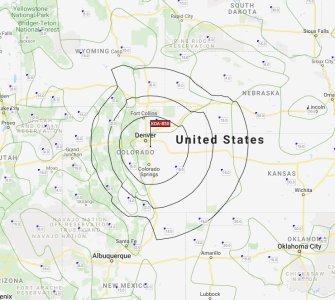
Here's one illustrating 50 KW KOA-850. KOA's single monopole is in Parker, Colorado, just outside of Denver.

The extremely good ground conductivity eastward toward and into Kansas greatly extends the signal in that direction. I often cross the country and when I do, I usually stay in Hays, Kansas, 300 miles east of KOA. KOA has a beautiful signal into Hays.

Bill

KOA.jpg
 
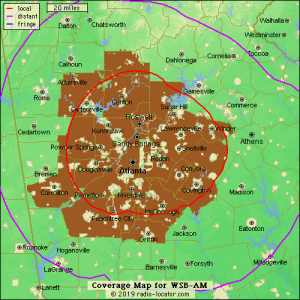
Put another way, WSB 750 fails to put a daytime 2mV/m contour over the entire Atlanta area. I've tried to highlight the Atlanta Nielsen radio market in Brown on this map from Radio-Locator. It's a bit rough, but you can clearly see the market exceeds the red contour.
 

Attachments

  • wsb-atlanta-market.png
    wsb-atlanta-market.png
    97.4 KB · Views: 13
JP McCarthy and John McMurray used to talk about listening to WJR on their boats in the Daytime up by Manitoulin Island in the Northern parts of Lake Huron. Listeners would then ask why they lost the signal North of Clare, MI in the Daytime. JP explained that it was the sand. There are a lot of places where the conductivity is much less than M-3, and observably so. Northern and Western Michigan, even quite a ways East of the 2 mS/m Zone on the map, are two places.
 
Last edited:
@timetraveller These maps are awesome, keep it up! I have to wonder when you traverse I-70 how (particularly) KRVN, KGAB, KDFD, and WIBW do?
 
Driving from the Tampa Bay, Florida to our present home in Midland, Michigan, I was rather surprised at the poor coverage of WSB. By the time we reached the Georgia-Tennessee state line, WSB was really noisy. I started listening to WJR while we were in northern Kentucky. At that location, the signal was a little noisy but very listenable. WJR has a huge signal.
 
Driving from the Tampa Bay, Florida to our present home in Midland, Michigan, I was rather surprised at the poor coverage of WSB. By the time we reached the Georgia-Tennessee state line, WSB was really noisy. I started listening to WJR while we were in northern Kentucky. At that location, the signal was a little noisy but very listenable. WJR has a huge signal.
WSB is usually disappointing.
My experience, lots of noise throughout GA. The signal improves only when very close to Atlanta, and even then there's a lot of noise.
 
I don't know if these pics work. This is a rock from my front yard, 30 miles east of Atlanta. Quartz with staining from iron clay. Tough for an AM signal to get over this on groundwave.
Yes, and somewhat similar to an iceberg, Stone Mountain has most of its rock buried underground for a wide area. Bad for AM transmitter coverage, but fortunately very good for "Loop-on-Ground" type receive antennas.
 
WSB is usually disappointing.
My experience, lots of noise throughout GA. The signal improves only when very close to Atlanta, and even then there's a lot of noise.
I imagine it's better to go west to east across WSB (4.0 mV/m) as opposed to North/South (1 or 2 mV/m)
 
Here's one illustrating 50 KW KOA-850. KOA's single monopole is in Parker, Colorado, just outside of Denver.

The extremely good ground conductivity eastward toward and into Kansas greatly extends the signal in that direction. I often cross the country and when I do, I usually stay in Hays, Kansas, 300 miles east of KOA. KOA has a beautiful signal into Hays.
That map looks like KOA's signal is just west of Hays.
I recall KOA's daytime signal coming in very weak in LaCrosse, KS, about 30 miles south of Hays.
I listened to the Clarence Thomas supreme court hearings, which KOA carried live, in the late 1980s.

I could hear KOA, during the day, but only on my car radio. The signal must be better in Hays, which would be closer to the contour than LaCrosse or points directly south.
I don't recall receiving KOA (during the day) in Great Bend, which is the next major town of significance southeast of Hays toward Wichita.
 
Last edited:
Put another way, WSB 750 fails to put a daytime 2mV/m contour over the entire Atlanta area. I've tried to highlight the Atlanta Nielsen radio market in Brown on this map from Radio-Locator. It's a bit rough, but you can clearly see the market exceeds the red contour.
WSB doesn't make the trip to Knoxville (of course next door local WETR doesn't help) but even without them, it's the last breath of WSB
 
Status
This thread has been closed due to inactivity. You can create a new thread to discuss this topic.


Back
Top Bottom