
• Get involved.
    We want your input!
    Apply for Membership and join the conversations about everything related to broadcasting.

    After we receive your registration, a moderator will review it. After your registration is approved, you will be permitted to post.
    If you use a disposable or false email address, your registration will be rejected.

    After your membership is approved, please take a minute to tell us a little bit about yourself.
    https://www.radiodiscussions.com/forums/introduce-yourself.1088/

    Thanks in advance and have fun!
    RadioDiscussions Administrators

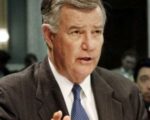
Lowry Mays Dies at Age 87

8D460C23-4F9A-4D1D-BE96-0E6B84F49184-150x120.jpeg
By Ed Ryan

The man who founded the company that would go on to become the biggest radio group in the United States has died. Lowry Mays passed away Monday at the age of 87. The announcement of his death was made by his alma mater, Texas A&M University.

Mays founded the San Antonio Broadcasting Company back in 1972. The name was later changed to Clear Channel Communications.
Throughout the years, Clear Channel would own over 40 TV stations, launch a billboard company and own over 1,200 radio stations, gobbling up companies during the early years of deregulation when radio was the darling of Wall Street.

Clear Channel purchased Jacor in 1998 in a $3.4 billion stock swap, adding over 450 radio stations. In 1999 the company bought AMFM in a deal valued at $17.4 billion in stock and $6.1 billion in debt. The debt would eventually lead to a bankruptcy years down the road.

After suffering a stroke in 2005, Mays turned over the day-to-day operation of Clear Channel to Mark Mays. Son Randall Mays was also involved in the company. In 2011 Bob Pittman was named CEO. Under Pittman’s leadership the company was renamed iHeartMedia and paired down to about 850 radio stations. The billboard company was spun off and TV stations were sold.

Lowry Mays was inducted into the Texas Business Hall of Fame in 1999 and Radio Hall of Fame in 2004. He was named Radio Ink’s Executive of the Year in 1999 and was on Radio Ink’s 40 Most Powerful People in Radio list from 1996 to 2004, holding on to the #1 spot from 2000 to 2004. The Broadcasters Foundation also has an award named after Mays.

Mays was a 1957 graduate of Texas A&M University. A business school is named after him at the college. Mays, who earned his bachelor’s degree in petroleum engineering at Texas A&M, was the founder and CEO of Clear Channel Communications. He was dedicated to supporting his alma mater, serving two non-consecutive terms (1985-1991 and 2001-2007) on The Texas A&M University System Board of Regents, including as chairman from 2003-2005.

Lowry-Mays.jpg

(l-r) Professor of Marketing and former Mays Business School Dean Eli Jones; Lowry and Peggy Mays; former Mays Business School Dean Benton Cocanougher; and Associate Dean for Graduate Programs, Professor and KPMG Chair in Accounting Jerry Strawser, taken in 2017 on the evening the Mays were presented with their namesake award.

“A really big tree fell in the Aggie forest today,” said John Sharp, chancellor of The Texas A&M University System. “We will never forget what he did for Aggieland.”
Texas A&M’s school of business was endowed by Mays in 1996 with a $15 million gift and was renamed the Lowry Mays College & Graduate School of Business. The university renamed the school once more in 2002 to Mays Business School. In 2017, the Mays Family Foundation gifted an additional $25 million, the largest single commitment in the business school’s history. Both gifts were part of an overall lifetime giving of $47 million.

Texas A&M University President M. Katherine Banks said, “We are saddened to hear of Lowry Mays’ passing today. He truly exemplified the Aggie core values. The Mays family has had a remarkable impact on the business school, providing countless opportunities for students and faculty, as well as on the university system through his service on the Board of Regents. Aggies are proud to carry on his legacy of leadership and service.”

In 2010, the Texas A&M Foundation Board of Trustees honored Mays with its Sterling C. Evans Medal for his philanthropy to the university. And as a result of the Mays’ service and generosity to the business school, the Peggy and Lowry Mays Impact Award was created and given to the couple in 2017. The award continues to be given in honor of those who impact the school through exemplary giving and strong leadership.

Radio Ink

More...
 
Dang I remember hearing at one point that Iheart when it was then known as Clear Channel was viewed as "Evil Company" because they formed what we now know as radio clusters in every city in the USA they operate back in the 2000's.

Yes today Iheart is known for being a podcast distributor, radio station owner and concert promoter ever since the rename from Clear Channel to Iheart in the 2010's.

If I am not mistaken Iheart started out with WOAI Radio and KAJA-FM in San Antonio when they only owned media outlets in the San Antonio area.


I was a two-time employee of Clear Channel under Lowry... Even though we called it cheap channel, at least it was run as a real radio company and not what Pittman has done as iHeartMedia which has cut everything to the bone and dismantled what Lowry had built.
RIP sir. It was an honor to know you and your sons and work for you.
 
I was a two-time employee of Clear Channel under Lowry.. I worked at their first acquisition outside of San Antonio, 1250 KPAC in Port Arthur, who I started with in my senior year in high school when Port Arthur College still owned it. Even though we called it cheap channel, at least it was run as a real radio company and not what Pittman has done as iHeartMedia which has cut everything to the bone and dismantled what Lowry had built.
RIP sir. It was an honor to know you and your sons and work for you
 
Clear Channel founder Lowry Mays died on Monday at the age of 87. The announcement of his death was made by his alma mater, and the namesake of its business school, Texas Aandamp;M University. Mays founded the San Antonio Broadcasting Company back in 1972 and the name was later changed to Clear

More...
 
I was a two-time employee of Clear Channel under Lowry.. I worked at their first acquisition outside of San Antonio, 1250 KPAC in Port Arthur, who I started with in my senior year in high school when Port Arthur College still owned it. Even though we called it cheap channel, at least it was run as a real radio company and not what Pittman has done as iHeartMedia which has cut everything to the bone and dismantled what Lowry had built.
RIP sir. It was an honor to know you and your sons and work for you

Lowry Mays and his family were most certainly responsible for executing a lot of ruthless staff cuts before Pittman entered the scene. The family built up that behemouth company to 1200 stations and then cashed out with their sale to private equity, setting it up for unsustainable debt and certain bankruptcy just before the market crashed.

Bob Pittman is the one who saw the shift to streaming and digital coming and put major resources into building the iHeartRadio app before any other commercial broadcaster began investing in that area. I'm no defender of big radio consolidation but credit where it's due, that was a pretty visionary move even in the midst of the company's debt crisis. I'm not sure what you think Pittman dismantled unless you're talking about spinning off the billboard business and selling their towers which I'd agree was dumb, but I don't think they had much choice given the financial situation the company ended up in after that disastrous private equity deal.
 
Lowry Mays and his family were most certainly responsible for executing a lot of ruthless staff cuts before Pittman entered the scene. The family built up that behemouth company to 1200 stations and then cashed out with their sale to private equity, setting it up for unsustainable debt and certain bankruptcy just before the market crashed.
Actually, the market had "crashed" before the sale was closed on. The investment banks tried to get out of it, but were legally forced to go through. The huge cuts in staff came under the new owners.

Consolidation itself, nearly 15 years before the crash, took place because over half of all US radio stations were not profitable. So the staff cuts over those first 13 years were due to a new cluster not needing 4 or 5 GMs, multiple accountants, as many in traffic and production and the like. Even engineering was cut when owners decided that five stations did not need 6 to 10 engineers.
Bob Pittman is the one who saw the shift to streaming and digital coming and put major resources into building the iHeartRadio app before any other commercial broadcaster began investing in that area.
That is not true. many companies had websites, streaming and the like well before Pittman got to Clear Channel. In 2002 HBC had "Netmio" with a corporate-wide Internet service for all their stations. Other companies were doing the same.

Heck, there is a certain "Shark" who now owns a big-name team who began even before Y2K selling internet services to radio and consolidating them... that's how he made his first billions.
I'm no defender of big radio consolidation but credit where it's due, that was a pretty visionary move even in the midst of the company's debt crisis.
He just made more noise and did a slightly better job on the content and graphics. But nearly all the bigger companies were doing that at the time.
I'm not sure what you think Pittman dismantled unless you're talking about spinning off the billboard business and selling their towers which I'd agree was dumb, but I don't think they had much choice given the financial situation the company ended up in after that disastrous private equity deal.
And they sold the event business well before Pittman arrived, creating Live Nation.

 
That is not true. many companies had websites, streaming and the like well before Pittman got to Clear Channel. In 2002 HBC had "Netmio" with a corporate-wide Internet service for all their stations. Other companies were doing the same.

I was talking about investment into the iHeartRadio platform and mobile app, not company websites. No other commercial broadcasters have anything that really compares to the platform Pittman envisioned and executed. Audacy has been trying but they got a late start and the execution has not been in the same league.
 
I was talking about investment into the iHeartRadio platform and mobile app, not company websites. No other commercial broadcasters have anything that really compares to the platform Pittman envisioned and executed. Audacy has been trying but they got a late start and the execution has not been in the same league.
That's only because the technology changed with the introductorio of the smartphone precisely when Clear Channel was sold and the recession began.

Pittman was an opportunist, not an innovator.
 
Last edited:
Dang I remember hearing at one point that Iheart when it was then known as Clear Channel was viewed as "Evil Company" because they formed what we now know as radio clusters in every city in the USA they operate back in the 2000's.

I never completely understood the hatred toward Mays and Clear Channel. I could understand people thinking their product wasn’t necessarily that great, not enjoying working for them, not wanting to have dinner with them, or whatever, but the Mays family was just businessmen. Clear Channel was a business being a business doing what a business does.

I've worked for several businesses inside and outside of radio and publicly and privately held. All of them, at their core, were about the exact same thing, making money, and they would do anything they could to make sure that would happen and would continue to happen. I worked for a large telecommunications company where contempt for the rank and file was off the charts. I worked for a locally owned radio company with owners who lived within a three mile radius of my old apartment, and, while better than a public company, cuts were frequent, and it used the Clear Channel business model. We had lots of voicetracking and automation, and we had plenty of syndicated programming. Despite being a locally owned company of seven stations, we had out of market voicetracking, too. Cumulus bought that company, and it changed a lot but also not much at all. From what I could tell, Lowry Mays was no worse (nor much better, for that matter) than any other corporate CEO. Since the private equity firms took over, I'd almost say the current regime makes Mays look like Mr. Rogers.

My experience has been, no matter the industry, if you’re working for a for profit business, your job is to keep the fat guy fat. If he starts losing weight, he'll make cuts, and he won’t think about anybody else.
 
I never completely understood the hatred toward Mays and Clear Channel. I could understand people thinking their product wasn’t necessarily that great, not enjoying working for them, not wanting to have dinner with them, or whatever, but the Mays family was just businessmen. Clear Channel was a business being a business doing what a business does.

I've worked for several businesses inside and outside of radio and publicly and privately held. All of them, at their core, were about the exact same thing, making money, and they would do anything they could to make sure that would happen and would continue to happen. I worked for a large telecommunications company where contempt for the rank and file was off the charts. I worked for a locally owned radio company with owners who lived within a three mile radius of my old apartment, and, while better than a public company, cuts were frequent, and it used the Clear Channel business model. We had lots of voicetracking and automation, and we had plenty of syndicated programming. Despite being a locally owned company of seven stations, we had out of market voicetracking, too. Cumulus bought that company, and it changed a lot but also not much at all. From what I could tell, Lowry Mays was no worse (nor much better, for that matter) than any other corporate CEO. Since the private equity firms took over, I'd almost say the current regime makes Mays look like Mr. Rogers.

My experience has been, no matter the industry, if you’re working for a for profit business, your job is to keep the fat guy fat. If he starts losing weight, he'll make cuts, and he won’t think about anybody else.
True also I was guessing before Clear Channel was renamed as iHeartRadio. I remember "Clear Channel is Greedy" rants was related to brining back the Fairness doctrine and how big Rush was in News/Talk stations like KFBK Sacramento that sparked the discontent about Clear Channel.

However when we talk about CHR radio like the transition from Rick Dees to Ryan Seacrest on KIIS-FM and the other CHR's and HotAC's managed by Clear Channel we give them a more positive review such as demographics change and ability to spot where the trends are going.
 
I'm reading all the comments, and people don't remember that Clear Channel was once voted one of the 200 Best Companies in America. It may have been one of the few radio companies to be in that book. Critics also believe Mays lobbied for the 96 Telecommunications Act. The reality is he didn't have to. The government was in a deregulation frenzy at the time. They had already deregulated the airlines, and several other industries. Reagan wanted to make government smaller, so he started deregulating radio in the 80s. Clinton also campaigned on shrinking the government. Some think Clinton was this big liberal, but he was an economic conservative. He cut taxes, cut regulations, and cut welfare. The only thing that is big enough to control big companies is big government. Unfortunately for radio, Clinton and Gingrich agreed that government needed to be cut. So radio ownership regulations were going to be cut regardless of what Mays or anyone else wanted. The only thing Mays did was get the investment money to buy a lot of radio stations. It came at a time when a lot of companies wanted to sell, because profits were down. It all became the perfect storm. Then the 2008 financial crash happened, and radio hasn't recovered.
 
True also I was guessing before Clear Channel was renamed as iHeartRadio. I remember "Clear Channel is Greedy" rants was related to brining back the Fairness doctrine and how big Rush was in News/Talk stations like KFBK Sacramento that sparked the discontent about Clear Channel.

However when we talk about CHR radio like the transition from Rick Dees to Ryan Seacrest on KIIS-FM and the other CHR's and HotAC's managed by Clear Channel we give them a more positive review such as demographics change and ability to spot where the trends are going.
People thought (I think there was a book out about it even) that Rush was Clear Channel's editorial voice, who was there to articulate the Mays' take on current events. Randy Michaels sold Jacor to Clear Channel, there was a lot of hate directed toward him as well. The long beaten-like-a-dead-horse Fargo thing earned Clear Channel criticism.

Mays said this in Fortune: " "We're not in the business of providing news and information. We're not in the business of providing well-researched music. We're simply in the business of selling our customers products.". (full Wikipedia bio: https://en.wikipedia.org/wiki/Lowry_Mays). I remember the reaction on this board (or its predecessor) being "how dare he!", but he was right.
 
The long beaten-like-a-dead-horse Fargo thing earned Clear Channel criticism.

It was Minot, but, yeah, it's been beaten to death.

Mays said this in Fortune: " "We're not in the business of providing news and information. We're not in the business of providing well-researched music. We're simply in the business of selling our customers products.". (full Wikipedia bio: https://en.wikipedia.org/wiki/Lowry_Mays). I remember the reaction on this board (or its predecessor) being "how dare he!", but he was right.

All too often, radio and broadcast programmers are ignored and otherwise looked down on while the sales staff is lauded, making good money, and driving better cars when nobody could be doing that if not for the programming. I get the disappointment and anger from the programming perspective when someone actually says the quiet part of broadcasting out loud, which is what Mays did. I can't imagine the people who were angry about it didn't know that was actually the case. The truth is that I've never worked for a broadcasting company that considered itself an entertainment organization. Every one of them was a sales operation. Even those that were programming focused and truly believed programming was important and invested in it only believed in programming if it was programming it could sell. If broadcasters weren't sales organizations, the beautiful music format wouldn't have died off of commercial radio roughly 30 years ago!

When I worked for the small local broadcaster that eventually sold to Cumulus that I mention above, one of the owners once told me, "If you don't pay for the product, YOU are the product!" His point was that the listeners weren't our actual customers. They were the product being moved to our actual customers, the advertisers. Now that we have access to all of this free stuff on the internet, we should probably keep that in mind a lot more than most of us do!
 
It was Minot, but, yeah, it's been beaten to death.


All too often, radio and broadcast programmers are ignored and otherwise looked down on while the sales staff is lauded, making good money, and driving better cars when nobody could be doing that if not for the programming. I get the disappointment and anger from the programming perspective when someone actually says the quiet part of broadcasting out loud, which is what Mays did. I can't imagine the people who were angry about it didn't know that was actually the case. The truth is that I've never worked for a broadcasting company that considered itself an entertainment organization. Every one of them was a sales operation. Even those that were programming focused and truly believed programming was important and invested in it only believed in programming if it was programming it could sell. If broadcasters weren't sales organizations, the beautiful music format wouldn't have died off of commercial radio roughly 30 years ago!

When I worked for the small local broadcaster that eventually sold to Cumulus that I mention above, one of the owners once told me, "If you don't pay for the product, YOU are the product!" His point was that the listeners weren't our actual customers. They were the product being moved to our actual customers, the advertisers. Now that we have access to all of this free stuff on the internet, we should probably keep that in mind a lot more than most of us do!
The free stuff on the internet makes us, the users the product as well. (And no, Facebook, Twitter, nor CNN, nor Fox nor your local news and talk station ownership wants Candidate/Political Party X to be elected to office).
 
I worked at two different Clear Channels, and frankly they operated about the same way as much smaller companies did, obviously with more mass.
 
Status
This thread has been closed due to inactivity. You can create a new thread to discuss this topic.


Back
Top Bottom