When that sudden jolt of a 3.8 earthquake hit the Buffalo area this morning, there was not enough time for much information to be gathered and deseminated about what had happened. Granted, it wouldn't take long in this internet/smartphone/social-media era for people to compare notes, but my immediate instinct was to turn on one of the live/local radio morning shows, knowing there was a good chance I'd hear IMMEDIATELY what had happened. And that's exactly what happened.

-
Get involved.
We want your input!
Apply for Membership and join the conversations about everything related to broadcasting.
After we receive your registration, a moderator will review it. After your registration is approved, you will be permitted to post.
If you use a disposable or false email address, your registration will be rejected.
After your membership is approved, please take a minute to tell us a little bit about yourself.
https://www.radiodiscussions.com/forums/introduce-yourself.1088/
Thanks in advance and have fun!
RadioDiscussions Administrators
You are using an out of date browser. It may not display this or other websites correctly.
You should upgrade or use an alternative browser.
You should upgrade or use an alternative browser.
eArThQuAkE? Put one in the RADIO column!
- Thread starter flybynight
- Start date

So, to whom did you turn? WBFO? WBEN? Someone else?
WBEN did an outstanding job! Callers began sharing their experiences almost immediately after the quake happened. Kudos to WBFO’s Jay Moran. He had Buffalo radio’s first interview with an expert at 6:45am — a geologist from UB. I’m sure other morning hosts weighed in since nearly everyone who was awake felt the quake.So, to whom did you turn? WBFO? WBEN? Someone else?
If social media is any indication, it seems that most live morning shows were on it and talking about it. My guess is that they covered it appropriately to their format. It certainly was the topic of the morning.
Meanwhile, did anyone cover the major earthquake in Turkey? It's a very grim situation there with over 5,000 deaths. I haven't heard of any injuries or property damage in Buffalo. Small quakes are a fairly common occurrence in many places (less so in New York) and not particularly newsworthy...WBEN did an outstanding job! Callers began sharing their experiences almost immediately after the quake happened. Kudos to WBFO’s Jay Moran. He had Buffalo radio’s first interview with an expert at 6:45am — a geologist from UB. I’m sure other morning hosts weighed in since nearly everyone who was awake felt the quake.
Yes, WBFO gave as much coverage to the Turkey earthquake as the Buffalo quake over the course of the morning. NPR talked with its Lebanon-based reporter who felt the shaking of the quake in that country. Plus, NPR’s top and bottom of the hour newscasts led with the latest on the Turkey quakes. WBEN also included coverage of the Turkey quakes in its newscasts throughout the day. Amidst the calls Susan Rose was taking during the morning show, she played a news spot from ABC about the devastation wrought by the Turkey quake. So, yes, Turkey was covered!Meanwhile, did anyone cover the major earthquake in Turkey? It's a very grim situation there with over 5,000 deaths. I haven't heard of any injuries or property damage in Buffalo. Small quakes are a fairly common occurrence in many places (less so in New York) and not particularly newsworthy...
Again, tbolt909, YOU DON’T LIVE HERE! The Buffalo quake WAS newsworthy. As you correctly note, they’re not common here. I’m in my late 60s. And I have NEVER, EVER experienced what I felt Monday morning. Scared the living daylights out of me. The same holds true for the rest of the hundreds of thousands of people who live in our region. After getting up to check the interior and exterior of my house, I went to Twitter and turned on WBEN to find out what happened. I spent my career in radio news. Believe me, I know what’s newsworthy and what is not!

When that sudden jolt of a 3.8 earthquake hit the Buffalo area this morning, there was not enough time for much information to be gathered and deseminated about what had happened. Granted, it wouldn't take long in this internet/smartphone/social-media era for people to compare notes, but my immediate instinct was to turn on one of the live/local radio morning shows, knowing there was a good chance I'd hear IMMEDIATELY what had happened. And that's exactly what happened.

Buffalo, New York, area is hit with the strongest earthquake in 40 years
“It felt like a car hit my house in Buffalo. I jumped out of bed,” Erie County Executive Mark Poloncarz said of Monday's 3.8-magnitude quake.
 www.nbcnews.com
Buffalo area quake on the national news. Woah when I hear of quakes outside the ring of fire it's considered a rare occurrence. Also I remember a few years ago that east coast quakes tend to cover a larger area than the same sized quake in California. A 3.8 quake in California would only be felt in an area less than 50 mile radius from the epicenter.
Then again in rare cases there have been quakes outside the ring of fire that have gotten a 5.0-5.9 in the past 15 years and it's crazy how they affect the entire east coast and the entire Midwest in those cases. However a same sized quake in California would be confined to one section of the state such as a 5.0 quake in the Los Angeles area would only be felt in Southern California type situation. Also most of the time when quake risks are discussed it's centered around places like the Puente Hills Fault in Los Angeles or the Hayward Fault in the Bay Area, San Andreas fault for the entire state of California or the Cascadia fault in Washington and Oregon.
I don't know the specifics of the Buffalo Fault given this one is rarely discussed due to other reasons related to USGS putting lots of attention to "Previously unrecognized faults" in California.
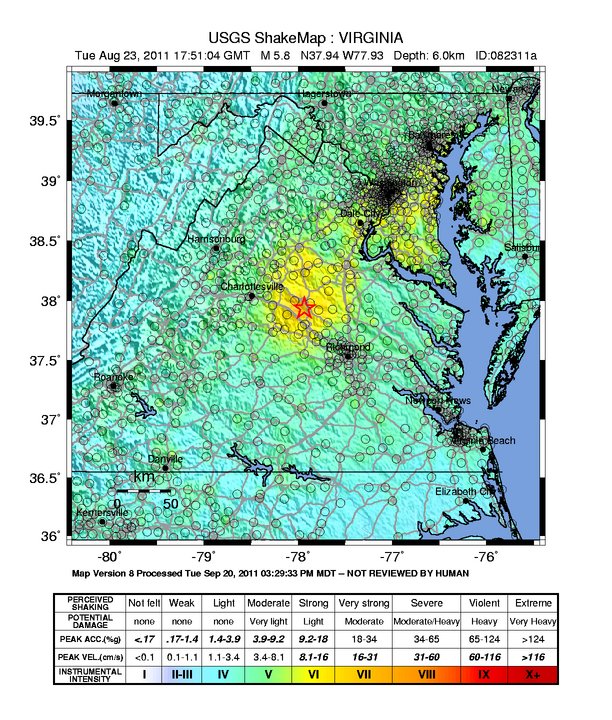
2011 Virginia earthquake - Wikipedia
2020 Sparta earthquake - Wikipedia
2008 Illinois earthquake - Wikipedia

Credit where due, WBEN did a commendable job in putting people on the air and contacting officials from the community in which the quake occurred. California residents might call the Buffalo quake nothing more than a blip on the screen, comparatively speaking, it was; but for thousands, if not hundreds of thousands of WNY residents, 3.8 was a major seismological event. Most WNY residents felt the momentary jolt and, as a community, had similar reactions.
Although putting callers on the air to memorialize their reactions may seem trite, it served a cathartic purpose. It also went to prove that all was well, despite the momentary rumble. This in itself proved beneficial, and a service to the public.
Although putting callers on the air to memorialize their reactions may seem trite, it served a cathartic purpose. It also went to prove that all was well, despite the momentary rumble. This in itself proved beneficial, and a service to the public.
Absolutely. I know exactly what I was doing the first time I experienced an earthquake, when I was a teenager growing up in Indiana. It was a similar magnitude as the one which impacted Buffalo this week, and earthquakes of magnitude 4+ are pretty rare here. Once every 20 years or so.The Buffalo quake WAS newsworthy. As you correctly note, they’re not common here. I’m in my late 60s. And I have NEVER, EVER experienced what I felt Monday morning. Scared the living daylights out of me. The same holds true for the rest of the hundreds of thousands of people who live in our region.
First thing I did once the shaking subsided was grab the transistor radio and tune the news/talk station in Indianapolis to find out if this was the New Madrid fault in the bootheel of Missouri lighting up a magnitude 8 earthquake, or something lesser.

I've been through more quakes than I can count, including being in the strongest zone of the 1994 Northridge, CA, quake.
Add to that many small ones in Puerto Rico, and many in Ecuador and Mexico City... including one where the hotel I was in could be heard hitting the next door building from the swaying; that hotel, the Regis, came down in the "big one" killing several hundred guests and employees.
In every case, as soon as possible (in a number of cases the shaking was so strong that I could not stand up and balance) I turned on a battery powered radio (always had several in convenient places when living in quake territory) to hear what was going on. At the same time, I called the stations I owned or worked for to see the effect on our facilities.
Today, my question is: what is the first reaction of different age groups?
Those over 45 or 50 will likely try to find information on radio or TV. If there is a power failure, TV would be impossible. Many will no longer have a radio, and most home routers will either be dead or only have a short battery-aided service life.
Many will turn to cellular phones, and find that lots of cells don't have backup. Others have battery backups that last short periods. A few, such as those on dedicated terrains, may have generators but with fuel for a limited period.
In Hurricane María in Puerto Rico in 2017, all but 2 of over 120 radio stations were off. All TV stations were gone, with the "big two" losing their 1000' towers. Wired connectivity with over half of all cellular sites was damaged. For a while, less than 10% of cell sites actually worked, and then only in their own immediate area. Some parts of the Island went months without electricity... almost nobody had power for a week to 10 days.
So what would younger adults do? How about people in their 30's and 40's? And those over 50?
Add to that many small ones in Puerto Rico, and many in Ecuador and Mexico City... including one where the hotel I was in could be heard hitting the next door building from the swaying; that hotel, the Regis, came down in the "big one" killing several hundred guests and employees.
In every case, as soon as possible (in a number of cases the shaking was so strong that I could not stand up and balance) I turned on a battery powered radio (always had several in convenient places when living in quake territory) to hear what was going on. At the same time, I called the stations I owned or worked for to see the effect on our facilities.
Today, my question is: what is the first reaction of different age groups?
Those over 45 or 50 will likely try to find information on radio or TV. If there is a power failure, TV would be impossible. Many will no longer have a radio, and most home routers will either be dead or only have a short battery-aided service life.
Many will turn to cellular phones, and find that lots of cells don't have backup. Others have battery backups that last short periods. A few, such as those on dedicated terrains, may have generators but with fuel for a limited period.
In Hurricane María in Puerto Rico in 2017, all but 2 of over 120 radio stations were off. All TV stations were gone, with the "big two" losing their 1000' towers. Wired connectivity with over half of all cellular sites was damaged. For a while, less than 10% of cell sites actually worked, and then only in their own immediate area. Some parts of the Island went months without electricity... almost nobody had power for a week to 10 days.
So what would younger adults do? How about people in their 30's and 40's? And those over 50?
Maybe because of the commonality of these type quakes, it's not newsworthy on a national scale, but certainly newsworthy locally. And for what it's worth, this quake did make the national news.Small quakes are a fairly common occurrence in many places (less so in New York) and not particularly newsworthy...
WGR, WBEN, WKSE.So, to whom did you turn? WBFO? WBEN? Someone else?
Yes, I did see it mentioned on CNN. It's still only a minor curiosity and not a disaster. Nothing wrong with local news giving it some coverage. People should have some empathy for the folks in Turkey and Syria. The devastation is horrific. That is a major World news story...Maybe because of the commonality of these type quakes, it's not newsworthy on a national scale, but certainly newsworthy locally. And for what it's worth, this quake did make the national news.
I'm in Silicon Valley and the San Jose Mercury News had an AP story on page A3. Of course this is earthquake country and even a "small" shake gets coverage.Yes, I did see it mentioned on CNN.
Earthquakes are rare in WNY. The 2/7 quake was the third I've experienced here in my lifetime, and the strongest. It was a sharp, loud jolt that thankfully had short duration, which limited damage. There are several geologic faults in WNY that were discerned in the last 15 years thanks to new technologies that allow geologists to survey sub-surface structures more accurately. There is a major fault about halfway between Buffalo and Rochester called the Clareden-Linden fault system that has a 40% chance of a 6.5 magnitude quake at this time. Several smaller faults have been identified, including the one that runs through West Seneca. A 6.5 quake would likely do major damage in the city of Buffalo.
The National Guard and regional emergency services have conducted training in earthquake response locally. You can get a better look at the threat, including a map of the faults, and how they've trained to respond, here:
The National Guard and regional emergency services have conducted training in earthquake response locally. You can get a better look at the threat, including a map of the faults, and how they've trained to respond, here:
New York Division of Military and Naval Affairs News - Faults Underlying Exercise Vigilant Guard
New York Division of Military and Naval Affairs News - Faults Underlying Exercise Vigilant Guard
dmna.ny.gov
Probably in a minority... but within seconds of the 'event', I was listening to my scanner (specifically, local police, fire, EMS, and airports - KBUF, KIAG, and Air Reserve). After about 10 minutes, I went to FaceBook. Between those two sources, I feel that I had accurate, valid, and reliable information. Never turned a radio or television on for this purpose... frankly, didn't even think about it.I've been through more quakes than I can count, including being in the strongest zone of the 1994 Northridge, CA, quake.
Add to that many small ones in Puerto Rico, and many in Ecuador and Mexico City... including one where the hotel I was in could be heard hitting the next door building from the swaying; that hotel, the Regis, came down in the "big one" killing several hundred guests and employees.
In every case, as soon as possible (in a number of cases the shaking was so strong that I could not stand up and balance) I turned on a battery powered radio (always had several in convenient places when living in quake territory) to hear what was going on. At the same time, I called the stations I owned or worked for to see the effect on our facilities.
Today, my question is: what is the first reaction of different age groups?
Those over 45 or 50 will likely try to find information on radio or TV. If there is a power failure, TV would be impossible. Many will no longer have a radio, and most home routers will either be dead or only have a short battery-aided service life.
Many will turn to cellular phones, and find that lots of cells don't have backup. Others have battery backups that last short periods. A few, such as those on dedicated terrains, may have generators but with fuel for a limited period.
In Hurricane María in Puerto Rico in 2017, all but 2 of over 120 radio stations were off. All TV stations were gone, with the "big two" losing their 1000' towers. Wired connectivity with over half of all cellular sites was damaged. For a while, less than 10% of cell sites actually worked, and then only in their own immediate area. Some parts of the Island went months without electricity... almost nobody had power for a week to 10 days.
So what would younger adults do? How about people in their 30's and 40's? And those over 50?
Yes here in Northern California we get lots of stories close to earthquake anniversaries like the 1906, 1989, and 2014 quakes to watch out with the Hayward Fault getting the most attention given that Berkeley, Oakland and are the largest cities in the Bay Area are within the likely epicenters in the event the next Hayward Fault Quake takes place.I'm in Silicon Valley and the San Jose Mercury News had an AP story on page A3. Of course this is earthquake country and even a "small" shake gets coverage.
For the Buffalo area faults on the other hand there needs to be more research on those topics given that it's an intraplate quake and is not well known.
So far the most notable intraplate earthquake fault getting attention is the New Madrid Fault. There's a few more like Ramapo Fault, Charleston, Wabash, Mineral Virginia Fault that did get attention in the past.
But what would you have done if you lost your power?Probably in a minority... but within seconds of the 'event', I was listening to my scanner (specifically, local police, fire, EMS, and airports - KBUF, KIAG, and Air Reserve). After about 10 minutes, I went to FaceBook. Between those two sources, I feel that I had accurate, valid, and reliable information. Never turned a radio or television on for this purpose... frankly, didn't even think about it.
I have a generator to keep my house running... but that didn't happen. And though the fact is it didn't... I suppose cell service and home internet might also go down... but police/fire/EMS/ATC/military would still be up. As I said, scanner traffic informed me within less than 5 minutes what had occurred. And the fact that no fire/EMS calls came through indicated that it was not a "disaster."But what would you have done if you lost your power?
Thing is, IMO, in cases of a desire (or need) to be real-time-aware of a local situation, a basic scanner is your best friend. Heck, I'd imagine much of what is reported by OTA radio about incidents is initially gathered from scanner traffic... and then there's some delay until Sandy Beach or Carl Russo (or whomever the announcer du jour is) speaks it to the masses.
Curious... at what time did, say, WBEN, report (beyond "yikes, something just happened") the event? I'll bet that it was longer than five minutes.
Again, yes, I realize that I am probably in the minority. But I also bet that I am not the lone singular person that did this. I will accept that I am likely on the edges of a bell curve.
This may be true in some areas of the country, but not others. Even the smaller county where my parents live has their police/fire/EMS/Disaster Services/Public Safety on a digital trunked system which is scrambled and has been since the early 2000s. Scanners in that area are nearly useless for listening to public safety communications. Where I live, you could once log onto the internet and see a screen of active dispatched calls for fire/EMS with real time updates, but they've taken that down, most probably due to privacy issues and concerns.Thing is, IMO, in cases of a desire (or need) to be real-time-aware of a local situation, a basic scanner is your best friend. Heck, I'd imagine much of what is reported by OTA radio about incidents is initially gathered from scanner traffic...
- Status
- This thread has been closed due to inactivity. You can create a new thread to discuss this topic.