I believe I turned on WBEN before 6:30, and they were already taking listener calls. So, if not five minutes, it was within 10 to 15 minutes. I suppose a purist would say that’s not true reporting. But those calls began to paint a picture of what happened — information about what communities felt the quake, the sound it made, how pets reacted, etc. It was around this time that a Canadian monitoring station revealed a 4.2 magnitude quake. The USGS followed with its statement of a 3.8 magnitude quake located in West Seneca. As mentioned in an earlier post, WBFO had an interview with a geologist from the University at Buffalo at 6:45am. WBEN interviewed the Mayor of Buffalo during the 7:00 hour. So, the radio response was quite immediate, IMHO.Curious... at what time did, say, WBEN, report (beyond "yikes, something just happened") the event? I'll bet that it was longer than five minutes.

-
Get involved.
We want your input!
Apply for Membership and join the conversations about everything related to broadcasting.
After we receive your registration, a moderator will review it. After your registration is approved, you will be permitted to post.
If you use a disposable or false email address, your registration will be rejected.
After your membership is approved, please take a minute to tell us a little bit about yourself.
https://www.radiodiscussions.com/forums/introduce-yourself.1088/
Thanks in advance and have fun!
RadioDiscussions Administrators
You are using an out of date browser. It may not display this or other websites correctly.
You should upgrade or use an alternative browser.
You should upgrade or use an alternative browser.
eArThQuAkE? Put one in the RADIO column!
- Thread starter flybynight
- Start date

Having been through more and larger quakes than most, I think an important point is that there is no "official news" source for earthquakes other than the USGS and other monitoring agency estimates of the magnitude. Everything else is a compendium of anecdotal experience, fire and police calls and ordinary people reporting what they feel.I believe I turned on WBEN before 6:30, and they were already taking listener calls. So, if not five minutes, it was within 10 to 15 minutes. I suppose a purist would say that’s not true reporting. But those calls began to paint a picture of what happened — information about what communities felt the quake, the sound it made, how pets reacted, etc.
In that context, a radio or TV station that can report on police and fire and also air listener experiences is of the greatest value. One of the most important things a station can do for people is help them over the fear or excitement and lead them to logical steps. In many places I've worked we always had a bright colored envelope hung on the wall or studio bulletin board with things like how to check your gas connection / how to turn it off and other safety steps. The important thing is to get people out of the hysteria that quakes produce.
That is actually good coverage. And airing listeners who can unite people in a "common experience" helps to calm nerves and allows those with no real emergency or issue to be segregated from those who may need help or assistance.It was around this time that a Canadian monitoring station revealed a 4.2 magnitude quake. The USGS followed with its statement of a 3.8 magnitude quake located in West Seneca. As mentioned in an earlier post, WBFO had an interview with a geologist from the University at Buffalo at 6:45am. WBEN interviewed the Mayor of Buffalo during the 7:00 hour. So, the radio response was quite immediate, IMHO.

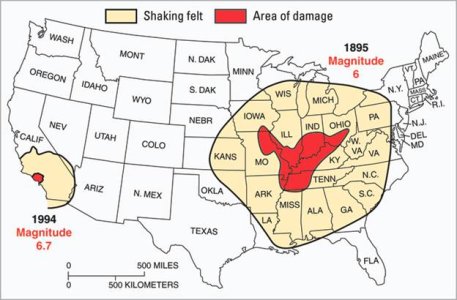
Here is one that the USGS and Caltech brings up whenever Intraplate quakes are reported. a quake in California thats a 6.7 would only be confined to Southern California. A 6.0 New Madrid Quake would cause damage in multiple states. Its like a 3.8 quake in Buffalo would be felt in the entire Northeast of the USA and parts of Ontario, Canada while a 3,8 quake would either be rarely felt or felt in one small neighborhood within California.
I generally agree with the overall thought here. Remember, though, your 'question' was about peoples *first* reaction. Frankly, I'd imagine that peoples *first* reaction is far less about what Oliver and Lisa experienced 30 miles away and whether, or not, the dog barked or parakeet fluttered. That may come later as social soothing. The first reaction, I'll bet strongly, is what-the-hell-is- happening-*here*-and-*now*... and they want to know as quickly and accurately as possible... with intermediaries "color." I gave my reaction... and, as I have learned since, I was definitely not alone. As a related opinion, I find that WX monitoring is beneficial as it will alert to meaningful events well before the collective Andy Parker's, Mike Cejka's, or Maria Genero's do. But, true, radio has it's place and contribution to the overall landscape.Having been through more and larger quakes than most, I think an important point is that there is no "official news" source for earthquakes other than the USGS and other monitoring agency estimates of the magnitude. Everything else is a compendium of anecdotal experience, fire and police calls and ordinary people reporting what they feel.
In that context, a radio or TV station that can report on police and fire and also air listener experiences is of the greatest value. One of the most important things a station can do for people is help them over the fear or excitement and lead them to logical steps. In many places I've worked we always had a bright colored envelope hung on the wall or studio bulletin board with things like how to check your gas connection / how to turn it off and other safety steps. The important thing is to get people out of the hysteria that quakes produce.
That is actually good coverage. And airing listeners who can unite people in a "common experience" helps to calm nerves and allows those with no real emergency or issue to be segregated from those who may need help or assistance.
- Status
- This thread has been closed due to inactivity. You can create a new thread to discuss this topic.