• Get involved.
    We want your input!
    Apply for Membership and join the conversations about everything related to broadcasting.

    After we receive your registration, a moderator will review it. After your registration is approved, you will be permitted to post.
    If you use a disposable or false email address, your registration will be rejected.

    After your membership is approved, please take a minute to tell us a little bit about yourself.
    https://www.radiodiscussions.com/forums/introduce-yourself.1088/

    Thanks in advance and have fun!
    RadioDiscussions Administrators

KZMP 1540 sold

1460 KCLE, in Wikipedia, is described as one of Texas' oldest stations, going on the air in Waco on July 21, 1922, making it 100 years old. It has two FM translators: 93.1 K226BM in Cleburne and 95.7 K239CC in Burleson. You'd think the two translators would be enough to keep it on the air, most recently airing Vietnamese programming.

Three Dallas-area AM stations off the air. Not a good sign for the state of AM radio.
 
1460 KCLE, in Wikipedia, is described as one of Texas' oldest stations, going on the air in Waco on July 21, 1922, making it 100 years old. It has two FM translators: 93.1 K226BM in Cleburne and 95.7 K239CC in Burleson. You'd think the two translators would be enough to keep it on the air, most recently airing Vietnamese programming.

Three Dallas-area AM stations off the air. Not a good sign for the state of AM radio.
Indeed it did. Unfortunately, 1460 celebrated its centennial in silence. Also unfortunate are the translators serving Cleburne and Burleson, which lent no favors to whom Tron Dinh Do was trying to serve with his programming. Neither of the two towns are a hotbed of Vietnamese speakers, and left the AM as the only service in DFW available for those listeners to tune in. What the station was doing as a classic country outlet, a decade or so ago, would likely be the best avenue for 1460 and its translators, but that will require an LMA or an outright purchase, because that isn't something that is going to occur under the current licensee.

AM radio is in dire straits no matter what market we may discuss. The problem is definitely not Dallas alone.
 
I asked about KCLE and translators a few years back and the price was way up there. I signed a non-disclosure paper, so I won't reveal price quoted. If I had a programming paying at least $50,000 a month I could possibly break even if nothing went wrong.

Looks like they bought it in 2015 for 1.6. That's going to be a huge haircut no matter what, unless the land was included and is desirable.
 
The only AM stations that get any significant listenership in the DFW area are WBAP and KRLD. KTCK may be the #1 station, but it's likely that 95% of its listenership is from the FM rimshot 96.7.

I'm surprised more AMs aren't silent. But the death of the band will come in the next few years when few people will have cars with AM radios in them.
 
Looks like they bought it in 2015 for 1.6. That's going to be a huge haircut no matter what, unless the land was included and is desirable.
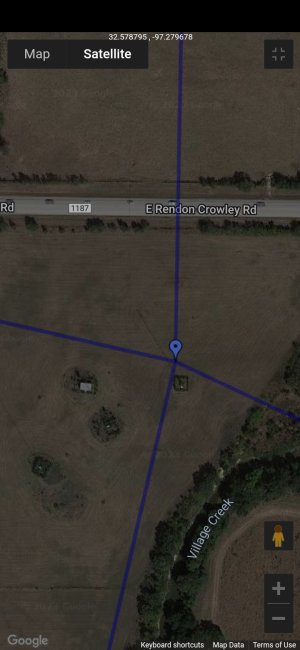
The land was included in the sale. It is located east of I-35W on east Rendon Crowley Road in Burleson. On 35W, as you are coming from the north, you will see a Lowe's to your left, just after the exit. The towers are about a mile, maybe a hair less, down Rendon Crowley. It sits on a few acres of well kept land. Someone is maintaining the site, that is certain. I don't know if anything else calls that particular site home, other than the 95.7 translator licensed to Burleson.

I couldn't remember the sales price, and thanks for that Ryan, but as you might imagine, Burleson is certainly growing, neighborhoods and a variety of retail development surround the site, but not to the point that it is in danger of being bought out to drop the towers to build something more profitable in its place. The auxiliary for 1460 is still at the old studio and offices in Cleburne, at 919 North Main. That property is now occupied by an ISP called Digitex. Last year, when I was in Cleburne, the building looked great, still has the KCLE call letters and frequency prominently displayed on the front of the building, and has a ton of equipment on the attached tower. The Rendon Crowley site was also well maintained, freshly mowed, and it appears that the towers are in good shape. The station isn't operating, but you'd never know it going by the conditions of the site.
 

Attachments

  • Screenshot_20230514-173213_Samsung Internet.jpg
    Screenshot_20230514-173213_Samsung Internet.jpg
    428.3 KB · Views: 10
I'm surprised more AMs aren't silent. But the death of the band will come in the next few years when few people will have cars with AM radios in them.
The average car in the US is 12 years old.

Only a few vehicles today don't have AM radios, so it will be some time before all of them have no AM capability.

AM is nearly dead now, with many markets showing less than 5% of listening on AM. And that is generally to one or two big signal stations. Many of those will move to FM if they are profitable.

So saying that AM will be dead in "the next few years" is wrong. For 90% of AM stations, it is dead already. For the rest, they will continue to prosper until they either move to FM or the revenue stream dries up.
 
The average car in the US is 12 years old.

Only a few vehicles today don't have AM radios, so it will be some time before all of them have no AM capability.
Let's, too, keep in mind that not everyone is rushing right out to purchase brand new vehicles in today's economy. There is still a significant percentage of cars, trucks, minivans, and suvs on the road that bear a year model earlier than 2010. Of course, not all of them have a factory sound system in the dash, but if you're driving a vehicle that's already 15 years old or so, you likely aren't rushing out to purchase an expensive head unit to replace what originally came with the vehicle. My everyday driver is a 2010 Texas Edition Chevy Silverado. Top of the line when she was new, with all the bells and whistles included. Today, comparing it to a brand new Silverado, it's a dinosaur. We have newer vehicles, a '20 Tundra, and '19 Camry, but both of them are AM capable, even with various other Bluetooth and satellite options available at the touch of a screen. Point being, me, you, tested, and most everyone posting here will be long gone before a majority of vehicles currently on the road will be sans an AM option.
AM is nearly dead now, with many markets showing less than 5% of listening on AM. And that is generally to one or two big signal stations. Many of those will move to FM if they are profitable.

So saying that AM will be dead in "the next few years" is wrong. For 90% of AM stations, it is dead already. For the rest, they will continue to prosper until they either move to FM or the revenue stream dries up.
Now, this is 100% on point. My own hometown once had 4 distinctly different AM stations in its heyday, along with the ones readily available from Dallas-Fort Worth, and to a lesser extent Shreveport-Bossier City. 3 of those 4 still exist, here in Tyler, but I doubt there are a handful of east Texans listening to any of the 3. All of them are readily available on the FM band. 2 via translator, and 1 simulcast with a C3 that adequately covers both of the larger cities of Tyler and Longview, due to its placement when it was moved up here a few years back from a small town further south. Other than being used to feed the associated translators, I would hazard an educated guess that both KYZS and KGLD would already be on Mesa Mike's list of deleted AM facilities, had they not been granted their translator counterparts. I don't exactly understand why Paul Gleiser continues to bother with 600 KTBB, now that he has 97.5, other than he hasn't been able to unload it, and just doesn't have the heart to surrender it. The signal has degraded over the years, and while still strong in Tyler, has a tough go of it over in Longview. I constantly hear that the AM revitalization didn't revitalize anything, and that is somewhat true. Nothing was done to fix AM's shortcomings, instead, it gave most of them a purpose to survive. Perhaps ithe effort to "revitalize" should have been more aptly named the AM Survival Plan.
 
I rarely use my AM radios to listen as I prefer to stream because the audio quality is so much better. If the internet is down though and we need local news or emergency information we will miss our AM radios!
 
What market does have the highest percentage of AM listeners? Here in San Antonio, it’s around 10 percent (which is probably one of the higher percentages). My guess might be Cincinnati based exclusively on WLW. On the other side, I read Little Rock may be 1 percent.
 
If the internet is down though and we need local news or emergency information we will miss our AM radios!
Ha! That's doubtful. It's more likely that most of them will be airing Glenn Beck or Sean Hannity in your time of need.

I only half jest.
 
The average car in the US is 12 years old.

Only a few vehicles today don't have AM radios, so it will be some time before all of them have no AM capability.

AM is nearly dead now, with many markets showing less than 5% of listening on AM. And that is generally to one or two big signal stations. Many of those will move to FM if they are profitable.

So saying that AM will be dead in "the next few years" is wrong. For 90% of AM stations, it is dead already. For the rest, they will continue to prosper until they either move to FM or the revenue stream dries up.
I confess that my dismay over the problem is exaggerated, but I really don't like the fact automakers are killing AM in cars. It should be an option, even in EVs. It can be done, we just don't have political leadership willing to make the requirements to do so. AM is important. It's been around for a century and has benefits that FM and streaming simply don't. I fear that stations will see the move of automakers and move stations to FM and advertisers will stop buying AM. I know you're right, but I just hate seeing this happen.
 
Let's, too, keep in mind that not everyone is rushing right out to purchase brand new vehicles in today's economy. There is still a significant percentage of cars, trucks, minivans, and suvs on the road that bear a year model earlier than 2010. Of course, not all of them have a factory sound system in the dash, but if you're driving a vehicle that's already 15 years old or so, you likely aren't rushing out to purchase an expensive head unit to replace what originally came with the vehicle. My everyday driver is a 2010 Texas Edition Chevy Silverado. Top of the line when she was new, with all the bells and whistles included. Today, comparing it to a brand new Silverado, it's a dinosaur. We have newer vehicles, a '20 Tundra, and '19 Camry, but both of them are AM capable, even with various other Bluetooth and satellite options available at the touch of a screen. Point being, me, you, tested, and most everyone posting here will be long gone before a majority of vehicles currently on the road will be sans an AM option.

Like you, I have a 2009 model SUV that I inherited from my ex-wife when she moved to Europe, and I have a 2020 Nissan Sentra that I bought when my own 2012 model vehicle started showing signs of transmission trouble. I briefly thought about trading both of them in when I bought the Sentra but decided to keep the SUV because it was good for hauling items around, excellent in snow, still had about three years on the extended warranty the ex bought, and was better for traveling with my dog. Plus, as my mom gets older and likes traveling less, it's good for family trips as I usually meet my sister, brother-in-law, and nieces in various destinations two or three times a year. I've mentioned a few times on these boards that the Sentra has AM, but I doubt the average buyer knows it. It wasn't in what I assume was the factory dash configuration (though I suppose a salesman could've altered it while showing it to a previous prospective buyer). I had to search my options and reconfigure the dash to get AM as a push-button option.

Now, this is 100% on point. My own hometown once had 4 distinctly different AM stations in its heyday, along with the ones readily available from Dallas-Fort Worth, and to a lesser extent Shreveport-Bossier City. 3 of those 4 still exist, here in Tyler, but I doubt there are a handful of east Texans listening to any of the 3. All of them are readily available on the FM band. 2 via translator, and 1 simulcast with a C3 that adequately covers both of the larger cities of Tyler and Longview, due to its placement when it was moved up here a few years back from a small town further south. Other than being used to feed the associated translators, I would hazard an educated guess that both KYZS and KGLD would already be on Mesa Mike's list of deleted AM facilities, had they not been granted their translator counterparts. I don't exactly understand why Paul Gleiser continues to bother with 600 KTBB, now that he has 97.5, other than he hasn't been able to unload it, and just doesn't have the heart to surrender it. The signal has degraded over the years, and while still strong in Tyler, has a tough go of it over in Longview. I constantly hear that the AM revitalization didn't revitalize anything, and that is somewhat true. Nothing was done to fix AM's shortcomings, instead, it gave most of them a purpose to survive. Perhaps ithe effort to "revitalize" should have been more aptly named the AM Survival Plan.

I think we talked before about how Tyler/Longview had a more vibrant AM market longer than most places. While the majority of radio listening went from AM to FM around 1977 and music listening made that switch about two years earlier, that was mostly driven by larger markets and definitely wasn't the case everywhere. Still, most areas saw AM mostly die by 1985. Tyler/Longview held on with a fairly competitive AM landscape until about '89 or '90. I grew up more in Oklahoma than in Texas. While AM mostly died in the early 80's in OKC, I seem to remember that, as recently as 1991, WKY 930 ran an easy listening format that routinely got between 5 and 10% of 12+ listening and even ran KKNG's soft AC off the air. KNOR 1400 superserved Norman with an AC/CHR format, though, by the end of 1991, it started adding talk programming and began to phase out music. WNAD/WWLS 640 lasted until, I believe, the late 80's superserving Norman with a country format. It went on to become the first all sports station in the market when that was a new niche and was the first all sports format to get on the air in all three of the state's rated markets. KOMA 1520 had its oldies format only to see its ratings go to rock bottom after long suffering blowtorch KLTE 101.9 ditched its soft rock format for oldies in late 1989. KOMA, of course, got its own FM signal in 1992 by putting KKNG out of its misery. When the weather got bad, which much of the time in OKC, everyone knew to tune to 1000 KTOK. At the time, the successes those stations had proved people would go to AM if they were either unserved or underserved by FM. Granted, some of those audiences were hard to monetize, which was why some of them left FM in the first place, but people had no trouble finding and no problem listening to their favorites on AM.

AM, of course, doesn't get the same results today. I wonder how much of that was the technology itself, how much was the difficulty making money in radio in general, and how much was a self-fulfilling prophecy. Seems like a lot of AM operators developed the philosophy that they only way to get an audience was to go after the audience already listening to AM rather than to try to get people to try something new there. That the best anyone could come up with for revitalizing AM was to give it a tiny spot on the FM dial, however, should tell us that the technology itself is outdated and not long for the world. I suspect a few operators, though, will hold on to the bitter end, and, so long as Salem can sell their airtime to preachers, a few stations will be profitable.

What market does have the highest percentage of AM listeners? Here in San Antonio, it’s around 10 percent (which is probably one of the higher percentages). My guess might be Cincinnati based exclusively on WLW. On the other side, I read Little Rock may be 1 percent.

Not sure what it is today, but, 10-15 years ago, it was San Francisco. FM was disadvantaged due to the terrain there, and it had three 50,000 watt cash cows on AM. Plus, the area had large minority populations that could only get programming in their languages on AM. In the years sense, two of those three cash cows, of course, have gotten full-power FM simulcasts while another slowly declined and became a sports betting station that would seem to have no listeners at all. I'm not sure what the numbers themselves are, but, given KGO's decline, one can probably infer that most listening to KCBS and KNBR occurs on FM today. Roughly 1/3 of listening in San Francisco was to AM 15 years ago, but I'd be surprised if it were even 10% today.

I would've initially said that 1% in Little Rock was probably a little low, but, taking a second look at the numbers, it's probably about right. That was never a very good AM market, and one of its best signals bit the dust around 1995. When KAAY ditched top-40 for religion in the mid-80's, only two or three stations could draw any audience to the band. The African American audience got an FM serving it shortly afterward, which quickly rendered KOKY 1250 irrelevant. KARN migrated to FM roughly 20 years ago, and it was about the last AM anyone was listening to. Much of the Mexican audience has migrated to FM, and most of the AM's still serving that audience have FM translators now.

I doubt the AM listening is much higher here in Collegetown, USA. The heritage news/talk station has an FM translator now, but even that hasn't been enough to save it from its longtime morning man's retirement a couple years ago. Half of its audience left with him. The classic country AM signal also got an FM translator, and its audience doubled or tripled almost overnight. No mystery how most everyone is listening to it. The all sports station shows up in the ratings, but it has had an FM translator for over a decade. I suspect few people listen to it on AM.

Personally, I still listen to AM fairly often during sports season, but it's usually to stations in the larger markets an hour and a half to two hours away to the east and west. AM is still the only free place I can get live play-by-play of the NFL, and those stations aren't allowed to stream daytime games outside of their local markets. Even when in the local market, not all of those stations can tell I'm there if I'm on the cellular network.

 
Across all 48 PPM markets in the April survey, AM averaged an 8.2 share of listening per market.
DFW had 12.9 shares going to AM, San Antonio 10.4, Austin 9.3 and Houston had 7.3. (AM/FM simulcasts are credited by virtue of Nielsen's designation, so KTCK is credited as an AM in this case.)

The best (and worst) markets for AM:
1. Milwaukee 20.9 (Two big AMs with WISN and WTMJ)
2. Cincinnati 17.2 (WLW accounts for 11.6 of that)
3. Sacramento 15.4
4. Chicago 14.7
5. San Jose 14.2

44. Nashville 2.2
45t. Indianapolis 1.4
45t. Jacksonville 1.4
47. Raleigh 0.1
48. Greensboro 0.0
 
I did research for my comments in Radio World magazine about AM stereo a while back...the stats said the average age was 17 years!
In this area, I defer to our resident automobile expert, Michael Hagerty. He always has the precise statistics we need!
 
They were first in line when the dial was reorganized by the FRC and / or FCC in the late 20's and again in the early 30's.
In the case of KXEL, the CP was issued late in 1941 and the station went on the air in 1942, according to the FCC history cards. There's probably a story there.

On the other hand, I'm currently visiting the city that lost its clear-channel allocation in NARBA for reasons that were unclear.
 
Status
This thread has been closed due to inactivity. You can create a new thread to discuss this topic.


Back
Top Bottom