
-
Get involved.
We want your input!
Apply for Membership and join the conversations about everything related to broadcasting.
After we receive your registration, a moderator will review it. After your registration is approved, you will be permitted to post.
If you use a disposable or false email address, your registration will be rejected.
After your membership is approved, please take a minute to tell us a little bit about yourself.
https://www.radiodiscussions.com/forums/introduce-yourself.1088/
Thanks in advance and have fun!
RadioDiscussions Administrators
You are using an out of date browser. It may not display this or other websites correctly.
You should upgrade or use an alternative browser.
You should upgrade or use an alternative browser.
British actress-singer Jane Birkin
- Thread starter cyber
- Start date


One of the biggest hits I ever had at my Top 40 station Radio Musical in Quito, Ecuador was Birkin and her partner Sergé Gainsbourg's "Je t'aime... moi non plus" which was quite scandalous due to its overt sexual content but, thus, very popular.
No accent necessary on Serge, which is one syllable, pronounced "Sairzh."One of the biggest hits I ever had at my Top 40 station Radio Musical in Quito, Ecuador was Birkin and her partner Sergé Gainsbourg's "Je t'aime... moi non plus" which was quite scandalous due to its overt sexual content but, thus, very popular.
That is what was on the original record label for the french pressing. I got my French Top 40 releases directly from France, once a month at least.No accent necessary on Serge, which is one syllable, pronounced "Sairzh."
It was the '60s. They put an accent on Cher just to be fancy and exotic:
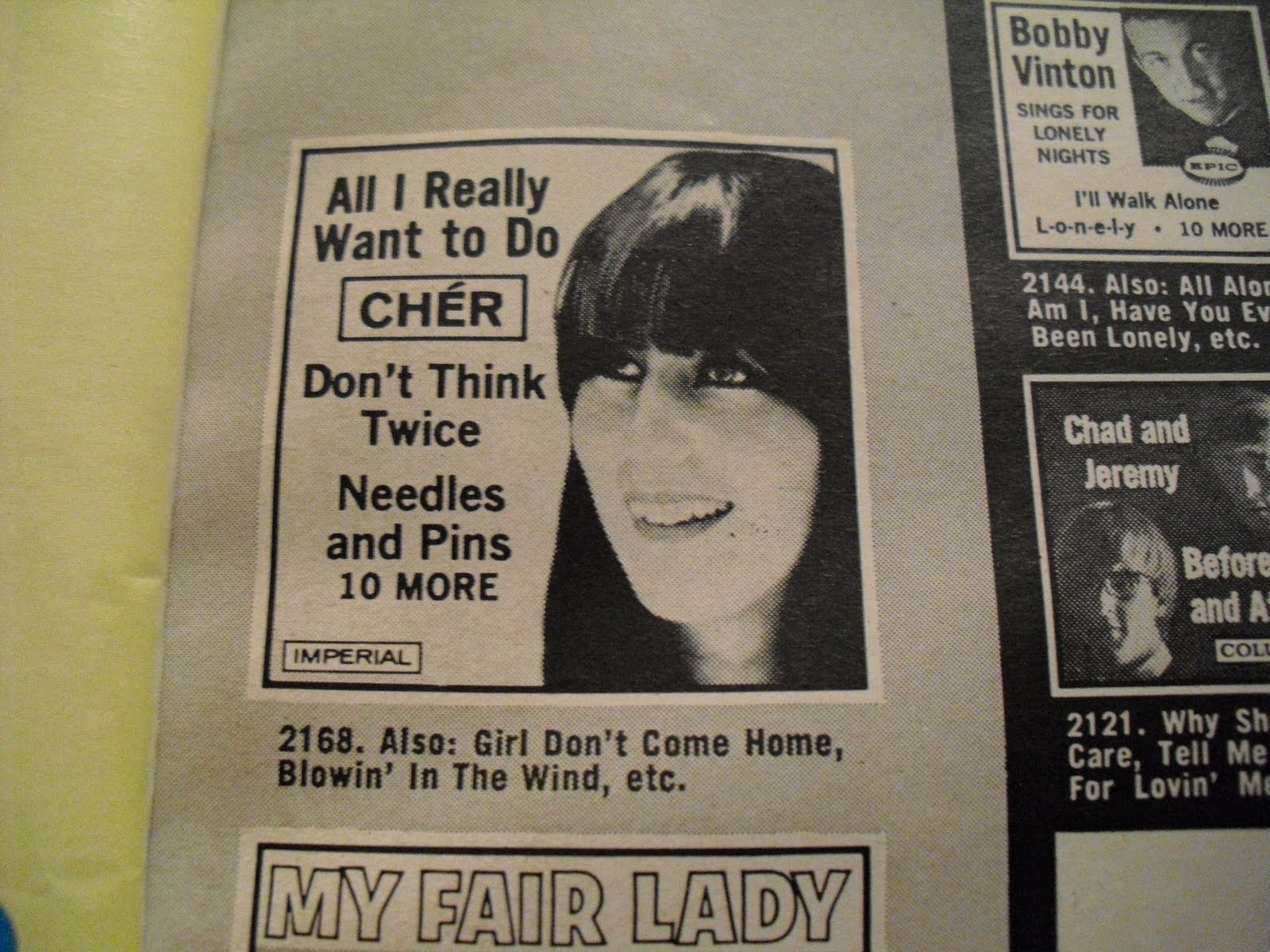
But that's an English-language ad. David says he saw the accent on the label of a French-language single manufactured in France. I can find no source that indicates that Gainsbourg ever used the accent on his name, not even in French-language news articles about him and Birkin.It was the '60s. They put an accent on Cher just to be fancy and exotic:
Attachments
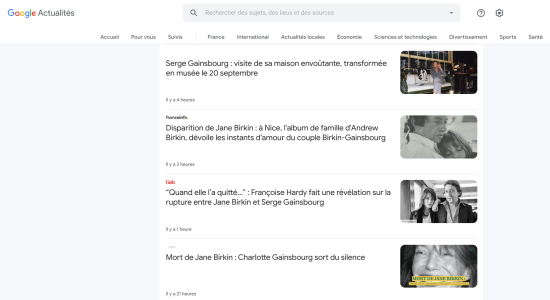
One remote possibility relates to Gainsbourg having been born Lucien Ginsburg, of Russian and Ukrainian descent. The Russian form of Serge is Sergei, two syllables and hard "g." But even that name isn't pronounced with the second syllable stressed.

A relatively phonetic spelling of "Sergei" in French would be "Sergueï", with the final syllable stressed, because, in French, the final pronounced syllable is always stressed. The "é" sound, while called an "accent" in both English and French, is really an indication that the e is "closed", similar to English "long a" minus the glide at the end. This is contrasted with "è", which is "open" and sounds like English "short e", or unstressed "e", which is a schwa sound. Thus you can have a word like "téléférique" (aerial tram) where the stress is on none of the "e" sounds, but on the "i" in the final pronounced syllable. (Also: final "er" is usually rendered as if it were "é".)One remote possibility relates to Gainsbourg having been born Lucien Ginsburg, of Russian and Ukrainian descent. The Russian form of Serge is Sergei, two syllables and hard "g." But even that name isn't pronounced with the second syllable stressed.
As a possible consequence, "Sergé" could have been used as some kind of transitional form. It seems odd to me, though.
Aside: French newspapers will, when they can, render some foreign names into a phonetic form. For instance, the name of the president of Russia is rendered as "Poutine", which does not refer to that Québecois, uh, delicacy.
A relatively phonetic spelling of "Sergei" in French would be "Sergueï", with the final syllable stressed, because, in French, the final pronounced syllable is always stressed.
Ummm, no. French two-syllable words (and names) can have first-syllable emphasis and even equal emphasis. Roland Garros (French Open tennis) is pronounced RO-lahnd GAH-ros. The accents in three-syllable words can even be on the first two syllables.
I may be misunderstanding your lengthy first paragraph. If it covers the instances I cite, I apologize.
With proper names - especially place names but personal names, too - the rules often go out the window - as they tend to do in any language. Likewise for loan words.Ummm, no. French two-syllable words (and names) can have first-syllable emphasis and even equal emphasis. Roland Garros (French Open tennis) is pronounced RO-lahnd GAH-ros. The accents in three-syllable words can even be on the first two syllables.
I may be misunderstanding your lengthy first paragraph. If it covers the instances I cite, I apologize.
No kidding. I'm amused by the trend to put accents on first names on vowels in syllables that are not stressed...Looks cool, but then you get announcers in other countries saying "bay-un-SAY" and it defeats the purpose.With proper names - especially place names but personal names, too - the rules often go out the window - as they tend to do in any language. Likewise for loan words.
I remember American baseball announcers putting the accent on the "rez" in Tony Perez's surname all the time -- during his career, which was in the '60s and '70s. Since he was a Hall of Fame player, his name still comes up today, but some 50 years later, the accent is always on the first syllable. New generation of baseball announcers, new awareness of proper pronunciation of Spanish names.No kidding. I'm amused by the trend to put accents on first names on vowels in syllables that are not stressed...Looks cool, but then you get announcers in other countries saying "bay-un-SAY" and it defeats the purpose.
In English, the accented e is simply used to indicate pronunciation, not stress. Without it, DJs would be talking about that Canadian crooner Michael Bubble.No kidding. I'm amused by the trend to put accents on first names on vowels in syllables that are not stressed...Looks cool, but then you get announcers in other countries saying "bay-un-SAY" and it defeats the purpose.
And then there's the "metal umlaut", which has nothing to do with pronunciation either, and is simply done because they think it looks cool:
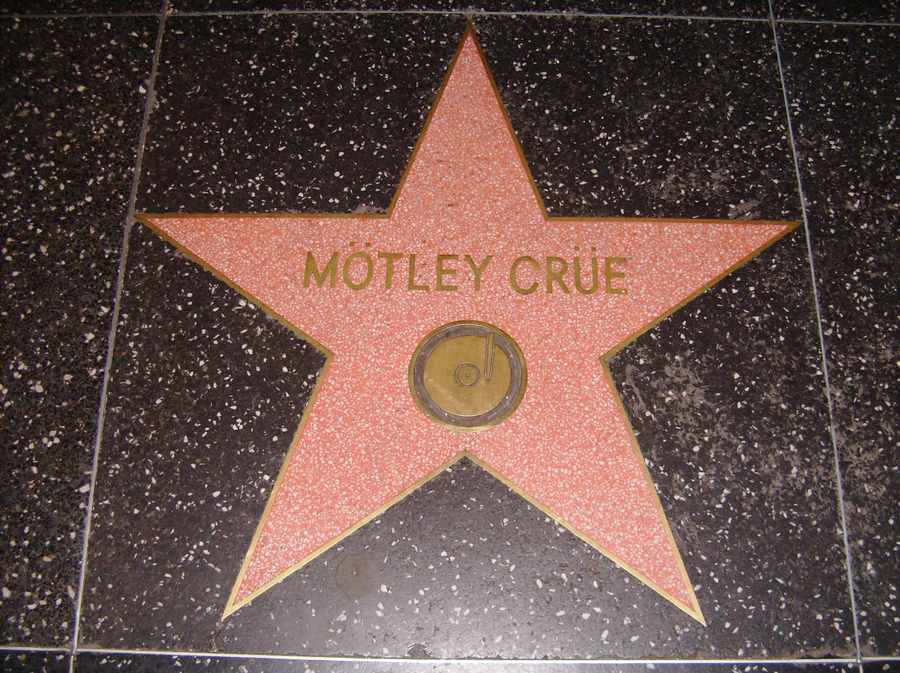
Metal umlaut - Wikipedia
- Status
- This thread has been closed due to inactivity. You can create a new thread to discuss this topic.