
-
Get involved.
We want your input!
Apply for Membership and join the conversations about everything related to broadcasting.
After we receive your registration, a moderator will review it. After your registration is approved, you will be permitted to post.
If you use a disposable or false email address, your registration will be rejected.
After your membership is approved, please take a minute to tell us a little bit about yourself.
https://www.radiodiscussions.com/forums/introduce-yourself.1088/
Thanks in advance and have fun!
RadioDiscussions Administrators
You are using an out of date browser. It may not display this or other websites correctly.
You should upgrade or use an alternative browser.
You should upgrade or use an alternative browser.
WBFO wants to be Buffalo's "news leader."
- Thread starter SirRoxalot
- Start date


This is the same with some government jobs and it’s one thing I don’t miss about my government workevery hour that's on our time cards has to be coded for what project it's being spent on so that all of that funding can be accounted for properly, because some funders require very specific detail on how their money is being used.
Don’t some of these stations have endowments, or not?
It's complicated. Until you've worked in public media, you can't imagine how many different funding sources there are and how many strings are attached to them.
Correct. One of the most publicized endowments in public radio happened exactly 20 years ago when the widow of Ray Kroc, founder of McDonalds, endowed $200 million to NPR News.
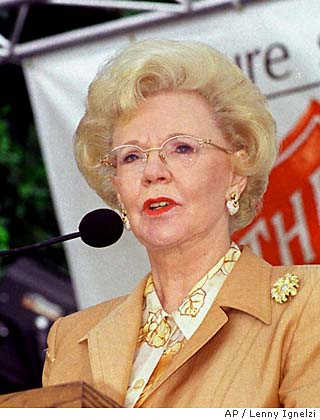

At the time, that was twice NPR's budget. What most stations do with an endowment is invest the money in some kind of fund, and then use the interest from the fund to carry out the wishes of the benefactor. So in the case of Ray Kroc, they set up a fellowship to develop journalists:
That may be what WBFO would like to do. Perhaps there's someone with great ideas who would like to do some form of long-term funding for news at WBFO. I would guess that WNYPM has some endowments, but they own four stations. They're not going to use the general endowment for daily news operations unless the endowment was set up for that. At the same time, there are lots of journalism foundations that WBFO can apply to help with staffing in specialized ways. A science reporter, a diversity reporter, or a business reporter are examples of reporter positions that could be funded through foundation grants. When they started "What's Next," I expected them to use that daily program as a way to attract funding. I think they got some grants from the state, but I don't see any top-line corporate funding. The fact that they haven't attracted a major funder after a year tells me they may want to change their strategy.
But all of this gets back to what I said in my previous post. If listeners want more news, it will cost more money. In the corporate world, they simply say no, and that's the end of it. In the non-commercial world, they look at funding sources and ways to use grants and other sources to pay for what they want to do.
Did I mention that every single employee at a station that gets CPB funding also has to go through several mandatory online training sessions annually for sexual harassment and other such matters?
BTW that's not unique to CPB. Most of the major radio companies, in fact most major companies in any business, have similar requirements based on federal laws and experiences the companies have had with employee lawsuits. Which is why when politicians talk about eliminating these laws, they're unwittingly opening the door for major litigation.

It's complicated. Until you've worked in public media, you can't imagine how many different funding sources there are and how many strings are attached to them.
The best kind are the unrestricted donations - "here, take this money and use it for whatever you need most." Those are rare!
What's much more common is grant money that is restricted for specific purposes or uses. Some funds can only be used for operational costs and not for programming. Some (like CPB funding) can only be used to acquire programming and not for operational costs. Some must be used for specific types of programming. And every hour that's on our time cards has to be coded for what project it's being spent on so that all of that funding can be accounted for properly, because some funders require very specific detail on how their money is being used.
And then there's the funding for equipment, which in turn has its own set of accountability demands - we have a basement full of old gear that can't be given away or disposed of because it's still logged through one grant program or another.
Did I mention that every single employee at a station that gets CPB funding also has to go through several mandatory online training sessions annually for sexual harassment and other such matters?
It's a lot to keep track of, compared to the commercial world.
I just took that training.
I'm glad I don't have to deal with the money side of things for public radio.. thats why we have an accountant, office manager and board preisdent who do.
I mean, im not completely ignorant and uneducated about it, but im not the one keeping specific track of some money stuff that grants require
I would HIGHLY disagree with your take that "WBFO and NPR in general is leaning a bit too far to the left nowadays". NPR never HAS been part of the left, despite decades of yelling and screaming otherwise. And, like Scott, I'd like to know what exactly you find to be too "left" leaning.As a sustaining member, I've noticed the diminshing local news presence and miss it. It's getting harder to find a good solid source of straight up news without a strong political lean. WBFO and NPR in general is leaning a bit too far to the left nowadays. I expect somewhat of a left lean, but in many cases it's become unlistenable due to the repitition of the same topics and viewpoints. Maybe people think that well researched, balanced, straight up news is boring, but I definitely value it and I'm willing to pay for it. I'm a 49 year old male and politically independent.
As for Buffalo having an all-news station: That will NEVER happen. It takes way too much money and effort to get one started up and properly maintain it. If you want an example of an all-news station; there's one in our backyard: CFTR(CityNews 680)in Toronto. It recently celebrated its 30th year in that format(and there's a 6 part podcast retrospective of it).
He claims to be a sustaining member of WBFO, but finds it too "Left Leaning"? That is puzzling. Most of the content comes from NPR. Maybe the Tops massacre and the discussion about decades of systemic racism in Buffalo is too uncomfortable for some. NPR delivers "straight up news" -- which is what he said he wants...I would HIGHLY disagree with your take that "WBFO and NPR in general is leaning a bit too far to the left nowadays". NPR never HAS been part of the left, despite decades of yelling and screaming otherwise. And, like Scott, I'd like to know what exactly you find to be too "left" leaning.
Last edited:

For the most part, a well-informed thread here. A few observations: With regard to WBFO, the issue goes a few steps beyond staffing. The staff certainly has been reduced. As has been noted in this thread, economics is often the driver of reductions in staff. Yet, there are (a limited number of) "bodies" in place, but they've been given a new playbook and game plan. Formatically, the station has changed, at least to the perception of many listeners, members and posters here. The Monday through Friday formatics seem to be askew.
Local news seems to have been de-emphasized. Instituting the local "Buffalo, What's Next" appears to have come at the expense of cutting local news.
A few weeks ago, an unsolicited opinion about WBFO arose in a conversation I had with a woman who appeared to be in the 45-54 demographic. She was not employed in the broadcast or media fields. In a conversation about a local news event, she mentioned WBFO and asked, "What's happening to that station?" This intrigued me because our conversation was centered on a news story, with no mention of radio.
I asked what she meant. She answered, "They changed everything. It's like when Wegman's re-arranges the store. You never know where anything is. Why do they do that?!" The correlation to Wegman's (a Western New York grocery chain known nationwide for its quality service and customer outreach) was interesting because it was a "real world observation."
This woman might have been good in a WBFO focus group. Or maybe not. She might have been one of those "dominators" that the moderator has to hold in check. But that's beside the point.
She went on to say that she "never knows" when the local news is on. "It used to be the same time after the NPR news, and then it moved to something like 40 minutes after the hour, but I guess it's now back to following the NPR news, but there's never any local news. Last Monday all they did was Bills and sports. That's not what I listen for."
Well, she certainly knew the station, and some of her contentions disproved themselves because she appeared to know when the local news was on these days. But her point about "never any local news" was powerful because it goes to perception, and in this case perception is reality. This applies to the issue about changing the playbook and game plan.
There are bodies in place, albeit not as many as a year ago, certainly not as many as five years ago. Jay Moran in morning drive used to do interviews with news makers inside Morning Edition cutaways. He was well-informed and his interviews were top notch. He delivered the local news with clarity. Local newscasts were augmented by packages and features produced by the local news reporters, Mike Desmond, Michael Mroziak and others. Local news followed the NPR newscasts and were laden with solid local news reporting within the window given to the local news cutaway. It was a given. It worked. It had purpose and effect.
One other point about my conversation with this 45-54 year old woman: Her palpable disdain for the changes at WBFO. As is the case with many public radio-TV stations, listeners, members more precisely, have a sense of ownership, a claim. When the terms of that ownership changes, when listeners, members' claims are challenged, it often results in diminished financial support and fealty, followed by disassociation, like a spurned lover. This seems to be a common point among listeners ... and posters here and it's understandable.
Local news seems to have been de-emphasized. Instituting the local "Buffalo, What's Next" appears to have come at the expense of cutting local news.
A few weeks ago, an unsolicited opinion about WBFO arose in a conversation I had with a woman who appeared to be in the 45-54 demographic. She was not employed in the broadcast or media fields. In a conversation about a local news event, she mentioned WBFO and asked, "What's happening to that station?" This intrigued me because our conversation was centered on a news story, with no mention of radio.
I asked what she meant. She answered, "They changed everything. It's like when Wegman's re-arranges the store. You never know where anything is. Why do they do that?!" The correlation to Wegman's (a Western New York grocery chain known nationwide for its quality service and customer outreach) was interesting because it was a "real world observation."
This woman might have been good in a WBFO focus group. Or maybe not. She might have been one of those "dominators" that the moderator has to hold in check. But that's beside the point.
She went on to say that she "never knows" when the local news is on. "It used to be the same time after the NPR news, and then it moved to something like 40 minutes after the hour, but I guess it's now back to following the NPR news, but there's never any local news. Last Monday all they did was Bills and sports. That's not what I listen for."
Well, she certainly knew the station, and some of her contentions disproved themselves because she appeared to know when the local news was on these days. But her point about "never any local news" was powerful because it goes to perception, and in this case perception is reality. This applies to the issue about changing the playbook and game plan.
There are bodies in place, albeit not as many as a year ago, certainly not as many as five years ago. Jay Moran in morning drive used to do interviews with news makers inside Morning Edition cutaways. He was well-informed and his interviews were top notch. He delivered the local news with clarity. Local newscasts were augmented by packages and features produced by the local news reporters, Mike Desmond, Michael Mroziak and others. Local news followed the NPR newscasts and were laden with solid local news reporting within the window given to the local news cutaway. It was a given. It worked. It had purpose and effect.
One other point about my conversation with this 45-54 year old woman: Her palpable disdain for the changes at WBFO. As is the case with many public radio-TV stations, listeners, members more precisely, have a sense of ownership, a claim. When the terms of that ownership changes, when listeners, members' claims are challenged, it often results in diminished financial support and fealty, followed by disassociation, like a spurned lover. This seems to be a common point among listeners ... and posters here and it's understandable.
Last edited:
Perhaps there's a correlation between the decline of local news coverage in the Buffalo News and the decline in local news on radio in general in WNY, particularly at stations that are short-staffed.
Ha! You seem surprised,For the most part, a well-informed thread here.
They're the same thing. It's just the way they're handled that has changed. A year and a half ago, there was a "disruption in the force," a mass shooting that typically doesn't happen in a place like Buffalo. The station took that opportunity to make a change to address that disruption, in the way radio stations did 50 years ago when they did community ascertainments. That was an old FCC rule that required radio stations to come up with a list of issues in their community, and programming that addressed those issues. The process was cumbersome for stations and the FCC. It was eliminated 40 years ago.Local news seems to have been de-emphasized. Instituting the local "Buffalo, What's Next" appears to have come at the expense of cutting local news.
The situation here is known as putting all of one's eggs in one basket. They have limited resources, and they made a decision to devote those resources to one daily program that's on the air in the middle of the day when a portion of the audience can't listen. They didn't change the local hosting of Morning Edition and All Things Considered. But those local hosts no longer have the produced reports they used to have, because the resources they would have are instead devoted to What's Next. That may have seemed like a good decision at the time, but it's now a year and a half later. Perhaps they want to talk about this situation with listeners the way Rusty has done. It's always useful to speak with listeners, just plain folks who don't have an agenda.
The other part of the story is what I described earlier: The funding. You can't spend money you don't have. News gathering costs money. There are lots of ways to address that and I described a few of them earlier in this thread. The other way has to do with staffing. Not every position needs to be filled with full time employees who expect salary + benefits. The other way stations handle news reporting is with free-lancers. Being a free-lancer doesn't mean you work for free, but it means you're not full time. Perhaps you're a retired reporter at the Buffalo News, and want to stay active. You do a story a week, and get paid by the story. The station should have a list of people it can turn to who can do this.
In any case, the fact that the station has sent out this email tells me they're aware of the problem. They likely know how they want to address it. They just want to talk about it with listeners before they move forward.
If anyone in management there had a clue as to how radio actually works, I would fall over. They are clueless....
The decision-makers at WBFO need only listen to the replays of Fresh Air Weekend as an example of how this can be properly and effectively presented.
It's not rocket science.
Is this parody?I would HIGHLY disagree with your take that "WBFO and NPR in general is leaning a bit too far to the left nowadays". NPR never HAS been part of the left, despite decades of yelling and screaming otherwise. And, like Scott, I'd like to know what exactly you find to be too "left" leaning.
If anyone in management there had a clue as to how radio actually works, I would fall over. They are clueless.
Do you know who their CEO is? He seems to get a pass whenever anyone here complains about them.
Yes. Tom Calderone. I have no idea why anyone would go to bat for him. His claim to fame there has been who kisses his ass the best gets promoted the highest. He has literally ruined WBFO, as far as I'm concerned.Do you know who their CEO is? He seems to get a pass whenever anyone here complains about them.
As if radio/media was different from any other (entertainment) business in America. Stories about Jack Welch, Bob Pittman and even "Chainsaw" Al Dunlap abound....[H]is claim to fame there has been who kisses his ass the best gets promoted the highest. He has literally ruined WBFO, as far as I'm concerned.
It seems like 95% of the stories and topics they cover regard either racial equity or climate change. I want the "intellegent" news supposedly offered on NPR but without the overtly political slant. Not saying that those issues aren't important or shouldn't be covered, but it DOMINATES the discussion. I want a wider variety of topics and issues covered in the intellectual style NPR does.I'm asking out of genuine curiosity: what are some examples of topics, guests or stories that you see as a "left lean"?
It seems like 95% of the stories and topics they cover regard either racial equity or climate change.
That's a bit of an exaggeration, don't you think? I think of you look at their show rundowns posted on their website, you'll see a much wider range of topics than any other US news show. Then again, that's not hard to do. Just the amount of coverage they give to international news such as the Moroccan earthquake is beyond the coverage anywhere else.
Do you listen to shows like SCIENCE FRIDAY or FRESH AIR?It seems like 95% of the stories and topics they cover regard either racial equity or climate change. I want the "intellegent" news supposedly offered on NPR but without the overtly political slant. Not saying that those issues aren't important or shouldn't be covered, but it DOMINATES the discussion. I want a wider variety of topics and issues covered in the intellectual style NPR does.
Those are just 2 examples. NPR has many others. It doesn't seem like you're hearing what you say you listen to...
I don't want to get into your little rhubarb here, but I believe that "CSMWNY" was referring to content created by the WBFO "news" department, not all of the PBS programming carried by WBFO.
- Status
- This thread has been closed due to inactivity. You can create a new thread to discuss this topic.